
Electric knives’ll slice through soft breads and meats faster and more consistently than manual knives, offering smoother cuts with less physical effort. You’ll find electric options lightweight and ergonomic, particularly beneficial if you’ve got hand strength limitations. Manual knives provide superior precision for complex cuts around bones and joints. Your ideal choice depends on specific cooking tasks, food types, and personal comfort. Want to uncover which knife suits your culinary style?
Key Takeaways
- Electric knives offer faster, more consistent cutting for soft foods like bread and meats, completing tasks in approximately 90 seconds.
- Manual knives provide superior precision and control, especially around joints and bones, making them ideal for intricate cutting techniques.
- Ergonomic electric knife designs reduce hand strain and benefit users with conditions like arthritis, featuring lightweight construction between 13-23 ounces.
- Cost-wise, electric knives are more economical, typically priced under $25 with inexpensive replacement blades and minimal maintenance requirements.
- The best knife depends on specific culinary tasks: electric knives excel in speed and uniformity, while manual knives offer ultimate cutting precision.
What Are Electric and Manual Knives?
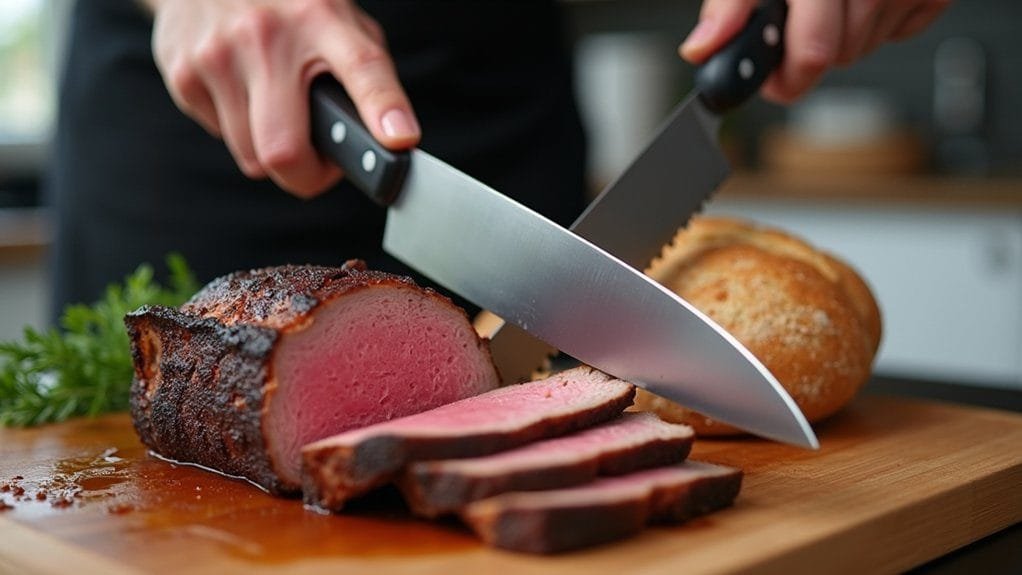
While the world of culinary tools continues to evolve, electric and manual knives represent two distinct approaches to food preparation and cutting. Electric knives feature a motorized handle with removable serrated blades that oscillate rapidly, allowing you to slice through foods with minimal physical effort. In contrast, manual knives—like chef’s and carving knives—rely on your skill and strength to create precise cuts. These sharp kitchen knives demand technique and consistent hand motion to achieve uniform slicing.
The key difference lies in their operational mechanics: electric knives automatically power through food, while manual knives require your direct manipulation. Each type offers unique advantages, with electric knives providing ease and speed, and manual knives delivering greater control and versatility across various cutting tasks.
Performance Comparison: Speed and Precision
Because speed and precision are critical factors in kitchen performance, electric and manual knives diverge considerably in their cutting capabilities. Performance tests reveal distinct differences in their functionality:
- Electric knives cut cleanly through bread and meats in approximately 90 seconds, offering rapid slicing with minimal physical effort.
- Manual knives provide superior precision around joints and bones, demanding more skill but delivering nuanced control.
- The oscillating motion of electric knives guarantees consistent cuts without sawing, while manual knives require practiced technique.
- Serrated electric knife blades maintain effectiveness longer, though they can eventually dull, whereas manual knives need regular sharpening to preserve cutting performance.
Your choice depends on balancing speed, precision, and specific culinary tasks at hand.
Cutting Techniques for Different Foods
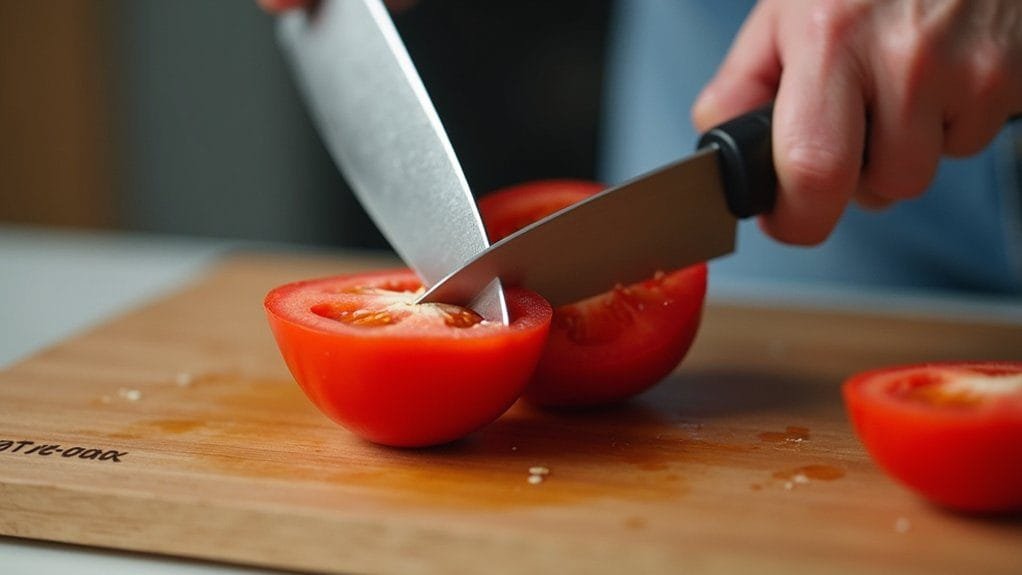
When traversing the culinary landscape, selecting the right knife for specific food types can dramatically influence your cutting efficiency and presentation. An electric knife‘s blades excel at creating thin slices of soft breads and delicate baked goods with uniform precision, while manual knives demand more skill. For carving turkey, the electric knife provides swift, consistent cuts with minimal pressure, making holiday meal preparation seamless. When confronting tough rinds like watermelon, an electric knife reduces slipping risks and enhances control. However, manual knives shine in intricate tasks, allowing precise cuts around joints and bones that electric models struggle to navigate. Your choice depends on the specific cutting technique required: electric knives offer speed and ease, while manual knives provide artisanal control and nuanced maneuvering.
Cost and Maintenance Considerations
Given the significant financial implications of kitchen tool investments, understanding the cost and maintenance landscape for electric versus manual knives becomes essential for consumers.
When comparing electric and manual knives, consider these key factors:
- Initial Cost: Electric knives are typically more affordable, with most models priced under $25, whereas high-quality manual knives can require a substantial upfront investment.
- Maintenance Expenses: Electric knives demand minimal maintenance, while manual knives need regular sharpening using a knife sharpener or professional services.
- Replacement Blades: Electric knife replacement blades are generally inexpensive and easily accessible, reducing long-term ownership costs.
- Longevity: Manual knives can last a lifetime with proper care, but electric knives offer consistent performance with less ongoing maintenance.
These considerations help you make an informed decision based on your budget and kitchen needs.
Ergonomics and User Experience
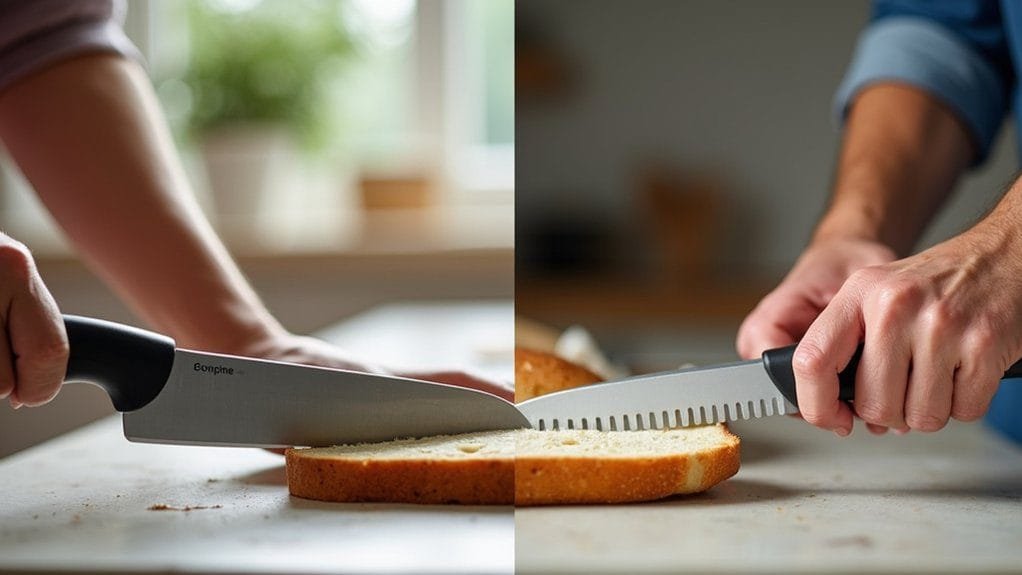
Knife ergonomics play a critical role in determining user comfort and efficiency during food preparation tasks. Electric knives offer distinct advantages in this domain, with their ergonomic grip design reducing hand strain considerably. You’ll find that the dual blade motion allows for smoother slicing with minimal pressure, enhancing overall user experience. Most electric knife models weigh between 13 to 23 ounces, providing a lightweight alternative to heavier manual options that demand more physical effort. While some safety features like finger guards can occasionally limit cutting fluidity, simpler electric knife designs often deliver superior comfort and control. For individuals with conditions like arthritis, the electric knife’s engineered design can transform food preparation from a challenging task to a more manageable experience.
Best Uses for Each Knife Type
Beyond the ergonomic considerations that make electric and manual knives unique, their ideal performance varies considerably across different culinary tasks. Consider these best uses:
- Bread Slicing: Electric knives excel at cutting soft, delicate baked goods with uniform thickness, while manual stainless steel chef’s knives require more skill.
- Turkey Carving: Electric knives provide speed and efficiency when carving meats, preventing skin tearing. Manual carving knives offer greater precision for intricate cuts.
- Meat Preparation: Manual knives are superior for cutting through joints and cartilage, offering more control than electric alternatives.
- Accessibility: Electric knives benefit users with hand arthritis or limited strength, reducing physical effort required for food preparation.
Your choice depends on specific culinary needs, personal skill level, and desired cutting technique.
Expert Recommendations
Professional chefs and culinary experts consistently recommend selecting knife types based on specific cooking tasks and individual ergonomic needs. When choosing the best electric fillet knife, consider your physical capabilities and desired cutting precision. An Electric Carving Knife with serrated blades can help you achieve beautifully sliced meats with minimal pressure, especially beneficial for those with hand mobility limitations. For more intricate tasks requiring detailed control, experts suggest the Best Carving Knife Set featuring manual options like the Wüsthof Classic. Your selection should balance efficiency, comfort, and cutting performance. Electric knives excel in speed and consistency, while manual knives offer superior maneuverability around joints and cartilage. Ultimately, matching the knife to your specific culinary requirements will guarantee peak results and a more enjoyable cooking experience.
Making the Right Choice for Your Kitchen
While selecting the right kitchen cutting tool can greatly impact your culinary experience, understanding the nuanced differences between electric and manual knives is essential for making an informed decision.
Consider these key factors when choosing between electric and manual knives:
- Performance: An electric fillet knife excels at Knives for Turkey carving, while manual knives offer superior precision for delicate tasks.
- Maintenance: Electric knives require less sharpening; manual blades get dull faster, so you’ll need to use a sharp tool regularly.
- Versatility: Manual knives provide broader cutting applications across your cutting board, outperforming specialized electric models.
- Convenience: Electric knives complete tasks faster, but the Best Knife depends on your specific culinary needs and skill level.
Your choice ultimately reflects personal preference, balancing efficiency with traditional craftsmanship.
Frequently Asked Questions
Can You Cut Meat With an Electric Knife?
You’ll find electric knives excel at meat slicing, offering safety features and ease of use. While manual knives provide precision, electric models deliver consistent cutting performance, making them ideal for large roasts and holiday meats.
What Knives Are Best for Cutting?
You’ll want a versatile chef’s knife for general tasks, a Santoku for precise slicing, a paring knife for detailed work, a cleaver for tough cuts, a serrated knife for bread, and a fillet knife for delicate fish preparation.
What Are the Benefits of Electric Knives?
You’ll love electric knife advantages: they offer user convenience, precision slicing, and effortless carving. With safety features and versatile uses, they’re perfect for those with limited hand strength, making food preparation easier and more consistent.
Do Electric Knife Blades Get Dull?
Sharp yet susceptible, electric knife blades do get dull. With proper blade maintenance tips, you’ll extend longevity. Replacement is often more practical than sharpening, ensuring consistent cutting precision and performance over time.
Conclusion
When you’ve weighed the pros and cons, you’ll realize that knife choice isn’t just about cutting—it’s about understanding your culinary needs. Electric knives excel in speed and uniform slicing, while manual knives offer precision and control. Your perfect kitchen tool depends on your cooking style, skill level, and the specific tasks you’ll tackle. Trust your instincts, and choose the knife that feels like an extension of your hand.