
Electric grills are easier to clean compared to gas grills. You’ll find electric models have fewer components and simpler surfaces, making maintenance more straightforward. They require unplugging, burning off residue, and wiping with non-scratching sponges. Gas grills demand more intensive cleaning, involving complex grate configurations and rigorous gas connection inspections. While both require regular maintenance, electric grills present less cleaning complexity. Curious about the nuanced details? Keep exploring.
Key Takeaways
- Electric grills generally offer simpler cleaning processes with fewer complex components and more straightforward removable parts compared to gas grills.
- Gas grills require more intensive maintenance, including rigorous inspection of gas connections and thorough removal of carbon buildup on grates.
- Electric grills demand delicate cleaning around heating elements, avoiding direct liquid exposure, which can make their cleaning process more nuanced and careful.
- Gas grills provide more robust cleaning approaches with easier access to heating surfaces and less risk of electrical component damage during maintenance.
- Both grill types benefit from consistent cleaning strategies, but electric grills typically present fewer technical challenges and safer maintenance procedures.
Cleaning Basics for Electric Grills
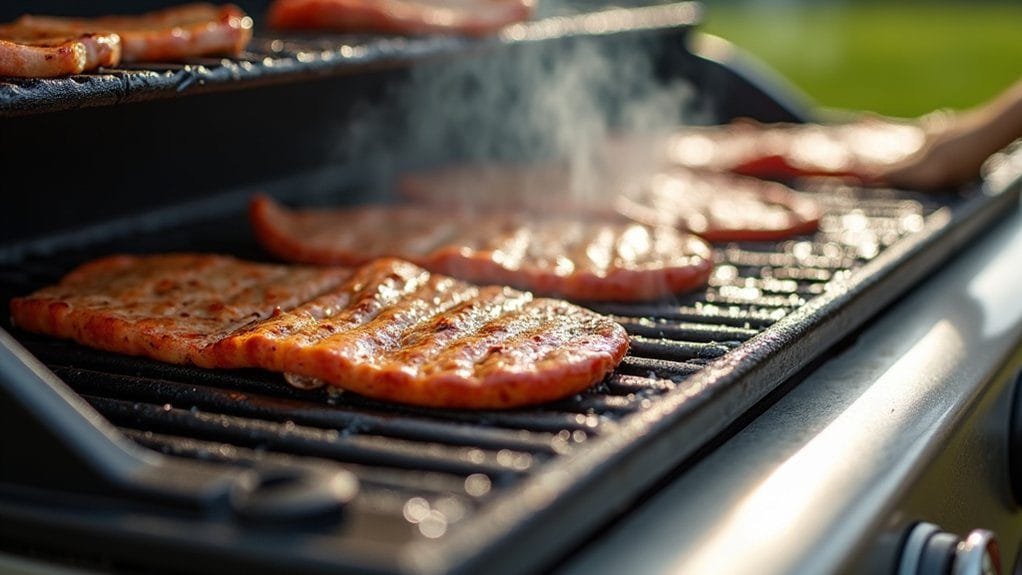
Electric grills offer a convenient and low-maintenance cooking solution, with several key advantages in cleaning and upkeep. When maintaining your electric grill, start by unplugging the unit and burning off leftover food at maximum temperature. Use non-scratching sponges and mild cleaning agents to protect the grill’s surfaces during maintenance. Carefully wipe down surfaces with a damp cloth, taking care to avoid submerging heating elements in water. Removable parts can be cleaned separately, which simplifies the overall cleaning process. Regular cleaning after each use prevents carbon buildup and guarantees peak grill performance. By following these maintenance guidelines, you’ll extend your electric grill’s longevity and maintain its cooking efficiency. Consistent care is the key to keeping your electric grill in top condition.
Cleaning Basics for Gas Grills
Because maintaining a gas grill requires consistent attention, understanding proper cleaning techniques can greatly extend your grill’s lifespan and performance. When cleaning gas grills, start by burning off leftover food at maximum temperature, which simplifies surface and grate cleaning. Use a specialized grill brush or scraper designed for gas grills to effectively remove carbon buildup without damaging surfaces. Removable grates and trays can be washed with hot, soapy water, facilitating easier maintenance. Regular safety checks on gas connections and components are essential for ensuring proper function and preventing potential issues. During storage, properly seal gas jets to prevent debris accumulation that could complicate future cleaning. By implementing these systematic cleaning practices, you’ll preserve your gas grill’s efficiency and longevity.
Removable Parts and Accessibility
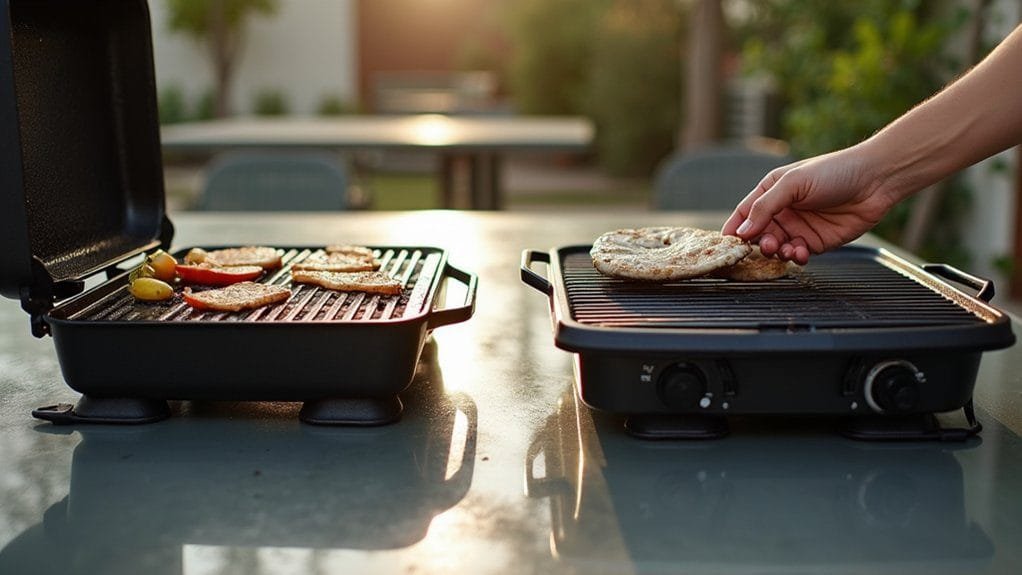
Grill manufacturers recognize the importance of user-friendly design when it comes to removable parts and cleaning accessibility. When selecting between electric and gas grills, you’ll find variations in their cleaning mechanisms:
- Electric grills typically offer simpler removable parts with fewer components
- Gas grills feature more complex grate and tray configurations
- Both grill types provide detachable elements for thorough cleaning
- Accessibility varies based on specific model design and manufacturer
Your cleaning effectiveness depends on understanding each grill’s unique removable parts. Electric grills generally present more straightforward cleaning processes, with fewer intricate components to manage. Gas grills require more meticulous attention to removable parts, including careful inspection of grease trays and cooking grates. The key is matching your maintenance approach to the specific grill type, ensuring ideal cleaning accessibility and performance.
Heating Element Considerations
While comparing heating mechanisms between electric and gas grills reveals significant functional differences, understanding their core thermal performance becomes essential for potential buyers. Electric grills‘ heating elements require meticulous cleaning techniques to prevent water damage, as direct liquid exposure can compromise their electrical components. Unlike gas grills’ more robust heat distribution systems, electric grill heating elements demand careful maintenance to preserve their structural integrity and operational efficiency. When cleaning electric grills, you’ll need to focus on surface wiping and avoiding moisture penetration near electrical connections. Gas grills, by contrast, offer more straightforward heating element access and resilience. Their robust design allows for more direct cleaning approaches, though you’ll still need to exercise caution around gas jets and connections to maintain peak performance and safety.
Gas Connection and Component Maintenance
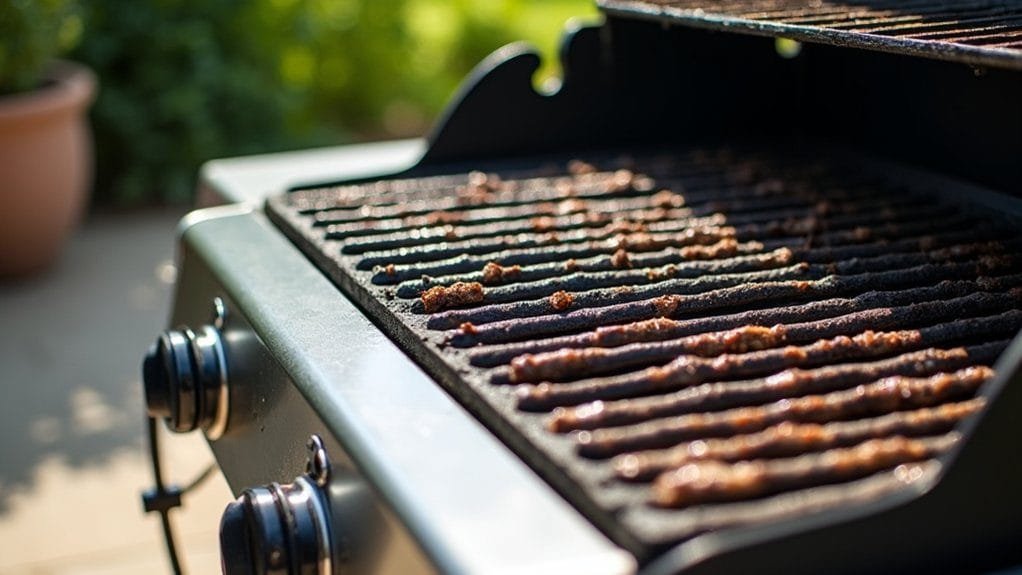
Shifting focus from heating element considerations, gas grill maintenance centers on thorough connection and component care. You’ll need to prioritize several critical maintenance tasks to guarantee safe and efficient operation:
- Regularly inspect gas connections using a soap and water solution to detect potential leaks
- Check burners, hoses, and other components for signs of wear or damage that could compromise performance
- Clean the grease tray and verify proper function of the ignition system to maintain ideal cooking conditions
- Seal gas jets during storage to prevent dirt and debris from entering the system
Proper gas connection and component maintenance involves systematic inspection, cleaning, and replacement of parts. By following these technical guidelines, you’ll extend your grill’s lifespan and ensure safe, reliable cooking performance.
Recommended Cleaning Tools and Techniques
An effective cleaning regimen for both electric and gas grills requires selecting appropriate tools and implementing strategic techniques that preserve equipment integrity while ensuring peak performance. When cleaning electric grills, you’ll want to use non-scratching sponges and mild cleaning agents to protect delicate heating elements. Gas grill components can typically withstand hot, soapy water for thorough cleaning. Always unplug electric grills before maintenance and remember to burn off leftovers at maximum temperature to simplify subsequent cleaning.
Your regular maintenance routine should include specific considerations for each grill type. Electric grills demand gentler approaches, while gas grills tolerate more robust cleaning methods. Regardless of grill type, consistent care will extend equipment lifespan and maintain ideal cooking performance.
Common Challenges in Grill Cleaning
Despite meticulous maintenance techniques, grill owners frequently encounter persistent cleaning challenges that can compromise equipment performance and hygiene. These challenges vary between electric and gas grill types:
- Electric grills offer delicate heating elements that require precise, non-submerged cleaning techniques to prevent electrical damage.
- Gas grills necessitate rigorous inspection of gas connections and potential carbon buildup on grates.
- Accumulated grease and food residue can create significant adhesion on cooking surfaces, demanding intensive scrubbing methods.
- Temperature-sensitive components in both grill types require specialized cleaning approaches to maintain structural integrity.
Effective cleaning demands understanding each grill’s unique construction and potential vulnerabilities. Thermal burn-off techniques and targeted cleaning strategies can mitigate these challenges, ensuring ideal grill performance and extending equipment longevity through meticulous maintenance protocols.
Time and Effort Comparison
When comparing cleaning time and effort between electric and gas grills, owners quickly recognize substantial differences in maintenance complexity. Electric grills are easier to maintain due to their simplified design and reduced carbon buildup, requiring less intensive cleaning processes. You’ll find that electric grill components can be efficiently cleaned without extensive disassembly, whereas gas grills require more thorough maintenance involving gas connection inspections and thorough residue removal.
Gas grills typically demand greater cleaning effort, with multiple components needing meticulous attention. Your cleaning process for a gas grill will likely involve more steps, including checking jet seals and removing combustion-related residue. Electric grills, conversely, offer a more streamlined maintenance approach, allowing you to clean removable parts quickly and with minimal technical intervention.
Long-Term Maintenance Strategies
While long-term maintenance strategies differ between electric and gas grills, owners can maximize their equipment’s performance through systematic, proactive care. Electric grills are even more delicate, requiring meticulous attention to their electrical components. Consider these essential maintenance strategies:
- Consistently burn off food residues at maximum temperature after each use to prevent buildup and simplify future cleaning.
- Inspect gas grill components regularly, focusing on connections, seals, and potential wear points to prevent potential safety hazards.
- Implement proper storage of gas grills by sealing gas jets and securing connections to prevent leaks and environmental damage.
- Clean removable parts thoroughly, ensuring that electrical elements remain dry and gas connections remain tight and secure.
Cost-Effective Cleaning Solutions
Since maintaining a clean grill requires minimal investment, homeowners can effectively manage their equipment’s hygiene using affordable, versatile cleaning strategies. Cost-effective cleaning solutions for gas grills and electric grills can include simple homemade mixtures utilizing everyday household ingredients. Vinegar and baking soda create powerful cleaning agents that break down stubborn grease without damaging grill surfaces.
| Cleaning Solution | Benefit |
|---|---|
| Vinegar Mix | Dissolves grease |
| Baking Soda Paste | Removes tough residue |
| Warm Water Rinse | Prevents buildup |
| Specialized Brush | Protects grill surfaces |
Specialized grill cleaning accessories complement these methods, enabling thorough maintenance without significant financial investment. By implementing regular cleaning techniques after each use, you’ll extend your grill’s lifespan and maintain peak performance. These cost-effective approaches guarantee your grill remains clean, functional, and ready for your next outdoor cooking adventure.
Frequently Asked Questions
What Is the Easiest Cleaning Outdoor Grill?
You’ll find electric grills easiest to clean due to their simple surface materials, minimal carbon buildup, and straightforward cleaning methods. Their removable parts and low-maintenance design make grill maintenance quick and hassle-free compared to other outdoor cooking options.
Are Electric Grills Easy to Clean?
Like a knight’s shining armor, electric grills boast easy maintenance. With non-scratching sponges and mild cleaners, you’ll effortlessly clean stainless steel surfaces. Removable parts and minimal carbon buildup make these grills a breeze to maintain.
Is It Better to Have a Gas or Electric Grill?
You’ll find gas grills offer superior heat control and flavor, while electric grills provide efficiency and safety. Consider your cooking style, space limitations, and maintenance preferences when choosing between the two grill types.
How Does Food Taste on an Electric Grill?
You’ll find electric grill food lacks smoky depth due to absent flame, with cooking techniques limiting flavor development. While convenient, grill maintenance can’t fully compensate for the muted taste compared to gas or charcoal grilling methods.
Conclusion
Ultimately, your grill cleaning experience depends on specific model features and maintenance commitment. Electric grills typically offer simpler cleaning processes with fewer intricate components. Gas grills require more detailed component maintenance, particularly around connections and burners. Have you considered how your cooking frequency impacts cleaning complexity? Your choice should balance convenience, performance, and long-term maintenance requirements, ensuring a clean, efficient grilling experience that meets your specific culinary needs.