
When choosing between electric bikes and scooters for urban commuting, you’ll find each has unique strengths. E-bikes offer superior range (20-50 miles), comfort, and stability, making them ideal for longer routes and varied terrain. Scooters shine in portability, weighing just 22-24 pounds and fitting easily into tight spaces. Your ideal choice depends on commute distance, budget, and personal mobility needs. Uncover which option best transforms your daily transit experience in the following comparison.
Key Takeaways
- E-bikes offer superior comfort and stability with larger wheels, ergonomic seating, and advanced suspension compared to electric scooters.
- For longer commutes (20-50 miles), electric bikes provide better range, speed, and pedal-assist technology that enhances workout potential.
- Electric scooters excel in portability, weighing 22-24 pounds and easily folding for last-mile transportation and urban navigation.
- Cost considerations favor scooters for lower upfront expenses ($350-$1,400), while e-bikes offer better long-term value through durability.
- Overall commuting performance depends on individual needs, route complexity, personal mobility preferences, and specific urban transportation requirements.
The Commuting Landscape: E-Bikes vs. Electric Scooters
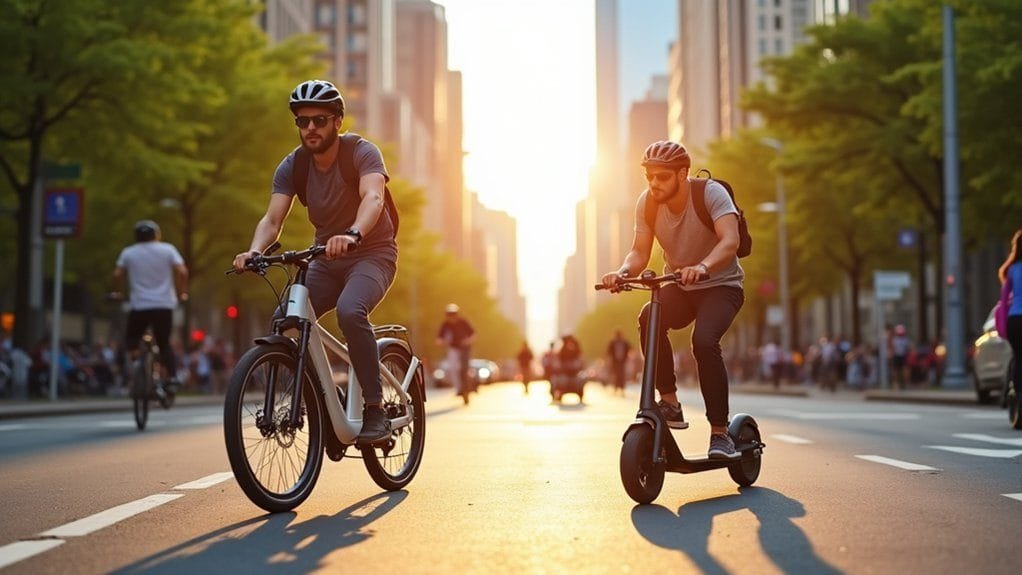
While urban transportation continues to evolve, electric bikes and electric scooters have emerged as compelling alternatives to traditional commuting methods. Electric bikes offer a more reliable ride with a longer range, making them ideal for commuting to work across varying distances. Popular electric bikes typically provide 20-50 miles of travel, contrasting with electric scooters that tend to cover 10-30 miles. Urban commuters increasingly recognize these eco-friendly transportation options as practical solutions to daily transit challenges. E-bikes stand out for their comfort and efficiency, while electric scooters appeal to those prioritizing portability and lower upfront costs. Each option presents unique advantages, with maintenance costs and performance capabilities differing markedly. Your choice ultimately depends on your specific commuting needs, route complexity, and personal preferences for urban mobility.
Technical Performance and Capabilities
Because urban commuters demand reliable and efficient transportation, the technical performance of electric bikes and scooters becomes a critical comparison point. When evaluating speed and range, electric bikes outperform scooters, reaching 20-28 mph with 20-50 miles of range, compared to scooters’ 15-20 mph and 10-30 miles. Larger wheels on e-bikes (around 29 inches) provide a more comfortable riding experience over uneven surfaces, while scooters’ smaller wheels can create a bumpier journey. E-bikes offer greater versatility through pedal-assist technology, enabling a workout while maintaining eco-friendly transportation. Safety is enhanced by e-bikes’ robust braking systems and wheel design, making them more stable across diverse terrain. These technical capabilities position electric bikes as a superior choice for commuters seeking reliable, adaptable modes of transportation.
Portability and Urban Mobility
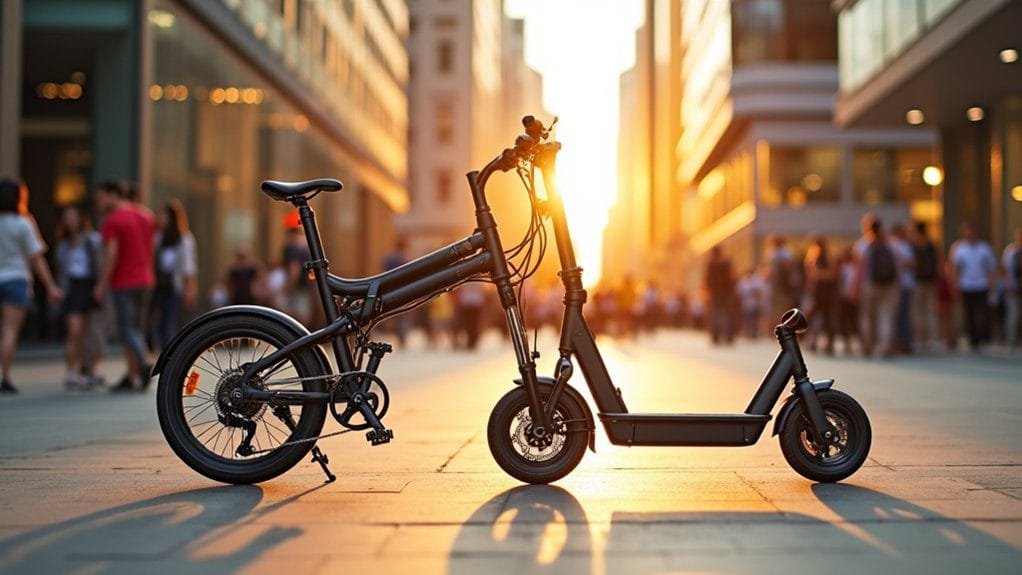
Two key factors define urban mobility for electric transportation: portability and ease of transport. Electric scooters offer unparalleled advantages in this domain, with their lightweight nature and small size enabling seamless urban navigation. At just 22-24 pounds, they’re easily folded and transported, fitting effortlessly into elevators, under desks, and public transit seats—perfect for last-mile transportation. Commuter electric bikes, weighing 40-80 pounds, present a stark contrast, often requiring more storage space and challenging maneuverability.
Your urban mobility strategy hinges on these critical differences. Scooters provide superior portability, allowing you to shift between transportation modes without bulky equipment. Their compact design means you’ll navigate crowded city environments more efficiently than with traditional e-bikes. For commuters prioritizing flexibility and ease of transport, electric scooters emerge as the more pragmatic choice.
Comfort and Ride Quality
When comparing electric bikes and scooters for urban commuting, comfort and ride quality emerge as critical differentiators that greatly impact rider experience. E-bikes offer superior comfort through larger 29-inch wheels, ergonomic seating, and advanced suspension systems, ensuring a smooth ride even on challenging terrain. In contrast, electric scooters with smaller 7-12 inch wheels and minimal suspension provide a less stable and more jarring experience, especially during longer commutes.
The standing position required by scooters can lead to rider fatigue, whereas e-bikes’ seated configuration allows for more relaxed and ergonomic travel. When maneuvering urban landscapes with uneven surfaces, e-bikes’ design provides a more stable ride, making them a more comfortable choice for commuters seeking a reliable and pleasant transportation option.
Cost Considerations and Value
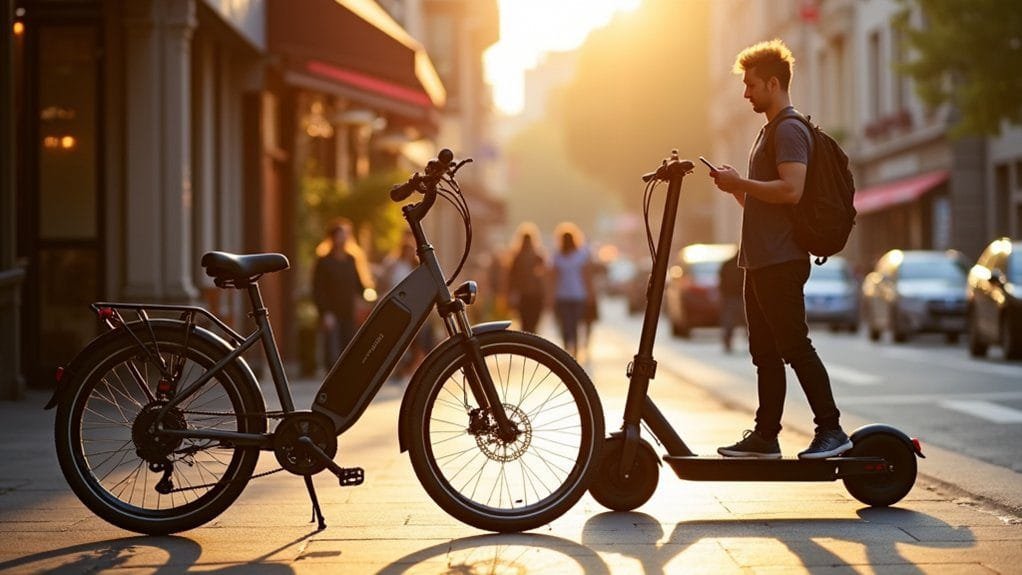
Dollar signs and budget constraints often dictate personal transportation choices, and the financial landscape of electric bikes versus scooters reveals a nuanced economic narrative. You’ll find electric scooters generally offer lower upfront costs, ranging from $350 to $1,400, while e-bikes typically cost $1,500 to $4,000. However, long-term maintenance expenses favor e-bikes due to their superior durability and efficiency. When evaluating total cost of ownership, electric bikes provide better value through longer lifespans and fewer battery replacements. Your commuting needs will ultimately determine the most cost-effective option. While scooters might seem more affordable initially, e-bikes’ versatility, cargo capacity, and suitability for longer commutes can lead to significant savings. Consider not just the price tag, but the thorough financial implications of your personal electric vehicle investment.
Safety and Practical Considerations
While commuters evaluate transportation alternatives, safety emerges as a critical factor distinguishing electric bikes from electric scooters. When reviewing practical considerations for commuting, key safety elements become paramount:
- Design stability: E-bikes offer superior stability with larger wheels and lower center of gravity, reducing fall risks compared to scooters’ standing posture and elevated balance requirements.
- Braking performance: Enhanced braking systems on e-bikes provide more reliable stopping power, critical in urban environments with unpredictable traffic and road conditions.
- Weather resilience: E-bikes demonstrate better handling in diverse weather conditions, maintaining control on wet or uneven surfaces where scooters might struggle.
These safety considerations make e-bikes a more reliable choice for commuters prioritizing personal safety and consistent transportation performance across various urban riding scenarios.
Personal Preference and Lifestyle Fit
How do personal preferences shape your urban mobility choices? When selecting between electric bikes and scooters, your lifestyle greatly influences the decision. Your comfort with riding posture matters: e-bikes offer seated comfort for longer distances, while scooters require standing, which can become fatiguing during extended commutes. Consider your living space and transport needs—scooters are more portable and budget-friendly, ideal for urban dwellers with limited storage, whereas electric bikes provide greater versatility for cargo and varied terrain.
Your specific commuting conditions also play an essential role. If you’ll navigate uneven surfaces, e-bikes’ larger wheels provide smoother changes. Budget constraints further impact your choice, with scooters ranging from $350 to $1,400 and e-bikes typically costing $1,500 to $4,000. Ultimately, your personal preference determines the most suitable urban mobility solution.
Frequently Asked Questions
Should I Get an Ebike or E-Scooter?
You’ll want to weigh your commute’s terrain, budget, and personal preferences. E-bikes offer more comfort and range, while scooters are cheaper and more portable. Consider speed, storage, maintenance, and local regulations before deciding.
Are Electric Scooters a Good Way to Commute?
Like a nimble urban gazelle, you’ll zip through city streets. Electric scooters offer cost-effective, eco-friendly commuting with low maintenance, impressive portability, and efficient last-mile transportation, ideal for short urban trips despite minor safety considerations.
Are Ebikes Worth It for Commuting?
You’ll find e-bikes worth it if you’re seeking a cost-effective, eco-friendly commute with longer range, health benefits, and manageable maintenance. They offer speed advantages, better battery life, and increasingly favorable legal regulations compared to other transport options.
What Are the Disadvantages of Electric Bikes?
You’ll quickly discover e-bikes aren’t just pricey toys, but complex machines with hefty maintenance costs, substantial weight limits, and challenging storage requirements that might make your wallet and patience cry.
Conclusion
While e-bikes offer robust transportation and scooters promise nimble urban navigation, your ideal choice hinges on personal mobility needs. Weigh performance against practicality: e-bikes provide stability and longer ranges, whereas scooters deliver compact convenience. Your commute’s terrain, budget, and lifestyle will ultimately determine the perfect micro-mobility solution, transforming daily transit from mundane transportation to an efficient, personalized journey.