
Stainless steel bottles are safer than plastic, protecting you from harmful chemical leaching like BPA that can disrupt hormonal balance. You’ll reduce health risks with a non-porous, food-grade #304 stainless steel container that prevents bacterial growth and chemical transfer. With superior durability, temperature retention, and 100% recyclability, these bottles offer a healthier alternative to disposable plastics. Curious about the full environmental and health implications?
Key Takeaways
- Stainless steel bottles are safer than plastic bottles because they prevent chemical leaching of harmful compounds like BPA, which can disrupt hormonal balance.
- Plastic water bottles pose significant health risks by potentially transferring toxic chemicals into drinking water, especially when exposed to heat or sunlight.
- Stainless steel’s non-porous surface makes it more hygienic and less likely to harbor bacteria compared to plastic bottles with microscopic cracks and crevices.
- Food-grade stainless steel (#304) maintains liquid purity and does not transfer any potentially harmful substances into beverages during regular use.
- Stainless steel bottles offer superior safety by eliminating the risk of microplastic contamination that can occur with repeated use of plastic water containers.
Understanding the Materials
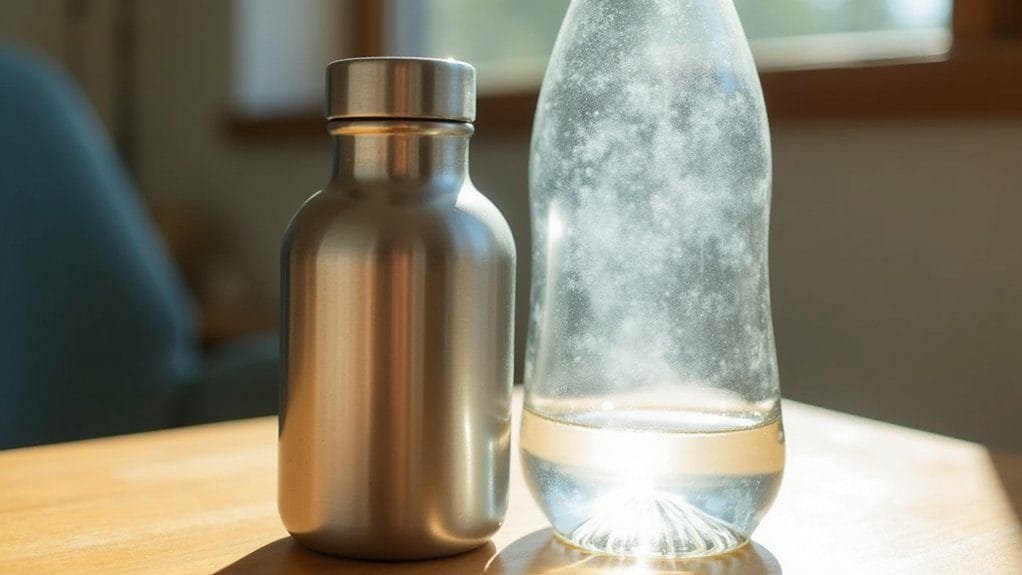
While water containers might seem simple at first glance, the materials they’re made from can greatly impact your health and environmental footprint. When choosing between plastic and stainless steel reusable water bottles, you’ll want to evaluate key factors like chemical leaching and durability. Plastic bottles, though lightweight and inexpensive, can leach harmful chemicals like BPA, BPS, and BPF, raising significant health concerns. In contrast, stainless steel bottles, particularly food-grade #304 varieties, offer a safer alternative that doesn’t transfer chemicals when exposed to heat or sunlight. While disposable water bottles are energy-efficient to produce, their short life cycle creates substantial environmental impacts. Stainless steel’s durability means fewer replacements and less waste, making it a more sustainable choice for conscientious consumers seeking long-term hydration solutions.
Health Risks and Chemical Leaching
Although chemical leaching might seem like an abstract concern, the potential health risks associated with water bottle materials are quite tangible. When you choose a plastic bottle, you’re exposing yourself to potential BPA and similar chemical compounds that can disrupt hormonal balance. Stainless steel offers a safer alternative, with food-grade materials preventing chemical leaching and maintaining liquid purity. Your health depends on understanding these risks: plastic reusable bottles can release harmful substances, especially when exposed to heat or sunlight, while stainless steel remains stable and inert. Regular cleaning is essential for both bottle types, but stainless steel’s non-porous surface makes it easier to sanitize and less likely to harbor bacteria. By selecting a high-quality stainless steel bottle, you’re making a proactive choice for your long-term health.
Environmental Impact and Sustainability
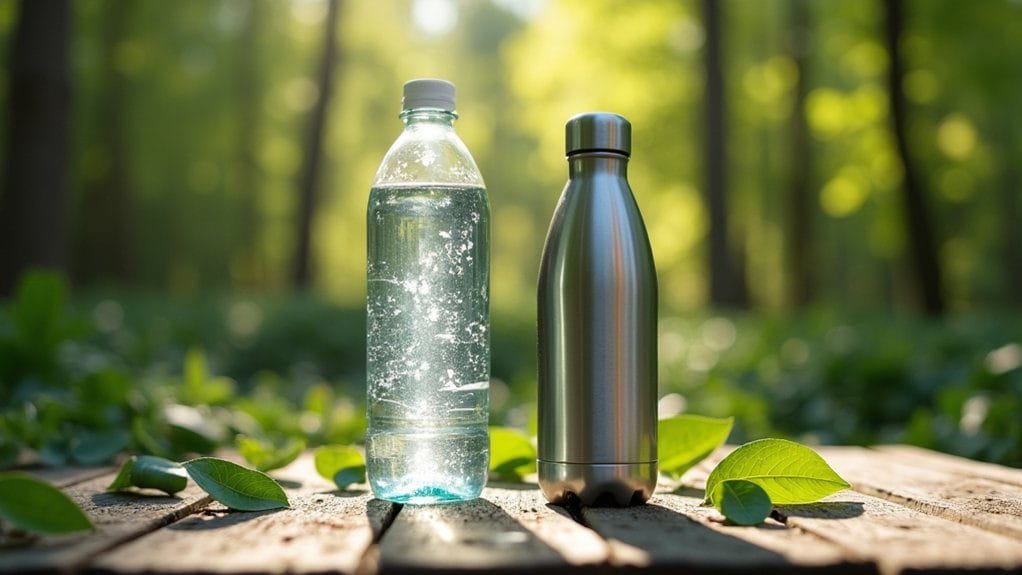
Because environmental sustainability has become a critical global concern, the choice between plastic and stainless steel water bottles represents more than a mere consumer decision—it’s an ecological statement. The environmental impact is stark:
- 60 million plastic bottles are discarded daily in the U.S., considerably contributing to landfill waste and ocean pollution that devastates marine life.
- Stainless steel bottles offer a 100% recyclable alternative, dramatically reducing single-use plastic consumption.
- A single reusable stainless steel bottle can prevent thousands of disposable plastic bottles from entering ecosystems over its lifetime.
Transitioning to stainless steel bottles isn’t just a personal health choice—it’s a tangible step toward mitigating environmental degradation. By selecting BPA-free, food-grade stainless steel options, you’re making a sustainable choice that supports global ecological preservation.
Durability and Longevity
When evaluating water bottle materials, durability emerges as a critical factor that directly influences long-term performance and consumer satisfaction. Stainless steel bottles demonstrate superior durability, withstanding drops and impacts without significant damage, while plastic bottles are prone to shattering or warping under stress. You’ll find that stainless steel’s robust design guarantees a much longer lifespan, often spanning several years compared to plastic bottles requiring frequent replacements.
The longevity of stainless steel bottles becomes evident through their ability to maintain aesthetic appeal and structural integrity over time. Most stainless steel options come with lifetime warranties, signaling manufacturers’ confidence in their product’s durability. By choosing stainless steel, you’re making a sustainable choice that reduces waste and provides better long-term value compared to disposable plastic alternatives.
Temperature Retention and Performance
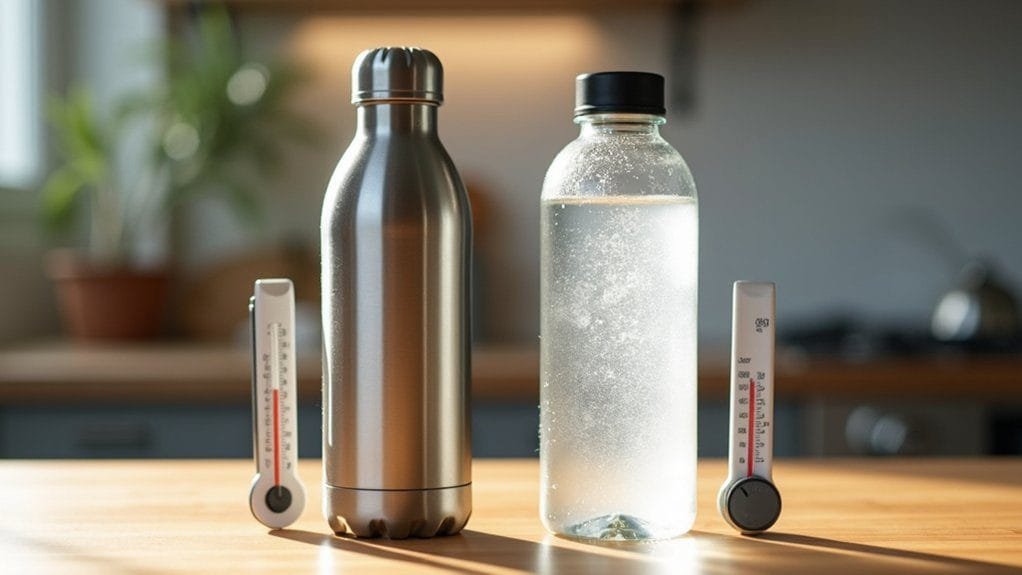
Temperature performance stands as a pivotal differentiator between plastic and stainless steel water bottles, with stainless steel demonstrating markedly superior thermal retention capabilities. When choosing a reusable bottle, you’ll want to take into account these critical performance factors:
Stay hydrated with confidence: stainless steel bottles deliver unmatched thermal performance and superior drinking experience.
- Stainless steel bottles maintain beverage temperature for up to 6 hours (cold) and 12 hours (hot), dramatically outperforming plastic alternatives.
- Unlike plastic bottles that generate condensation and become slippery, stainless steel provides a consistent, dry exterior surface.
- The advanced insulation properties guarantee zero temperature fluctuation, protecting your drink’s original temperature and enhancing overall drinking experience.
These performance characteristics make stainless steel bottles a smarter choice for health-conscious consumers prioritizing safety, sustainability, and long-term bottle performance. The material’s superior thermal management transforms your hydration routine.
Cost Comparison and Long-Term Value
Beyond superior thermal performance, stainless steel water bottles present a compelling economic narrative that extends far beyond their initial purchase price. When comparing cost between stainless steel and plastic water bottles, you’ll discover significant long-term value in choosing durability over short-term savings. A high-quality stainless steel bottle can save you approximately $200 over five years by eliminating single-use plastic purchases. While plastic bottles seem cheaper upfront, their frequent replacements create hidden costs that accumulate rapidly. Lifetime warranties on stainless steel bottles further enhance their investment potential, making them a more economical choice. In addition, you’re not just saving money—you’re reducing environmental impact by minimizing plastic waste. The cost comparison clearly demonstrates that stainless steel bottles offer superior economic and ecological benefits.
Frequently Asked Questions
Are Stainless Steel Water Bottles Healthier Than Plastic?
You’ll find stainless steel bottles healthier due to their chemical-free composition, superior durability, and environmental friendliness. They offer better taste preservation, easier cleaning, and reduced health risks compared to plastic alternatives.
What Is the Safest Material for a Water Bottle?
Fragile glass meets robust stainless steel: you’ll find stainless steel #304 trumps plastic. It’s BPA-free, environmentally friendly, durable, and maintains taste—balancing health, insulation, and practicality without compromising your hydration needs.
Is Stainless Steel Less Toxic Than Plastic?
You’ll find stainless steel less toxic than plastic, with lower chemical leaching, minimal BPA concerns, superior durability, and better environmental impact. Its heat retention and taste preservation make it a safer, more eco-friendly choice for daily hydration.
What Are the Disadvantages of a Stainless Steel Water Bottle?
Like a heavyweight boxer with pros and cons, stainless steel bottles can weigh you down, dent easily, cost more, require careful maintenance, and potentially lack effective insulation compared to other water bottle options.
Which Is the Safer Option for Insulated Water Bottles: Plastic or Stainless Steel?
When choosing between plastic and stainless steel for your insulated bottle showdown, both materials have their pros and cons. Plastic bottles are lightweight and less expensive, but can leach chemicals. Stainless steel, while heavier and pricier, offers durability and better insulation, making it a safer long-term choice for hydration.
Conclusion
You’ve weighed the pros and cons of plastic and stainless steel water bottles. Like a town crier of health consciousness, you now understand that stainless steel emerges as the superior choice. It’s safer, more durable, and environmentally friendly. While plastic bottles pose potential chemical risks, stainless steel offers a reliable, sustainable solution. Your informed decision today can protect both your health and the planet’s future.