
When choosing between indoor and outdoor security cameras, consider your specific needs. Indoor cameras monitor activities inside, offering high-resolution video and features like two-way audio. Outdoor cameras, built for tough conditions, provide night vision and high IP ratings to withstand weather. Evaluate your environment to determine which type suits you best; indoor cameras may suffice for internal security, while outdoor models are essential for perimeter protection. Explore more about how to select the right system for your security.
Key Takeaways
- Indoor security cameras are ideal for monitoring activities inside buildings, while outdoor cameras focus on surveillance in external environments.
- Consider high IP ratings in outdoor cameras for protection against harsh weather, unlike indoor models which are designed for aesthetic integration.
- Evaluate the need for night vision capabilities in outdoor cameras to capture clear footage during nighttime or low-light conditions.
- Indoor cameras often feature two-way audio and advanced motion detection, enhancing interaction and alert capabilities within the home.
- Combining both indoor and outdoor cameras provides comprehensive security coverage for your property, addressing various monitoring needs.
Understanding the Basics of Security Cameras
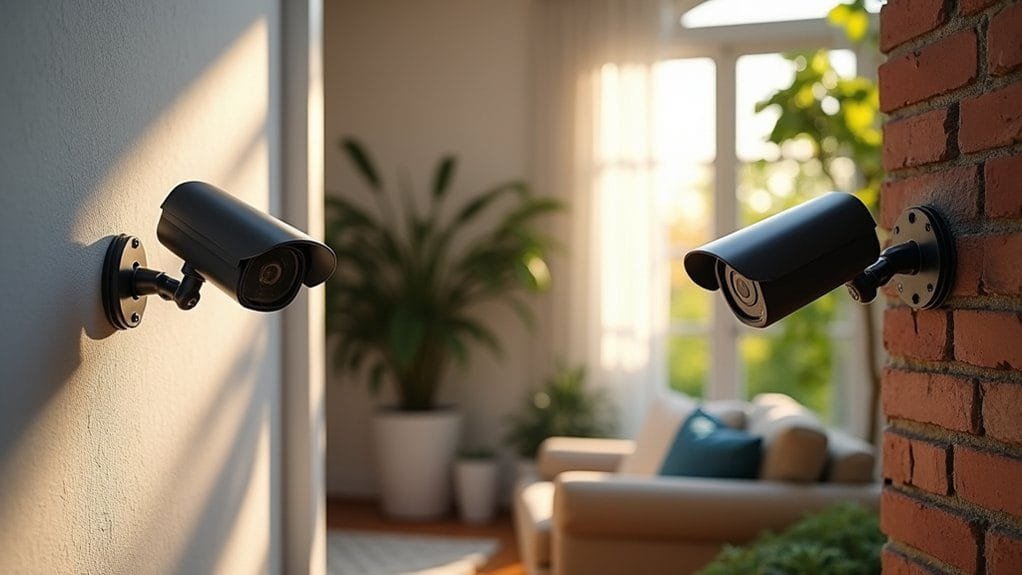
When considering security cameras for your property, it is crucial to understand the fundamental differences between indoor and outdoor models. Indoor security cameras primarily focus on monitoring activities within a building, often blending seamlessly with home decor and providing high-resolution video, typically at 1080p, for clear footage. In contrast, outdoor security cameras are engineered for resilience against harsh weather conditions, featuring high IP ratings like IP65 or IP66 for protection against rain and dust. Many outdoor models include night vision capabilities for effective surveillance in low light, while both types may offer advanced motion detection and, in the case of indoor cameras, two-way audio for enhanced communication. Knowing these distinctions aids in selecting the right cameras for your specific surveillance purposes.
Benefits of Indoor Security Cameras
Indoor security cameras provide numerous benefits that greatly enhance home surveillance. Their compact design allows them to blend seamlessly with your decor, making them less obtrusive in your living spaces. Here are three key advantages:
- High-Resolution Video: Many indoor cameras offer 1080p video, ensuring clear detail capture for effective monitoring activities.
- Two-Way Audio: This feature lets you communicate with family members or pets remotely, adding convenience and interaction.
- Motion Detection: Advanced motion detection capabilities provide instant alerts for unusual activities, considerably enhancing home security.
Additionally, these cameras typically require minimal wiring, making for an affordable setup and easier installation compared to outdoor models. With these features, indoor cameras are essential tools for effective home monitoring and security.
Best Practices for Indoor CCTV Installations
Effective indoor CCTV installations hinge on strategic camera placement and thoughtful considerations. Prioritize positioning your indoor CCTV cameras at key entry points and in high-traffic areas to enhance security effectiveness. Be mindful of privacy; avoid sensitive spaces like bedrooms and bathrooms, and utilize zone privacy settings to restrict recordings in these areas. Regular maintenance checks are essential to guarantee cameras are unobstructed and provide ideal visibility. Additionally, securing your network is critical—use strong passwords and keep your software updated to prevent unauthorized access. Display clear signage indicating the presence of CCTV surveillance to inform visitors and comply with legal requirements, reinforcing both transparency and security within your space.
Outdoor Security Camera Advantages
While security needs may vary between properties, outdoor security cameras offer distinct advantages that enhance overall safety and surveillance. Here are three key benefits:
- High IP Rating: Designed with high Ingress Protection ratings, outdoor security cameras withstand rain, dust, and adverse weather conditions without losing functionality.
- Night Vision Technology: Equipped with advanced night vision capabilities, these cameras capture clear footage in low-light conditions, ensuring visibility up to 98 feet in total darkness.
- Robust Construction: With weatherproof features and resistance to vandalism, outdoor cameras provide reliable long-term surveillance, acting as a strong deterrent against criminal activity while enabling continuous surveillance to monitor suspicious movements around your property.
Investing in outdoor security cameras noticeably enhances your property’s security posture, giving you peace of mind.
Best Practices for Outdoor CCTV Installations
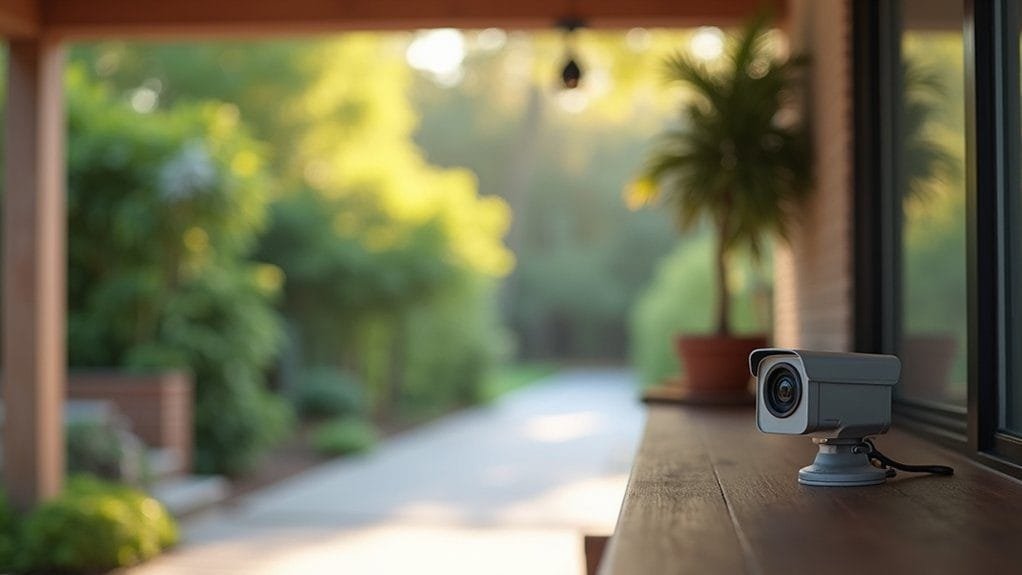
When installing outdoor CCTV cameras, strategic placement is essential to guarantee thorough surveillance coverage. Position outdoor cameras to cover all exterior angles, focusing on vulnerable areas like entry points and driveways. Confirm your cameras have high weatherproof ratings, such as Ingress Protection (IP) ratings of IP65 or IP66, to withstand harsh weather conditions. Incorporate adequate lighting to enhance visibility during day and night monitoring, guaranteeing clear footage in low-light scenarios. Regular maintenance checks are vital; inspect cameras for obstructions and functionality. Finally, confirm compliance with local laws regarding outdoor surveillance. Displaying clear signage about the cameras not only meets legal requirements but also informs the public about your security measures, reinforcing your overall security needs.
Choosing the Right Camera Types for Your Needs
Choosing the right camera types for your security needs involves evaluating several key factors. To guarantee you make an informed decision, consider the following:
Evaluating key factors is essential for selecting the right security cameras to meet your needs.
- Camera Environment: Indoor and outdoor cameras serve different purposes. Outdoor cameras are designed to withstand harsh weather conditions and typically have higher IP ratings.
- Night Vision Capabilities: Assess whether you need cameras with infrared technology for clear visibility at night, especially for monitoring entry points.
- Special Features: Determine if you require features like two-way audio or integration with home automation systems to enhance your security setup.
Making Informed Decisions for Your Security System
To make informed decisions about your security system, it’s essential to weigh the specific needs of your environment against the capabilities of various camera types. Indoor cameras typically offer discreet design and ease of installation, making them ideal for monitoring activities in high-traffic areas. In contrast, outdoor cameras require weatherproofing and durable materials to handle harsh conditions, often including advanced features like night vision for effective surveillance at night. Position outdoor cameras to cover entry points and driveways, while indoor cameras can be placed strategically throughout your home. A thorough security system benefits from combining both types, ensuring complete monitoring and protection of your property. Consider costs as well, with indoor cameras averaging $300 and outdoor models around $400 each.
Frequently Asked Questions
Is It Better to Have Indoor or Outdoor Security Cameras?
When deciding between indoor and outdoor security cameras, weigh indoor benefits like cost and privacy against outdoor advantages such as durability and nighttime performance. Consider installation tips, visibility factors, and design aesthetics for ideal monitoring options.
Can I Use Indoor Security Camera Outdoor?
You can’t effectively use an indoor camera outdoors. Its lack of weather resistance features and durability for environmental elements risks damage, compromising visibility and connectivity, while outdoor cameras guarantee ideal surveillance and motion detection in varying lighting conditions.
Is It Better to Have Wired or Wireless Security Cameras?
When deciding between wired and wireless security cameras, consider wired advantages like superior image quality and reliable power sources versus wireless flexibility and installation ease. Evaluate cost comparison, maintenance needs, signal range, and data storage for ideal security effectiveness.
How Many Security Cameras Do I Need Around My House?
To determine how many security cameras you need, assess coverage areas, identify blind spots, and consider property size. Prioritize camera placement strategy, type selection, and budget planning while addressing privacy concerns and installation difficulties.
Which Type of Security Camera Should I Choose for Outdoor Use: Indoor, Outdoor, or a Specific Brand Like Ring or Arlo?
When deciding on the best security camera for outdoor use, consider durability and features. A “ring or arlo comparison” reveals significant differences in design, functionality, and integration with smart home systems. Choose a camera that withstands weather conditions and meets your surveillance needs for optimal protection.
Conclusion
When deciding between indoor and outdoor security cameras, consider your unique needs. Indoor cameras offer peace of mind for monitoring your family and belongings, while outdoor cameras provide a strong defense against intruders. Both play crucial roles in your security system, but understanding their specific benefits and installation practices can enhance their effectiveness. By weighing these factors, you can create a balanced surveillance strategy that protects your home from every angle, ensuring safety both inside and out.