
When choosing between ceramic and titanium hair straighteners, it all comes down to your hair type and styling needs. Ceramic straighteners are ideal for fine, damaged, or frizz-prone hair, as they provide gentle, even heat and enhance moisture retention. On the other hand, titanium straighteners heat up quickly and suit thick, coarse, or curly hair, offering faster styling with fewer passes. Want to discover more details about the best fit for you? Keep exploring!
Key Takeaways
- Ceramic straighteners are ideal for fine or damaged hair due to their gentle, even heat distribution that minimizes frizz and damage.
- Titanium straighteners heat up quickly and are best for thick or coarse hair, allowing for efficient styling with fewer passes.
- Ceramic plates retain moisture better, making them suitable for maintaining hair health, while titanium can cause heat damage to fragile hair types.
- Titanium straighteners are more durable and long-lasting, making them a better choice for frequent users compared to ceramic models.
- The choice between ceramic and titanium should align with hair type and styling needs to ensure optimal results and minimize damage.
What Are Ceramic Hair Straighteners?
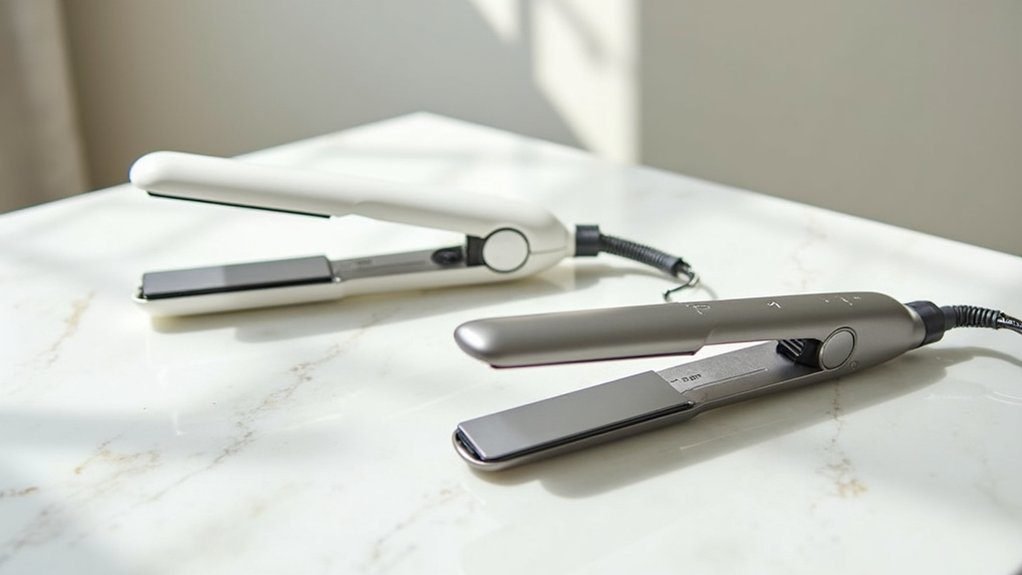
When it comes to achieving sleek, smooth hair, ceramic hair straighteners are a popular choice for many. These tools utilize ceramic plates that guarantee even heat distribution, eliminating hair-damaging hotspots. The gentle heat produced is perfect for fine or damaged hair, as it locks in moisture and reduces frizz while enhancing shine. Many ceramic straighteners also incorporate ionic technology, which smooths hair cuticles and maintains a healthy appearance. Although they may take a bit longer to heat up compared to other types, they offer safe styling without the risk of excessive heat damage. Models like the CHI Original Ceramic Hair Straightening Flat Iron and the BaByliss Porcelain Ceramic 1 are well-regarded for their effectiveness and gentle styling capabilities.
What Are Titanium Hair Straighteners?
Titanium hair straighteners are a game-changer for those seeking quick and efficient styling. Equipped with high-grade titanium plates, these tools heat up rapidly, reaching high temperatures in seconds. This means you can achieve sleek, polished results with fewer passes, making them particularly effective for thick, coarse, or curly hair. The consistent heat distribution guarantees that every section of your hair gets the same treatment, reducing styling time considerably. Plus, their lightweight design enhances comfort during prolonged use, which many professionals appreciate. However, it’s important to exercise caution; the intense heat can damage fine or fragile hair types if not handled properly. With some experience, you’ll master the art of using titanium straighteners for stunning looks!
Key Differences Between Ceramic and Titanium Hair Straighteners
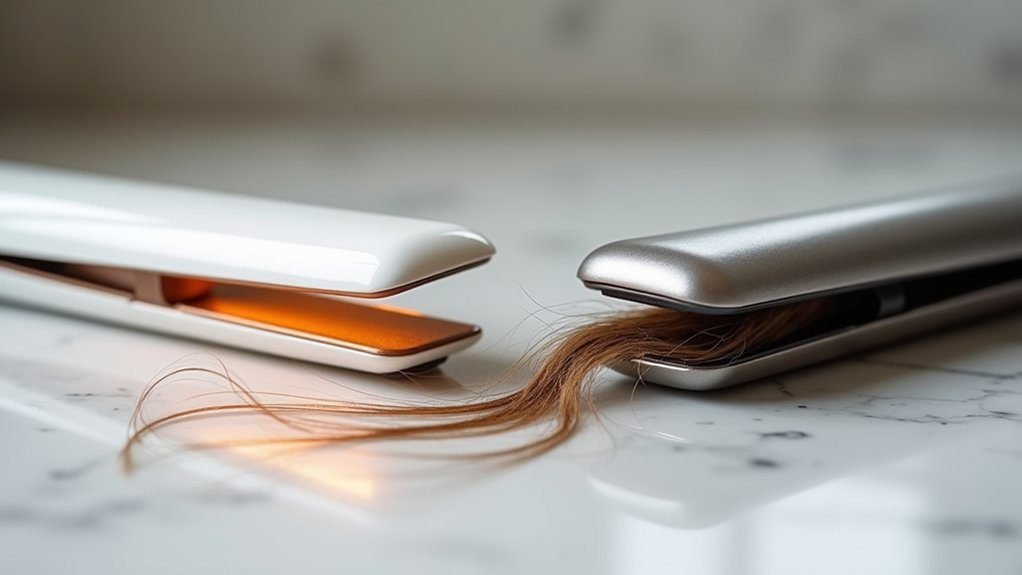
While both ceramic and titanium hair straighteners have their unique advantages, understanding their key differences can help you choose the right tool for your hair type and styling needs. Ceramic straighteners are ideal for fine or damaged hair, heating from the inside out to lock in moisture and reduce over-drying. In contrast, titanium plates heat from the surface, offering faster straightening times, especially beneficial for coarse hair that requires high heat. Titanium straighteners heat up nearly instantly, making them preferred for professional use, while ceramic options take longer but distribute heat more evenly. Additionally, titanium is more durable, providing a long-term investment for frequent users. Ultimately, your choice should align with your specific hair type and styling preferences.
Heat Distribution: Ceramic vs. Titanium
Understanding heat distribution is essential for achieving the best results with your hair straightener. Ceramic plates provide even heat distribution, heating hair from the inside out and minimizing hotspots that can damage your locks. This is especially beneficial for fine or damaged hair, as the infrared technology enhances moisture retention and reduces frizz. On the other hand, titanium plates heat up almost instantly and distribute heat evenly from the surface. They’re great for quickly styling coarse hair, reaching higher temperatures rapidly, which means fewer passes are needed. However, this intense heat can be more damaging to finer strands. Ultimately, choosing between ceramic and titanium depends on your hair type and styling needs.
Performance Comparison: Ceramic and Titanium
When you compare the performance of ceramic and titanium hair straighteners, you’ll notice distinct differences that cater to different styling needs. Ceramic flat irons heat hair from the inside out, ideal for fine or damaged hair, while titanium flat irons heat from the surface, making them perfect for thick hair. Titanium straighteners heat up nearly instantly, offering quick styling, whereas ceramic options take longer to reach peak temperatures. Furthermore, titanium often achieves smooth results with fewer passes, enhancing styling efficiency. However, while ceramic is gentler on hair, titanium can risk overheating if not used correctly.
| Feature | Ceramic Flat Irons | Titanium Flat Irons |
|---|---|---|
| Heat-Up Time | Slower | Nearly instant |
| Best for Hair Type | Fine or damaged hair | Thick or coarse hair |
| Styling Efficiency | More passes required | Fewer passes needed |
| Hair Health Impact | Less damaging | Risk of overheating |
Durability and Lifespan of Ceramic vs. Titanium Straighteners
Choosing between ceramic and titanium hair straighteners also involves considering their durability and lifespan. Titanium hair straighteners are renowned for their robust nature, often outlasting ceramic models that may wear down over time. The coatings on ceramic straighteners can chip, leading to reduced performance and a shorter lifespan, especially with frequent use. While both types can last several years with proper maintenance, titanium straighteners generally provide better longevity, making them a smart investment for regular users. Regular maintenance, such as cleaning the plates and avoiding excessive force during styling, can extend the lifespan of both options. Ultimately, if durability and consistent performance are your priorities, titanium straighteners may be the superior choice for long-term use.
Suitability for Different Hair Types
Selecting the right hair straightener can make a significant difference in how your hair looks and feels, especially when considering your specific hair type. If you have fine, damaged, or frizz-prone hair, a ceramic hair straightener is suitable for you. It heats evenly and minimizes damage, making it perfect for delicate textures. Aim for temperatures between 325 to 375 degrees for safe styling. On the other hand, if your hair is coarse, thick, or stubborn, a titanium hair straightener is your best bet. It heats up quickly and maintains high temperatures, allowing you to style effectively with fewer passes. Choosing based on your hair type guarantees healthier results and a polished finish every time.
Pros and Cons of Ceramic Hair Straighteners
Ceramic hair straighteners come with a variety of benefits that make them a popular choice among users. They provide excellent heat distribution, preventing damaging hotspots and ensuring consistent styling results. Ideal for fine, fragile, or damaged hair, they gently lock in moisture and reduce frizz. However, they may require more passes for thick or coarse hair, which can be less efficient. Their ionic technology smooths cuticles and enhances shine, cutting styling time in half compared to traditional methods.
| Pros | Cons | Best For |
|---|---|---|
| Even heat distribution | Less efficient on coarse hair | Fine or damaged hair |
| Locks in moisture | Requires more passes | Everyday use |
| Reduces frizz with negative ions | Takes longer to heat up | Maintaining hair health |
Pros and Cons of Titanium Hair Straighteners
While considering the best hair straightener for your needs, titanium options stand out for their impressive performance. Here are some pros and cons to help you decide:
- High Heat: Titanium hair straighteners heat up quickly, making them perfect for thick or coarse hair.
- Consistent Heat Distribution: They offer fast styling with fewer passes, saving you time.
- Lightweight and Durable: Their design is easy to handle and built to last, ideal for professionals.
- Potential Damage: However, the intense heat may not be suitable for fine or damaged hair types.
Making the Right Choice: When to Choose Ceramic or Titanium
How do you know when to choose a ceramic or titanium hair straightener? If you have fine, damaged, or frizz-prone hair, go for ceramic. Its gentle heat distribution locks in moisture, minimizing damage and enhancing your hair’s health. On the other hand, if your hair is thick or coarse, titanium is your best bet. It heats up quickly and distributes heat evenly, allowing for faster styling with fewer passes—perfect for busy days. Just remember, titanium’s intense heat can be harsh on fine hair, so always use heat protection. Ultimately, your hair type and desired styling outcomes should guide your choice between ceramic and titanium for the best results.
Frequently Asked Questions
Which Is Better for Straightening Hair, Ceramic or Titanium?
When deciding which straightener’s better, consider your hair texture compatibility, like ceramic heat distribution for fine hair or titanium durability for coarse types. Check user reviews, styling time efficiency, price comparison, and maintenance requirements before choosing.
What Straightener Is Healthiest for Your Hair?
Ironically, you’d think the hottest tool is the healthiest! For ideal hair health, choose a straightener that promotes moisture retention and minimizes heat damage. Always consider your hair type and use proper heat protection with styling techniques.
What Material Is Best for Hair Straighteners?
When choosing a hair straightener, consider material durability, heat distribution, and hair type compatibility. Weigh pricing comparison against styling versatility and temperature control, as lighter options may offer better maneuverability without sacrificing performance.
Is Ceramic or Titanium Better for Curling Hair?
When curling hair, think of it as painting a masterpiece. For fine hair, ceramic’s gentler heat settings preserve your style’s integrity, while titanium suits thicker types. Always consider user experiences for the best product recommendations and styling tips!
Which Hair Straightener Material is Better for Fine Hair: Ceramic or Titanium?
When choosing the best straightener for fine hair, the ghd and babyliss hair straightener comparison reveals key differences. Ceramic plates distribute heat evenly, reducing the risk of damage. In contrast, titanium offers faster heating but can be harsh. For fine hair, ceramic is generally the safer choice.
Conclusion
In the battle of ceramic vs. titanium hair straighteners, the best choice really boils down to your hair type and styling needs. If you’ve got fine or damaged hair, ceramic might be your best bet for gentle heat. On the other hand, if you’re looking for quick results on thick or coarse hair, titanium is your golden ticket. Ultimately, it’s about finding the right tool that fits your hair like a glove, ensuring you get that sleek look you desire.