
When choosing between projectors and TVs for your home theater, consider your specific needs. Projectors offer massive 100+ inch screens at lower costs, ideal for cinematic experiences and gaming. However, TVs excel in picture quality, color accuracy, and performance in varied lighting. Your decision hinges on room dynamics, budget, and intended use. The nuanced comparison reveals deeper insights into which technology will transform your entertainment space.
Key Takeaways
- Projectors offer larger screen sizes up to 100+ inches, providing a cinema-like experience at a lower cost per inch compared to TVs.
- TVs deliver superior picture quality with better color accuracy, brightness, and HDR performance, especially in well-lit room environments.
- Projector setups require darker rooms and additional equipment like screens, while TVs function effectively in various lighting conditions.
- Budget-conscious home theater enthusiasts can achieve massive displays with projectors, making them ideal for immersive movie and gaming experiences.
- The best choice depends on specific use cases: TVs for everyday viewing and precise visuals, projectors for large-scale entertainment and flexibility.
Screen Size Showdown: TV vs. Projector Dimensions
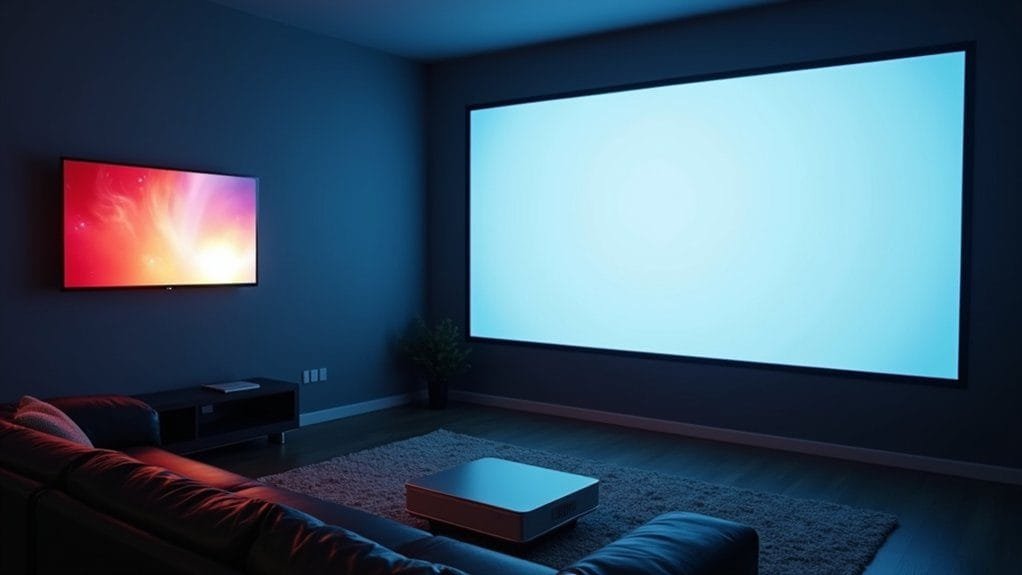
When comparing screen dimensions in home theater setups, projectors definitively outperform traditional TVs in scale and immersion. While TVs typically max out around 85 inches, projectors can easily deliver screen sizes exceeding 100 inches, creating a genuinely cinematic experience. You’ll find that affordable projectors offer a more expansive viewing area at a lower cost per inch compared to large TVs. The flexibility of projector setups allows you to customize your viewing experience based on room space, adjusting screen dimensions with ease. A prime 4K projector positioned at 10 feet can transform your wall into an immersive theater-like display, providing a notably more engaging visual environment than standard television screens. This adaptability makes projectors the superior choice for home theater enthusiasts seeking a truly large, dynamic viewing experience.
Picture Quality: Brightness, Color, and HDR Performance
While screen size offers projectors a clear advantage, picture quality presents a more nuanced battleground where TVs currently hold considerable ground.
When evaluating picture quality, consider these critical factors:
- Brightness and ambient light greatly impact viewing experience, with OLED TVs maintaining superior image quality in well-lit environments
- Color accuracy and rich colors are consistently more precise on TVs, rendering more detailed and vibrant visual representations
- HDR performance remains challenging for most projectors, with higher-end models demanding premium prices to approach TV-level color reproduction
Modern home theater enthusiasts must weigh these technical considerations carefully. TVs excel in delivering consistent color accuracy and brightness across diverse lighting conditions, while projectors struggle with maintaining image quality. The large screen potential of projectors becomes less compelling when compromised by reduced HDR performance and color fidelity.
Room Considerations: Lighting, Space, and Flexibility
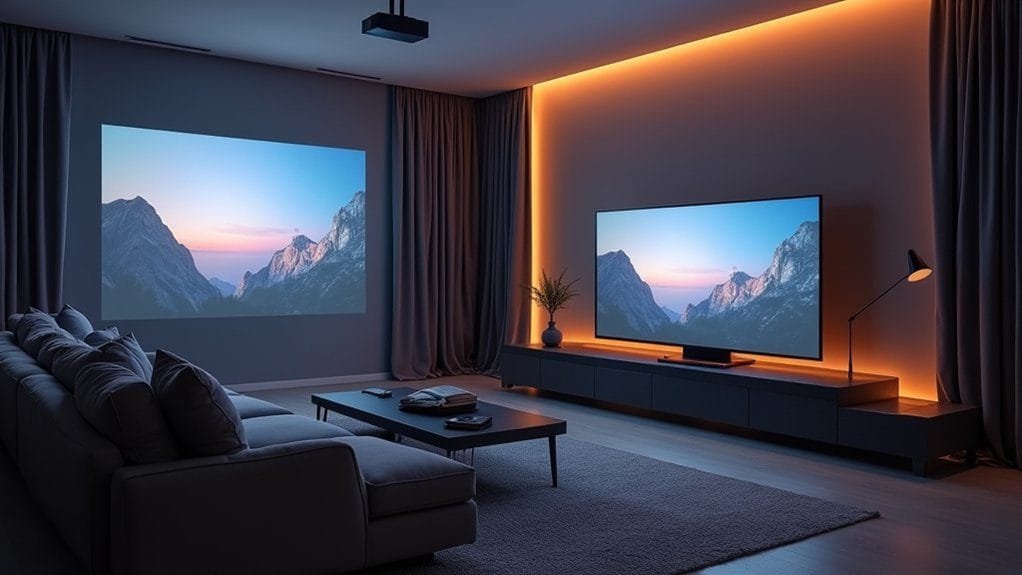
Despite the impressive screen size potential of projectors, home theater enthusiasts must carefully evaluate room-specific dynamics that dramatically influence display performance. Lighting emerges as a critical factor, with projectors demanding dark room environments to maintain ideal contrast and image clarity. While TVs deliver bright images that tolerate varied lighting conditions, projectors struggle with ambient light, potentially degrading visual quality.
Space and flexibility become paramount considerations. Projectors offer unprecedented adaptability, enabling you to transform any blank wall into a larger screen and easily stow equipment when not in use. Conversely, TVs require permanent mounting or dedicated stands, restricting placement options. Your home theater setup’s success hinges on understanding these spatial constraints and selecting a display technology that harmonizes with your specific room characteristics and viewing preferences.
Budget Breakdown: Cost per Inch and Long-Term Value
Dollar signs often tell a compelling story in home theater equipment comparisons, and projectors emerge as the cost-effective champion when analyzing screen size versus price. Consider these budget insights:
- Projectors offer a lower cost per inch, with larger screen options (up to 120 inches) available at a fraction of an 86-inch TV’s price
- The initial investment might be modest, but factor in potential additional costs for screens and sound systems
- Long-term value shines through immersive viewing experiences that maximize screen size without maximal financial strain
As technology improves, projectors become increasingly budget-friendly. They deliver a cinematic experience that traditional TVs can’t match, making them an analytically sound choice for those seeking expansive visual environments without exhausting their financial resources. The value proposition becomes crystal clear: more screen, less spend.
Use Case Scenarios: Gaming, Movies, and Everyday Viewing
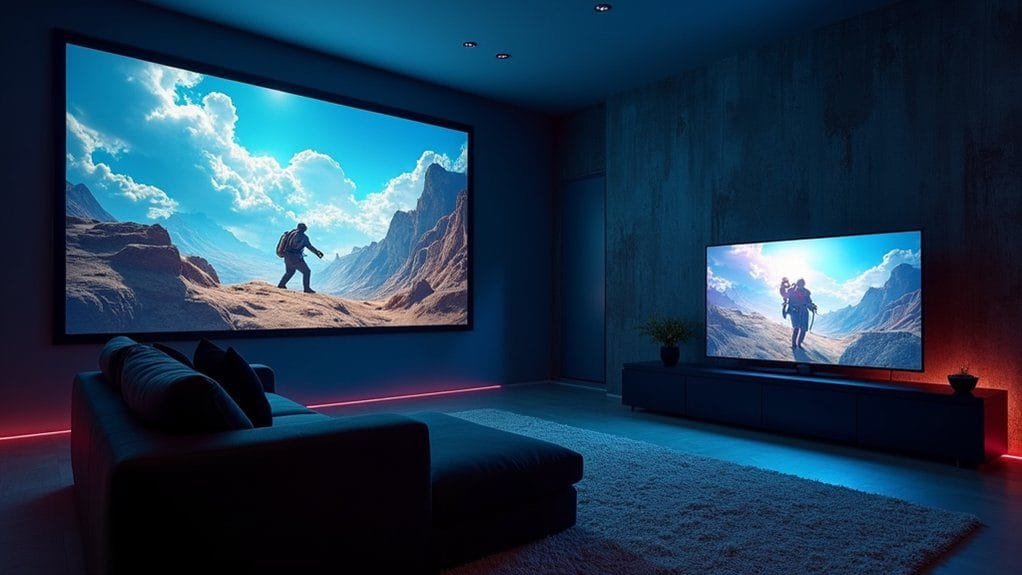
As home entertainment technologies evolve, the choice between projectors and TVs becomes increasingly nuanced across different use cases. For gaming, projectors like the BenQ X3000i deliver an immersive experience with large screens and low input lag, surpassing traditional TV limitations. Movie enthusiasts will appreciate projection quality that creates cinema-scale displays exceeding 100 inches, dramatically enhancing visual engagement. Everyday viewing scenarios, however, typically favor TVs due to superior brightness and color accuracy in varied lighting conditions.
Your home theater setup should consider each technology’s strengths: projectors offer remarkable flexibility and dramatic screen sizes, while TVs provide consistent performance. Ultimately, your selection depends on specific usage – whether you’re seeking intense gaming sessions, cinematic movie experiences, or reliable daily entertainment.
Frequently Asked Questions
Is Watching on a Projector Better Than TV?
You’ll find projectors excel in screen size and immersion, but they’re less practical due to image quality challenges in bright rooms, installation complexity, and maintenance needs compared to TVs’ consistent performance and ease of use.
What Are the Disadvantages of Projectors?
You’ll face challenges with projectors: poor image quality in bright rooms, high maintenance needs, expensive bulb replacements, mediocre sound, complex installation, limited color accuracy, and precise viewing distance requirements that compromise portability and overall viewing experience.
Why Don’t People Use Projectors Instead of TVS?
Like a mirage fading in bright light, projectors lose their charm due to installation complexity, poor ambient light performance, maintenance needs, and inferior image quality compared to TVs’ crisp, convenient viewing experience.
What Lasts Longer, a TV or a Projector?
You’ll find TVs typically outlast projectors, with LED/OLED screens lasting 7-10 years, while projectors average 3-5 years. Maintenance costs, technology advancements, and usage frequency greatly impact your display’s lifespan and overall user experience.
Which Is Better for Home Theater: Projectors or TVs for Gaming?
When setting up a home theater for gaming, choosing between a projector and a TV can be challenging. Both offer unique advantages, especially when comparing epson and benq projectors. Projectors deliver larger images for immersive experiences, while TVs provide superior brightness and refresh rates for competitive gaming scenarios.
Conclusion
When you’re choosing between a projector and TV, it’s like selecting a telegraph in the age of smartphones—each technology has its strengths. Your decision hinges on personal preferences, room dynamics, and viewing habits. Projectors offer massive screens and immersive experiences, while TVs provide consistent quality and easier setup. Ultimately, your ideal home theater solution depends on balancing performance, budget, and spatial constraints.