
When choosing between hiking boots and trail runners for backpacking, consider your terrain, body type, and hiking pace. Hiking boots provide stability and support for rugged trails, making them ideal for heavier individuals or those with past injuries. In contrast, trail runners are lighter and promote quicker movements over smoother paths. Each option has its advantages, and understanding these can enhance your hiking experience. Let’s explore more factors that influence this important decision.
Key Takeaways
- Hiking boots provide superior stability and support on rugged terrains, making them ideal for challenging backpacking trails.
- Trail runners are lighter, offering improved speed and agility for long-distance backpacking on smoother paths.
- Heavier individuals may prefer hiking boots for added support, while lighter individuals might opt for trail runners to avoid bulk.
- Hiking boots excel in traction on rocky surfaces, while trail runners may struggle in unstable conditions despite their lightweight design.
- Comfort and fit are crucial, with hiking boots often requiring break-in time, whereas trail runners typically provide immediate comfort.
Understanding the Terrain: Choosing the Right Footwear
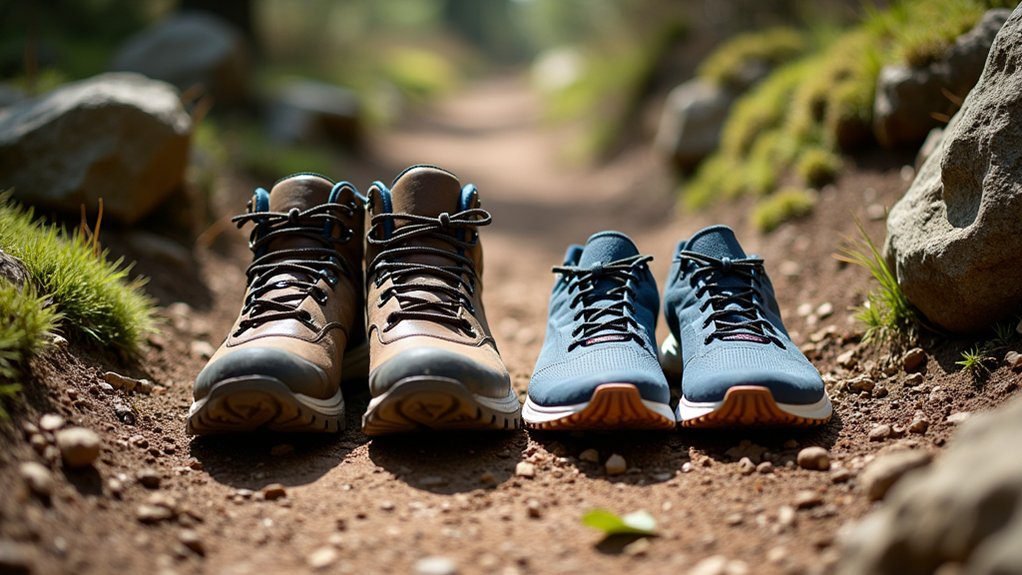
When you’re selecting footwear for backpacking, understanding the terrain you’ll encounter is crucial. Rugged trails with rocks and uneven surfaces demand the stability and support of hiking boots. These boots feature thick, durable soles and robust lugs, providing superior traction on loose soil and challenging terrains. Conversely, if you’re traversing smoother, well-maintained paths, trail runners might be more appropriate. They’re lighter and more flexible but have less aggressive tread patterns, which can compromise grip on technical trails. In wet or cold environments, waterproof hiking boots offer enhanced moisture protection, while trail runners may require waterproof socks or gaiters for dryness. Ultimately, your choice should reflect the specific terrain to guarantee comfort and safety throughout your hike.
The Role of Body Type in Footwear Selection
Choosing the right footwear for backpacking isn’t just about terrain; your body type plays a significant role in this decision. If you have a heavier body type or carry a heavy pack, hiking boots offer the support and stability necessary to prevent foot fatigue and injuries. Conversely, if you’re lighter with strong legs and joints, trail runners might suit you better, providing adequate support without the bulk. Consider any past injuries as well; those with existing foot or joint issues generally benefit from the extra support of hiking boots. Remember, your personal comfort and body mechanics greatly influence which footwear you should choose, as different body types experience varying levels of comfort and support from hiking boots versus trail runners.
Hiking Pace: How Speed Influences Your Choice
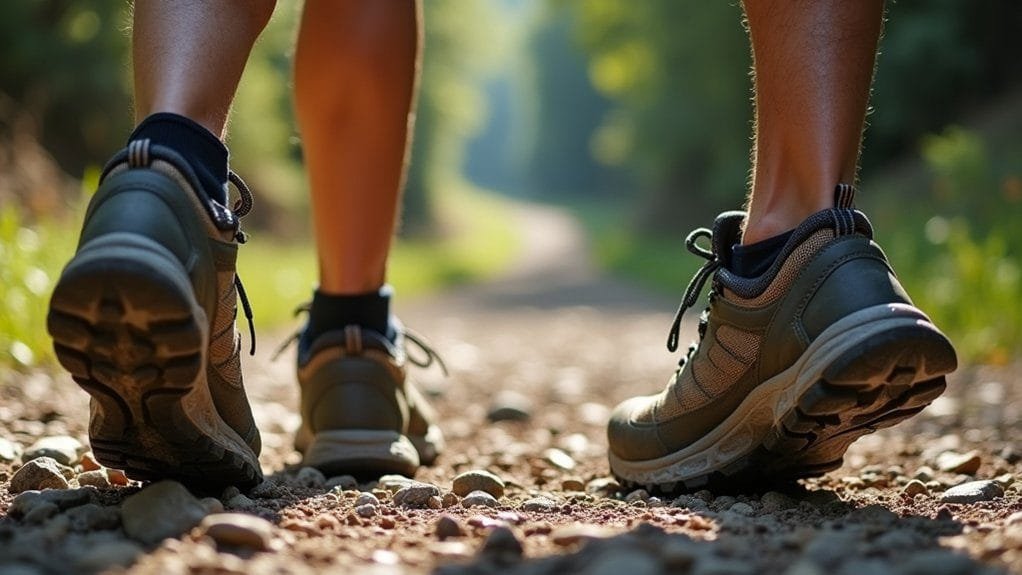
As you plan your backpacking trip, your hiking pace will greatly impact your footwear selection. If you’re aiming for a faster hiking pace, trail runners are often the better choice. Their lightweight design and flexibility facilitate quicker movements, allowing you to cover long distances more efficiently. Thru-hikers, who typically prioritize speed and mileage, frequently opt for trail runners to minimize the weight difference compared to hiking boots. Conversely, if you’re hiking at a slower pace, hiking boots can offer additional stability and support. However, keep in mind that their heavier weight may hinder your agility. Ultimately, aligning your footwear choice with your hiking pace is essential for enhancing your overall backpacking experience.
Traction Comparison: Boots vs. Trail Runners
Selecting the right footwear for your backpacking adventure includes understanding how traction plays a role in your performance on the trail. Here’s a comparison of traction in hiking boots versus trail runners:
- Hiking Boots: Feature thick lugs and rubber compositions for superior grip on rugged terrains.
- Trail Runners: Generally offer less traction, but some models use sticky rubber compounds for better grip on wet surfaces.
- Speed Factor: Slower hiking speeds in trail runners can diminish traction effectiveness, especially on unstable ground.
- Terrain Suitability: Boots excel on rocky or unstable surfaces, while trail runners are ideal for smoother, well-maintained trails where agility is key.
Choosing the correct footwear based on these traction characteristics is essential for a successful backpacking experience.
Advantages of Hiking Boots for Rugged Trails
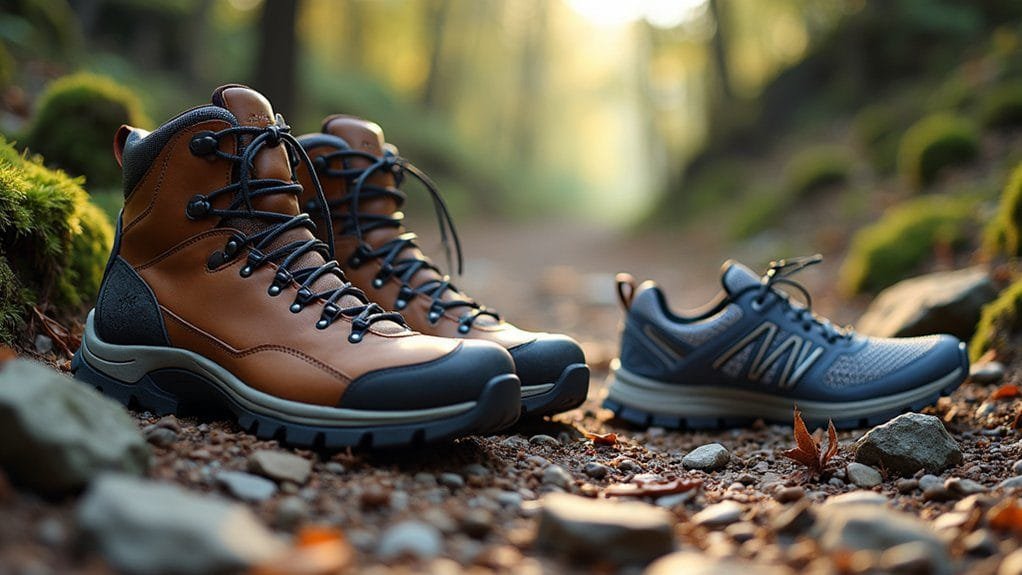
When tackling rugged trails, hiking boots stand out for their ability to provide essential stability and support. Their thicker soles and robust designs enhance durability, offering superior protection against sharp rocks and roots, which minimizes your risk of injury. The high ankle coverage is particularly beneficial, as it helps prevent twists and sprains, making these boots ideal for hikers carrying heavy packs or traversing uneven terrain. Additionally, hiking boots often feature aggressive tread patterns and thick lugs that deliver better traction on slippery surfaces, ensuring safer movement on steep inclines and descents. Many models incorporate waterproof materials, keeping your feet dry during wet conditions, vital for maintaining comfort and preventing blisters on long hikes.
The Benefits of Trail Runners for Lightweight Hiking
While hiking boots excel in rugged conditions, trail runners present a compelling option for lightweight hiking enthusiasts. Their design offers several advantages:
Trail runners offer a lightweight, breathable, and agile alternative for hiking enthusiasts seeking comfort and performance on the trails.
- Weight: Trail runners are about 40% lighter than mid-cut hiking boots, minimizing fatigue on long hikes.
- Breathability: The mesh materials provide excellent airflow, reducing moisture and blisters compared to waterproof alternatives.
- Agility: With flexible soles, trail runners enable quick foot movement and responsiveness across varied terrains, perfect for both hiking and running.
- Traction: Many feature rugged outsoles with lugs that deliver decent traction on moderate trails, suitable for lightweight hiking.
For frequent hikers, trail runners combine comfort and performance, making them ideal for efficient long-distance journeys.
Addressing Common Misconceptions About Ankle Protection
Though many hikers assume that high-cut boots are essential for ankle protection, this belief often stems more from tradition than from evidence-based analysis. Research indicates that low-cut footwear, like trail runners, can provide adequate stability and mobility without the added weight of hiking boots. The notion that boots prevent ankle injuries is largely based on fear rather than empirical evidence; studies show no definitive link between boot height and reduced risk of sprains. In fact, heavier boots may hinder natural foot movement, leading to fatigue and increasing the likelihood of falls. Experienced hikers often find that trail runners offer sufficient ankle support while promoting freedom of movement across varied terrain, effectively managing most hiking conditions without greatly raising injury risk.
Waterproof Features: Do They Really Matter?
Do you really need waterproof features in your hiking footwear? While waterproof membranes may seem appealing, they often underperform in real-world conditions. Here’s what you should consider:
- Moisture Trapping: Waterproof membranes can trap sweat inside, increasing blister risk.
- Declining Effectiveness: Over time, waterproof features can lose their reliability, especially in prolonged wet conditions.
- Breathability: Non-waterproof trail runners excel in moisture management, ensuring better breathability during hikes.
- Weight Concerns: Waterproof boots can become heavy when wet, negatively impacting your comfort and performance.
Many experienced hikers find that combining non-waterproof trail runners with Gore-Tex oversocks offers ideal flexibility and protection, particularly in winter conditions. Ultimately, assess your hiking environment and preferences to make the best choice.
Evaluating Comfort and Fit for Long Hikes
When evaluating comfort and fit for long hikes, it’s crucial to guarantee your footwear accommodates your foot’s natural shape and movement. A proper fit includes a thumb’s width of space between your longest toe and the shoe’s front to prevent discomfort and blisters. Hiking boots often require a break-in period due to their stiffer construction, while trail runners offer immediate comfort with minimal adjustment. Although trail runners are lighter and more flexible, providing greater foot movement, those with past foot or joint issues may benefit from the added support of hiking boots. Additionally, using cushioned insoles and moisture-wicking socks can greatly enhance comfort, helping manage blisters and promoting overall foot health during extended hikes.
Frequently Asked Questions
Are Trail Runners Ok for Backpacking?
Yes, trail runners are great for backpacking. Their lightweight footwear reduces pack weight, while trail runner advantages like flexibility and terrain adaptability enhance comfort and performance, especially on diverse trails and during long-distance hikes.
Are Trail Runners Better Than Hiking Boots?
Trail runners offer advantages like lightweight design and flexibility, enhancing speed and comfort. While hiking boots boast durability for rugged terrain, assess your priorities—if you seek agility, trail runners might be your better choice.
What Is the Difference Between Day Hiking Boots and Backpacking Boots?
Day hiking boots focus on lightweight materials and flexibility, while backpacking boots offer enhanced ankle support and durability. Understanding these boot materials comparison, weight differences analysis, and ankle support importance is essential for choosing the right footwear.
What Makes a Good Backpacking Boot?
Imagine your feet dancing effortlessly over rugged terrain. A good backpacking boot combines fit and comfort with weight distribution, ensuring stability. It must also adapt to various terrains, providing the support needed for long journeys.
How Does the Choice of Footwear Impact Running Performance During Backpacking?
The choice of footwear plays a crucial role in running performance during backpacking. Proper shoes provide support and cushioning, which can prevent injuries and enhance endurance. To track your progress effectively, consider using an apple watch or garmin for running, ensuring you stay informed about your stats on the trail.
Conclusion
In your quest for the perfect footwear, consider the terrain beneath your feet as a canvas, each step painting a picture of comfort and stability. Whether you choose sturdy hiking boots for rugged adventures or lightweight trail runners for speedy escapes, the right choice enhances your experience. Balancing traction, protection, and comfort is essential; after all, your journey is only as strong as the foundation you build it on. So lace up and let the trails unfold before you.