
When comparing Google Nest Protect and First Alert Smart Smoke & CO Alarm, both devices excel in advanced detection capabilities. Nest Protect offers a split-spectrum sensor and real-time smartphone alerts, making it highly user-friendly. On the other hand, First Alert uses advanced photoelectric technology with a focus on minimizing false alarms. Both guarantee robust safety, but your choice depends on specific features you value most. Explore the differences further to see which one fits your needs best.
Key Takeaways
- Google Nest Protect offers split-spectrum sensor technology for improved smoke detection accuracy, while First Alert uses advanced photoelectric sensing to reduce false alarms.
- Nest Protect provides real-time smartphone alerts and voice warnings that specify danger locations, enhancing response times during emergencies.
- First Alert’s “Heads-up Early Warning” feature alerts users via voice notifications and app, ensuring timely information about potential dangers.
- Nest Protect includes automatic self-testing capabilities, ensuring reliability over its 10-year lifespan compared to First Alert’s regular safety checkups.
- Both devices require installation in key areas of the home, but Nest Protect is available in both hardwired and battery-powered options for flexibility.
Overview of Smart Smoke Detectors
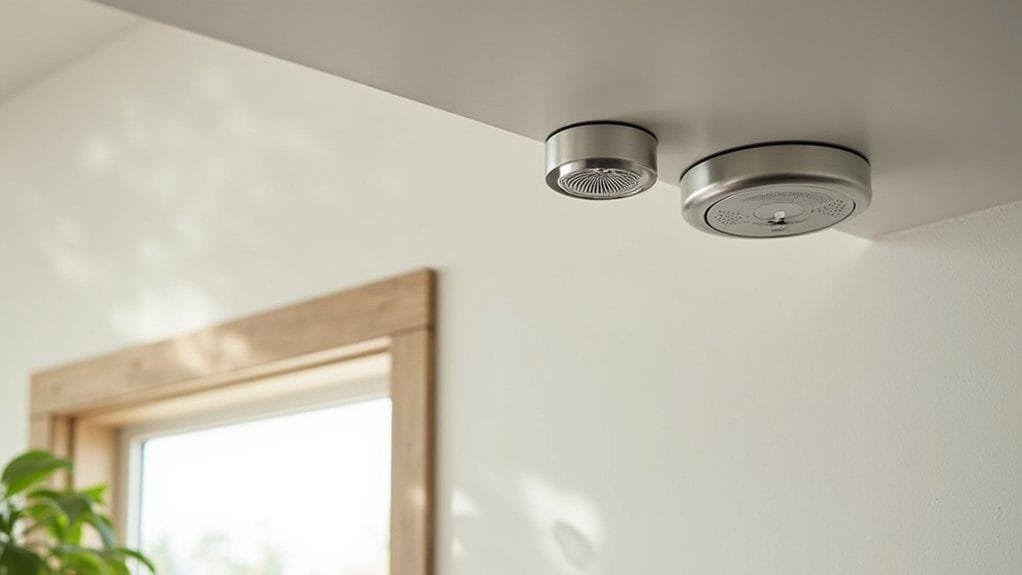
As you consider enhancing your home’s safety, smart smoke detectors provide an advanced solution that goes beyond traditional models. Devices like the Google Nest Protect and the upcoming First Alert Smart Smoke offer robust smoke and carbon monoxide detection, guaranteeing extensive protection. They feature voice alerts that specify the location of danger, facilitating quick responses. With self-testing capabilities, these detectors assure reliability and minimize false alarms. They can interconnect with other devices, triggering simultaneous alerts across multiple units for enhanced coverage. Installation is typically straightforward, allowing homeowners to upgrade easily. As the market expands, many smart smoke detectors integrate seamlessly with smart home systems, offering advanced features that cater to your safety needs.
Google Nest Protect: Features and Benefits
When considering a smart smoke detector, the Google Nest Protect stands out due to its innovative features and user-friendly design. Its split-spectrum sensor enhances smoke detection accuracy by distinguishing between fast-burning and smoldering fires, greatly reducing false alarms. You’ll appreciate the real-time alerts sent to your smartphone, complete with voice warnings that specify the danger’s location, ensuring timely evacuation. The device performs automatic self-tests, verifying sensor functionality and contributing to its impressive safety performance over a 10-year lifespan. Additionally, the night-light feature activates during motion, providing safety in dark hallways. You can easily silence false alarms via the mobile app or a dedicated button, enhancing convenience while maintaining peace in your home.
First Alert Smart Smoke & CO Alarm: Key Highlights

The First Alert Smart Smoke & CO Alarm offers a compelling alternative for those seeking reliable fire and carbon monoxide detection. Priced at $129.99, it features both hardwired and battery-powered options for versatile installation. Utilizing advanced photoelectric sensing technology, it minimizes false alarms while ensuring effective monitoring. The alarm’s automatic safety checkup provides peace of mind through regular functionality assessments. With the “Heads-up Early Warning” feature, you’ll receive voice alerts and app notifications before a full alarm triggers, enabling timely responses to potential dangers. Plus, its seamless integration with Google Home and the First Alert app allows for easy control and monitoring right from your smartphone, enhancing your overall safety experience.
Comparison of Detection Technologies
In comparing detection technologies, it’s clear that advancements have greatly improved the effectiveness of smoke and carbon monoxide alarms. Nest Protect employs a Split-Spectrum Sensor that merges ionization and photoelectric technologies, enhancing its ability to detect both fast-burning and smoldering fires. On the other hand, First Alert’s Smart Smoke & CO Alarm utilizes advanced photoelectric sensing technology, markedly reducing false alarms while maintaining reliable smoke detection. Both devices offer UL certification, ensuring they meet high safety standards. Nest Protect stands out with real-time smartphone alerts and voice notifications that specify the danger and location. This combination of features underscores the superior detection capabilities of both Nest Protect and First Alert in safeguarding your home.
Installation and Maintenance Considerations
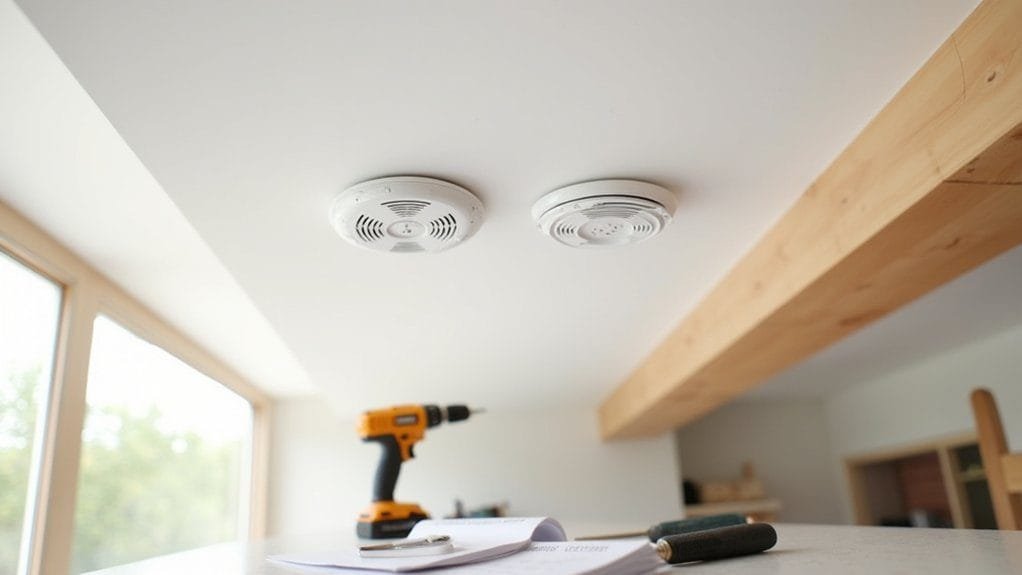
Choosing the right installation and maintenance plan for your smart smoke detector is essential for ensuring safety and reliability in your home. Both Nest Protect and First Alert require installation inside and outside bedrooms, as well as in common areas. Nest Protect allows for both hardwired and battery-powered options, while First Alert primarily relies on battery-powered models, necessitating periodic battery replacement. Regular maintenance is vital; test your smoke detectors monthly for functionality and replace them every 10 years due to sensor degradation. Both brands offer app-based alerts for low battery notifications, enhancing user experience. Nest Protect even lets you silence alarms via the app, minimizing disturbances. First Alert’s straightforward installation process makes it accessible for most homeowners.
Privacy and Data Collection Insights
While smart smoke detectors enhance safety through advanced features, they also raise important privacy concerns regarding data collection. For instance, Kidde’s parent company, Carrier, collects personal information, including location data, which may be shared with third parties. Although users can opt-out of this data sharing, transparency around these practices is limited. Google Nest Protect provides alerts via its app, but you should review its privacy policy to fully understand how your user data is managed. First Alert’s upcoming smart smoke alarms may involve data collection as well, yet their privacy policies remain vague. The integration of smart smoke detectors with other smart home devices can improve functionality but also increases the risk of data sharing and privacy issues.
User Experience and App Functionality
Smart smoke detectors not only prioritize safety but also enhance user experience through intuitive app functionality. The Google Nest app stands out with real-time alerts and voice warnings that specify the location of smoke or carbon monoxide detection, improving your response time. Its “Heads-up Early Warning” feature proactively notifies you of potential issues before triggering an alarm. In contrast, the First Alert app provides basic alarm triggered notifications and allows remote silencing, but lacks the advanced features of the Nest Protect. Both apps support smart home integration, enabling voice commands through systems like Google Home and Amazon Alexa. You can also customize alert notifications in some apps, ensuring a tailored user experience for safety and convenience.
Future Trends in Smart Smoke Detectors
As the landscape of home safety evolves, future trends in smart smoke detectors are poised to enhance both functionality and user experience. The upcoming First Alert Smart Smoke & CO Alarm, featuring advanced photoelectric sensing technology, aims to replace the discontinued Nest Protect. With increasing competition, brands like Kidde are integrating smart home interconnectivity with devices like Ring.
Future models are expected to adopt the Matter standard, improving compatibility across platforms and addressing current limitations. Additionally, consumers will likely prioritize user privacy, influencing their choices as concerns about data collection grow. Enhanced features such as real-time alerts and professional monitoring options will further elevate safety in the smart smoke detector market, ensuring a smarter, more secure home environment.
Frequently Asked Questions
Is Google Discontinuing Nest Smoke Alarm?
Yes, Google’s discontinuing the Nest smoke alarm due to product changes and reliability issues. Future innovations will focus on smart home integration, prioritizing consumer safety through collaborations with established brands and enhanced smoke detector features.
What Is the Best Smart Smoke Detector?
In home safety, prevention’s worth a pound of cure. For the best smart smoke detector, consider user reviews on alarm features, installation tips, and device integration for fire prevention and emergency response in your space.
Is Nest the Best Smoke Detector?
Considering Nest’s features like smart connectivity, emergency alerts, and user reviews, it’s a solid option. However, compare battery life, installation process, price, smoke sensitivity, and design aesthetics to determine if it meets your needs.
What Smoke Detector Do Firemen Recommend?
Firefighters recommend dual-sensor smoke detectors for thorough detection, emphasizing regular smoke alarm maintenance and ideal placement. They also advocate for integrating carbon monoxide detection and encouraging a home evacuation plan to enhance fire safety strategies.
Conclusion
In the battle of smart smoke detectors, both the Nest Protect and First Alert have their unique strengths. If you value advanced features and integration, Nest might be your champion. However, First Alert offers reliability and simplicity that can’t be ignored. Ultimately, choosing the right device can feel like deciding between two superheroes—each with powers that can save your home. Weigh your priorities carefully, and you’ll guarantee your safety is in the best hands possible.