
When comparing Ring and Arlo doorbell cameras for night vision, Ring excels with its advanced color night vision, offering better clarity and detail in low-light conditions. Although Arlo provides a higher resolution, its black-and-white night vision may not capture interactions as effectively. Both systems have their strengths, so consider your specific needs. If you’re looking for more insights into their features and overall performance, keep going to explore further comparisons.
Key Takeaways
- Ring features advanced color night vision up to 30 feet, enhancing clarity in low-light conditions compared to Arlo’s black-and-white night vision.
- Arlo captures video at a higher resolution of 1536p but lacks color night vision, which may affect clarity during nighttime.
- Ring offers a broader 160-degree horizontal field of view, while Arlo has a 180-degree diagonal view, impacting coverage area.
- Arlo supports more smart home platforms and offers customizable automation options, enhancing overall functionality in smart home setups.
- Ring Protect starts at $4/month for cloud storage, while Arlo Secure offers both cloud and local storage options starting at $5/month.
Overview of Ring and Arlo Doorbell Cameras
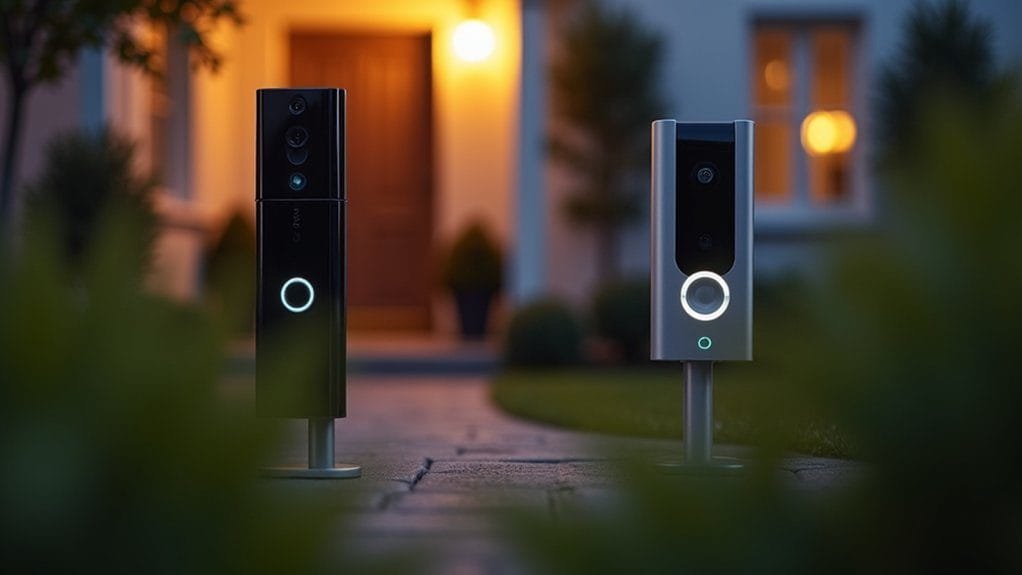
When considering smart home security, both Ring and Arlo doorbell cameras stand out for their innovative features and capabilities. The Ring Video Doorbell 4 offers enhanced night vision with superior 1080p HD clarity, ensuring you see clear images even in low-light conditions. Its improved motion detection allows for timely alerts, enhancing your security. Conversely, Arlo’s Essential Video Doorbell provides high-resolution video quality with a wide 180-degree field of view, optimizing visibility of faces and packages. Both cameras feature two-way audio, enabling seamless communication with visitors. Arlo also excels in object detection, utilizing AI-driven technology for better recognition at night. Additionally, with a subscription, Arlo offers 30 days of video storage, allowing you to review critical nighttime events.
Night Vision Technology: A Key Feature
Night vision technology plays an essential role in enhancing the effectiveness of smart doorbell cameras, particularly in low-light conditions. The Ring Video Doorbell offers advanced color night vision, ensuring clarity and visibility up to 30 feet, even in dim environments. In contrast, the Arlo Essential Doorbell relies on infrared night vision, providing effective black-and-white monitoring but lacking the color detail that Ring offers. Arlo’s 180-degree diagonal view enhances coverage, making it easier to spot faces and packages, while Ring’s 160-degree horizontal view still offers a substantial wide field of view. Both systems utilize motion detection to activate night vision, but peak performance can be influenced by installation height and surrounding ambient light, making placement essential for effective monitoring.
Image Quality in Low Light Conditions
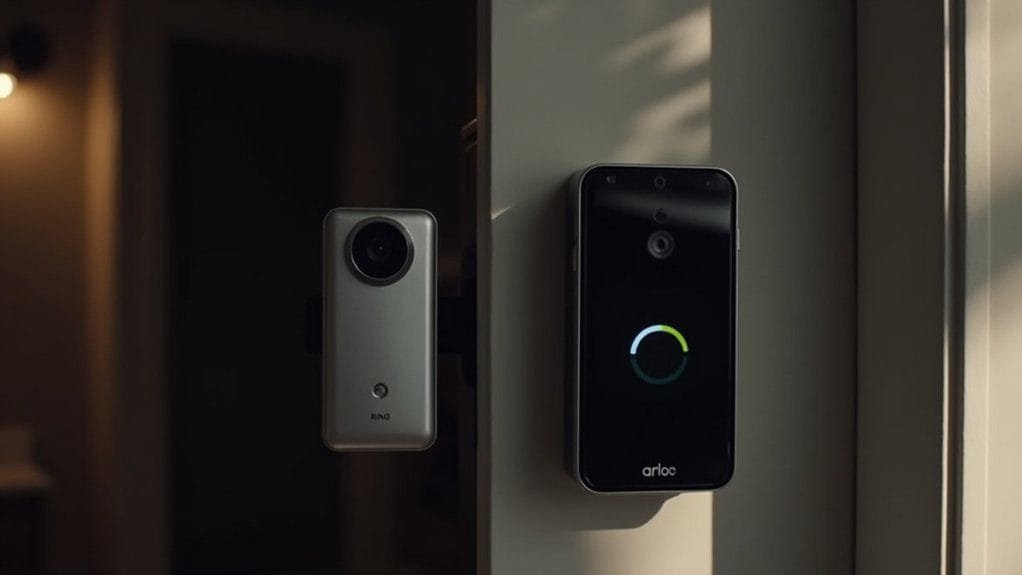
While both the Ring Video Doorbell and Arlo Essential Doorbell aim to provide clear images in low-light conditions, their approaches to image quality differ greatly. Here are some key points to take into account:
- Night Vision Type: Ring offers enhanced color night vision, while Arlo provides black-and-white night vision.
- Video Resolution: Arlo captures video at 1536p, ensuring excellent clarity, whereas Ring maxes out at 1080p HD.
- Field of View: Ring boasts a 160-degree horizontal field of view, compared to Arlo’s 127 degrees, giving you a broader perspective.
- Two-Way Audio: Ring’s superior night vision enhances communication clarity during evening hours, essential for your interactions.
In low-light conditions, Ring’s technology gives it a distinct edge over Arlo, particularly in video quality and detail recognition.
Smart Home Integration Capabilities
Although smart home integration is essential for maximizing the functionality of doorbell cameras, the approaches taken by Arlo and Ring reveal significant differences in compatibility and automation capabilities. Arlo excels in smart home tech integration, supporting Amazon Alexa, Google Assistant, Samsung SmartThings, and select Apple devices, which enhances your smart home automation experience. You can also leverage IFTTT for customized actions, making Arlo a flexible choice. In contrast, Ring primarily pairs with Amazon Alexa, allowing features like live footage viewing on Echo Show devices, but it has limited compatibility with other platforms. While both brands offer app-based control, Arlo’s app provides more robust features for managing settings and interactions, giving it an edge in the domain of smart home integration.
Subscription Services and Video Storage Options
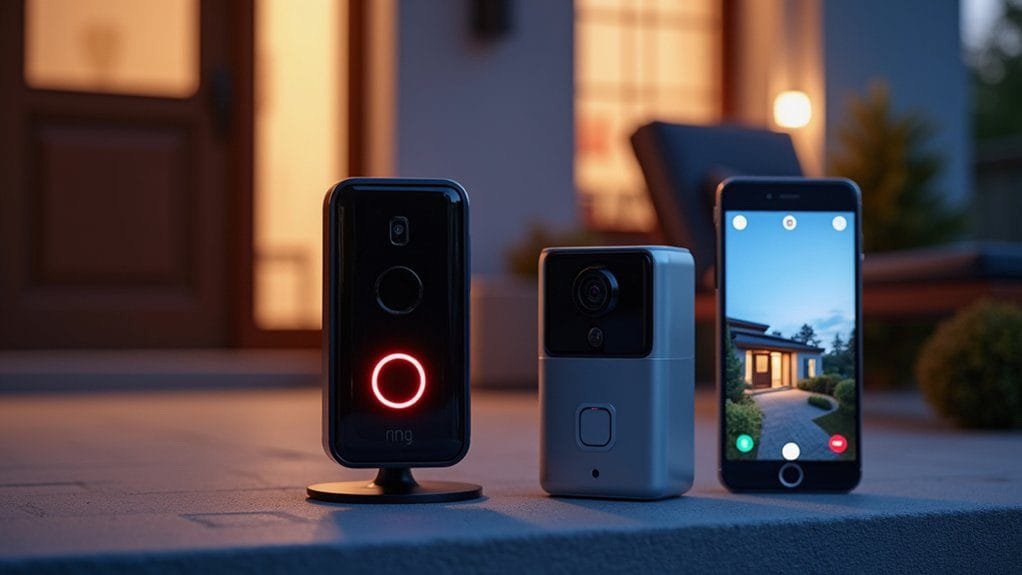
When considering the functionality of doorbell cameras, subscription services and video storage options play a significant role in how you experience and utilize these devices. Here’s a breakdown of what you can expect:
- Subscription Plans: Ring Protect starts at $4/month for 180 days of video history, while Arlo Secure begins at $5/month, offering 30 days of event history.
- Video Storage Options: Ring relies solely on cloud storage, whereas Arlo provides both cloud and local storage options via base stations.
- Advanced Features: Arlo’s plans include AI recognition for enhanced object detection, while Ring focuses on basic history access and 24/7 monitoring options.
- Free Trials: Ring Protect offers a 30-day free trial with limited recorded footage, whereas Arlo Secure only allows live views without video history.
Ease of Installation and Setup
For those looking to enhance their home security with a doorbell camera, the ease of installation and setup is a crucial factor. Both Ring and Arlo prioritize DIY installation, typically allowing you to complete the setup within 20 to 30 minutes without any tools or drilling. Ring provides extensive installation guides and app support, making it straightforward for you to tackle the setup independently. Similarly, Arlo offers clear instructions and various mounting options, including wireless installation, ensuring flexibility in placement. Both brands utilize magnetic charging and hardware mounts, allowing for easy adjustments. Additionally, their wireless design permits indoor testing, ensuring functionality before committing to outdoor installation. This focus on user-friendly installation makes both options appealing for enhancing your home security.
Customer Support and Service Ratings
Customer support and service ratings play a considerable role in your overall experience with Ring and Arlo doorbell cameras. Here’s a breakdown to help you understand the differences:
- Arlo’s Help Center: Offers FAQs and video tutorials, making it easier for you to find solutions.
- Premium Phone Support: Arlo provides 90 days of premium phone support, which users appreciate.
- Service Quality: Ring’s customer service can feel impersonal, leading to mixed ratings compared to Arlo’s more responsive and attentive support.
- No Long-Term Contracts: Both companies allow you to cancel subscriptions anytime, enhancing customer satisfaction.
Ultimately, if you value responsive and attentive customer service, Arlo tends to receive better ratings, while Ring’s support can vary considerably.
Cost Comparisons and Value for Money
Evaluating the cost and value for money of Ring and Arlo doorbell cameras reveals significant differences that can influence your decision. The Ring Video Doorbell 4 is priced at $160, while the Arlo Essential Doorbell is often available for $100 or less, making it a budget-friendly option. Ring’s subscription plan starts at $4/month for 180 days of video history, offering enhanced motion detection and superior night vision. In contrast, Arlo’s plan begins at $5/month with only 30 days of event history. However, Arlo provides a generous three-month free trial period compared to Ring’s 30-day trial. Overall, while Ring excels in video quality, Arlo’s lower initial cost and extended trial may present better value for money for many consumers.
Final Thoughts on Night Vision Performance
While both the Ring Video Doorbell 4 and the Arlo Essential Doorbell offer night vision capabilities, their performance diverges markedly regarding quality and effectiveness. Here’s a breakdown of their night vision performance:
- Night Vision Quality: Ring’s enhanced low-light performance allows for superior clarity, even in darkness, while Arlo relies on basic infrared night vision.
- Motion Detection: Ring employs advanced algorithms for better nighttime motion detection, ensuring you capture essential movements.
- Two-Way Audio: Ring’s audio clarity shines in low-light conditions, making communication more effective.
- User Satisfaction: Users report higher satisfaction ratings for Ring, particularly regarding nighttime footage clarity.
Frequently Asked Questions
Does Arlo Have Good Night Vision?
Arlo’s night vision excels with features like color night vision and HDR technology. Reviews highlight its performance in low light, while installation remains straightforward. For competitive pricing and accessories, consider your security needs before deciding.
Do Ring Cameras Have Good Night Vision?
Yes, Ring cameras excel in night vision performance, utilizing infrared technology for impressive low light capabilities. User reviews highlight the night mode features, though video quality comparison with other brands shows varying results based on lighting conditions.
Are Ring Cameras Any Good at Night?
You won’t believe how well Ring cameras perform at night! With stellar night vision performance and infrared technology, they shine in low light, garnering high customer satisfaction ratings and favorable video clarity compared to competitors.
Which Doorbell Camera Is Better Than Ring?
When considering which doorbell camera is better, Arlo’s superior night vision features, higher video quality, and longer subscription trial outweigh Ring’s advantages in motion detection and smart home integration, alongside notable price differences highlighted in user reviews.
Conclusion
In the battle of Ring versus Arlo, your choice boils down to what you prioritize. If crisp night vision and seamless smart home integration are your top concerns, Arlo shines brightly. However, if you value user-friendly installation and a robust subscription service, Ring stands out. Ultimately, both brands offer unique strengths; your decision should reflect your specific needs and preferences. So, weigh the features carefully, and you’ll find the doorbell camera that fits perfectly into your home security setup.