
When you’re looking for patio furniture materials that last the longest, consider teak for its natural oils and durability, or aluminum for its lightweight, rust-resistant properties. Stainless steel offers strength but can heat up in the sun, while HDPE mimics wood with excellent moisture resistance. Synthetic wicker outperforms natural wicker in UV resistance and longevity. Each material has unique benefits that contribute to durability, and there’s much more to explore about selecting the best for your outdoor space.
Key Takeaways
- Teak wood is highly durable due to its natural oils, resisting rot and insects effectively.
- Aluminum is lightweight and rust-resistant, making it ideal for long-term outdoor use.
- Wrought iron offers excellent strength but requires regular maintenance to prevent rust.
- HDPE plastic mimics wood’s appearance while being resistant to warping and moisture.
- Synthetic wicker outlasts natural wicker in UV resistance and overall longevity.
Material Properties and Durability
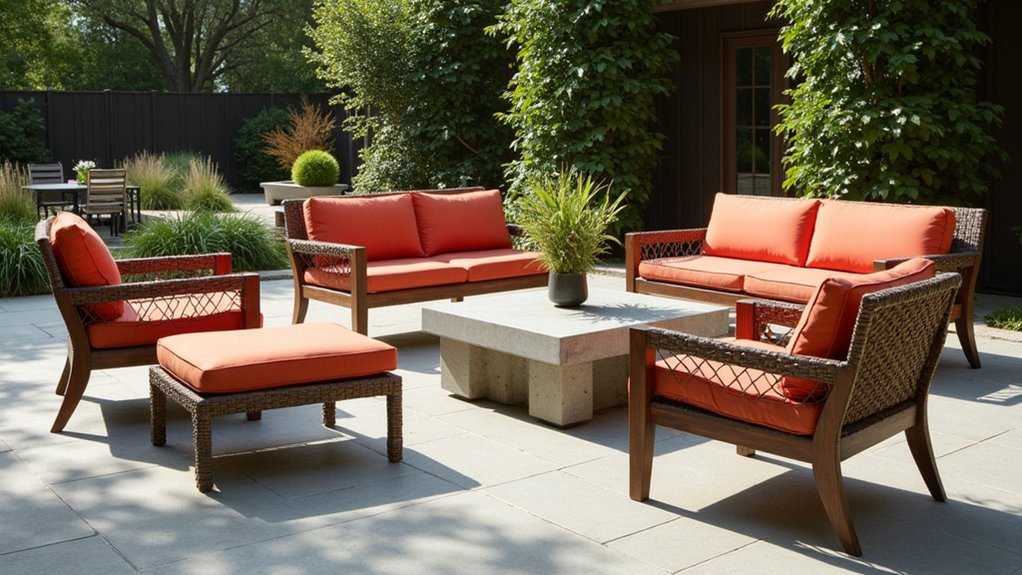
When it comes to choosing outdoor furniture, how do material properties impact durability? The materials you select considerably affect your furniture’s resilience against various weather conditions. Teak, with its natural oils and dense grain, offers excellent protection against rot and insects, ensuring a long lifespan. Aluminum is lightweight and rust-resistant, making it an ideal choice for outdoor settings, while stainless steel provides strength but can heat up under direct sunlight. High-density polyethylene (HDPE) mimics wood’s look and delivers remarkable resistance to warping and moisture, making it both eco-friendly and durable. Finally, synthetic wicker, crafted from resin or polyethylene, surpasses natural wicker in UV resistance and longevity, safeguarding your investment against the elements.
Maintenance and Upkeep
Choosing the right materials for your patio furniture not only impacts durability but also dictates the level of maintenance required to keep it looking great and functioning well. Here’s a quick overview of the maintenance needs for different materials:
| Material | Maintenance Requirements | Longevity |
|---|---|---|
| Teak Wood | Oil or sealant treatment periodically | Up to several decades |
| Aluminum Furniture | Occasional cleaning to prevent scratches | Long-lasting, rust-resistant |
| Wrought Iron Furniture | Regular rust-proofing and repainting | Durable but can corrode |
| Synthetic Resin Wicker | Regular cleaning | Designed for durability |
| HDPE Plastic Furniture | Occasional mild soap and water cleaning | Virtually maintenance-free |
Understanding these maintenance aspects helps you choose materials that fit your lifestyle and guarantee longevity.
Weather Resistance: Rain, Humidity, and Sun Exposure
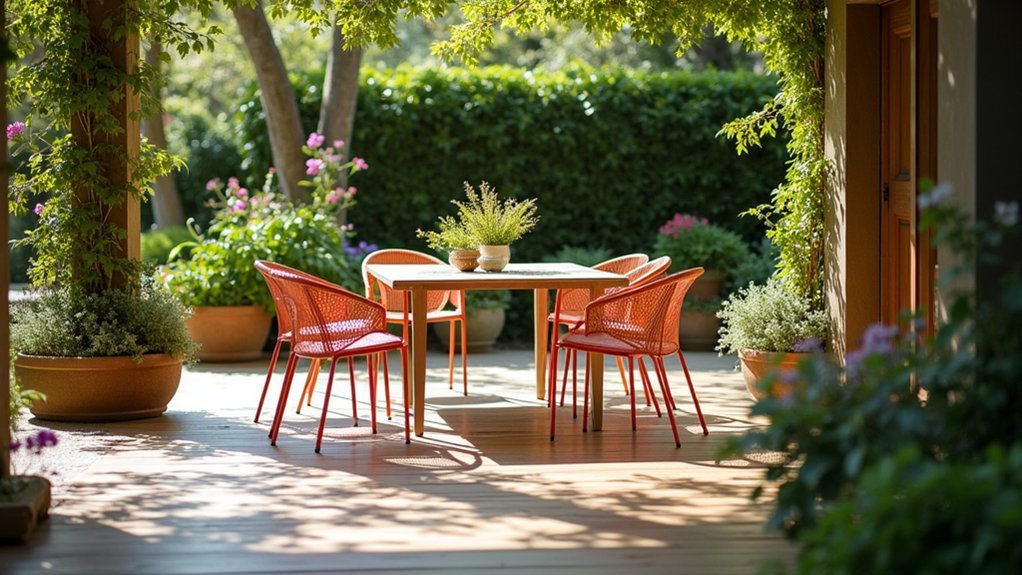
Weather resistance is an essential factor to take into account when selecting patio furniture, as it directly affects the lifespan and appearance of your investment. In humid climates, materials like teak and powder-coated aluminum excel, resisting mold and mildew while guaranteeing structural integrity. Opt for moisture-treated options to prevent odors and stains in damp environments. UV-resistant materials are crucial, as prolonged sunlight exposure can lead to fading, brittleness, and cracking. To enhance durability, regularly apply protective finishes and consider using outdoor furniture covers. These steps will greatly improve weather resistance, allowing your furniture to withstand rain and humidity while maintaining its aesthetic appeal. Investing in the right materials guarantees your patio furniture remains beautiful and functional for years to come.
Wind and Storm Resilience
While enjoying your outdoor space, it is crucial to contemplate how your patio furniture can withstand the challenges posed by wind and storms. To guarantee ideal storm resilience, consider the following:
- Opt for durable materials like wrought iron and stainless steel.
- Secure anchoring is essential in high wind areas to prevent damage.
- Choose robust designs that feature lower profiles and heavier bases.
- Assess local climate conditions to select appropriate outdoor furniture.
Investing in furniture made from sturdy materials not only enhances its ability to endure harsh winds and storms but also increases its longevity. By prioritizing these factors, you can enjoy your patio knowing your outdoor furniture is well-prepared to handle nature’s challenges.
Comfort and Design
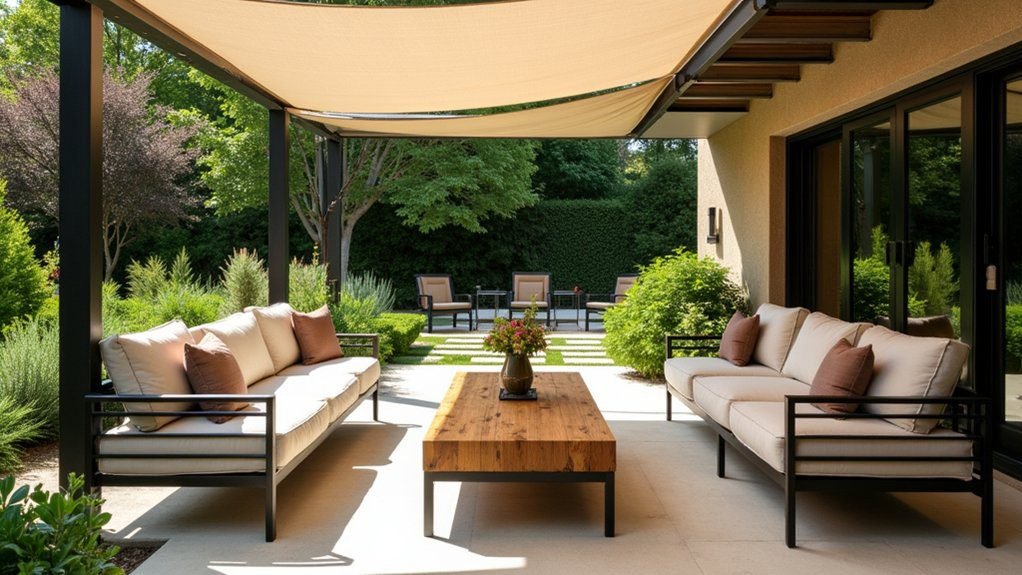
When it comes to outdoor living, comfort and design play pivotal roles in transforming your patio into an inviting space. You’ll want durable outdoor furniture that prioritizes user experience; options like cushions and padded seats enhance comfort without compromising stability. High-quality materials guarantee that your seating supports weight effectively, providing an experience akin to indoor comfort. Thoughtful design elements, including ergonomic shapes and adjustable features, greatly boost overall usability. Additionally, integrating UV-resistant materials helps prevent fading and brittleness, maintaining both comfort and aesthetic appeal throughout the seasons. A well-designed outdoor space accommodates both intimate gatherings and larger events, guaranteeing that everyone enjoys a comfortable atmosphere, regardless of the occasion.
Types of Materials: Wood, Aluminum, Wicker, and Steel
Choosing the right materials for your patio furniture is key to creating a space that balances comfort with durability. Here’s a breakdown of popular options:
- Wood: Teak is highly sought after for its natural oils, offering resistance to rot and insects; however, it requires regular maintenance.
- Aluminum: Lightweight and rust-resistant, aluminum needs minimal upkeep, but can heat up in direct sunlight.
- Wicker: Synthetic resin wicker is UV-resistant and weatherproof, making it a stylish, durable choice for outdoor settings.
- Steel: Known for its strength, steel furniture can withstand wind but needs protective coatings to prevent rust.
Combining materials, like metal frames with wood accents, enhances both aesthetics and durability, ensuring your outdoor furniture lasts.
Frequently Asked Questions
What Patio Furniture Material Lasts the Longest?
When considering patio furniture material longevity, prioritize wood durability like teak, metal resistance from aluminum or steel options, and composite strength. Wicker longevity is lesser, while cushion maintenance impacts overall lifespan, especially with plastic weathering.
What Patio Material Lasts the Longest?
When considering patio materials, think about aluminum durability, teak longevity, and wicker resilience. Also, explore options like composite materials for weatherproofing and cast iron benefits for rust resistance, ensuring your outdoor space lasts for years.
What Is the Strongest Material for Patio Furniture?
When considering strength, teak wood and wrought iron excel, offering durability and weather resistance. Aluminum provides lightweight durability, while stainless steel combines strength with corrosion resistance. Don’t forget maintenance requirements and cost-effectiveness in your decision!
What Kind of Patio Furniture Can Stay Out All Year?
For year-round outdoor use, choose weather resistant materials like HDPE, teak, or aluminum. Prioritize rust resistant finishes, UV protection features, and style versatility options while considering comfort, aesthetics, and environmental impact in your selections.
Conclusion
When choosing patio furniture, it’s vital to take into account durability and maintenance. Did you know that high-quality teak wood can last over 50 years with proper care? This statistic highlights the importance of selecting materials wisely. By understanding the properties of wood, aluminum, wicker, and steel, you can enjoy your outdoor space without the constant worry of replacing furniture. Investing in the right material not only enhances comfort and design but also guarantees longevity against the elements.