
For beginners, spinning rods are the easiest choice. Their user-friendly design makes casting simple and reduces the risk of tangles and backlashes. With larger guides facing downward, they improve casting accuracy, especially for lighter lures. This forgiving experience allows you to focus on mastering basic techniques without frustration. Once you’re comfortable with casting and ready for more precision, you can explore the advantages of baitcasting rods, which you’ll discover more about soon.
Key Takeaways
- Spinning rods feature larger guides that minimize line tangles, making them easier for beginners to use.
- The user-friendly design of spinning rods simplifies casting, ideal for novice anglers.
- Spinning rods are less prone to backlash, providing a more forgiving experience for new fishers.
- These rods are perfect for light lures, allowing beginners to focus on mastering basic techniques.
- Baitcasting rods require more skill and practice, making them less suitable for those just starting out.
Understanding Spinning Rods for Beginners
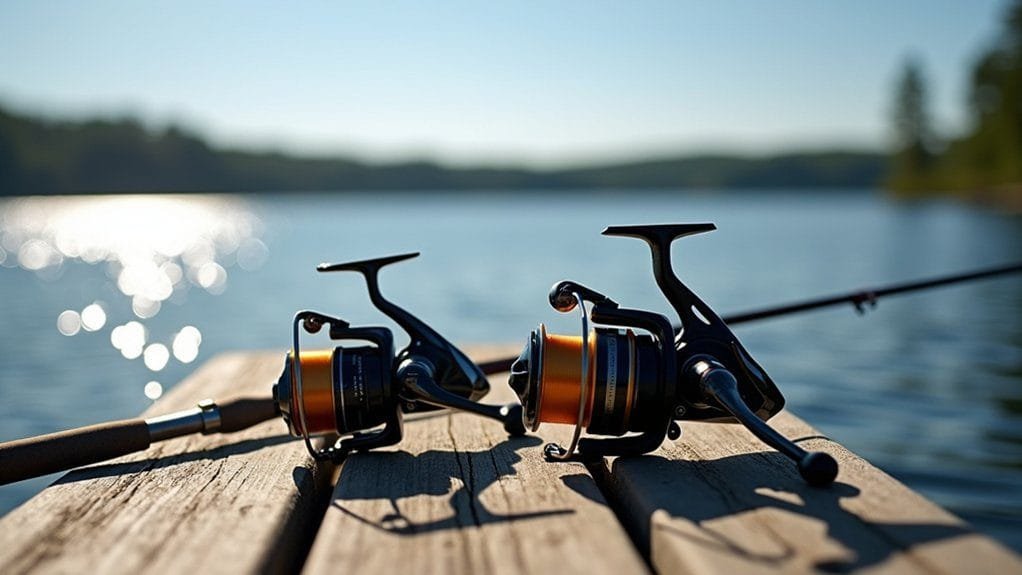
Spinning rods are an excellent choice for beginners looking to plunge into fishing. Their design features guides facing downward, which minimizes line tangles and enhances casting accuracy. This makes casting light lures a breeze, allowing you to target species like bass and panfish with finesse fishing techniques. The larger guides on spinning rods reduce friction, leading to improved casting distance, essential for those just starting. Additionally, spinning rods typically have a medium action, balancing sensitivity and backbone, so you can easily detect bites and set hooks. Since they don’t require advanced skills to avoid backlashes, spinning rods offer a forgiving learning curve, letting beginners focus on honing their fishing techniques without the frustration often associated with baitcasting gear.
The Basics of Baitcasting Rods
When you’re ready to elevate your fishing game, understanding baitcasting rods is essential. These rods are specifically designed for use with baitcasting reels, which mount on top, offering greater control and precision. With 8 to 12 guides that reduce resistance, baitcasting rods enhance casting distance and accuracy, especially when using heavier lures. They handle heavier lines, making them suitable for targeting larger fish and employing techniques like flipping and pitching. The first guide is smaller to minimize line friction, ensuring a smooth flow during casting and retrieval. While baitcasting rods are often more suited for experienced anglers due to their complexity, they can be highly effective for beginners willing to master specific fishing techniques.
Key Differences Between Spinning and Baitcasting Rods
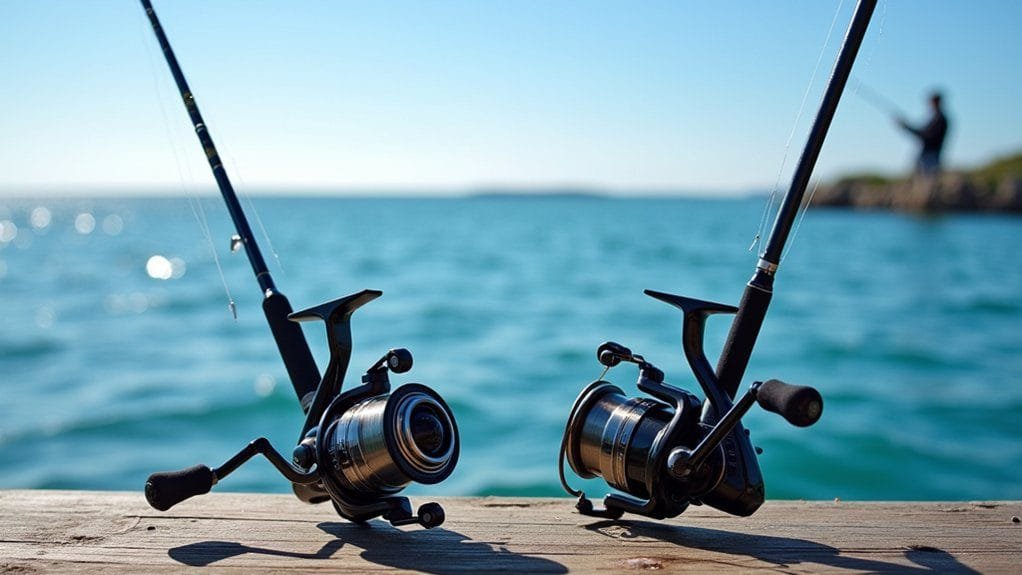
Understanding the key differences between spinning and baitcasting rods can greatly impact your fishing experience. Spinning rods feature larger guides and are designed for spinning reels mounted underneath, making them ideal for casting lighter lures and reducing tangles—perfect for beginners. They offer a forgiving casting experience, minimizing the risk of backlash. Conversely, baitcasting rods have guides facing upwards and are suited for baitcasting reels, allowing for greater control and precision with heavier lures and fishing lines. They typically have more guides, enhancing sensitivity, which aids in detecting bites. Your choice often depends on the fishing technique: spinning rods excel in finesse applications, while baitcasting rods shine in power fishing scenarios, each with its own pros and cons.
Advantages of Spinning Rods for New Anglers
For new anglers, spinning rods offer several distinct advantages that simplify the fishing experience. They’re user-friendly and designed for ease of use, making them ideal for beginners. The larger guides on spinning rods reduce line friction, leading to smoother casts and better distance with lightweight lures. This is especially beneficial in beginner-friendly scenarios like panfishing or bass fishing with finesse tactics. Additionally, spinning setups are less prone to backlashes and tangles, providing a more forgiving experience as you learn to cast. With a shorter learning curve, spinning rods allow you to focus on mastering basic fishing techniques without grappling with complex reel mechanics.
| Advantage | Description | Benefit |
|---|---|---|
| Ease of Use | Simple mechanics for casting | Ideal for beginners |
| Larger Guides | Reduces line friction | Smoother casts |
| Lightweight Lures | Perfect for finesse techniques | Better control |
When to Transition to Baitcasting Rods
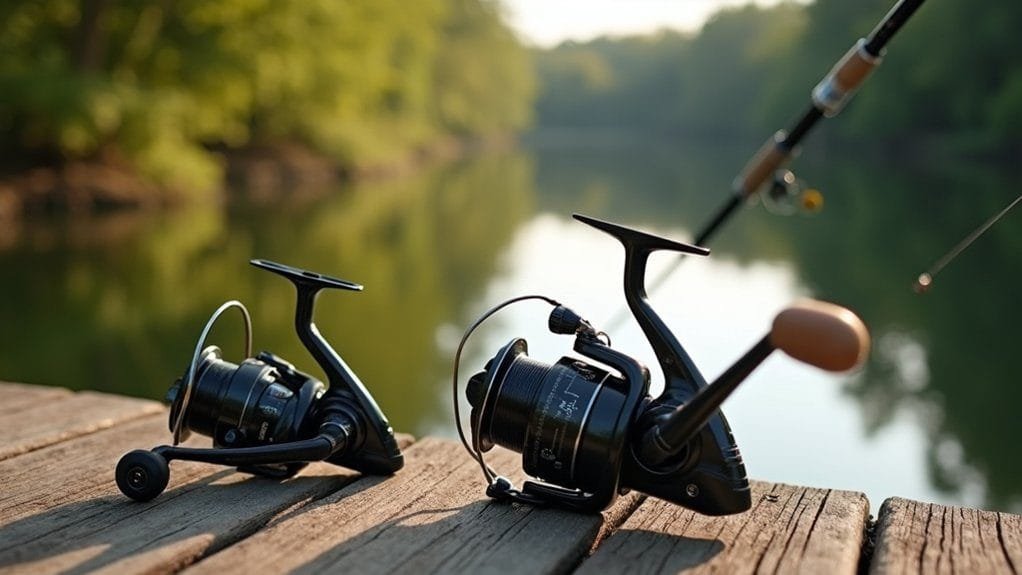
As you gain confidence in your casting techniques and master the basics of line management and lure presentation with spinning gear, it’s time to think about moving to baitcasting rods. If you’re consistently using heavier lures—typically over 1/4 ounce—and heavier lines, like 20 lb fluorocarbon, you’re likely ready for this change. Baitcasting rods excel in accuracy and control, making them ideal for advanced fishing techniques such as flipping and pitching. These rods also improve casting distance and precision, allowing you to target specific areas effectively. By gaining proficiency with baitcasters, you’ll benefit from features like reduced backlash and increased sensitivity, enhancing your ability to fish larger species in heavy cover situations.
Frequently Asked Questions
When to Use a Spinning Rod Vs Baitcaster?
When choosing between spinning rods and baitcasters, consider fishing techniques, target species, and water depth. Spinning rods excel in lightweight lures and windy conditions, while baitcasters offer better accuracy and control for heavier line and deeper waters.
Should a Beginner Get a Baitcaster?
As a beginner, you might find a baitcaster’s advantages—like improved casting distance and lure selection—appealing, but its disadvantages, such as reel maintenance and skill requirements, often make spinning reels a more practical choice for starting out.
Are Spinning Rods Good for Beginners?
Yes, spinning rods are excellent for beginners due to their advantages like versatility in techniques, lightweight materials, and user-friendly casting. Choose quality brands with good sensitivity and affordable pricing for an ideal fishing experience without heavy maintenance.
Is a Baitcaster Easier Than a Spinning Reel?
Baitcasters offer greater accuracy and control, but with a steeper learning curve. While they excel in tackle choice and casting distance, spinning reels provide easier line control and require less maintenance, making them more beginner-friendly.
Conclusion
In the end, you might think baitcasting rods are the obvious choice for expert anglers, but they can be tricky for beginners. With their complex mechanics and learning curve, they often lead to frustration instead of success. On the other hand, spinning rods offer simplicity and ease, making them the perfect introduction to fishing. So, while you might dream of casting like a pro, starting with a spinning rod could be your best-kept secret to enjoying the sport.