
When comparing mummy and rectangular sleeping bags, mummy bags are generally warmer. Their tapered design minimizes air space, enhancing heat retention, making them ideal for colder conditions. In contrast, rectangular bags have more internal space, which can lead to heat loss. Mummy bags also feature additional insulation elements like hoods and baffles for extra warmth. If you’re looking for the best fit for your camping needs, there’s more to take into account regarding comfort and portability.
Key Takeaways
- Mummy bags have a tapered design that minimizes air space, enhancing heat retention and warmth.
- Rectangular bags provide more internal space, which can lead to greater heat loss.
- Mummy bags typically have lower temperature ratings, making them suitable for colder conditions.
- Additional features like hoods and baffles in mummy bags improve insulation and warmth.
- For camping in cold weather, mummy bags are generally the warmer choice compared to rectangular bags.
Understanding Sleeping Bag Shapes
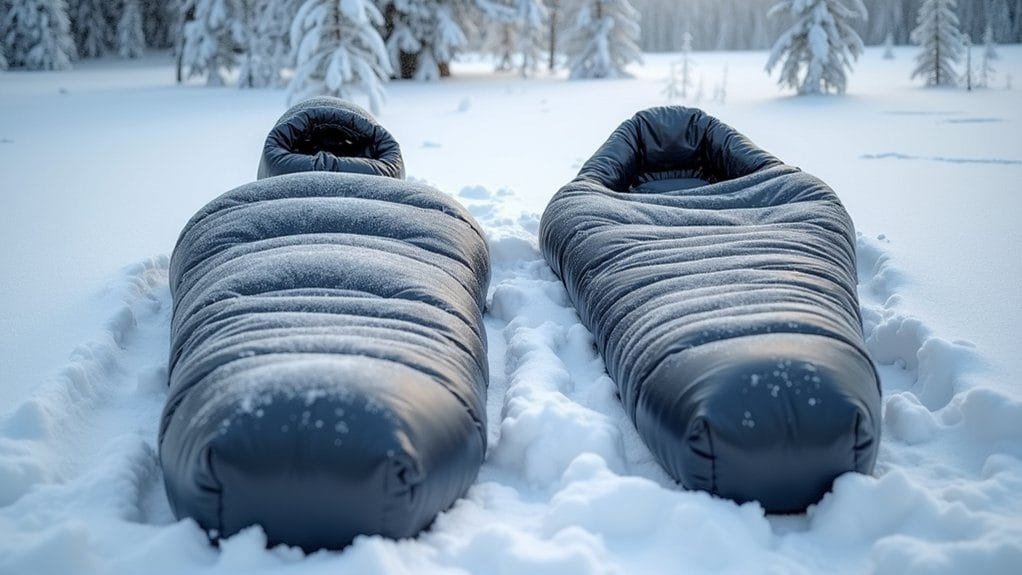
When choosing a sleeping bag, understanding the shape is essential for your comfort and warmth. Mummy sleeping bags feature a tapered design that narrows from the shoulders to the feet, enhancing thermal efficiency by reducing excess air space. This snug fit effectively traps warm air, making them ideal for colder conditions and outdoor adventures. In contrast, rectangular sleeping bags maintain a uniform width, allowing for more movement but sacrificing insulation due to increased internal space. While they’re better suited for mild weather and indoor use, relaxed mummy bags offer a semi-rectangular shape, providing extra wiggle room while still maintaining some insulation efficiency. Ultimately, the choice of sleeping bag shapes directly impacts your experience in varying temperatures.
Warmth and Insulation Comparison
Choosing the right sleeping bag shape greatly influences warmth and insulation. Mummy bags, with their tapered design, minimize air space and better trap heat, making them warmer for cold weather camping. Their snug fit helps retain warmth, while rectangular bags have more internal space, leading to increased heat loss.
Here’s a comparison of their features:
| Feature | Mummy Bags | Rectangular Bags |
|---|---|---|
| Shape | Tapered | Spacious |
| Insulation Type | Often synthetic | Varies |
| Temperature Ratings | Lower (for colder temps) | Higher (for milder temps) |
| Warmth Retention | High | Moderate |
| Additional Insulation | Hoods & baffles | Requires extra layers |
Comfort and Movement Considerations
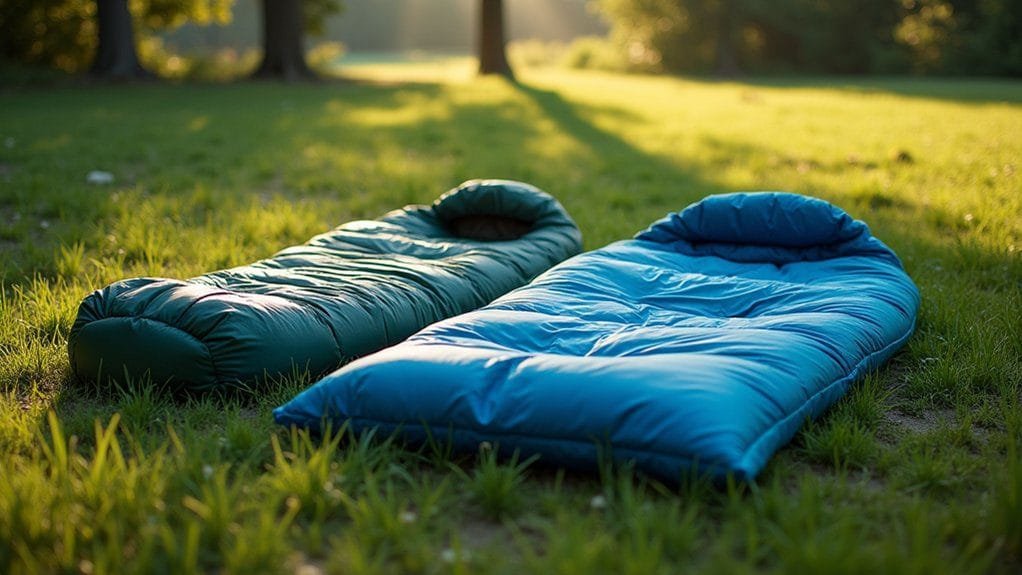
While many prioritize warmth in a sleeping bag, comfort and movement are equally important for a good night’s sleep. Mummy sleeping bags feature a tapered design that reduces excess space, enhancing warmth by trapping body heat. However, this snug fit can feel restrictive, particularly for larger individuals or those who prefer more freedom of movement. Rectangular sleeping bags, on the other hand, offer ample space, making them ideal for various sleeping styles, including side and restless sleepers. Their versatility allows you to unzip them and use them as a blanket, enhancing comfort. Ultimately, your choice should reflect your personal priorities—whether you value the warmth of a mummy bag or the spacious comfort of a rectangular bag and sleeping bag liner.
Portability and Weight Differences
Although both mummy and rectangular sleeping bags serve the purpose of providing warmth and comfort, their portability and weight differences can greatly impact your outdoor experience. Mummy sleeping bags are typically lighter and more portable due to their tapered design, making them ideal for backpackers and mountaineers. High-quality down-fill mummy bags can compress into smaller sizes, enhancing their packability. In contrast, rectangular sleeping bags are bulkier and heavier, mainly due to their larger interior space, which makes them less suitable for lightweight travel. The weight difference can be significant; a standard mummy bag often weighs around 2-3 pounds, while a rectangular bag ranges from 4-6 pounds. When planning outdoor adventures, consider these factors to optimize your gear selection.
Versatility and Additional Features
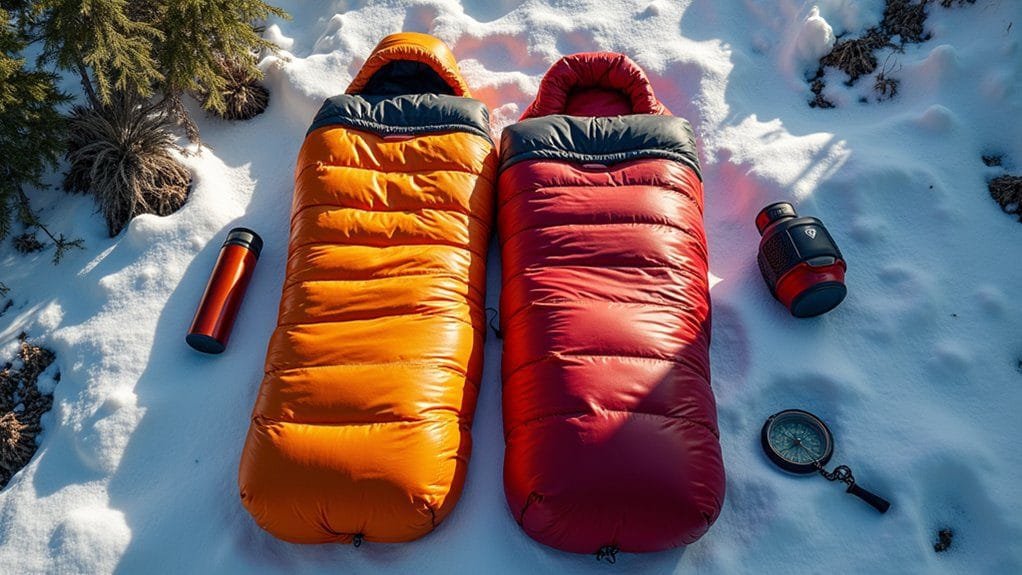
When evaluating sleeping bags, versatility and additional features play a significant role in determining which option best suits your needs. Mummy sleeping bags focus on thermal efficiency and insulation, providing warmth for solo campers but lacking versatility for joint use. In contrast, rectangular sleeping bags can zip together, making them ideal for couples or family camping. They also function as blankets when unzipped, enhancing their usability indoors. Many rectangular sleeping bags include additional features like adjustable hoods and pillow pockets, which boost comfort. While both types can be paired with sleeping pads, mummy bags often require specialized liners due to their tapered shape. Ultimately, your choice should reflect your camping style and preferences for comfort and functionality.
Affordability of Sleeping Bags
Affordability is an essential factor in choosing a sleeping bag, especially if you’re balancing budget constraints with your camping needs. Mummy sleeping bags typically fall on the higher end of the price spectrum, ranging from $100 to $500 or more, largely due to their advanced insulation technology and down fill options. In contrast, rectangular sleeping bags are more affordable, with price points between $50 and $250, making them appealing to casual campers and budget-conscious consumers. These bags often utilize synthetic fill, which lowers costs without sacrificing too much quality. For family camping trips or occasional use, rectangular bags offer decent insulation at a fraction of the price, ensuring you don’t have to break the bank for a comfortable night’s sleep.
How to Choose the Right Sleeping Bag for Your Needs
How do you choose the right sleeping bag for your specific needs? First, determine your primary use: if you’re backpacking in cold weather, a mummy bag’s thermal efficiency is ideal. For casual camping, a rectangular bag offers more room to move. Next, consider sleeping bag shape. Mummy bags suit back sleepers with their snug fit, while rectangular bags are great for side sleepers who need space. Evaluate the type of insulation; down-fill provides excellent warmth-to-weight ratios, while synthetic-fill performs well in wet conditions but is bulkier. Finally, check temperature ratings: mummy bags usually handle colder conditions better, impacting warmth retention. Understanding these factors will help you find the perfect sleeping bag for your individual needs.
Tips to Increase Warmth in Your Sleeping Bag
Selecting the right sleeping bag is just the beginning; guaranteeing you stay warm while using it is just as important. To enhance warmth, consider using a sleeping bag liner, which can add up to 30 degrees of insulation to both mummy-shaped bags and rectangular ones. Wearing thermal clothing while you sleep helps trap body heat, further increasing warmth. Additionally, a sleeping pad with an R-value of 5 or greater provides essential insulation from the cold ground. Make sure to seal gaps by properly adjusting the hood and zippers of your sleeping bag to minimize cold air intrusion. Finally, choose a sleeping bag rated for lower temperatures than expected conditions to guarantee adequate warmth in fluctuating weather situations.
Recommended Sleeping Bags for Different Conditions
When you’re planning your outdoor adventure, choosing the right sleeping bag for the conditions can greatly impact your comfort and warmth. Here’s a quick guide to help you select the best sleeping bag based on your needs:
| Condition | Recommended Bag |
|---|---|
| Cold Weather | Mummy sleeping bags (e.g., Sea to Summit Spark Ultralight) |
| Mild Weather | Rectangular sleeping bags (e.g., REI Siesta Hooded 20) |
| Versatile Comfort | Relaxed mummy bags (e.g., Sea to Summit Ascent) |
| Couples/Extra Room | Double sleeping bags (e.g., REI Double Sleeping Bag) |
For cold weather camping, opt for mummy sleeping bags for their superior warmth-to-weight ratio, while rectangular options provide comfort during milder nights.
Frequently Asked Questions
Are Mummy Sleeping Bags Warmer?
Yes, mummy sleeping bags are generally warmer due to their snug fit, insulation types, and lower temperature ratings. Their hood designs, moisture management, and lightweight packability enhance comfort levels, making them ideal for colder conditions.
What Is the Warmest Type of Sleeping Bag?
The warmest type of sleeping bag features high-quality insulation materials, effective bag shapes, and appropriate temperature ratings. Consider zipper types, weight, usage scenarios, maintenance tips, price ranges, and durability factors for ideal warmth during your adventures.
Are Mummy or Square Sleeping Bags Better?
When considering mummy or rectangular sleeping bags, evaluate mummy design advantages for warmth against rectangular comfort features. Analyze weight comparison, insulation materials, temperature ratings, packability, versatility in camping, user preferences, and price points to make an informed choice.
When Should You Use a Rectangular Sleeping Bag?
Think of a cozy blanket fort. You’ll want to use a rectangular sleeping bag for family outings or camping trips, prioritizing space efficiency and comfort levels over weight considerations, especially in mild weather with varying insulation types.
Conclusion
In the battle of mummy vs. rectangular sleeping bags, it ultimately comes down to your specific needs. Remember, “the right tool for the job” applies here; if warmth and insulation are your top priorities, a mummy bag’s design may serve you better. However, if comfort and space matter more, a rectangular bag might be your best bet. Consider your conditions and preferences, and you’ll find the perfect sleeping bag to keep you cozy on your adventures.