
Both massage chairs and manual massages effectively relieve muscle tension, but they differ in approach. You’ll find chairs offer consistent, automated relief through 4-roller systems and air compression techniques, while therapists provide dynamic, targeted interventions. Chair technology mimics professional methods, delivering generalized relaxation, whereas manual massages adapt in real-time to your body’s specific needs. Your ideal solution depends on personal preferences, frequency of use, and physiological requirements.
Key Takeaways
- Massage chairs provide consistent, automated relief through 4-roller systems and air compression techniques, offering reliable muscle tension management.
- Professional massages deliver more precise, adaptive treatment by targeting specific muscle knots and responding to individual physiological needs in real-time.
- While massage chairs are a one-time investment suitable for frequent users, manual massages excel in personalized assessment and dynamic technique modification.
- Combining both massage approaches maximizes muscle tension relief by leveraging the consistent automation of chairs and the targeted expertise of professional therapists.
- High-end massage chairs with advanced features like zero-gravity recline and heat therapy can approximate many professional massage techniques, narrowing the performance gap.
Understanding Massage Chair Technology
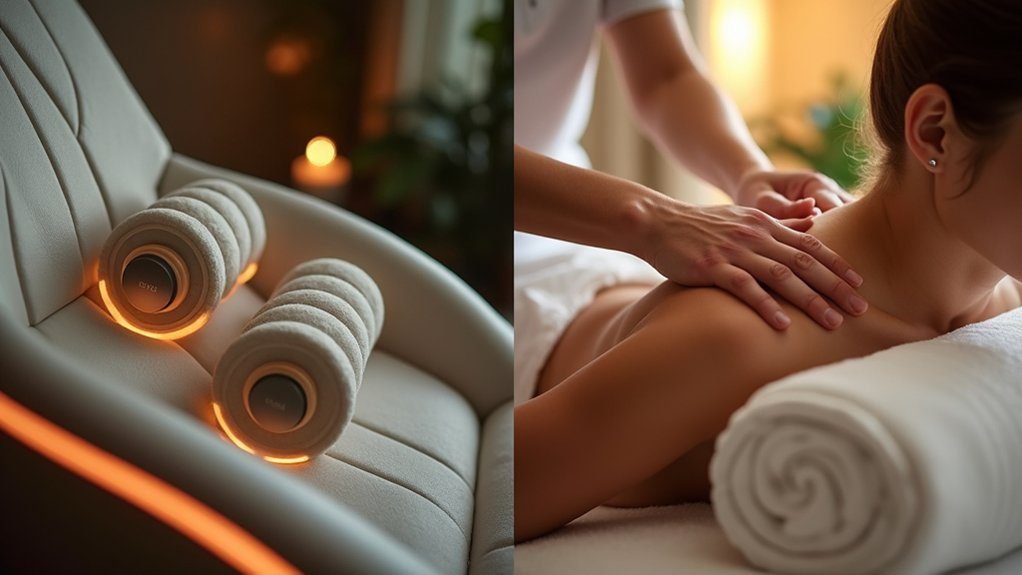
While traditional massage methods have long relied on human touch, modern massage chair technology has revolutionized personal relaxation and muscle recovery. Advanced massage chairs now utilize sophisticated 4-roller systems that meticulously mimic professional therapist techniques, delivering precise muscle tension relief through intuitive movements. These innovative devices integrate multiple technological elements like zero-gravity recline, customizable settings, and strategic air compression techniques to target specific muscle groups thoroughly.
High-end models incorporate heat therapy, enhancing therapeutic benefits by promoting deeper muscle relaxation and improving circulation. The intricate design allows users to experience full-body relaxation through programmed and manual settings that adapt to individual physical needs. By replicating professional massage methodologies, these technologically sophisticated chairs provide a scientifically structured approach to muscle recovery and tension management.
Professional Massage Techniques Explained
Professional massage techniques represent a sophisticated, scientifically-structured approach to muscular rehabilitation and stress management. These targeted methods address chronic pain and muscle tension through specialized interventions:
Scientifically-structured massage techniques transform manual manipulation into precise therapeutic interventions for muscular healing and stress relief.
- Deep tissue massage penetrates muscle layers, breaking down adhesions and releasing deep-seated tension
- Shiatsu techniques apply precise finger pressure along meridian points, restoring energy balance and promoting holistic relaxation
- Hot stone massages utilize strategically heated stones to enhance circulation and muscle recovery
- Swedish massage employs systematic strokes to reduce stress and improve overall muscular flexibility
Each professional massage technique is meticulously tailored to your specific physiological needs, ensuring personalized treatment that addresses individual pain patterns, injury history, and stress response. The scientific precision of these approaches transforms massage from a mere comfort technique into a sophisticated therapeutic intervention, delivering measurable health benefits through strategically applied manual manipulation.
Comparing Muscle Tension Relief Approaches
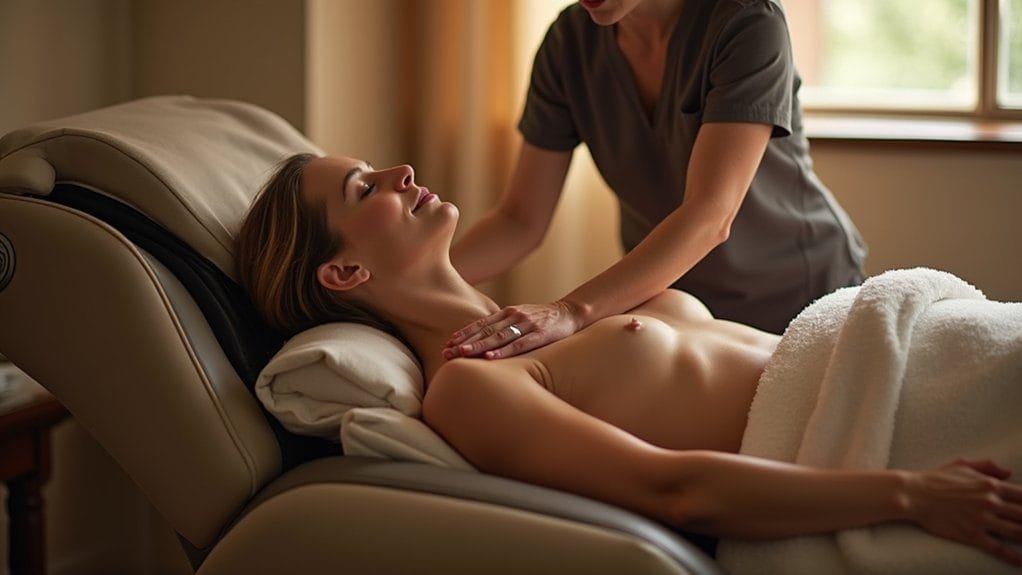
Because muscle tension relief strategies vary widely in approach and effectiveness, understanding the comparative mechanisms of manual massages and massage chairs becomes essential for targeted therapeutic intervention. Professional massages offer precision targeting of muscle tension through adaptive techniques, while massage chairs provide generalized relaxation using advanced features like shiatsu and air compression. Your pain relief strategy should consider the nuanced differences: manual massages excel in addressing specific muscle knots and individual needs through real-time pressure adjustment, whereas massage chairs deliver consistent, automated relief. Ideal results often emerge from combining both approaches—utilizing massage chairs for daily relaxation and professional massages for deep, targeted muscle treatment. This integrated strategy maximizes overall muscle tension management and promotes thorough physical recovery.
Cost Analysis of Massage Options
Cost considerations play a pivotal role in determining the most economically viable massage solution. When evaluating long-term cost dynamics, your investment strategy hinges on individual usage frequency and budget preferences.
- A massage chair represents a one-time investment ranging from $2,000 to $10,000, eliminating recurring massage session fees
- Professional massages typically cost $50-$200 per session, generating substantial cumulative expenses
- Frequent massage users can recoup their massage chair investment within 1-2 years
- Infrequent users might find professional massages more financially pragmatic
The economic analysis demonstrates that massage chair offers significant potential savings for consistent users. By comparing the financial trajectories of professional massages versus a massage chair, you’ll discover a quantifiable approach to managing muscle tension while optimizing your healthcare expenditure.
Personalization and Comfort Factors
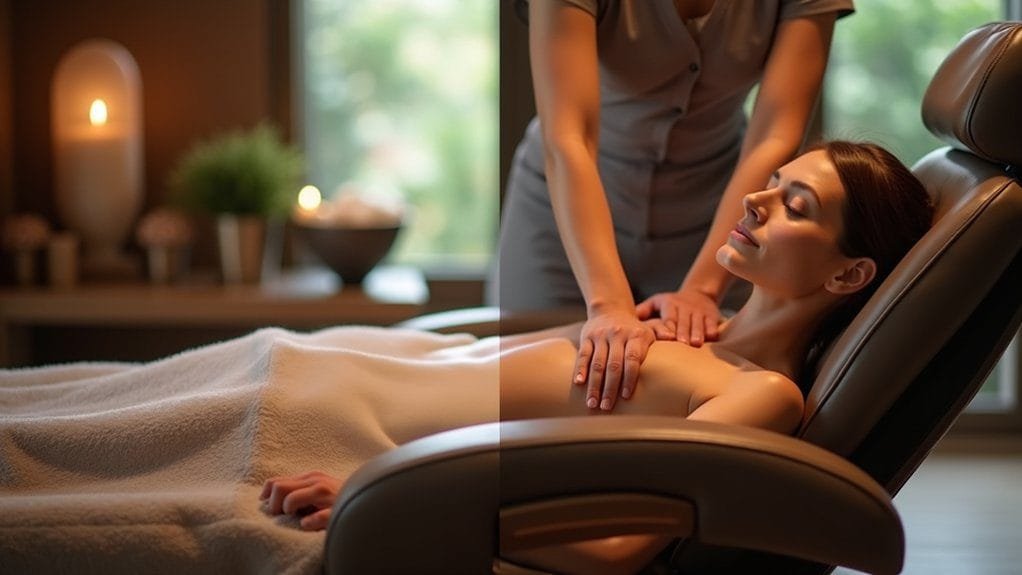
Beyond the financial calculations of massage investments, the nuanced domain of personalization and comfort emerges as a critical evaluative dimension. When comparing massage chairs and professional massages, the personalization potential greatly influences user experience. Massage chairs offer adjustable settings and pre-programmed techniques, enabling users to customize their relaxation and pain relief strategies, while professional massage therapists provide targeted manual manipulation through nuanced human touch.
| Massage Chairs | Professional Massage |
|---|---|
| Preset Programs | Individual Assessment |
| Convenient Access | Personalized Attention |
| Limited Adaptability | Dynamic Technique Modification |
Professional massages excel in delivering personalized attention, dynamically responding to individual muscle tension and pain conditions. While massage chairs provide convenience and consistent performance, they cannot fully replicate the adaptive, empathetic approach of skilled manual therapists who interpret and respond to body-specific requirements in real-time.
Making the Right Choice for Your Needs
How can you discern the ideal massage solution tailored to your physiological and lifestyle requirements? Selecting between massage chairs and professional massages depends on nuanced personal factors and specific muscle tension relief objectives.
- Evaluate your primary goal: targeted relief versus everyday relaxation
- Assess your budget for long-term investing in a massage solution
- Consider frequency of muscle tension and stress and anxiety management needs
- Analyze personal preferences for instant relaxation versus personalized techniques
Professional massages excel in addressing chronic conditions through hands-on, specialized techniques, while massage chairs offer features designed for convenient, on-demand tension reduction. Your choice should align with individual physiological requirements, financial constraints, and desired therapeutic outcomes. Technologically advanced massage chairs provide cost-effective, immediate relief, whereas manual interventions offer precision-targeted muscular interventions.
Frequently Asked Questions
What Is the Best Massage for Muscle Tension?
You’ll find deep tissue and trigger point techniques most effective for muscle tension, with sports massage and myofascial release targeting specific muscular adhesions through precise, evidence-based manual manipulation and strategic pressure application.
What Is the Best Type of Massage for Stress Relief?
You’ll find that aromatherapy benefits and guided meditation practices, combined with breathing exercises and mindfulness strategies, offer scientifically-validated stress relief techniques that can considerably reduce cortisol levels and promote neurological relaxation.
What Is the Disadvantage of Chair Massage?
You’ll face a technological torture device with chair massages! Limited customization, restricted intensity levels, and poor effectiveness reveal significant chair limitations, undermining personalized muscle tension relief compared to manual therapeutic interventions.
What Massage Technique Is the Most Relaxing?
Swedish massage likely offers the most thorough relaxation, integrating long, flowing strokes with therapeutic techniques. Its scientifically proven ability to reduce cortisol and stimulate parasympathetic responses makes it superior for holistic stress relief and muscular tension management.
Conclusion
You’ve likely been searching for the ideal muscle tension solution, ironically believing technology could replace human touch. Scientific evidence suggests both massage chairs and manual massages offer therapeutic benefits, but individual preferences and physiological responses vary. Your best choice depends on personal comfort, budget, and specific muscular needs. Ultimately, the most effective tension relief method is the one you’ll consistently use and enjoy.