
Electric ride-on cars can be safe for toddlers when engineered with critical safety features. You’ll want models with soft-start technology, adjustable speed limits (2-3 mph), secure seatbelts, and parental remote controls. Always pair the vehicle with proper protective gear like helmets and supervise constantly. Choose flat, obstacle-free environments and maintain strict operational boundaries. The right precautions transform these miniature vehicles from potential hazards into controlled learning experiences that spark early mobility development.
Key Takeaways
- Electric ride-on cars can be safe for toddlers when equipped with critical safety features like soft-start technology, limited speeds, and adjustable parental controls.
- Constant adult supervision and establishing clear, obstacle-free riding zones are essential to minimize potential accidents and ensure child safety.
- Mandatory protective gear including helmets, knee/elbow pads, and closed-toe shoes significantly reduce the risk of injury during ride-on car operation.
- Age-appropriate models designed specifically for 1-3 year olds incorporate technical specifications that accommodate children’s physical limitations and developmental stages.
- Regular maintenance and inspection of safety mechanisms, such as seatbelts and remote control functions, are crucial for maintaining the safe performance of electric ride-on cars.
Essential Safety Features for Toddler Ride-On Cars
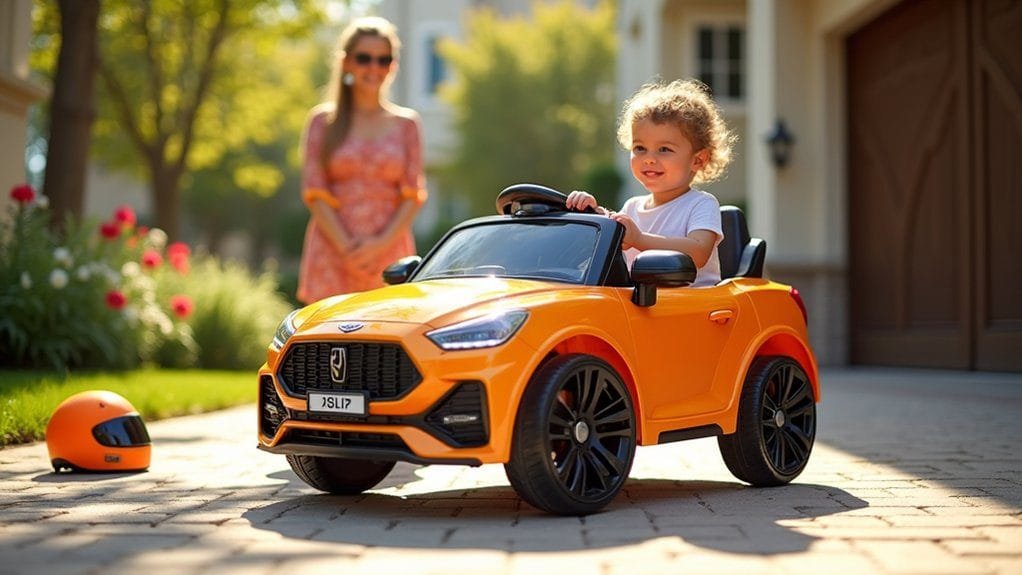
Safety is the cornerstone of any toddler ride-on car design. When selecting an electric ride-on car, you’ll want to prioritize essential safety features that minimize toy-related injuries. Soft start technology prevents abrupt jerking, ensuring a smoother ride for your little one. Adjustable speed controls are vital, typically limiting maximum speed to 2-3 mph for toddlers. Seatbelts provide important protection, securing children during operation and reducing fall risks. Parental remote control options give you immediate intervention capabilities, allowing direct management of the vehicle’s movement and speed. Anti-slip tires enhance stability across different surfaces, maintaining consistent grip and control. By carefully evaluating these safety mechanisms, you’ll create a secure environment that allows your toddler to explore and enjoy their ride-on car with minimal risk, transforming playtime into a safe, exciting adventure.
Selecting the Right Age-Appropriate Electric Vehicle
While exploring the world of electric ride-on vehicles for toddlers requires careful consideration, parents can systematically evaluate age-appropriate options by focusing on critical design parameters.
When selecting an electric car for younger children, prioritize models engineered specifically for 1-3 year old child safety:
Safety first: electric ride-on vehicles for toddlers demand meticulous selection focusing on age-appropriate design and protective features.
- Choose toy cars with limited speeds (2-3 mph) and soft-start technology to prevent sudden movements
- Verify robust safety features like adjustable seatbelts and stable construction to minimize tipping risks
- Confirm parental remote control capabilities for enhanced supervision of the child’s driving experience
Technical specifications matter greatly. Electric ride-on vehicles must accommodate specific age groups’ physical limitations and developmental stages. Parental remote control systems provide an additional safety layer, allowing immediate intervention if needed. By methodically evaluating these critical factors, parents can confidently select an age-appropriate electric vehicle that balances developmental stimulation with thorough safety protocols.
Protective Gear and Riding Guidelines
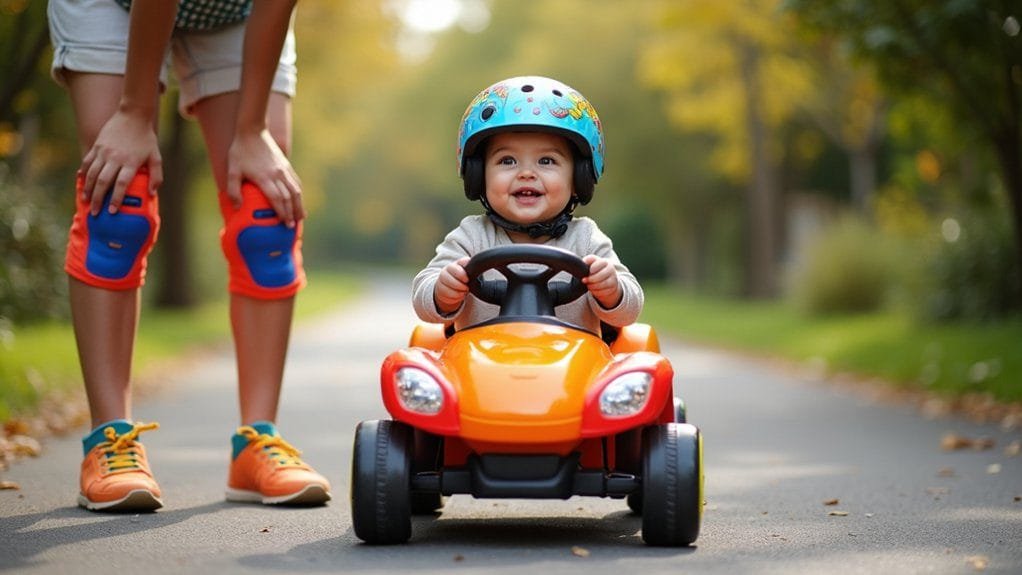
After selecting an age-appropriate electric ride-on car with robust safety features, parents must systematically address the next vital component: protective equipment and operational protocols.
| Protective Gear | Safety Guidelines |
|---|---|
| Helmet (mandatory) | Supervise constantly |
| Knee/elbow pads | Use remote controls |
| Closed-toe shoes | Establish safe boundaries |
Matching protective gear to your child’s age and size is essential for ride-on car safety. You’ll want to prioritize a well-fitted helmet to prevent head injuries, complemented by additional padding for vulnerable joints. When selecting a safe place for operation, choose flat, open areas away from potential hazards like driveways or water. Remote controls allow you to manage speed and guarantee child-safe environments. By consistently reinforcing safety practices and demonstrating proper usage, you’ll help your toddler develop responsible driving habits while minimizing injury risks during electric ride-on car experiences.
Creating a Safe Driving Environment
When designing a secure environment for toddlers’ electric ride-on cars, parents must meticulously assess and prepare the driving area to mitigate potential risks. The safe driving environment depends on strategic planning that considers the child’s age and toy car specifications.
Strategically plan safe driving zones for toddler electric ride-on cars, considering age and vehicle specifications.
- Select flat, open spaces like fenced backyards with smooth surfaces, free from obstacles that could compromise the electric ride-on car’s stability and the child’s safety
- Establish clear boundaries and designated driving zones away from hazardous areas such as driveways, streets, or water features
- Maintain constant supervision, ensuring the child adheres to predefined safe driving guidelines and remains within the controlled environment
Carefully curating a controlled driving space minimizes potential accidents and provides a structured, enjoyable experience for young riders using their electric ride-on cars.
Parental Supervision and Maintenance Strategies
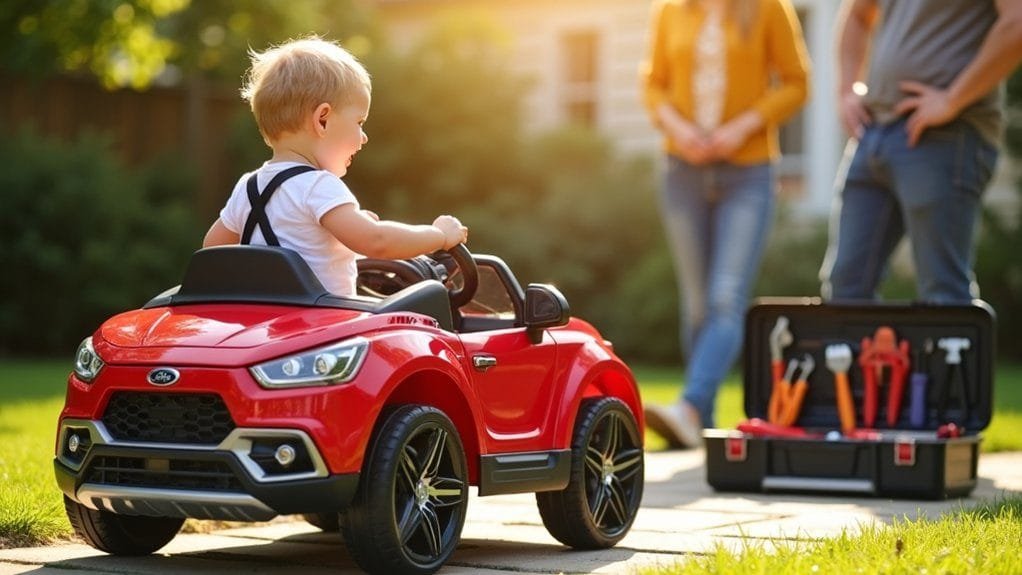
Because effective parental supervision forms the cornerstone of safe toddler ride-on car experiences, parents must develop a thorough approach to monitoring and maintaining these electric ride-on cars. Regular inspection of safety features and implementation of strategic oversight are critical to preventing accidents.
| Supervision Strategy | Maintenance Action |
|---|---|
| Remote control monitoring | Battery system check |
| Designated play areas | Structural component inspection |
| Protective gear enforcement | Electrical connection verification |
| Continuous visual tracking | Safety mechanism testing |
You’ll want to systematically evaluate your toddler’s ride-on car before each use. Check electrical components, verify seatbelt functionality, and ascertain the vehicle operates within safe parameters. Utilizing parental remote control features allows precise speed and directional management, while protective gear mitigates potential injury risks. Your methodical approach transforms these electric vehicles from potential hazards into safe, enjoyable play experiences.
Frequently Asked Questions
Are Ride-On Cars Safe for Toddlers?
You’ll find ride-on cars safe when you follow manufacturer guidelines, use safety features, supervise closely, select age-appropriate models, maintain recommended speed limits, and guarantee proper terrain and battery handling per user manuals.
Can a 2 Year Old Use an Electric Car?
You’ll want a ride-on car specifically designed for 2-year-olds, featuring low-speed settings, safety restraints, and parental controls. Choose models with weight limits matching toddler driving skills, ensuring supervised use and proper protective gear.
What Age Can Kids Ride Electric Car?
You’ll find ride-on cars tailored for various ages: from 2-4 years with low speeds and safety features, to 5-10 years with advanced models. Always prioritize supervision, weight limits, and age-appropriate vehicle specifications for safe, skill-developing outdoor play.
Are Remote Control Cars Safe for Kids?
Remote control cars can be safe when you follow age recommendations, use kid-friendly designs, implement battery precautions, and maintain constant parental supervision during outdoor play. Always review operating instructions and guarantee crash-tested models meet safety standards.
Conclusion
Electric ride-on cars can be safe for toddlers when you’re diligent about safety protocols. Like a carefully navigated sailing vessel, your child’s ride requires precise preparation and constant supervision. Prioritize age-appropriate models, implement robust safety measures, and always monitor their driving experience. By selecting vehicles with essential safety features, providing proper protective gear, and maintaining a controlled environment, you’ll transform a potential risk into an enjoyable, secure learning opportunity for your toddler.