
You’ll reduce your head injury risk by up to 66% when wearing a bicycle helmet, compared to riding without one. Over 80,000 cycling-related head injuries occur annually, with more than half of fatal accidents involving helmetless cyclists. A properly fitted helmet acts as a critical barrier against traumatic brain injury, transforming potentially catastrophic impacts into survivable incidents. Want to understand the full protective science?
Key Takeaways
- Helmet use reduces the risk of severe head injuries by up to two-thirds, dramatically improving cyclist safety during accidents.
- Over half of fatal cycling accidents involve cyclists without helmets, indicating protective gear significantly decreases mortality risk.
- Meta-analyses demonstrate that helmets decrease the likelihood of severe trauma by more than 50% across different cycling scenarios.
- Modern helmet technologies like expanded polystyrene (EPS) foam and MIPS actively absorb and mitigate impact forces during collisions.
- Properly fitted helmets positioned low on the forehead with correctly adjusted straps provide the most effective head protection for cyclists.
The Critical Role of Bike Helmets in Injury Prevention
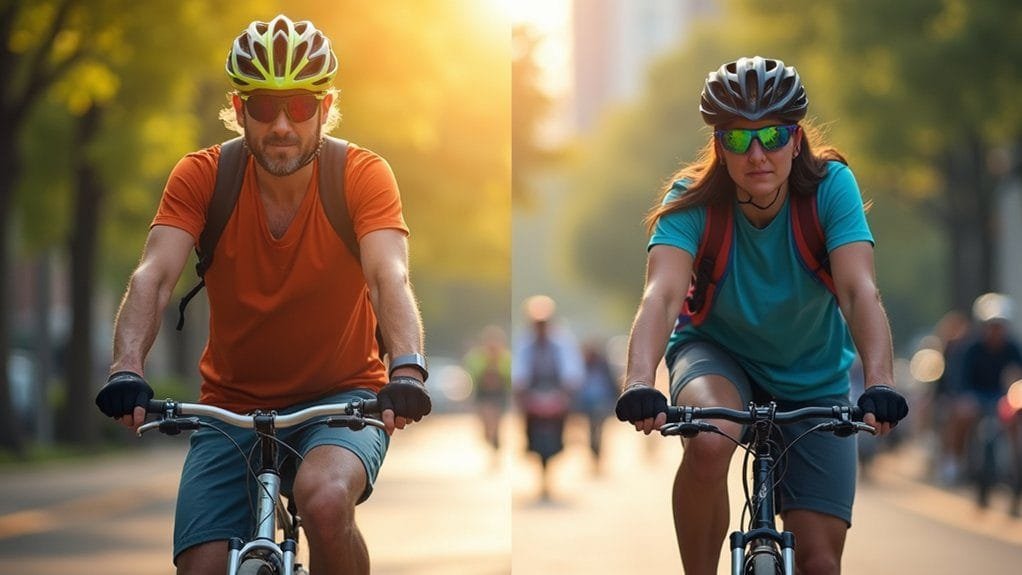
While cycling can be an exhilarating form of exercise and transportation, the stark reality of potential head injuries underscores the critical importance of wearing a helmet. Your safety hinges on this simple yet powerful protection mechanism. Research reveals that helmet use can reduce the risk of severe head injuries by up to two-thirds, making it an essential safety measure for cyclists.
With over 80,000 cycling-related head injuries treated annually in emergency departments, the stakes are high. More than half of fatal cycling accidents involve cyclists without helmets—a preventable tragedy. By choosing to wear a properly fitted helmet, you’re greatly decreasing your risk of traumatic brain injury and potentially saving your life through this fundamental injury prevention strategy.
Shocking Statistics: Head Injuries Without Helmet Protection
Over 80,000 cycling-related head injuries underscore the devastating consequences of riding without proper head protection. Without bike helmets, you’re dramatically increasing your risk of serious head trauma. Studies reveal that more than half of cyclists killed in collisions weren’t wearing helmets, highlighting the critical importance of helmet use.
Your chances of experiencing a Traumatic Brain Injury skyrocket when you choose to ride unprotected. The National Highway Traffic Safety Administration confirms that helmetless cyclists face considerably higher risks in cycling accidents. Research demonstrates that helmet protection can reduce head injury risks by up to 60%, transforming a potentially fatal incident into a manageable one.
Don’t become a statistic. Prioritize your safety with a simple, life-saving piece of equipment.
Scientific Evidence: How Helmets Reduce Trauma and Save Lives

Scientific research provides compelling evidence that bike helmets are a vital protective measure in reducing traumatic head injuries during cycling accidents. Meta-analyses demonstrate that helmet use greatly decreases the likelihood of severe trauma, with studies showing head injury risk reduction by over 50%. When you wear a helmet, you’re protecting yourself against potentially life-threatening brain injuries that can occur in shared road environments. The protective benefits are consistent across different ages and crash scenarios, with observational data revealing dramatically lower odds of serious injury for helmeted cyclists. Clinical research underscores that proper helmet use can be the difference between minor and catastrophic outcomes. In high-risk cycling situations, your helmet serves as a vital barrier against potential neurological damage, making it an essential safety investment.
Understanding Helmet Design and Impact Absorption Technology
Because modern bicycle helmets represent a critical intersection of engineering and safety, their design focuses intently on mitigating traumatic brain injury through sophisticated impact absorption technologies. You’ll find that helmet design prioritizes energy dissipation using expanded polystyrene (EPS) foam, which strategically compresses during collision to reduce force transmission to your skull. The Consumer Product Safety Commission certifies these safety equipment standards, ensuring each bicycle helmet meets rigorous impact protection criteria.
Advanced technologies like MIPS further enhance protection by addressing rotational forces during oblique impacts. When you select a helmet, you’re choosing a meticulously engineered device specifically designed to minimize head injuries. Lightweight materials and improved ventilation now complement these critical safety mechanisms, demonstrating that protective technology can be both sophisticated and comfortable.
Debunking Common Myths About Bicycle Helmet Safety

While many cyclists harbor misconceptions about helmet safety, empirical evidence consistently challenges these myths with robust statistical analysis. Research demonstrates that wearing a bike helmet notably reduces the risk of head injuries by over 50%, contradicting beliefs that helmets offer minimal protection. Although some argue that helmet laws don’t correlate with decreased injury rates, studies show a clear protective benefit, with a 2001 review indicating a 60% reduction in overall head injury risk.
However, nuanced considerations exist. Dr. Ian Walker’s research revealed potential unintended consequences, such as drivers passing helmeted cyclists more closely, suggesting complex interactions between helmet use and perceived safety. Understanding these subtleties is essential for a thorough public health approach to cyclist protection.
Proper Helmet Fitting: The Key to Maximum Protection
When it comes to bicycle safety, proper helmet fitting isn’t just a recommendation—it’s a critical factor in preventing potentially life-altering head injuries. Your helmet’s placement and adjustment directly impact its protective capabilities during an impact. Position the helmet low on your forehead, ensuring 1-2 finger widths above your eyebrows, with straps forming a precise “Y” shape at the earlobes.
| Key Fitting Aspect | Correct Placement | Risk If Incorrect |
|---|---|---|
| Helmet Position | Low on forehead | Reduced protection |
| Strap Adjustment | Snug “Y” shape | Helmet displacement |
| Chin Strap Tension | One finger width | Potential ejection |
| Regular Inspection | Check for damage | Compromised safety |
Regular maintenance and precise fitting transform your bike helmet from a mere accessory to a critical safety instrument, minimizing head injury risks during cycling.
Cost vs. Protection: Choosing the Right Helmet for Your Needs
Cyclists face a vital decision when selecting a helmet: balancing cost with extensive protection. While budget constraints matter, investing in a high-quality bicycle helmet greatly reduces the risk of head injury. Certified helmets meeting CPSC safety standards can decrease severe head injuries by over 50%, making them a vital protective investment. Advanced technologies like MIPS provide additional rotational impact protection, though at a higher price point. Premium helmets often incorporate superior materials and design features that enhance safety beyond basic models. Your choice should prioritize certification, fit, and technological advancements over mere affordability. Consider that a $100 helmet with robust safety features offers considerably better protection than a $20 alternative, potentially preventing life-altering trauma during cycling accidents.
Beyond Helmets: Comprehensive Cycling Safety Strategies
Although helmet use remains critical, extensive cycling safety demands a multifaceted approach that extends far beyond personal protective equipment. Urban infrastructure design plays a pivotal role in reducing cycling injuries, with strategic interventions like dedicated bike lanes and traffic calming measures greatly mitigating risk. Public awareness campaigns can educate motorists and cyclists about shared road responsibilities, while carefully crafted helmet legislation shouldn’t discourage cycling participation.
Your safety depends on thorough strategies that integrate infrastructure improvements, behavioral education, and protective gear. Research indicates that collaborative efforts among policymakers, urban planners, and public health experts can create safer cycling environments. By focusing on systemic changes rather than individual equipment, you’ll contribute to a holistic approach that addresses the complex dynamics of cyclist safety.
Frequently Asked Questions
How Much Safer Is Wearing a Bike Helmet?
You’ll reduce your head injury risk by over 50% when wearing a properly fitted helmet, dramatically improving cycling safety and potentially preventing severe trauma during unexpected accidents.
Is Cycling Without a Helmet Safer?
You’re not safer cycling without a helmet. Injury statistics reveal a 50-66% increased risk of head trauma. Helmet effectiveness is scientifically proven, making cycling safety dramatically dependent on proper head protection.
Do Bike Helmets Really Protect You?
You’ll cut your head injury risk by 60% with a properly fitted helmet meeting safety standards. Impact-resistant design and correct fit are essential for effective injury prevention in cycling’s high-risk environment.
Is It Better to Wear a Bike Helmet Yes or No?
You’ll considerably reduce head injury risk by 50-60% when wearing a properly fitted helmet. Cycling safety guidelines strongly recommend helmet usage based on compelling injury prevention statistics and thorough risk assessment research.
Conclusion
When you strap on a helmet, you’re not just wearing protective gear—you’re donning a life-saving shield. The data speaks volumes: helmets reduce head injury risks by up to 85%, transforming potential tragedy into survival. Picture a delicate brain, cushioned from devastating impact, protected by engineered layers of defense. Your choice is clear: ride smart, ride protected, and let science be your guardian on every cycling journey.