
When it comes to versatility in the kitchen, food processors and blenders each shine in their own way. Food processors excel at chopping, slicing, and shredding, making meal prep a breeze. They offer various attachments for precise texture control. Blenders, on the other hand, create creamy smoothies and puréed soups while effortlessly crushing ice. Ultimately, your choice depends on your cooking needs. Stick around to discover more about when to use each appliance effectively!
Key Takeaways
- Food processors offer greater versatility with multiple functions like chopping, slicing, shredding, and grating, making them suitable for diverse meal prep tasks.
- Blenders excel in creating smooth textures and are best for liquid-based mixtures, including smoothies and soups.
- Food processors have larger capacities and can handle bulk ingredients, making them ideal for meal prepping and large batches.
- Blenders efficiently crush ice and frozen fruits, making them perfect for frozen drinks and creamy textures.
- Overall, food processors provide more cooking versatility, while blenders focus on liquid-based tasks and smooth results.
Understanding the Key Differences
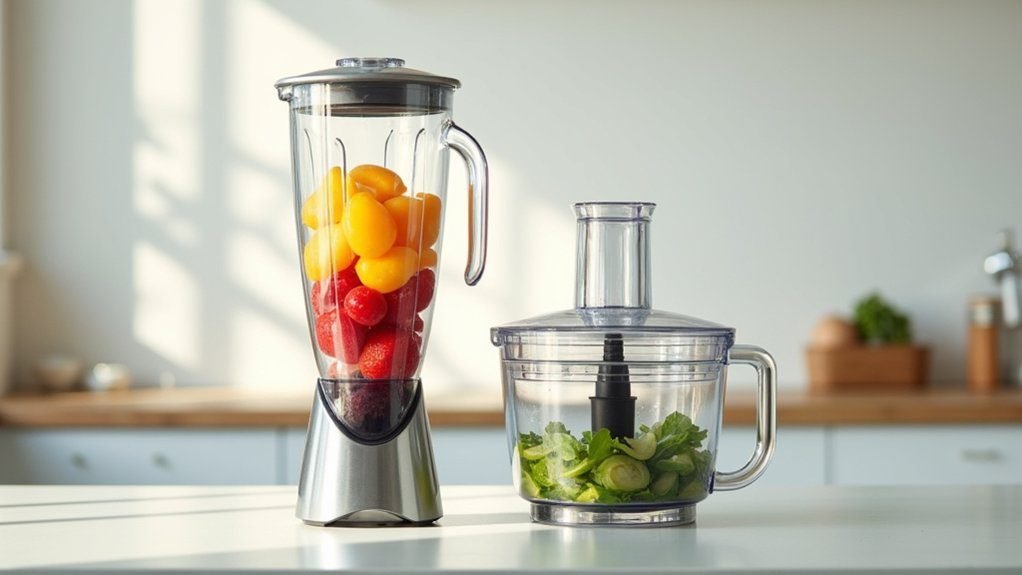
When it comes to kitchen appliances, understanding the key differences between blenders and food processors can greatly enhance your cooking experience. Blenders excel at pureeing and creating smooth textures in liquid-based mixtures like smoothies and sauces. They’re tall and narrow, designed primarily for liquefying ingredients. In contrast, food processors offer versatility with larger bowls and various attachments for chopping, slicing, shredding, and grating solid ingredients. This allows you to tackle a wider range of kitchen tasks, like making dough or nut butter. While blenders handle ice and frozen fruits efficiently, food processors provide more control over textures, making them ideal for finely chopped vegetables or coarse grates. Knowing these differences helps you choose the right tool for your cooking needs.
Advantages of Food Processors
While you might think of blenders as the go-to for smoothies and soups, food processors offer a wealth of advantages that can transform your food prep experience. Food processors excel in multitasking, effortlessly chopping, slicing, shredding, and grating, making them perfect for various tasks. With sharp blades and interchangeable discs, you’ll have precise control over your ingredients’ texture, achieving both coarse and fine consistencies. They shine when making dough, nut butters, and sauces, easily handling thicker mixtures that blenders struggle with. Plus, their larger capacities, often ranging from 3 to 18 cups, are ideal for meal prep. The Cuisinart DFP-14WGY, with its 14-cup work bowl, stands out for durability, often lasting up to 30 years.
Advantages of Blenders
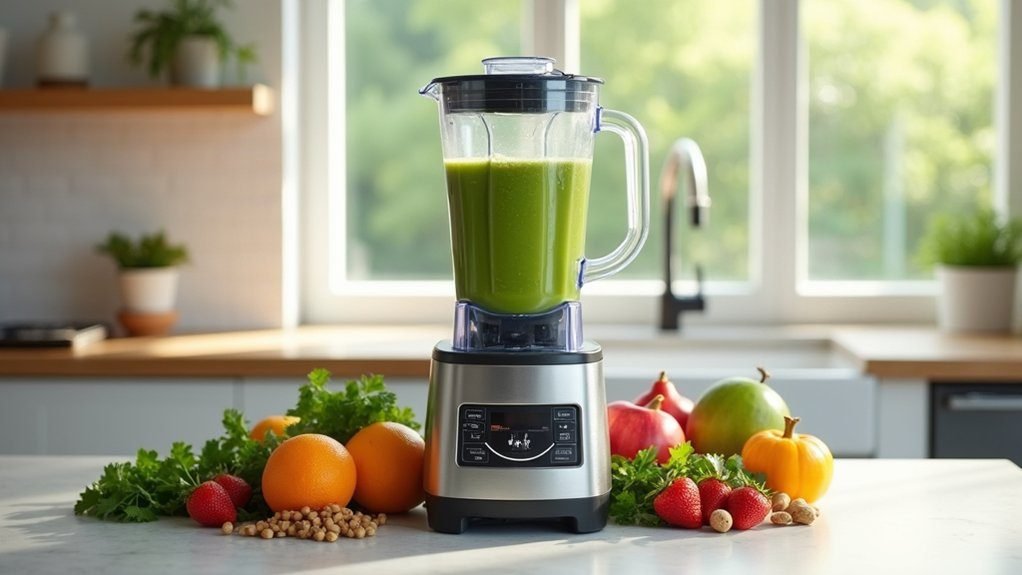
Food processors shine in their versatility, but blenders carve out their own niche with unmatched efficiency in creating silky smooth textures. A blender is your go-to appliance for making creamy smoothies, puréeing soups, and whipping up sauces in no time. High-speed blenders can crush ice effortlessly, making them perfect for frozen drinks and icy desserts. Their compact design means they won’t take up much counter space, and cleanup is a breeze—many components are dishwasher safe. Plus, the pour spouts found on many models make transferring liquids simple and mess-free. Whether you’re blending up a morning smoothie or crafting a rich nut butter, a blender offers versatility and convenience that’s hard to beat.
When to Use a Food Processor
If you’re looking to streamline your meal prep, a food processor is your best ally. This versatile small kitchen appliance excels at multitasking, making it perfect for chopping, slicing, shredding, and puréeing. With sharp blades or interchangeable attachments for making dough, nut butter, and sauces, you’ll achieve quick and easy results, especially when handling large quantities. Imagine cutting your prep time in half! Food processors typically have capacities ranging from 3 to 18 cups, accommodating various portion sizes effortlessly. Plus, their large feeding tubes let you add whole fruits and vegetables without pre-cutting, further simplifying the process. Whether you’re whipping up a salad or preparing a large batch of pesto, a food processor is indispensable for efficient meal prep.
When to Use a Blender
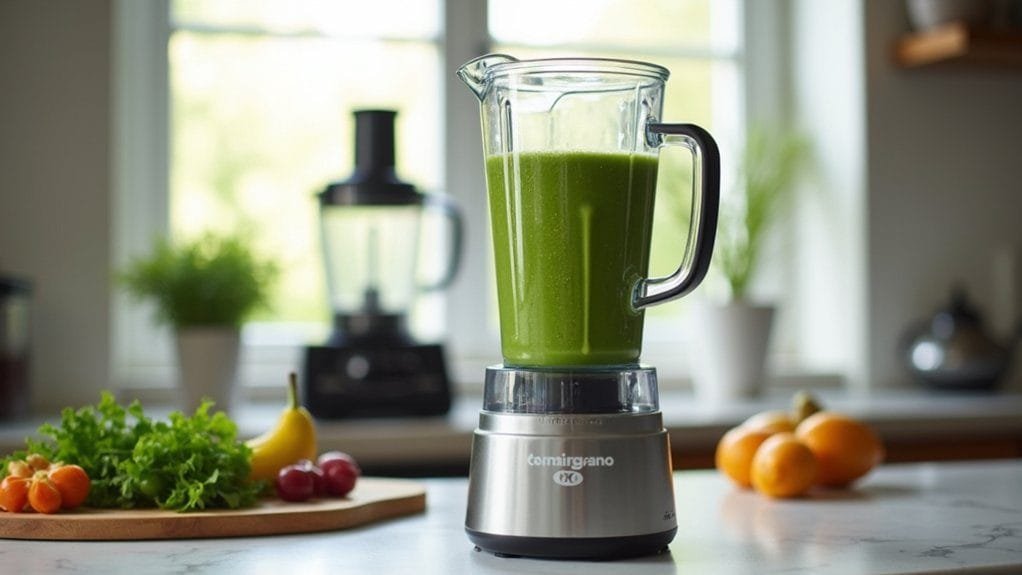
For creating velvety smoothies, icy cocktails, or puréed soups, a blender is your go-to appliance. This high-performance machine excels at achieving smooth textures in liquid-based recipes. When you’re crushing ice or blending frozen fruit, you’ll appreciate the blender’s powerful RPM and sharp blades designed for such tasks.
| Feature | Blender |
|---|---|
| Best for | Smoothies, soups, sauces |
| Capacity | 4 to 9 cups |
| Price Range | $15 to $730 |
| Blending Efficiency | High with tall pitcher |
| Cleaning | Clean immediately after use |
Can You Use One as the Other?
While both blenders and food processors serve essential roles in the kitchen, knowing when to use one over the other can greatly enhance your cooking experience. You can certainly use a food processor or blender interchangeably, but here’s what to keep in mind:
- Blenders excel at liquefying and creating smooth textures.
- Food processors shine with tasks like chopping and shredding.
- Using a food processor for smoothies may yield a coarser texture.
- Blenders struggle with thicker mixtures, like dough or nut butter.
- Food processors have interchangeable blades for greater versatility in food preparation.
Make sure to choose the right tool for the job to maximize efficiency. If you want versatility in one unit, consider a combined appliance, but remember they may not outperform dedicated models.
Cost Comparison: Food Processors vs. Blenders
When it comes to choosing between blenders and food processors, you’ll find a considerable range in prices that can affect your decision. Blenders typically range from $29.99 to $600, offering more budget-friendly options for entry-level users. In contrast, food processors are priced between £74.99 and £800, with the higher price tag often justified by their multifunctionality and efficiency in diverse cooking tasks.
| Appliance Type | Price Range |
|---|---|
| Budget-Friendly | $29.99 – $200 |
| High-Performance | $600 – $700 |
| Food Processors | £74.99 – £800 |
| Popular Models | $150 – $700 |
Ultimately, your choice hinges on your cooking needs and how much you’re willing to invest.
Expert Recommendations for Your Kitchen
How can you elevate your cooking game with the right appliances? Investing in a high-speed blender and a versatile food processor can greatly enhance your kitchen efficiency. Here’s what experts recommend:
- Best Food Processors like the Cuisinart Custom 14-Cup excel at chopping, slicing, and shredding.
- A high-speed blender like the Vitamix 5200 is perfect for smooth textures in drinks and sauces.
- Consider a food processor attachment for your Vitamix to save space and tackle emulsifying tasks.
- A compact design blender-food processor combo is ideal for small kitchens, offering the versatility of both.
- Choose based on your individual cooking habits: blenders for liquid-based recipes and food processors for solid ingredient preparation.
With the right tools, you’ll transform your culinary experience!
Frequently Asked Questions
Will a Blender Do the Same Job as a Food Processor?
A blender can’t fully replace a food processor. While it excels in smoothie making and blending techniques, its appliance limitations hinder chopping efficiency, dough mixing, and achieving desired puree consistency compared to versatile food processor tasks.
Is It OK to Use a Blender as a Food Processor?
You can use a blender for some food prep, but it won’t match a food processor’s capabilities. Blending techniques may compromise texture control, making ingredient processing less efficient. Consider versatility factors before adapting recipes.
Is a Food Processor Better Than a Hand Blender?
You might wonder if a food processor’s functions surpass a hand blender’s advantages. While the former offers meal prep versatility, motor strength, and attachment options, the latter shines in kitchen space usage and blending techniques. Price differences could sway you, too.
How Versatile Is a Blender?
A blender’s versatility shines through in smoothie creation, soup blending, and ice crushing. You can whip up nut butter, frozen desserts, and sauce emulsification while easily making smoothie bowls and purees for delightful meals.
What Additional Versatility Does a Blender Offer Compared to a Food Processor?
When deciding between a blender or food processor, consider the additional versatility a blender offers. Blenders excel at creating smoothies, soups, and sauces with a consistent texture. Their ability to crush ice and blend frozen fruits makes them ideal for drinks, while food processors may struggle with these tasks.
Conclusion
In the battle of blenders versus food processors, it’s clear both appliances have their strengths. Did you know that around 70% of home cooks find food processors indispensable for meal prep? Whether you’re whipping up smoothies or chopping veggies, choosing the right tool can elevate your cooking experience. Ultimately, knowing when to use each appliance can reveal a world of culinary possibilities, making your kitchen adventures even more enjoyable and efficient. Happy cooking!