
When comparing Bluetooth and wired speakers, wired options typically deliver superior sound quality. They provide stable connections and support high-resolution audio formats with minimal latency, making them ideal for gaming and live events. In contrast, Bluetooth speakers excel in convenience and portability, allowing for wireless freedom and easy placement. While advancements in wireless technology have improved sound fidelity, wired speakers remain the preferred choice for serious audiophiles. Explore further to uncover more about your options.
Key Takeaways
- Wired speakers generally provide superior sound quality with direct audio signals, reducing compression and latency issues common in Bluetooth connections.
- High-resolution audio formats are more easily supported by wired systems, leading to enhanced audio clarity and detail.
- Bluetooth speakers may face interference and compression, which can degrade sound quality, especially at high volumes.
- While wireless speakers offer convenience and portability, they often sacrifice audio fidelity compared to wired options.
- Advanced wireless codecs can improve Bluetooth sound quality, but wired connections remain more reliable for consistent audio performance.
Overview of Wired and Wireless Speakers
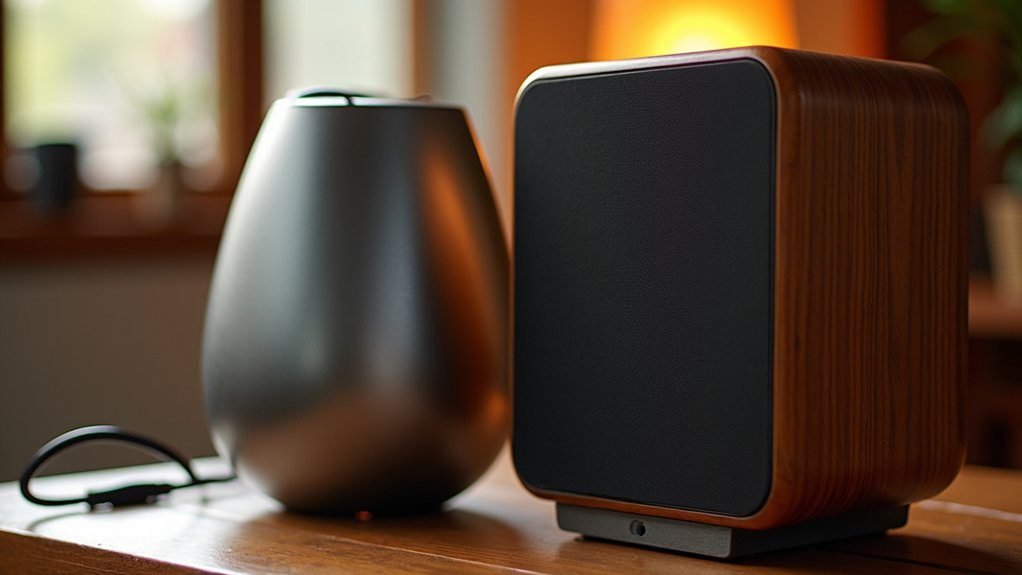
When you compare wired and wireless speakers, it is essential to recognize their fundamental differences in functionality and performance. Wired speakers transmit audio signals through physical cables, ensuring minimal signal loss and superior audio quality. This stability allows them to outperform wireless options in sound fidelity. On the other hand, wireless speakers utilize technologies like Bluetooth or Wi-Fi, providing greater flexibility in placement and convenience for casual listening. They integrate seamlessly with modern devices, such as smartphones and tablets, but might experience latency and interference depending on environmental conditions. While wired speakers offer a broader range of budget-friendly options, wireless speakers often include advanced features that can elevate their price point. Understanding these distinctions can guide your choice effectively.
Sound Quality Comparison
The choice between wired and wireless speakers markedly hinges on sound quality, a critical factor for discerning listeners. Wired speakers generally deliver superior sound due to direct audio signals, ensuring clarity and accuracy. In contrast, Bluetooth audio often faces quality loss from compression, particularly with older codecs like SBC, which can degrade your experience at high volumes. However, advancements such as aptX HD have improved Bluetooth sound quality, making it more competitive. Still, latency issues in Bluetooth can hinder real-time audio performance, making wired connections preferable for gaming or live events. Overall, while Bluetooth technology has progressed, wired speakers maintain an edge in consistent audio fidelity.
| Feature | Wired Speakers | Bluetooth Audio |
|---|---|---|
| Sound Quality | Superior | Variable |
| Compression | None | Yes |
| Latency | Low | Higher |
Convenience and Portability
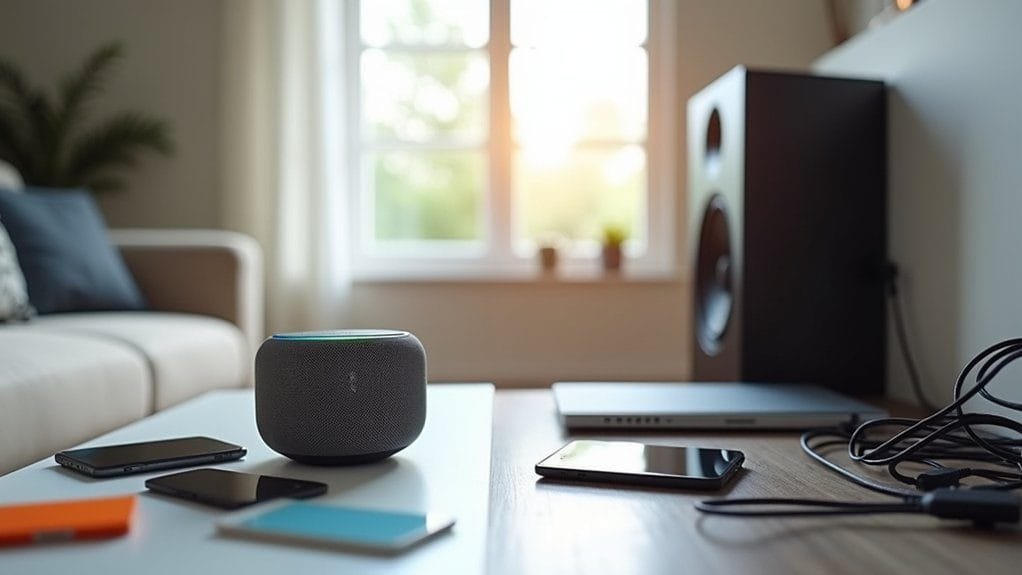
While both wired and wireless speakers have their merits, convenience and portability clearly favor wireless options. Wireless speakers allow you to place and move them effortlessly, free from the constraints of cables. With minimal setup, Bluetooth speakers connect to your devices with just a few taps, whereas wired options often require intricate installation. Most wireless speakers operate on batteries, making them ideal for outdoor activities or on-the-go listening, unlike stationary wired speakers tethered by cables. The absence of wires in wireless setups contributes to a cleaner aesthetic, reducing clutter. Additionally, many wireless speakers integrate seamlessly with smart home systems, offering voice control and remote access, enhancing your overall convenience in ways traditional wired setups can’t match.
Compatibility and Connectivity
Although wired speakers guarantee compatibility with a wide range of audio sources through direct physical connections, wireless speakers offer flexibility by utilizing Bluetooth or Wi-Fi technology. Wired connections guarantee stable connectivity across vintage and modern devices, providing consistent audio quality with minimal signal loss. In contrast, wireless speakers can seamlessly pair with smartphones and tablets, enhancing convenience. However, they may face interference from other devices, which can compromise audio quality. Many wireless models now support advanced codecs like aptX HD, achieving sound quality comparable to wired options. Still, the overall compatibility largely hinges on your audio source and device capabilities, making it essential to evaluate both connectivity methods based on your specific needs and preferences.
Cost Considerations
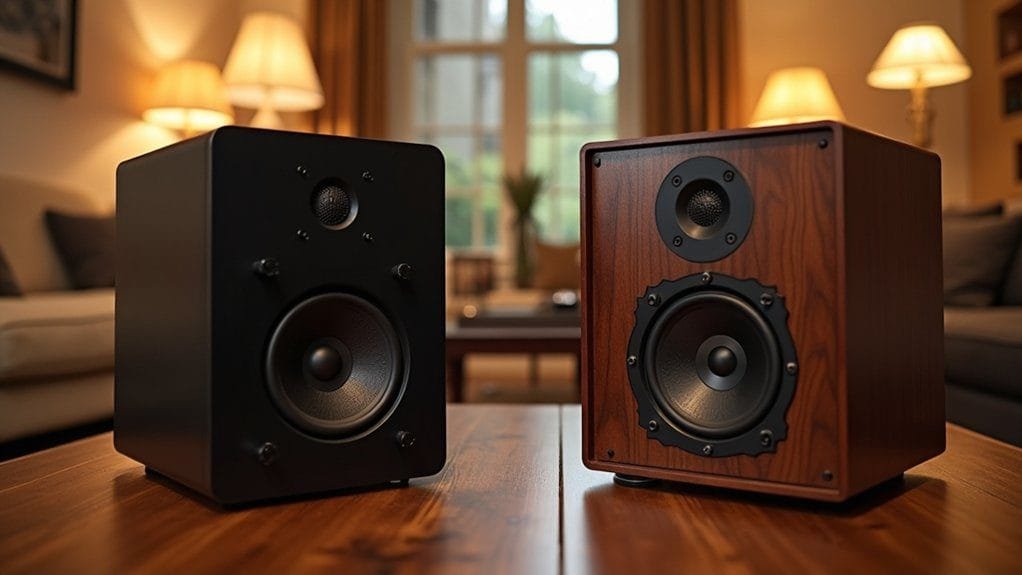
When considering your audio setup, cost plays an essential role in deciding between wired and wireless speakers. Wired speakers typically offer more budget-friendly options, delivering superior sound quality at lower price points. Entry-level models excel in audio fidelity without the complexities of advanced technology. In contrast, wireless speakers can be markedly more expensive due to their incorporation of Bluetooth or Wi-Fi, elevating convenience but increasing costs. Additionally, ongoing expenses for maintenance, like battery replacements for portable models, can add up. It’s important to factor in these long-term expenses when evaluating cost considerations. Ultimately, wired speakers often provide greater value for money regarding performance per dollar spent, making them a strong choice for budget-conscious audio enthusiasts.
Pros of Wireless Speakers
Wireless speakers offer several advantages that enhance their appeal for modern audio setups. Their flexibility in placement allows you to position them anywhere within the wireless signal range, eliminating the constraints of physical cables. Installation is a breeze, requiring no drilling or complex wiring, making them ideal for renters or anyone after a hassle-free setup. Many wireless speakers seamlessly integrate with smart home systems, enabling convenient voice control and interaction with other smart devices. Additionally, their sleek designs promote a cleaner aesthetic, as the absence of visible wires reduces clutter in your space. With advancements like the aptX HD codec, newer models can deliver audio quality that rivals wired speakers, greatly enhancing your listening experience.
Cons of Wireless Speakers
While the convenience of wireless speakers is undeniable, several drawbacks can compromise their overall performance. Here are some key cons to evaluate:
- Audio quality degradation: High volumes can lead to compression and signal loss, diminishing your listening experience.
- Signal interference: Wireless speakers may suffer from latency and interference from other devices, impacting audio synchronization.
- Battery reliance: Many models require regular charging or battery replacement, introducing maintenance concerns and limiting operational lifespan.
- Limited range: As you move away from the audio source, performance can suffer, affecting sound clarity and connection stability.
These factors can greatly influence your enjoyment of wireless speakers, making it essential to weigh these drawbacks against their convenience.
Pros of Wired Speakers
Despite the allure of wireless convenience, wired speakers stand out for their superior performance characteristics. They deliver exceptional audio fidelity thanks to direct connections, which eliminate the compression found in wireless technologies like Bluetooth. This results in richer sound reproduction, capturing nuances that enhance your listening experience. Additionally, wired speakers exhibit minimal latency, making them perfect for gaming and professional audio applications where timing is critical. Their stable connections prevent issues related to interference and signal dropouts, ensuring consistent audio performance. Furthermore, wired speakers generally offer better value for money, being more affordable than comparable wireless options. With a rich legacy of reliability and durability, wired speakers remain a robust choice for any home audio setup.
Cons of Wired Speakers
Although wired speakers offer impressive audio quality, they come with several drawbacks that can impact your overall experience. Here are some cons to reflect on:
Wired speakers deliver excellent sound, but their installation complexity and cable management can hinder your listening experience.
- Complex installation: Setting up wired speakers often requires drilling and running cables, which can be intimidating for beginners.
- Cable management challenges: Visible cables can clutter your living space, creating a disorganized appearance if not handled properly.
- Limited placement flexibility: You’re often restricted by cable lengths, making it tough to rearrange furniture or relocate speakers without extra wiring.
- Potential audio issues: Over time, cables may wear out, leading to audio issues that complicate maintenance and require troubleshooting or replacement.
These factors can greatly influence your enjoyment of wired speakers.
Frequently Asked Questions
Do Bluetooth Speakers Sound as Good as Wired Speakers?
Bluetooth speakers can’t consistently match wired speakers’ sound quality. Sound compression and audio latency can degrade Bluetooth quality, although advancements in codecs have improved performance. For critical listening, wired connections remain superior in fidelity and reliability.
Does a Wired Connection Sound Better Than Bluetooth?
When you crave audio quality like a fine wine, a wired connection delivers richer flavors. It guarantees connection stability with minimal sound latency, providing a crisp, uninterrupted experience that Bluetooth struggles to match in precision and reliability.
Can You Hear the Difference Between Bluetooth and Wired?
You can hear the difference between Bluetooth and wired connections. In an audio quality comparison, wired setups offer superior sound fidelity, while Bluetooth may face latency issues and compression artifacts that affect overall listening experience.
Which Sounds Better Aux or Bluetooth?
Imagine a crystal-clear lake versus a rippling stream. In your audio quality comparison, AUX offers clarity without signal interference issues, while Bluetooth provides convenience factors but may compromise fidelity. Choose based on your priorities for sound quality.
Which Audio System Delivers Better Sound Quality: Bluetooth Speakers or TVs?
When comparing sound quality, many wonder about projectors or tvs for theater settings. While Bluetooth speakers offer portability and decent audio, TVs typically provide superior sound fidelity, especially when paired with quality sound systems. For an immersive experience, investing in sound-enhancing devices alongside phones or tablets is key.
Conclusion
In the battle of Bluetooth versus wired speakers, sound quality often leans toward wired options, yet wireless speakers shine in convenience. Like choosing between a classic vinyl record and a modern streaming service, your preference hinges on what you value more: pristine audio or portability. If you’re an audiophile, wired might be your best bet; however, if you’re on the go, wireless can’t be beaten. Ultimately, the choice is yours, balancing sound fidelity with lifestyle needs.