
Desk treadmills and standing desks can enhance your workplace productivity, but with nuanced trade-offs. You’ll experience a 9% cognitive processing slowdown with treadmill desks, yet gain increased blood flow and energy expenditure. Standing desks offer better posture and reduced back pain, while treadmill workstations burn more calories. Your best choice depends on task complexity and personal work style. Unpacking the research reveals deeper insights into dynamic workspace performance.
Key Takeaways
- Treadmill desks boost long-term productivity by enhancing blood flow and overall wellness, despite short-term cognitive processing speed reductions.
- Standing desks improve posture and reduce back pain, creating a more comfortable work environment that indirectly supports productivity.
- Walking workstations are best suited for less demanding tasks, allowing continuous movement without significantly compromising work performance.
- The choice between treadmill and standing desks depends on individual work requirements, physical fitness, and cognitive task complexity.
- While treadmill desks offer higher energy expenditure and potential health benefits, they come with higher costs and spatial considerations.
Understanding Active Workspaces
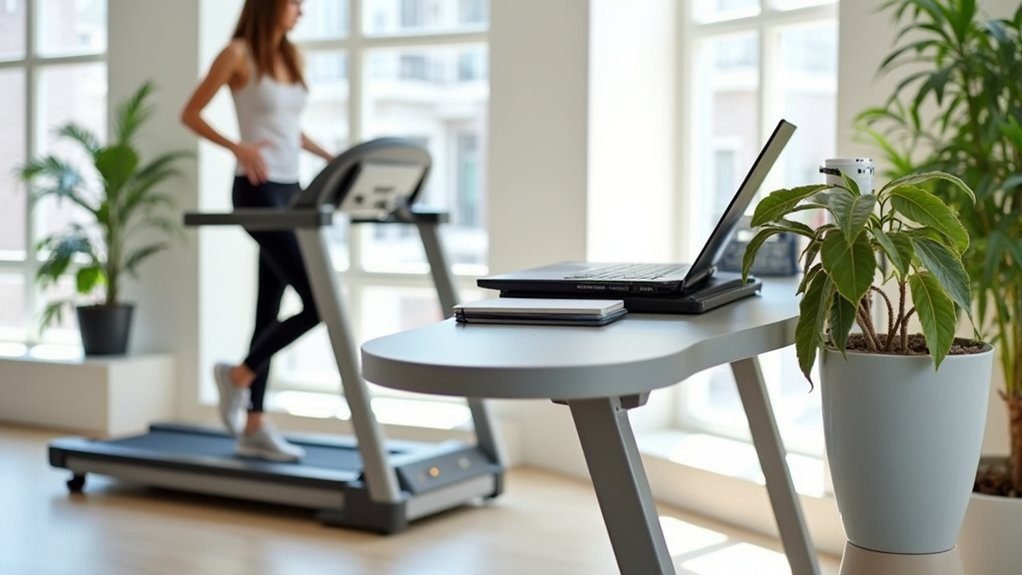
As sedentary work environments increasingly threaten employee health, active workspaces have emerged as a critical intervention strategy. Treadmill desks and standing desks represent innovative solutions designed to increase your physical activity during work hours, directly combating the health risks associated with prolonged sitting. These active workspaces provide measurable benefits for blood circulation and overall wellness, with research demonstrating their potential to elevate heart rates and energy expenditure compared to traditional desk setups.
Health Benefits Comparison
Building upon the understanding of active workspaces, the health benefits comparison between treadmill desks and standing desks reveals nuanced physiological impacts. When using a treadmill desk, you’ll experience enhanced energy expenditure and metabolic engagement compared to standing desks. Treadmill desks promote considerable calorie burning while simultaneously reducing cardiovascular disease risks and mitigating weight gain potential. Unlike standing desks, which primarily address back pain and posture, treadmill workstations offer more extensive health advantages. You’ll experience mood elevation, cognitive function improvement, and increased productivity through active movement. While slight cognitive performance declines might occur during initial adaptation, the long-term health benefits greatly outweigh temporary adjustments. The research consistently demonstrates that integrating physical activity into your workspace can transform sedentary work environments into dynamic, health-promoting settings.
Productivity and Performance Analysis

How do treadmill desks impact workplace productivity and cognitive performance? Research reveals a nuanced relationship between movement and professional output. When using a treadmill desk, you’ll likely experience a 9% decrease in cognitive processing speed, potentially challenging complex task completion. Your typing speed may reduce by approximately 13 words per minute, indicating performance trade-offs during high-concentration activities.
Despite these limitations, treadmill desks and standing desks offer compelling health and productivity advantages. Increased blood flow from dynamic workstations can offset cognitive processing challenges, suggesting that less demanding tasks remain suitable for walking workspaces. While productivity metrics might temporarily decline, the long-term health benefits could ultimately enhance workplace performance and individual energy levels, making alternative desk configurations a strategic wellness investment.
Ergonomic Considerations
Workplace wellness strategies extend beyond productivity metrics to prioritize physical comfort and ergonomic design. When evaluating standing desks and treadmill desks, you’ll want to take into account several vital ergonomic factors:
- Adjustable height features are essential for standing desks to accommodate different user heights and prevent musculoskeletal strain.
- Anti-fatigue mats can mitigate discomfort from prolonged standing and reduce leg fatigue.
- Comfortable, supportive footwear is fundamental for both standing and walking desks to prevent foot and leg pain.
- Ergonomic setups should balance movement with task complexity, recognizing that walking desks might reduce cognitive performance during intensive work.
Cost and Space Factors
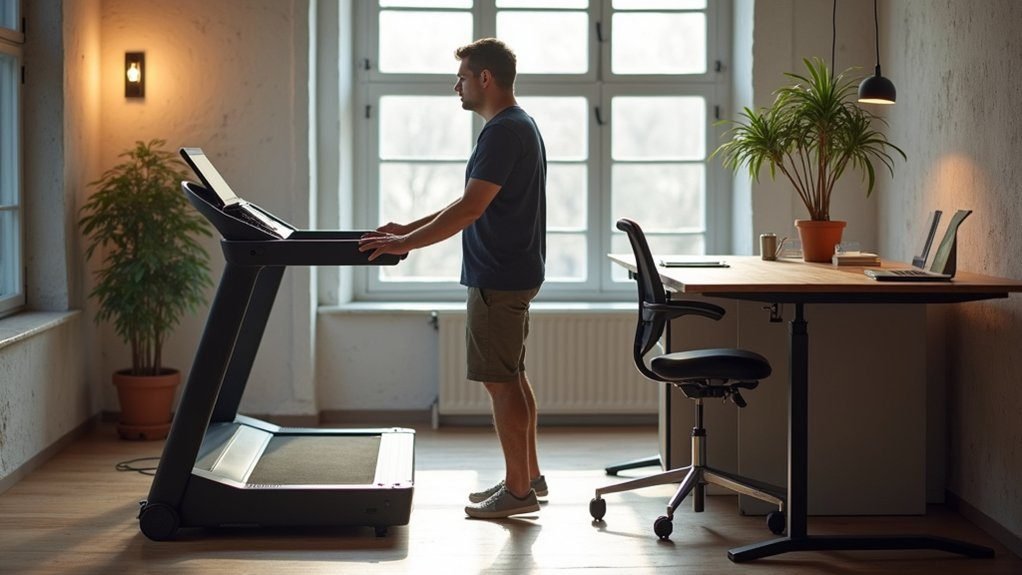
When evaluating desk alternatives for a modern workspace, budget and spatial constraints emerge as critical decision-making factors. Treadmill desks typically represent a significant investment, ranging from $400 to $3,000, compared to standing desks‘ more budget-friendly price point starting around $200. You’ll find that space requirements differ substantially between these ergonomic solutions. Treadmill desks demand more square footage, potentially challenging smaller office environments, while standing desks offer a more compact footprint that easily integrates into diverse workspace layouts.
Consider long-term maintenance costs: treadmill desks may require more complex upkeep, whereas standing desks primarily need minimal ergonomic accessories like anti-fatigue mats. Your choice should balance initial cost, spatial limitations, and potential ongoing maintenance expenses to optimize workplace productivity and comfort.
Personal Preference and Work Style Alignment
Might personal ergonomic preferences fundamentally determine the effectiveness of your alternative workspace solution? Your work style and comfort greatly influence the productivity potential of treadmill desks and standing desks:
- Cognitive Performance: Standing desks enhance focus for intense tasks, while treadmill desks suit less demanding work, potentially impacting your cognitive performance.
- Movement Preferences: If you’re someone who thrives on activity, a treadmill desk offers more dynamic engagement compared to a static standing desk.
- Adaptation Requirements: Both workspace solutions demand adjustment periods, with individual comfort levels varying based on personal physical tolerance and work habits.
- Task Complexity: Align your workspace choice with task intricacies, recognizing that walking while working might distract from high-concentration activities.
Ultimately, your personal preference will dictate the most effective ergonomic workspace solution.
Frequently Asked Questions
Do Desk Treadmills Increase Productivity?
Desk treadmills don’t directly boost productivity; they’re best for low-cognitive tasks. You’ll experience slight performance dips, but gain energy, mood improvement, and physical activity, potentially enhancing long-term workplace health and employee satisfaction.
Is a Standing Desk Better Than a Treadmill Desk?
You’ll find standing desks offer superior ergonomic benefits and focus enhancement, with fewer distraction factors compared to treadmill desks. They improve posture, maintain consistent energy levels, and support workspace efficiency without compromising cognitive performance.
Are Standing Desks Better for Productivity?
You’ll find standing desks boost productivity through ergonomic benefits, enhancing focus, energy levels, and employee satisfaction by reducing physical strain and creating a dynamic work environment with measurable health impacts.
Are Treadmill Desks Good for ADHD?
You’ll harness your neurodivergent energy through a treadmill desk, transforming workplace challenges into cognitive opportunities. By integrating physical movement, you’ll potentially mitigate ADHD symptoms, enhance focus, and optimize cognitive function through strategic, evidence-supported workplace interventions.
Conclusion
Choosing between desk treadmills and standing desks depends on your unique work dynamics. Recent studies reveal a 12% productivity boost with active workstations, highlighting their transformative potential. You’ll need to weigh ergonomic comfort, physical adaptability, and personal workflow preferences. While both options offer health advantages, your individual work style ultimately determines the most effective solution for enhanced performance and workplace wellness.