
When it comes to home security, professional systems usually offer greater safety and reliability compared to DIY installations. Professionals guarantee ideal placement and monitor your home with advanced technology, greatly reducing potential vulnerabilities. DIY systems can seem cost-effective, but they often lack essential features and support, leaving gaps. Investing in professional installation gives you peace of mind and expert support for emergencies. Discover how these factors can influence your choice and enhance your security strategy as you explore further.
Key Takeaways
- Professional security systems utilize advanced technology, ensuring better coverage and compliance with safety regulations, enhancing overall effectiveness.
- DIY systems often lack advanced features, potentially leaving security gaps and inadequate protection for vulnerabilities.
- Professional installations are conducted by trained technicians, reducing the risk of human error during setup and troubleshooting.
- Professional monitoring services offer dedicated support, whereas DIY systems rely on online resources, which may not be as effective.
- Trust in expert handling of security needs provides greater peace of mind, reducing stress related to system maintenance and operation.
Overview of Security Systems
When it comes to securing your home, understanding the differences between DIY and professional security systems can help you make an informed decision. DIY security systems are typically more cost-effective, as they eliminate installation fees and allow for quick setup, often in under an hour. These wireless systems, like SimpliSafe and Ring Alarm, offer smart security features and user-friendly mobile app integration, letting you customize your protection based on your preferences. On the other hand, professional installation guarantees that trained technicians optimize the placement and functionality of components, though this comes at a cost, ranging from $49 to $249. Ultimately, whether you choose a DIY approach or professional installation, both options can provide effective monitoring services and protection for your home.
What Is DIY Installation Like?
Although many homeowners appreciate the cost savings, DIY installation requires careful planning and execution to guarantee effective security coverage. Typically, this process takes between 30 minutes to two hours, depending on your system’s complexity. Most DIY security systems are wireless and designed for easy setup, allowing you to pair sensors via a mobile app. However, all installation responsibilities fall on you, which means you’ll need to plan component placement and troubleshoot any issues. While some systems are straightforward, others may require tools or even drilling for mounting. Although DIY installation reduces installation costs, it can increase the risk of human error compared to professional installation services. Ultimately, ensuring your smart home provides peace of mind is paramount.
Pros & Cons of DIY Installation
While DIY installation offers a cost-effective solution for many homeowners, it comes with both advantages and disadvantages that are essential to take into account. The primary benefit is the absence of installation fees, saving you money compared to professional services. You’ll enjoy flexibility in setup, typically taking just 30 minutes to two hours, and you’ll have control over sensor placement tailored to your specific needs. However, the risk of human error is significant, potentially leading to security gaps. Additionally, if you encounter issues, troubleshooting can be challenging without immediate professional support, especially if you’re not tech-savvy. Weighing these pros and cons will help you determine if DIY installation aligns with your security options and capabilities.
What Is Professional Installation Like?
Professional installation of security systems offers a level of expertise and assurance that DIY options often can’t match. While it typically incurs an extra fee, ranging from $49 to $249.99, the benefits are substantial. You’ll need to schedule an appointment and be present during the installation process, allowing trained technicians to guarantee ideal placement of your security components.
Here’s what you can expect:
| Step | Description |
|---|---|
| Appointment | Schedule and prepare for technician arrival |
| Installation Time | Can take several hours, based on complexity |
| Placement | Technicians guarantee ideal positioning |
| Tutorial | Post-installation overview of system features |
| Troubleshooting | Technicians handle any installation challenges |
Investing in professional installation means peace of mind regarding system setup and functionality.
Key Considerations for Choosing Between DIY and Professional Installation
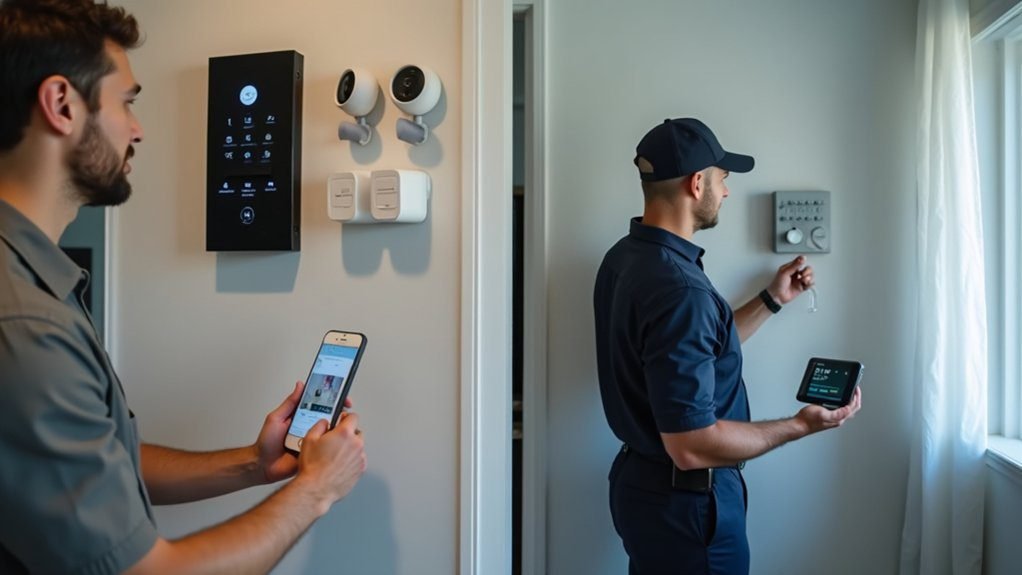
When deciding between DIY and professional installation for your security system, what factors should you weigh most heavily? Here are some key considerations:
- Budget: DIY installation usually incurs no extra costs, while professional options can range from $49 to $249.99.
- Complexity of the System: DIY systems are user-friendly but may require more effort. Professionals guarantee ideal setup.
- Time Availability: DIY can take 30 minutes to two hours, whereas scheduling for professionals may be less flexible.
- Future Expansion: DIY systems are easily modifiable, while professional installations might have stricter relocation policies.
Cost Comparison of DIY vs. Professional Installation
Choosing between DIY and professional installation for your security system often boils down to cost. DIY security systems typically have no installation fees, making them a budget-friendly option. In contrast, professional installation can range from $49.00 to $249.99, depending on the company and complexity of the system. While activation fees may apply, many DIY systems waive these charges, further lowering your expenses. Monthly monitoring costs also differ; professional systems usually charge between $45 and $60, while DIY options offer self-monitoring for as little as $5 per month. Plus, DIY setups allow for easy upgrades with individual security devices, whereas professional installations might incur additional costs for new equipment or services, making DIY a compelling choice for budget-conscious consumers.
Third-Party Installation Services
While many homeowners appreciate the convenience of professional installation services, third-party installers can offer a budget-friendly alternative without sacrificing quality. Here are some key points to reflect on:
- Cost-Effective: Third-party installation services are often priced lower than company-provided options while delivering similar expertise.
- Flexibility: Platforms like TaskRabbit and Thumbtack let you choose from various background-checked service providers for your security installation needs.
- Security Checks: HomeAdvisor conducts financial and criminal checks, ensuring peace of mind when selecting contractors.
- Warranty Risks: Be cautious; using third-party installers may void your warranty if damage occurs during installation, impacting your professionally installed security system’s reliability.
Evaluate these factors to make informed decisions about your DIY security system or professional home security options.
Customer Support and Warranties
Understanding customer support and warranty options is essential for making an informed decision about your security system. DIY systems often rely on online resources and user forums for assistance, which can leave you feeling unsupported during installation. In contrast, professional security systems typically offer dedicated support through trained representatives, ensuring you get immediate help.
Here’s a comparison of customer support and warranty features:
| Feature | DIY Systems | Professional Security |
|---|---|---|
| Customer Support | Online resources | Phone and chat support |
| Warranty Length | Varies (up to 2 years) | Extensive coverage |
| Installation Assistance | Limited | On-site support |
| Post-Installation Support | Minimal | Ongoing tutorials |
Choosing a system with robust customer support and reliable warranties can provide you peace of mind.
Final Thoughts on Safety and Security
When considering your safety and security, it’s crucial to weigh the benefits of DIY systems against professional services. Here are some key points to ponder:
- Cost vs. Coverage: DIY systems may save money but can lead to gaps in monitoring and response times.
- 24/7 Monitoring: Professional security offers round-the-clock monitoring and swift emergency responses, enhancing overall safety.
- Expert Assessments: Trained professionals provide tailored solutions that identify vulnerabilities—something DIY systems often overlook.
- Reliability and Compliance: Professional installations use advanced technology and comply with regulations, ensuring better performance and potential insurance benefits.
Ultimately, investing in professional security services often leads to greater peace of mind compared to the DIY approach. Prioritize your safety—it’s worth it.
Frequently Asked Questions
Are DIY Security Systems Worth It?
DIY security systems are worth it if you value cost-effective solutions, customization options, and user-friendly technology. They offer scalability for your needs, but consider maintenance requirements and smart home integration for a thorough approach.
Do Home Security Systems Really Deter Burglars?
Home security systems considerably deter burglars, backed by burglary statistics showing a 300% increase in risk for unprotected homes. Their psychological deterrent effect and effective security system features enhance homeowner perceptions and encourage quicker police response.
Who Makes the Best DIY Security System?
When choosing the best DIY security system, consider top DIY brands like SimpliSafe and Abode for installation ease, smart home integration, and system scalability. Compare monitoring options and costs while reviewing customer feedback to find your ideal fit.
Do Security Systems Make You Safer?
Imagine sleeping soundly, knowing your home’s secure. Security systems boost safety with proven crime statistics, offering peace of mind, reliable monitoring options, and insurance discounts, ultimately enhancing neighborhood safety and deterring potential threats.
Conclusion
In the tug-of-war between DIY and professional security systems, your choice can be the difference between a fortress and a flimsy fence. While DIY options offer flexibility and savings, professional installations provide expertise and reliability. Weigh the pros and cons carefully, as your safety is the crown jewel you’re protecting. Ultimately, choose the path that guarantees peace of mind, making your home a sanctuary rather than a target. Your security deserves nothing less than the best.