
Yes, air purifiers effectively help with pet allergies. You’ll capture up to 99.97% of pet dander and hair using True HEPA filters, which trap microscopic allergens as small as 0.3 microns. These devices systematically remove airborne proteins from dander, urine, and saliva that trigger respiratory symptoms. By continuously filtering indoor air, you’ll greatly reduce allergen concentrations and minimize allergic reactions. The science behind air purification promises extensive relief for pet allergy sufferers.
Key Takeaways
- Air purifiers with True HEPA filters can effectively capture up to 99.97% of microscopic pet dander particles as small as 0.3 microns.
- Specialized air purifiers reduce airborne allergens from pet hair, saliva, and dander, significantly minimizing respiratory symptoms like sneezing and congestion.
- Continuous air purification systematically eliminates pet allergens embedded in indoor environments, leading to improved air quality and fewer allergic reactions.
- Strategic placement of air purifiers in high-traffic areas and regular filter maintenance enhance their effectiveness in controlling pet-related allergens.
- Long-term use of air purifiers can decrease the frequency of asthma attacks and respiratory complications associated with pet allergies.
Understanding Pet Allergies and Air Quality
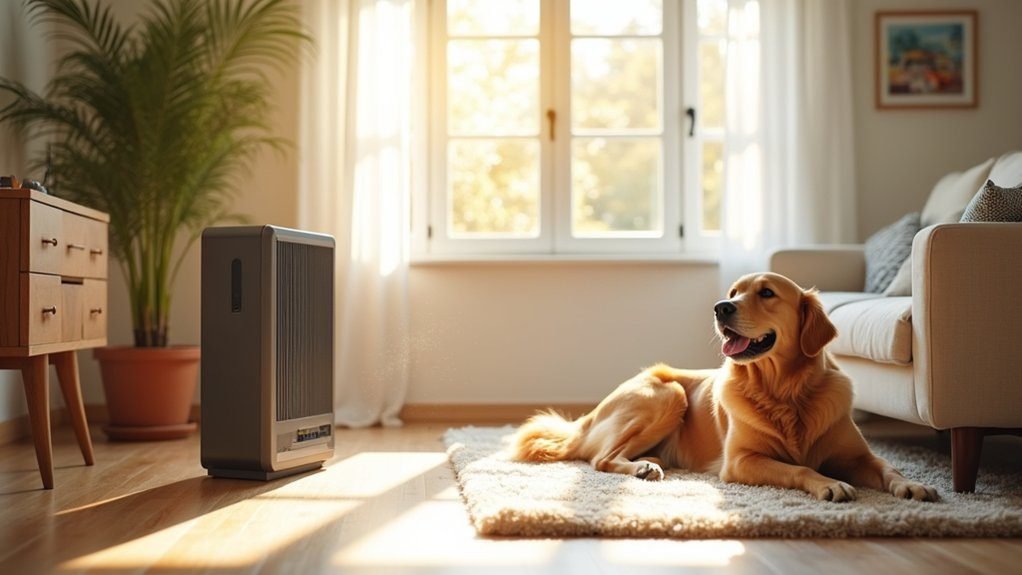
While pet ownership brings joy to millions of households, it can also introduce challenging air quality concerns for allergy sufferers. Pet allergies stem from microscopic proteins found in dander, urine, and saliva that become airborne and trigger immune responses. When you’re sensitive to these allergens, exposure can cause respiratory symptoms like sneezing, congestion, and breathing difficulties.
Your indoor environment becomes a vital factor in managing pet allergies. Airborne pet allergens circulate constantly, embedding themselves in carpets, furniture, and ventilation systems. These microscopic particles can remain suspended for extended periods, creating continuous potential for allergic reactions. Understanding how these allergens propagate and interact with your living space is essential for effectively mitigating pet allergy symptoms and maintaining ideal indoor air quality.
How Air Purifiers Capture Pet Dander and Hair
Pet allergies demand strategic air filtration solutions, and modern air purifiers offer scientifically engineered mechanisms for capturing microscopic pet-related allergens. HEPA filters in these devices effectively trap particles as small as 0.3 microns, removing up to 99.97% of pet dander and hair from your indoor environment.
| Filter Type | Particle Capture | Effectiveness |
|---|---|---|
| HEPA | Microscopic Particles | 99.97% |
| Activated Carbon | Odors | High |
| Combination Filters | Dander & Allergens | Superior |
The Clean Air Delivery Rate (CADR) determines an air purifier’s performance, with higher ratings indicating more efficient filtration. Strategic placement near pet areas maximizes allergen removal. Regular filter replacement maintains peak air purification, ensuring your living space remains free from pet-related airborne contaminants. By understanding these technical aspects, you’ll effectively manage pet allergies and improve indoor air quality.
Top Air Purifier Technologies for Pet Allergen Removal

Three advanced air purifier technologies have emerged as frontline defenders against pet allergens, offering homeowners sophisticated solutions for indoor air quality management. HEPA filtration stands as the gold standard, capturing 99.97% of microscopic particles down to 0.3 microns, effectively trapping pet dander and hair with remarkable precision. Complementing HEPA technology, activated carbon filters adsorb odors and volatile organic compounds, neutralizing pet-related airborne contaminants. UV-C light technology provides an additional layer of defense by targeting and neutralizing airborne bacteria and allergens at the molecular level. Ionizer technology further enhances allergen removal by causing particles to cluster and become more easily trapped by filters. These integrated technologies work synergistically to create a thorough pet allergen management system, ensuring cleaner, healthier indoor air for pet owners.
Choosing the Right Air Purifier for Pet Owners
Understanding the nuanced technologies behind air purification sets the stage for selecting the most effective device to combat pet allergens. When targeting pet-related allergies, you’ll want to prioritize an air purifier with a True HEPA filter, capable of capturing 99.97% of microscopic particles as small as 0.3 microns. This guarantees thorough removal of pet dander and hair from your indoor environment.
Consider the Clean Air Delivery Rate (CADR) specific to your room’s dimensions to ensure peak filtration efficiency. Devices like the MinusA2, which features a specialized Pet Allergy Customized filter, offer targeted solutions for pet owners. Position your portable air purifier strategically in high-traffic areas where allergy sufferers spend the most time, maximizing air quality improvement and allergen reduction.
Placement and Maintenance of Air Purifiers
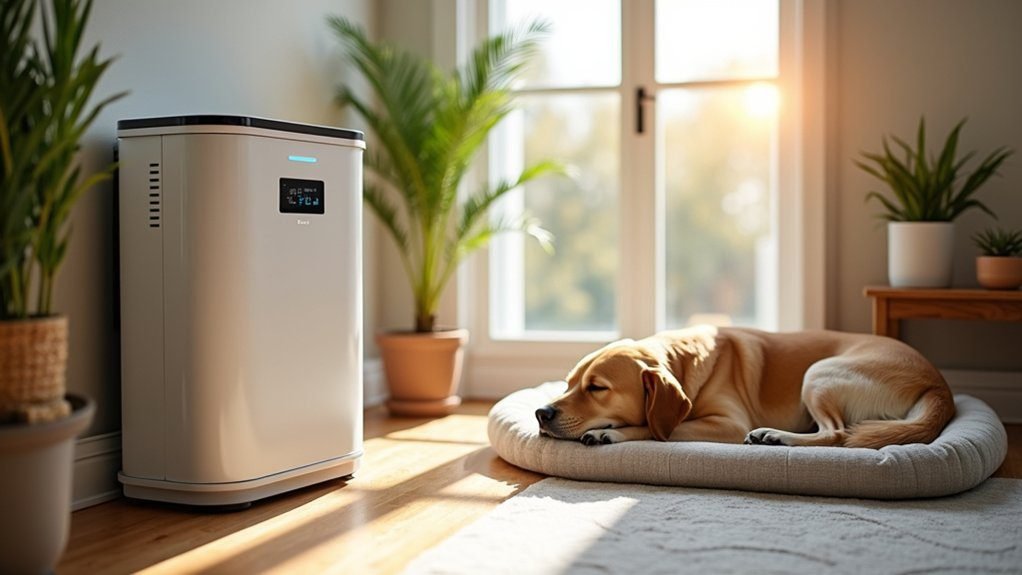
Strategically positioning your air purifier can dramatically enhance its efficiency in mitigating pet-related allergens. You’ll want to place the device in rooms where you spend the most time, guaranteeing maximum allergen reduction. Position the unit at least a few feet from walls and furniture to maximize air circulation.
| Placement Tip | Maintenance Requirement |
|---|---|
| Bedroom Focus | Replace Filters Regularly |
| Living Areas | Clean Exterior Surface |
| Away from Walls | Check CADR Specifications |
| Central Location | Monitor Airflow Performance |
| Near Pet Zones | Follow Manufacturer Guidelines |
Maintaining your air purifier requires consistent attention. Check and replace filters every 6-12 months, depending on usage and manufacturer recommendations. Regular cleaning prevents dust accumulation and guarantees peak performance. By implementing these strategic placement and maintenance practices, you’ll maximize your air purifier’s effectiveness in managing pet allergens and improving indoor air quality.
Additional Strategies to Reduce Pet Allergens
While air purifiers provide an effective solution for managing pet allergens, complementary strategies can further reduce indoor allergen levels. Implementing a consistent grooming routine helps minimize pet dander by removing loose hair and reducing surface allergens. Regular vacuuming with high-efficiency equipment targets hair and dander in carpets and furniture, preventing their accumulation. Using MERV-rated air filters in your HVAC system enhances overall air quality by capturing microscopic allergen particles. Wiping your pets after outdoor activities prevents outdoor allergens from spreading indoors. Creating designated pet-free zones, such as bedrooms, establishes allergen-controlled spaces for sensitive individuals. By combining these methodical approaches with air purification, you’ll greatly decrease pet-related allergen exposure and improve indoor air quality.
Real-World Performance of Air Purifiers
Beyond targeted cleaning methods, evaluating the actual performance of air purifiers reveals their considerable potential in managing pet allergens. Real-world testing demonstrates their effectiveness in combating airborne particles and pet odors:
- HEPA-filtered air purifiers capture 99.97% of microscopic allergens, dramatically reducing indoor particle concentration.
- Studies confirm air purifiers can decrease airborne allergens by over 50% within hours of operation, providing rapid relief for allergy sufferers.
- Specialized models like the MinusA2 with Pet Allergy Customized filters show exceptional performance in removing pet-related irritants.
The Clean Air Delivery Rate (CADR) serves as a critical metric, ensuring precise air cleaning efficiency. By matching purifier capacity to room size, you’ll optimize allergen removal and create a healthier indoor environment, considerably improving respiratory health and overall well-being for pet owners.
Cost Considerations for Pet-Friendly Air Purification
As pet owners explore air purification solutions, understanding the financial implications becomes essential for making informed decisions. Cost considerations for pet-friendly air purification involve evaluating initial investment, ongoing maintenance, and long-term benefits.
| Device Cost | Filter Replacement | Energy Efficiency |
|---|---|---|
| $100-$800 | $20-$100/year | $15-$30/year |
| Initial Investment | Maintenance Expense | Operational Cost |
| Advanced Features | Regular Filter Changes | Energy Consumption |
Strategic selection balances upfront expenses with performance. Higher-priced models with multiple filtration stages and smart connectivity often provide superior air quality, potentially reducing health-related expenses. Warranty options can mitigate repair costs, while energy-efficient designs minimize electricity consumption. By carefully analyzing these financial factors, you’ll make a cost-effective choice that addresses pet allergies and maintains a healthy indoor environment.
Long-Term Benefits of Air Purifiers for Pet Allergy Sufferers
After analyzing the financial aspects of air purification, pet owners can now explore the compelling health advantages these devices offer for allergy sufferers. Air purifiers deliver significant long-term benefits by dramatically improving indoor air quality and reducing allergenic particles.
Key advantages include:
- Continuous allergen removal: HEPA filters capture 99.97% of particles as small as 0.3 microns, systematically eliminating pet dander and hair.
- Respiratory health enhancement: Consistent air purification can decrease asthma attack frequency and minimize respiratory complications.
- Sustained symptom reduction: Regular use leads to fewer allergy symptoms over time, creating a healthier living environment.
Scientific evidence demonstrates that strategic air purifier implementation provides substantial protection for individuals sensitive to pet allergens, offering a proactive approach to managing indoor environmental health.
Frequently Asked Questions
Do Air Purifiers Really Work for Pet Allergies?
You’ll effectively reduce pet dander exposure with HEPA air purifiers, which scientifically capture 99.97% of airborne allergen particles. These precision-engineered devices consistently filter microscopic pet-related irritants, providing measurable respiratory relief for allergy sufferers.
Are Air Purifiers Worth It if You Have Pets?
Imagine Sarah’s constant sneezing vanished after installing a MinusA2. You’ll find air purifiers effectively capture pet dander, reducing allergic reactions scientifically by filtering microscopic allergen particles, providing measurable relief for sensitive individuals with furry companions.
How Do You Live in Your House if You Are Allergic to Dogs?
You’ll need strategic pet allergy management: create allergen-free zones, use HEPA air purifiers, vacuum frequently, groom your dog regularly, wash bedding weekly, and consider immunotherapy to reduce sensitivity and maintain a comfortable, symptom-controlled living environment.
What Type of Air Purifier Is Best for Pets?
You’ll want a HEPA air purifier with specialized pet filter types, prioritizing high-efficiency particulate capture and activated carbon technology. These scientifically engineered devices effectively remove pet dander, hair, and allergens from your indoor environment with precision.
Do Air Purifiers Also Help Prevent Mold That Can Trigger Pet Allergies?
Air purifiers play a crucial role in maintaining indoor air quality, but to combat mold that may trigger pet allergies, it’s essential to consider humidity levels. Knowing how dehumidifiers combat mold growth effectively can complement your air purifier, reducing moisture that fosters mold development and helping create a healthier environment for pets.
Conclusion
Powerful purifiers perfectly prevent pesky pet particulates from plaguing your personal space. You’ll breathe easier knowing advanced filtration technologies can greatly reduce allergen concentrations. By selecting the right air purifier with HEPA and activated carbon filters, you’ll mitigate respiratory risks and create a cleaner, healthier home environment. Don’t let pet allergies compromise your comfort—invest in scientific air purification solutions that deliver measurable, evidence-based allergen reduction.