
Yes, posture correctors can help improve your alignment and support your body. They provide immediate feedback, helping you develop better muscle memory. However, they’re best used short-term and alongside exercises to strengthen your muscles. Overreliance on them can lead to weakness. Different types exist, from back braces to kinesiology tape, each with varying effectiveness. Want to learn about how to use them effectively or improve your posture without a corrector? There’s more to explore!
Key Takeaways
- Posture correctors provide immediate cues for better alignment, leading to short-term improvement in posture.
- They address muscle imbalances by targeting tight and overstretched muscles, enhancing overall spinal function.
- Effectiveness varies; back braces and lower back straps generally show better results than shirts or kinesiology tape.
- Long-term benefits depend on integrating posture correctors with exercises for muscle strength and memory development.
- Overreliance on posture correctors can lead to muscle weakness, so they should be used as a supplement to professional advice.
Importance of Good Posture
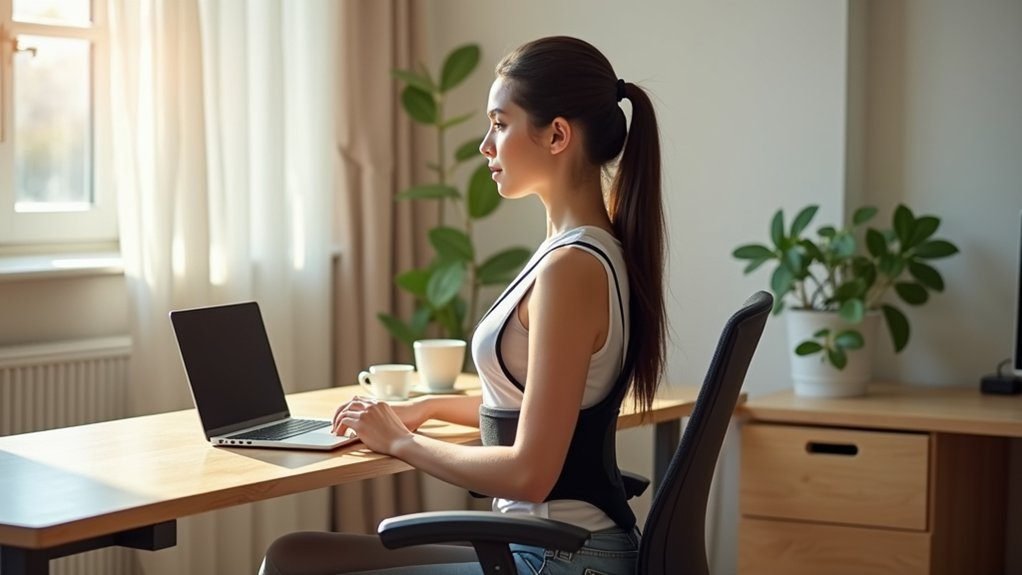
Good posture is essential not just for looking confident but also for maintaining your overall health. When you practice good posture, your musculoskeletal system functions more efficiently, helping you maintain balance and reducing the risk of fall-related injuries. Unfortunately, around 40% of adults experience back pain or posture issues during their lives due to poor posture. This can lead to complications like muscle weakness and discomfort, with billions spent on treatment. By focusing on improving posture, you can decrease stress on your body, minimizing stiffness and pain. Being aware of your posture is especially important in today’s technology-driven world, where prolonged sitting and slouching are common. Prioritizing good posture can greatly enhance your quality of life.
What Is a Posture Corrector?
A posture corrector is a specialized device designed to help you achieve and maintain proper alignment of your spine and shoulders. These wearable tools, which include back braces, lower back straps, posture-correcting shirts, and kinesiology tape, work by gently guiding your body into a more healthy posture. While they provide immediate cues for improvement, it’s important to remember that posture correctors are intended for short-term use. Overreliance can lead to muscle weakness, counteracting the benefits. Effectiveness varies; back braces generally enhance posture and shoulder muscle function, whereas posture-correcting shirts yield mixed results. Some tech-enabled devices even monitor your posture and send reminders, but their long-term efficacy remains a topic for further study.
How Posture Correctors Work

Posture correctors function by addressing the muscle imbalances that often arise from prolonged poor posture. They target tight pectoral muscles and overstretched upper back muscles, helping to realign your spine and alleviate discomfort in your neck, back, and shoulders. By providing proprioceptive feedback, these devices enhance your awareness of body positioning, encouraging you to improve your posture throughout the day. As you use a posture corrector, it facilitates the development of muscle memory for proper posture, making it feel natural over time. However, while posture correctors work effectively for minor issues, they shouldn’t replace professional advice for severe conditions. Consider them a temporary aid rather than a permanent fix as you work to maintain a healthier posture.
Types of Posture Correctors
Various types of posture correctors are available, each designed to address specific alignment issues and provide support. Back braces offer thorough support by aligning your spine and enhancing shoulder muscle function, while lower back straps focus on lumbar support. You might also consider posture-correcting shirts, though their effectiveness varies and researchers don’t widely recommend them. Kinesiology tape can help you maintain better posture, but it’s best applied by a trained professional like a physical therapist. Finally, tech-enabled devices take a modern approach, providing reminders through alerts or vibrations to help you stay aligned. While these solutions vary in design and function, they all aim to improve your posture and overall well-being.
Effectiveness of Posture Correctors
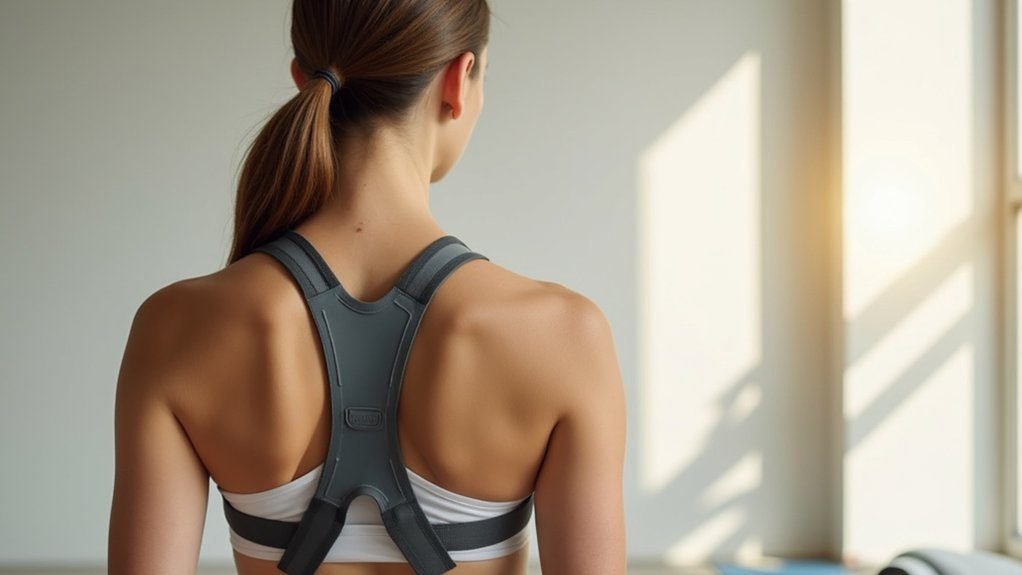
When it comes to posture correctors, their effectiveness can be quite impressive, especially for short-term use. They can instantly improve your posture while worn, but remember, long-term results depend on your individual muscle imbalances and pre-existing issues. Using them regularly can enhance muscle memory for proper posture, but overreliance may weaken your muscles.
| Aspect | Short-term Effectiveness | Long-term Considerations |
|---|---|---|
| Instant Posture Improvement | Yes | Depends on muscle strength |
| Awareness Boost | Yes | Requires ongoing exercises |
| Solution to Weaknesses | No | Must address underlying issues |
Ultimately, posture correctors should complement exercises aimed at strengthening your core and postural muscles to achieve lasting improvements.
Duration for Posture Correctors to Work
For effective results, many users find that wearing a posture corrector for about two to four hours a day strikes the right balance. This duration promotes awareness of proper posture without causing overreliance or weakening your muscles. While you might notice an instant improvement in your alignment, remember that posture correctors aren’t a permanent fix. They should be used alongside exercises to strengthen your postural muscles over time. It’s essential to gradually reduce your dependence on the device to maintain muscle engagement. If you’re experiencing pain or significant posture issues, a consultation with healthcare professionals is advisable to guarantee you’re using the correct approach for your needs.
Tips for Using a Posture Corrector
Using a posture corrector effectively requires a thoughtful approach to maximize its benefits while minimizing potential drawbacks. Here are some essential tips to help you improve posture and alleviate neck pain:
- Limit your use of the posture corrector to a few hours each day to avoid muscle dependency.
- Pair the corrector with posture-strengthening exercises to build muscle strength and support better alignment.
- Choose a posture corrector made from breathable materials for comfort and to prevent chafing.
- Verify it fits well under your clothing for discreet use in various settings.
Improving Posture Without a Corrector
Improving posture without a corrector is entirely achievable through simple lifestyle adjustments and mindful practices. Regularly changing positions while sitting can alleviate strain and enhance your physical posture. Strengthening exercises for your back, shoulders, and core provide essential muscle support for proper alignment. Additionally, incorporating ergonomic workstation setups can greatly mitigate the effects of poor posture.
| Action | Benefits |
|---|---|
| Change sitting positions | Reduces strain, improves posture |
| Strengthen core muscles | Supports alignment |
| Use ergonomic furniture | Minimizes discomfort |
Practicing awareness of your body position during daily activities helps reinforce correct alignment. Finally, maintaining a proper sleep position can positively influence your posture and reduce back pain.
Comprehensive Approach to Posture Correction
While many believe that simply wearing a posture corrector is enough to achieve better alignment, a thorough approach to posture correction encompasses much more. To effectively tackle posture problems, consider these key elements:
- Ergonomic adjustments: Optimize your workspace by adjusting chair height and screen positioning.
- Strengthening exercises: Incorporate activities like yoga and Pilates to build muscle memory.
- Stretching routines: Regularly stretch tight muscles to promote flexibility and balance.
- Daily awareness: Stay mindful of your body positioning throughout the day.
Frequently Asked Questions
Are Posture Correctors Legit?
Posture correctors can be legit, showing effectiveness measures through user testimonials. However, consider alternative solutions like strength and flexibility exercises for lasting results, rather than relying solely on devices for long-term posture improvement.
Can You Correct Years of Bad Posture?
Imagine Jane, who after years of slouching, adopted daily habits like stretching and using a posture corrector. Over months, she retrained her muscle memory, considerably improving her posture and mitigating long-term effects of her previous habits.
Do Chiropractors Recommend Posture Correctors?
Chiropractors often recommend posture correctors as effective posture support tools. Following chiropractic advice, they help improve spinal alignment temporarily, while encouraging you to strengthen postural muscles through exercises for long-term benefits and better posture habits.
Will a Posture Corrector Fix My Posture?
Did you know 80% of people experience back pain due to poor posture? While a posture corrector can improve alignment, its effectiveness relies on developing long-term habits and strengthening muscles for lasting benefits.
Can Improving Skin Health with Facial Cleansing Brushes Affect My Posture?
Improving skin health with facial cleansing brushes can indirectly influence posture. By promoting a clearer complexion, you may feel more confident and stand taller. This boost in self-esteem encourages better posture, making the connection between facial cleansing brushes and skin health not just about appearance, but overall well-being.
Conclusion
To summarize, posture correctors can be a game-changer in your quest for better posture. While they provide support and remind you to sit and stand correctly, they’re most effective when combined with other strategies, like strengthening exercises and ergonomic adjustments. Remember, achieving perfect posture might not turn you into a superhero overnight, but with consistent effort and the right tools, you can greatly enhance your well-being and confidence. Don’t underestimate the power of good posture!