
Yes, yoga blocks can greatly improve your flexibility. They provide essential support by bringing the ground closer, allowing you to achieve better alignment and depth in poses. This accessibility makes it easier, especially if you’re working with limited flexibility. Using blocks also encourages proper engagement with stretches, leading to deeper flexibility gains over time. Want to explore more ways to enhance your practice? There’s plenty more to discover about using yoga blocks effectively!
Key Takeaways
- Yoga blocks make poses more accessible, allowing for deeper stretches and improved flexibility.
- They help maintain proper alignment, preventing injury and encouraging safer movement.
- By modifying challenging poses, blocks increase the range of motion and flexibility over time.
- Consistent use of blocks during practice promotes engagement with stretches, leading to greater flexibility improvements.
- Experimenting with block heights allows personalized adjustments that can enhance flexibility in various poses.
What Are Yoga Blocks?
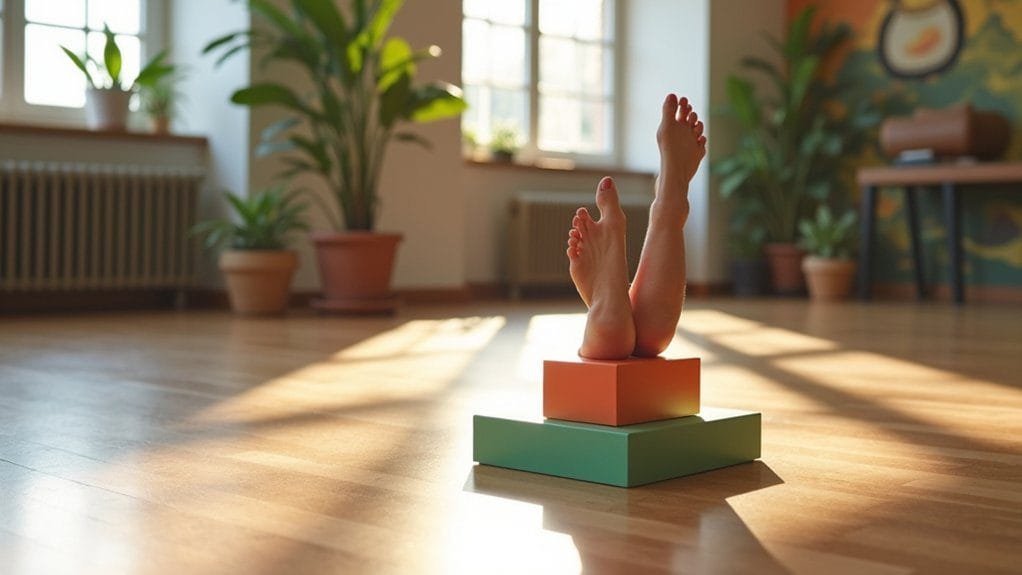
Yoga blocks are essential props in the world of yoga, designed to enhance your practice by providing support and stability. Typically made from foam or cork, these rectangular blocks bring the ground closer to you, making poses more accessible, especially if you’re a beginner or have limited mobility. By using yoga blocks, you can improve your postural alignment and flexibility, which ultimately enhances the effectiveness of your practice, no matter your skill level. You can place blocks under your hands, feet, or back to support proper alignment and comfort during various poses. For versatility, getting a set of two blocks is recommended, with standard dimensions of about 9 inches by 6 inches by 4 inches.
Why Should You Use Yoga Blocks?
Incorporating yoga blocks into your practice can greatly enhance your experience on the mat. Here’s why you should use them:
- Support: Yoga blocks provide essential support, helping you achieve proper alignment and depth in poses.
- Accessibility: They bring the ground closer, making it easier for those with limited flexibility or mobility to perform poses safely.
- Injury Prevention: Using blocks helps prevent strain by ensuring your body is aligned correctly during stretches.
- Pose Modification: Blocks allow you to modify challenging poses, gradually increasing your range of motion.
- Consistency: Incorporating yoga blocks encourages consistent engagement with stretches, promoting deeper flexibility improvements over time.
How to Use Yoga Blocks
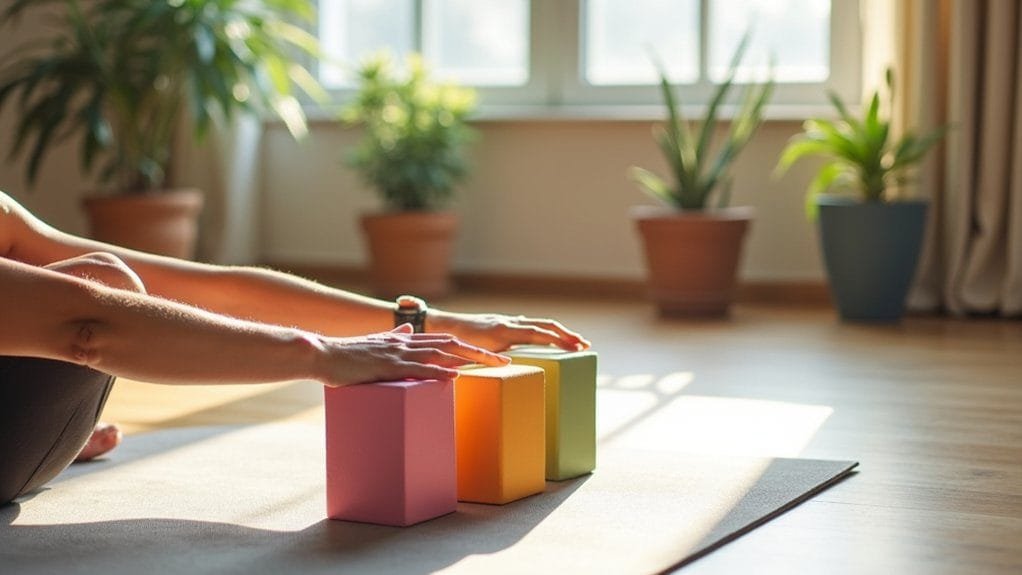
Using yoga blocks effectively can transform your practice by enhancing stability and support in various poses. In your yoga classes, blocks are often placed under your hands, feet, back, or forehead to improve alignment and comfort. They come in three height options, allowing you to adjust based on your needs.
| Block Height | Use Case |
|---|---|
| Tallest | Standing poses |
| Medium | Seated poses |
| Lowest | Restorative poses |
| Custom | Experiment freely |
Yoga Blocks for Beginners
For those just starting their yoga journey, blocks can be game changers. They provide essential support, making poses more accessible and enjoyable. Here’s how yoga blocks can help you as a beginner:
- They bring the ground closer, enhancing your ability to achieve poses.
- Blocks improve postural alignment, promoting better form.
- You can experiment with block placement for a personalized experience.
- Using blocks in poses like Forward Fold prevents spinal rounding, deepening stretches.
- They boost your confidence, helping you tackle challenging poses without feeling inadequate.
Incorporating yoga blocks into your practice not only enhances flexibility but also encourages a more fulfilling yoga experience. Embrace the support they offer and watch your practice flourish!
Which Yoga Blocks Are Best for You?
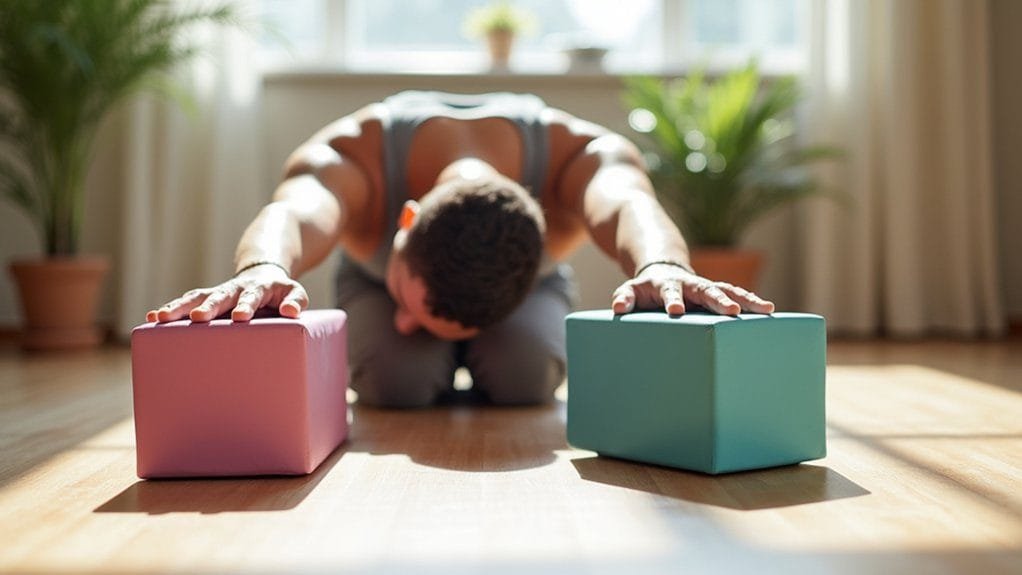
How can you choose the right yoga blocks for your practice? First, consider the material: foam or cork blocks offer different levels of firmness, with firmer options providing better stability and support during poses. A standard set of blocks typically measures about 9 inches by 6 inches by 4 inches, and having two blocks can enhance versatility in your practice. It’s wise to visit sporting goods stores to test various shapes and materials, ensuring you find blocks that feel comfortable for you. Peloton yoga blocks made from durable EVA foam are popular for their easy cleaning. Finally, experimenting with different heights can help you adapt poses to your specific flexibility levels, improving your overall experience.
The Ideal Height for Yoga Blocks
Finding the right yoga blocks is just the beginning; understanding the ideal height for them can greatly enhance your practice. The perfect height depends on your specific pose and comfort level. Here are some tips to take into account:
Choosing the right yoga block height is essential for enhancing your practice and ensuring proper alignment.
- Tallest height: Great for beginners or poses requiring extra reach.
- Medium height: Useful as your flexibility improves, providing a balance of support and challenge.
- Lowest height: Best for advanced practitioners focusing on deeper stretches.
- Experiment: Try different heights to discover what feels best for you.
- Support: Use one or two blocks based on your needs to maintain proper alignment.
How to Use Yoga Blocks for Added Flexibility
Using yoga blocks can greatly enhance your flexibility by providing the necessary support and stability in various poses. To use at home, place blocks under your hands in a forward fold to maintain proper alignment and prevent rounding of your spine. This adjustment allows you to achieve deeper stretches safely. In poses like the Half Split, blocks can be positioned under your hands, promoting a longer spine and better hamstring stretch. Additionally, squeezing blocks between your legs during stretches helps engage your muscles, leading to greater stability. By regularly practicing with yoga blocks, you’ll notice significant improvements in your flexibility, as they assist in achieving proper form and alignment throughout your yoga journey.
How to Use Yoga Blocks for an Added Challenge
Yoga blocks not only support your flexibility but can also introduce exciting challenges to your practice. Here are some ways to use yoga blocks for that added challenge:
- In Seated Forward Fold, place blocks under your hands for deeper stretches without compromising form.
- Use blocks in Warrior 3 to enhance balance and alignment, making it easier to hold the pose.
- Squeeze blocks between your legs in Boat to Low Boat to engage your core, adding resistance.
- In Half Split, put blocks under your hands to maintain a longer spine and effective hamstring stretch.
- Experiment with different block heights to modify poses, gradually increasing your range of motion and comfort.
Incorporating these strategies with yoga blocks will elevate your flexibility and overall practice.
Related Articles
As you explore the benefits of yoga blocks in enhancing flexibility, you’ll discover a wealth of resources that dive deeper into their various applications. Articles on the correct use of yoga blocks can guide you in poses like Forward Fold and Half Moon, demonstrating how blocks support deeper stretches and proper alignment. You’ll find studies highlighting the long-term benefits of consistent block usage, showing how they allow for modifications that cater to individual limitations. These resources emphasize the importance of maintaining stability, which leads to more effective muscle engagement during your practice. By reading related articles, you’ll gain a better understanding of how yoga blocks can transform your flexibility journey, making challenging poses more accessible and enjoyable.
Frequently Asked Questions
Do Yoga Blocks Help With Flexibility?
Using yoga blocks enhances your flexibility techniques by providing support and stability. They help you achieve deeper stretches, maintain proper alignment, and explore your limits safely, ultimately leading to improved flexibility and overall progress in your practice.
What Are the Benefits of a Yoga Block?
Using a yoga block’s like having an extra hand during your practice. It enhances posture, supports alignment, and boosts your confidence in various poses, making it easier for you to deepen your stretches and improve overall well-being.
Which Yoga Improves Flexibility?
Practicing yoga styles like Hatha and Yin greatly boosts flexibility through long-held yoga poses. Incorporating consistent flexibility training with dynamic styles like Vinyasa enhances your range of motion and deepens your stretching experience.
How to Use Yoga Blocks for Stretching?
To use yoga blocks for stretching, explore various yoga block techniques like placing them under your hands or feet. This supports proper alignment, enabling deeper stretches while enhancing your flexibility and overall practice experience.
Do Resistance Bands Help Enhance Flexibility in Yoga Practice?
Resistance bands can be a valuable tool in yoga practice, especially for beginners. Incorporating the best beginner bands allows for deeper stretches and improved flexibility. These bands provide gentle support, enabling practitioners to hold poses longer and achieve better alignment, ultimately enhancing their overall yoga experience.
Conclusion
Just as a bridge connects two shores, yoga blocks serve as your guide, enhancing your journey toward flexibility. By providing support and stability, they empower you to explore deeper stretches and reach new heights in your practice. Embrace these tools; they’re not just props but allies in your quest for balance and strength. As you grow more confident, you’ll discover that every pose can lead you to a greater understanding of your body and mind.