
Electric toothbrushes outperform manual brushes by delivering up to 21% more plaque removal. You’ll benefit from thousands of precise strokes per minute, powered by oscillating-rotating technology that manual brushing can’t match. Clinical studies confirm electric models reduce gingivitis by 11% and provide more thorough cleaning. Built-in timers and pressure sensors enhance your oral hygiene routine. Curious about the science behind this dental breakthrough? The details ahead will illuminate your path.
Key Takeaways
- Electric toothbrushes remove 21% more plaque than manual toothbrushes, offering superior cleaning performance through thousands of strokes per minute.
- Oscillating electric toothbrushes demonstrate the most effective plaque reduction, with proven clinical benefits of reducing plaque and gingivitis by 11-21%.
- Built-in features like timers and pressure sensors in electric toothbrushes enhance cleaning effectiveness and help users maintain proper oral hygiene techniques.
- Individuals with limited mobility, such as those with arthritis, benefit significantly from electric toothbrushes’ reduced manual effort and consistent cleaning action.
- While electric toothbrushes have a higher upfront cost ($15-$250), they provide long-term advantages in plaque removal and potentially reduce overall dental care expenses.
The Science of Plaque Removal
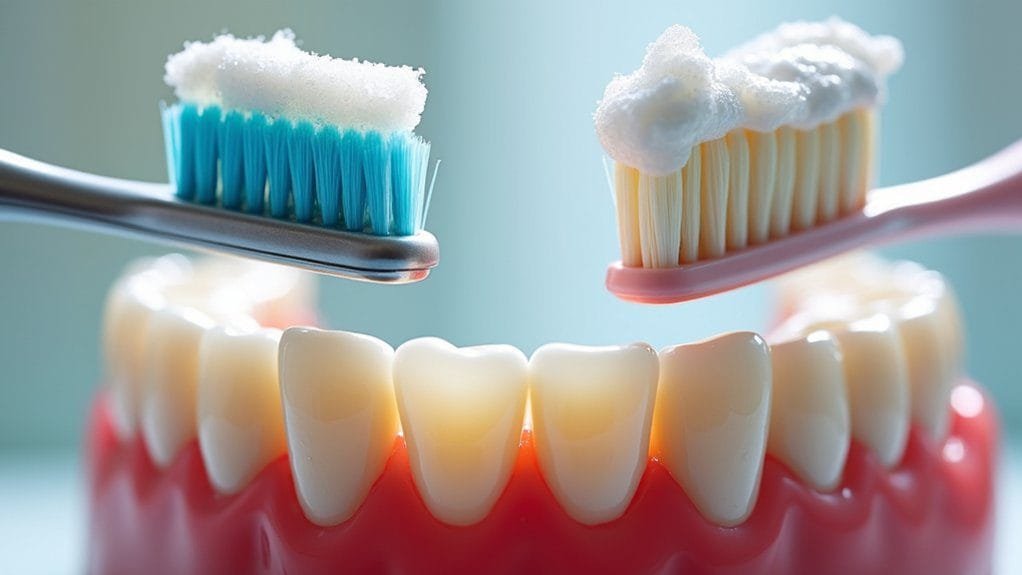
While plaque removal is essential for maintaining oral health, scientific research reveals a clear advantage for electric toothbrushes over manual alternatives. The science behind effective cleaning demonstrates that electric toothbrushes can produce thousands of strokes per minute, greatly outperforming manual brushing techniques. A 2014 Cochrane review confirmed that powered toothbrushes reduce plaque by 11% within the first 1-3 months of use. Specifically, oscillating toothbrushes show slightly superior plaque removal compared to sonic models. Users can expect up to 21% plaque reduction and 11% gingivitis improvement after three months of consistent use. The key to maximizing oral health lies in selecting the right electric toothbrush and maintaining proper brushing technique, which amplifies the mechanical advantages of these advanced dental tools.
Technological Differences Between Electric and Manual Toothbrushes
Although manual and electric toothbrushes serve the same fundamental purpose, their technological mechanisms differ considerably in plaque removal efficiency. Electric toothbrushes leverage advanced technologies like oscillating-rotating and sonic vibrations, generating thousands of strokes per minute to enhance cleaning efficiency beyond manual user technique.
| Feature | Electric Toothbrushes | Manual Toothbrushes |
|---|---|---|
| Stroke Rate | Thousands/minute | Limited human motion |
| Plaque Removal | 21% more effective | Standard removal |
| Additional Tech | Built-in timers, pressure sensors | None |
| Gingivitis Impact | 11% reduction | Minimal reduction |
These technological distinctions translate to superior plaque removal and gingivitis reduction. Built-in timers and pressure sensors guide users toward ideal brushing techniques, compensating for individual variations in manual dexterity and ensuring more consistent oral hygiene outcomes.
Cost and Accessibility Considerations
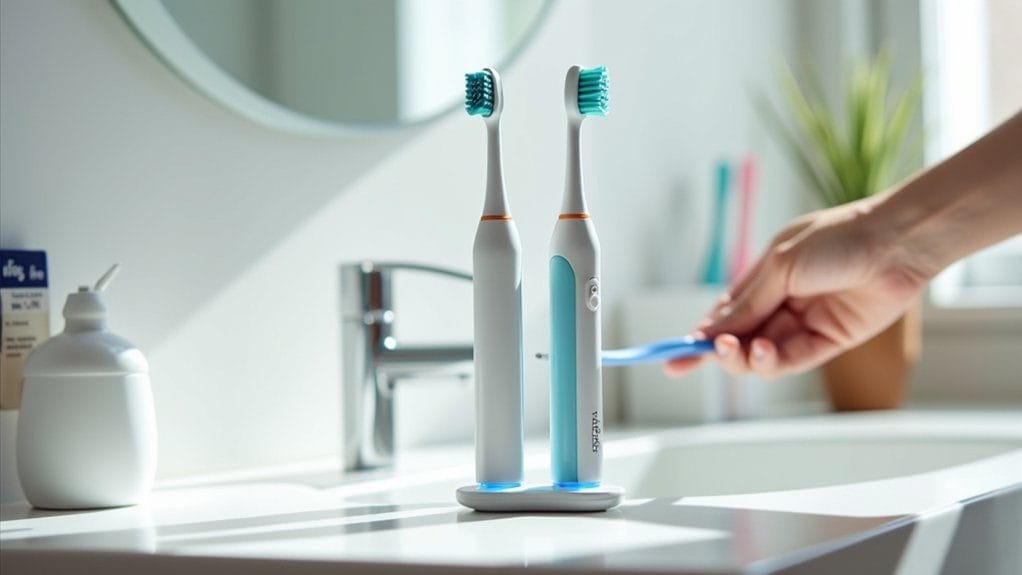
Since cost considerably influences consumer purchasing decisions, electric and manual toothbrushes present distinctly different economic profiles for oral healthcare consumers. Manual toothbrushes offer immediate accessibility, priced between $1 to $3, while electric toothbrushes demand a higher initial investment ranging from $15 to $250. Though the upfront cost is steeper, electric toothbrushes provide benefits like more effective plaque removal and potential long-term plastic waste reduction by requiring only replacement brush heads. For individuals with specific needs, such as limited mobility, the ease of use and built-in features of electric toothbrushes can justify their higher price point. Ultimately, your choice depends on balancing cost, oral health effectiveness, and personal accessibility requirements.
Oral Health Impact and Effectiveness
Beyond the economic considerations of purchasing a toothbrush, the oral health impact and effectiveness represent vital factors in selecting the right dental hygiene tool. Electric toothbrushes demonstrate superior plaque removal capabilities, with a 21% reduction compared to manual brushes after three months of consistent use.
Invest in oral health: electric toothbrushes offer a 21% superior plaque removal advantage over manual alternatives.
Key comparative insights include:
- Oscillating electric models outperform sonic toothbrushes in cleaning effectiveness
- Powered toothbrushes provide built-in features like timers and pressure sensors
- Over 80% of users perceive electric brushes as more thorough
- Proper technique remains essential regardless of toothbrush type
While manual toothbrushes can achieve good oral health with correct technique, electric toothbrushes offer advanced cleaning potential. The scientific evidence suggests that investing in an electric toothbrush can markedly enhance your dental hygiene routine, particularly in reducing plaque and gingivitis.
User Experience and Comfort
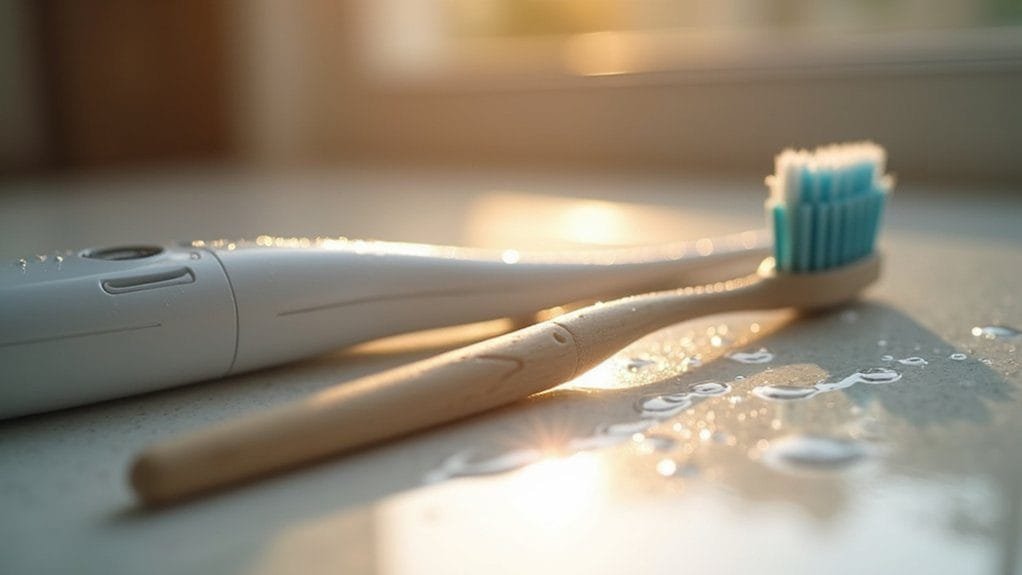
While dental hygiene effectiveness remains paramount, the user experience plays an essential role in selecting between electric and manual toothbrushes. Electric toothbrushes offer unique comfort features that enhance your brushing routine. Their built-in timers guarantee you consistently brush for the recommended two minutes, while ergonomic grips and pressure sensors prevent excessive gum pressure. Some users might find the vibrating sensation uncomfortable, yet many appreciate the automatic motion that improves plaque removal, especially for those with limited dexterity. Children often find electric toothbrushes more engaging due to playful designs and character themes, potentially increasing their brushing motivation. Manual toothbrushes, in contrast, provide a traditional experience with simpler handling. Ultimately, your personal comfort and brushing effectiveness should guide your toothbrush selection.
Special Needs and Mobility Considerations
As dental health technology evolves, electric toothbrushes have emerged as a critical solution for individuals with diverse mobility challenges. These advanced devices offer significant advantages for those with limited mobility:
- Reduced manual effort enables effective cleaning for individuals with arthritis or carpal tunnel syndrome
- Built-in timers guarantee consistent brushing duration, critical for thorough oral hygiene
- Pressure sensors protect sensitive gums and tooth enamel during brushing
- Specialized designs accommodate users with braces and special needs
Electric toothbrushes transform oral care for individuals who struggle with traditional manual toothbrushes. By minimizing physical strain and providing precision cleaning, these devices empower users to maintain peak dental health despite mobility constraints. The technological innovations embedded in electric toothbrushes make sophisticated oral care accessible and achievable for diverse populations.
Expert Recommendations for Optimal Brushing
Dental professionals underscore the critical importance of mastering ideal brushing techniques to maintain exceptional oral health. Whether you choose electric or manual toothbrushes, the key lies in proper technique. Hold your toothbrush at a 45-degree angle, focusing on two teeth simultaneously, and ascertain bristles contact all tooth surfaces. Electric toothbrushes demonstrate a 21% improvement in plaque removal and 11% reduction in gingivitis, making them an attractive option for peak oral hygiene.
| Brushing Recommendation | Details |
|---|---|
| Duration | 2 minutes, twice daily |
| Angle | 45-degree to gums |
| Coverage | 2 teeth at a time |
| Pressure | Gentle, consistent |
| Surfaces | All tooth sides |
Regular dental checkups will help monitor your technique and ascertain you’re effectively preventing potential oral health issues through precise brushing practices.
Frequently Asked Questions
Do Dentists Recommend Electric or Manual Toothbrushes?
Dentists recommend electric toothbrushes for superior plaque removal and gum health, but they’ll emphasize that your brushing technique matters most. Manual brushes can be effective if you’re diligent and follow proper dental hygiene practices.
What Is the Disadvantage of Using an Electric Toothbrush?
You’ll face higher costs, battery limitations, and potential noise disruptions with electric toothbrushes. They require specific maintenance, have a learning curve, and might cause gum irritation, making personal preference and accessibility key factors in your dental hygiene choice.
Why Manual Toothbrush Is Better Than Electric Toothbrush?
You’ll find manual toothbrushes offer superior cost-effectiveness, portability, and control. They’re eco-friendly, require less maintenance, and provide precise technique improvement, giving you a simple, reliable oral hygiene tool that adapts to your personal brushing preferences.
Is It Worth Switching to an Electric Toothbrush?
You’ll find electric toothbrushes worth switching to, given their superior plaque removal, improved gum health, and convenient features—despite higher initial costs. Consider battery life, maintenance, and travel practicality when evaluating this scientifically-validated oral hygiene upgrade.
Conclusion
When it comes to oral hygiene, your choice of toothbrush matters. Like a precision instrument clearing a forest path, electric toothbrushes can remove up to 21% more plaque than manual alternatives. They’re not just a gadget, but a scientifically validated tool for dental health. Whether you’re tech-savvy or budget-conscious, the key is consistent, thorough brushing. Your dentist’s recommendation, combined with your personal comfort, will guide you to the most effective cleaning strategy.