
Food dehydrators will preserve more nutrients than ovens due to lower, consistent temperatures between 95°F to 155°F. You’ll retain up to 90% of original food nutrients through low-temperature drying techniques, compared to ovens’ high-heat methods that accelerate nutrient degradation. Precise temperature control and air circulation in dehydrators minimize vitamin loss, making them superior for maintaining food’s nutritional integrity. Curious about the scientific breakdown? Keep exploring.
Key Takeaways
- Dehydrators operate at lower temperatures (95°F-155°F), which helps preserve more nutrients compared to high-heat ovens that can destroy sensitive vitamins.
- The consistent, precise temperature control in food dehydrators minimizes nutrient degradation, ensuring better nutrient retention during the drying process.
- Air circulation in dehydrators promotes even drying and helps maintain the nutritional integrity of foods more effectively than traditional oven methods.
- Systematic testing demonstrates that dehydrators preserve nutrients substantially better, particularly for delicate foods like fruits and vegetables that are prone to nutrient loss.
- Low-temperature dehydration prevents caramelization and rapid nutrient breakdown, making food dehydrators superior to ovens for maintaining the nutritional value of dried foods.
The Nutrient Preservation Showdown
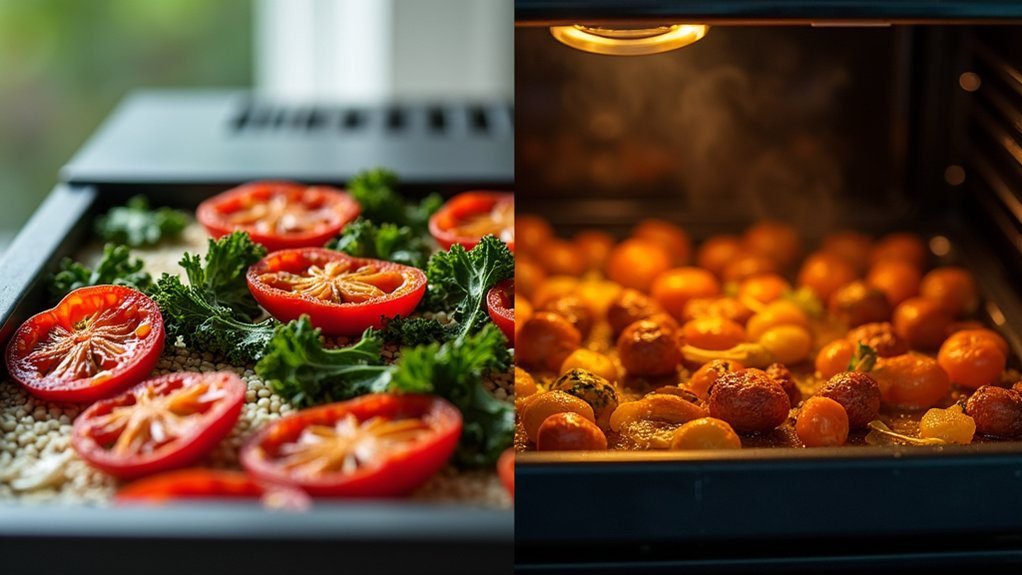
While comparing food preservation methods, the nutrient retention capabilities of food dehydrators and ovens reveal fascinating differences in thermal processing. You’ll find that food dehydrators offer superior nutrient preservation through precise temperature control, operating at lower temperatures that minimize nutritional degradation. Unlike ovens, these energy-efficient appliances can maintain temperatures as low as 60°C, ensuring minimal vitamin and mineral loss during the dehydrating process.
When you’re drying foods, dehydrators’ ability to control moisture content greatly impacts nutritional quality. Their targeted approach reduces heat exposure, protecting essential nutrients more effectively than traditional ovens. The result is dried foods that retain more vitamins and minerals, demonstrating why dehydrators are the preferred method for nutrient-conscious individuals seeking ideal food preservation techniques.
Comparing Drying Temperatures and Techniques
Since temperature plays a vital role in food dehydration, understanding the nuanced differences between dehydrators and ovens becomes essential for optimal food preservation. Dehydrators offer precise temperature control in 5°C increments, maintaining ideal drying conditions without compromising nutrient integrity. While ovens can achieve similar temperatures around 140°F (60°C), they often produce uneven results and require the door to be left open, increasing energy consumption. Drying times vary, with ovens typically processing foods 10% faster, though this speed can compromise quality, especially for delicate items like banana chips. Regardless of the method chosen, blanching vegetables beforehand remains critical for neutralizing enzymes that might degrade nutrients. By carefully managing moisture and temperature, you’ll maximize food preservation effectiveness and nutrient retention.
Energy Efficiency and Running Costs
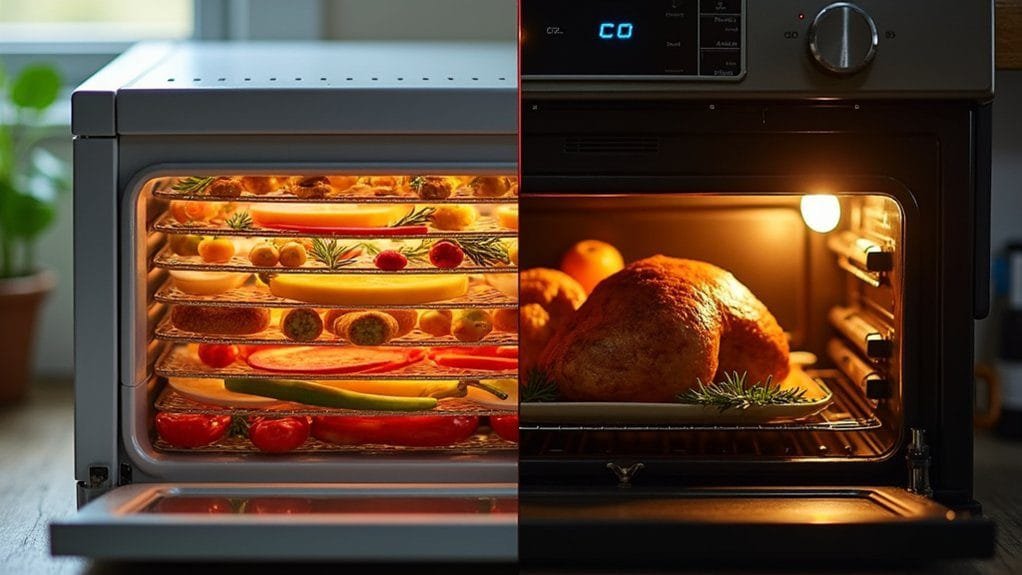
When comparing energy consumption in food preservation methods, dehydrators emerge as a markedly more efficient alternative to traditional ovens. You’ll find that a dehydrator consumes approximately 0.434 kWh per hour at 60°C, costing around 11¢ hourly, while ovens require considerably more energy due to maintaining heat with the door ajar. The yearly running costs for a dehydrator are estimated at $57, making it substantially more economical than oven-based drying. Precise temperature control in 5°C increments enhances drying efficiency and contributes to energy savings by reducing prolonged drying times. Although ovens might dry foods slightly faster, the increased energy expenditure negates this minor advantage. Your choice of dehydrator ultimately provides better temperature regulation, lower energy consumption, and more consistent moisture removal for dehydrated foods.
Detailed Results Across Different Foods
Although food dehydration techniques vary across different ingredients, systematic testing reveals nuanced performance differences between dehydrators and ovens. When drying fruits and vegetables, each appliance demonstrates unique characteristics. The food dehydrator’s consistent temperature often preserves nutrients more effectively, with banana chips showing remarkably better shape and flavor. Oven drying can accelerate the process, as seen with kiwifruit leather and potato mash completing 2-3 hours faster than dehydrator methods. Texture variations emerge across different foods: kale chips appear crispier in ovens, while maintaining comparable nutrient retention. Mushroom slices showed identical drying times and quality between both appliances. The key consideration is precise temperature control, which greatly impacts the final product’s texture and nutritional integrity. Understanding these subtle differences helps you choose the most appropriate drying method for specific foods.
Safety Considerations in Food Dehydration
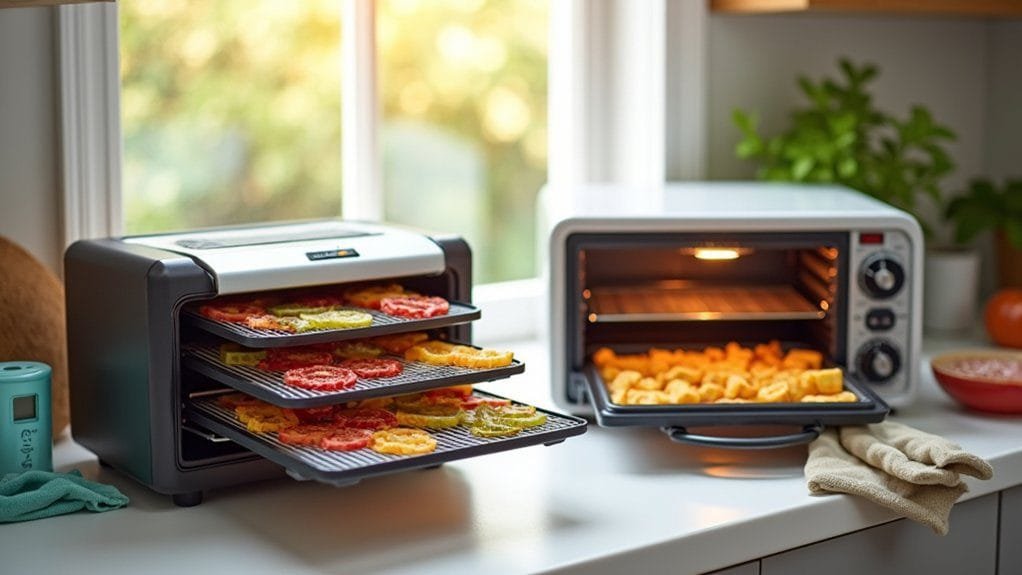
Because food safety is paramount in dehydration processes, understanding critical temperature, moisture, and sanitation parameters becomes essential for preventing foodborne illnesses. You must heat meat and poultry to at least 160°F to eliminate bacterial growth before drying. Maintain moisture content below 20% to prevent spoilage and guarantee safe storage of dehydrated foods.
Cleanliness is your primary defense against contamination. Thoroughly wash hands, equipment, and surfaces to minimize cross-contamination risks. After dehydrating, store your foods in airtight containers to protect against moisture ingress and extend shelf life. Regularly inspect stored items for signs of moisture or spoilage, and be prepared to re-dry any questionable items to maintain food safety and quality.
Nutritional Impact of Different Drying Methods
The preservation of nutritional integrity during food dehydration depends critically on the method and temperature used, with research demonstrating that precise, low-heat techniques can substantially mitigate nutrient degradation. When comparing food dehydrators and ovens, you’ll find significant differences in nutritional retention. Dehydrators offer precise temperature control in 5°C increments, enabling ideal preservation of sensitive vitamins A and C. Unlike oven-dried foods, which risk overcooking and flavor loss, dehydrators maintain consistent low temperatures around 60°C, protecting essential fatty acids and minerals.
Your choice of drying process directly impacts nutrient preservation. Dehydrators excel at minimizing nutrient loss while maintaining food quality, making them superior for health-conscious individuals seeking to retain maximum nutritional value during food preservation.
Practical Tips for Home Food Preservation
When starting on home food preservation, selecting the right dehydration equipment can greatly impact your success and food quality. Consider these practical strategies for effective nutrient preservation:
- Choose a dehydrator with precise temperature controls to maintain ideal nutrient retention in fresh produce.
- Store dehydrated foods in airtight containers to maximize shelf life and preserve important vitamins.
- Monitor drying times carefully to prevent nutrient degradation during the dehydrating process.
Dehydrators offer an easy, scientifically-backed method for preserving foods while maintaining nutritional integrity. Unlike ovens, which can quickly destroy crucial nutrients through high heat, dehydrators provide consistent, low-temperature drying that protects the food’s essential nutritional profile. By understanding these techniques, you’ll guarantee your home-preserved foods remain as nutritious as possible, extending the life of your favorite fruits, vegetables, and herbs.
Making the Right Choice for Your Kitchen
Selecting ideal food preservation equipment demands careful analysis of your kitchen’s specific requirements and preservation goals. When comparing dehydrators and ovens for drying food, consider factors like nutrient retention, energy costs, and temperature control.
| Feature | Dehydrator | Oven |
|---|---|---|
| Nutrient Preservation | High | Moderate |
| Energy Efficiency | Low Cost | High Cost |
| Temperature Control | Precise | Less Precise |
| Moisture Management | Optimal | Variable |
| Versatility | Specialized | Multi-Purpose |
Dehydrators excel at preserving vegetables and fruits with precise 5°C increments, ensuring minimal nutrient loss. They operate economically at approximately 11¢ per hour, making them more cost-effective for long-term food storage. Your choice should align with your preservation needs, focusing on maintaining the nutritional integrity of foods through controlled drying and proper storage techniques.
Frequently Asked Questions
Is a Food Dehydrator Better Than an Oven?
You’ll find a food dehydrator superior for nutrient retention, energy efficiency, and flavor preservation. Its precise temperature control and consistent drying environment outperform ovens, making it a cost-effective, user-friendly tool for ideal food preservation methods.
Does Dehydrating Food Take Away Nutrients?
You’ll preserve most nutrients through careful dehydration, as moisture removal concentrates food’s nutritional profile. While minimal heat-sensitive vitamin loss occurs, minerals, enzymes, and antioxidants remain largely intact, ensuring high-quality, nutrient-dense preserved foods with extended storage longevity.
Why Might Someone Choose to Use a Food Dehydrator Instead of Oven Drying?
You’ll appreciate a dehydrator’s precise temperature control, energy efficiency, and superior flavor preservation. It offers consistent drying, requires less supervision, and provides a more convenient, versatile experience with lower operational costs compared to traditional oven methods.
What Are the Disadvantages of a Dehydrator?
You’ll face challenges with dehydrators: higher energy consumption, limited versatility, longer drying times, potential noise, precise temperature control requirements, and a steep learning curve. Space constraints and maintenance needs can also impact your food preservation efficiency.
Conclusion
When preserving nutrients, your choice matters. Food dehydrators emerge as the scientific champion, maintaining more vitamins and minerals through lower, consistent temperatures. Like a precision instrument calibrated for ideal nutrition, these devices offer a metabolic shield against heat degradation. Ultimately, your investment in a quality dehydrator isn’t just about preservation—it’s a strategic nutritional decision that protects the intrinsic value of your food.