
French Press and drip coffee offer distinctly different taste experiences. You’ll find French Press delivers a robust, full-bodied flavor with intense oils and sediment, while drip coffee provides a smoother, cleaner profile. Your preference depends on whether you enjoy a gritty, bold brew or a refined, lighter taste. Coarse grinds and longer steeping in French Press intensify flavor, whereas drip coffee’s filtration creates a gentler cup. Curious about the nuanced brewing science behind each method?
Key Takeaways
- French Press delivers a robust, full-bodied flavor with intense taste compounds, offering a more complex and rich coffee experience.
- Drip coffee provides a smoother, cleaner taste profile with less sediment, appealing to those preferring a lighter, refined brew.
- Personal taste preference ultimately determines which method tastes better, with French Press offering bold intensity and drip coffee providing delicate smoothness.
- Brewing technique significantly impacts flavor, with French Press extracting more oils and antioxidants for a deeper, more nuanced taste.
- Grind size and brewing time influence the final taste, with French Press using coarse grounds and longer steeping for maximum flavor development.
The Science Behind Brewing Methods
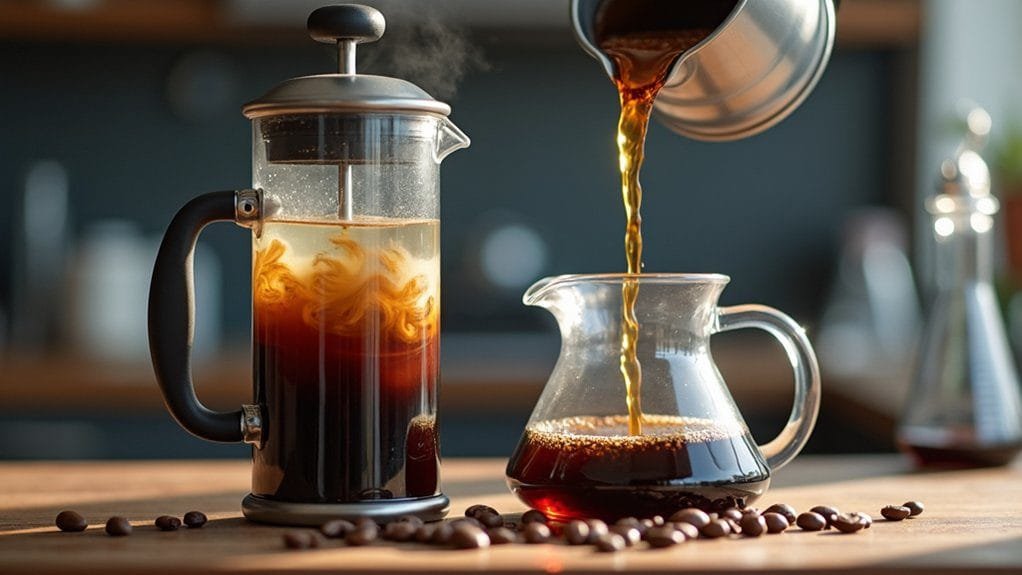
While brewing methods might seem straightforward, coffee extraction is a complex scientific process that greatly influences taste and quality. The French Press method employs immersion brewing, where coffee grounds steep directly in hot water, maximizing flavor extraction and preserving essential coffee oils. Conversely, drip coffee utilizes gravity-fed filtration, which limits ground contact and potentially reduces flavor depth. Your brewing technique markedly impacts the resulting beverage: a coarse grind in French Press allows fuller flavor development, while paper filters in drip machines can absorb nuanced oils. Brewing time further differentiates these methods, with French Press typically steeping 4-5 minutes, enhancing antioxidant retention and creating a more robust flavor profile. Understanding these scientific distinctions helps you appreciate the intricate chemistry behind your morning cup.
Flavor Profile Showdown
The scientific brewing principles explored previously set the stage for understanding coffee’s sensory landscape. When comparing French Press and drip coffee flavor profiles, you’ll discover nuanced differences rooted in extraction techniques. French Press’s immersion brewing method allows full contact between water and coffee grounds, yielding a robust, full-bodied taste with pronounced oils and intense flavor compounds. Conversely, drip coffee’s filtered approach produces a smoother, cleaner experience, sacrificing some depth for clarity. Your grind size dramatically influences this sensory journey—coarse grounds for French Press enhance extraction, while medium grinds optimize drip brewing. Each method uniquely transforms identical beans, demonstrating how brewing techniques can dramatically alter coffee’s fundamental character. Ultimately, your palate determines which approach—gritty and bold or light and refined—resonates most authentically.
Texture and Mouthfeel Comparison
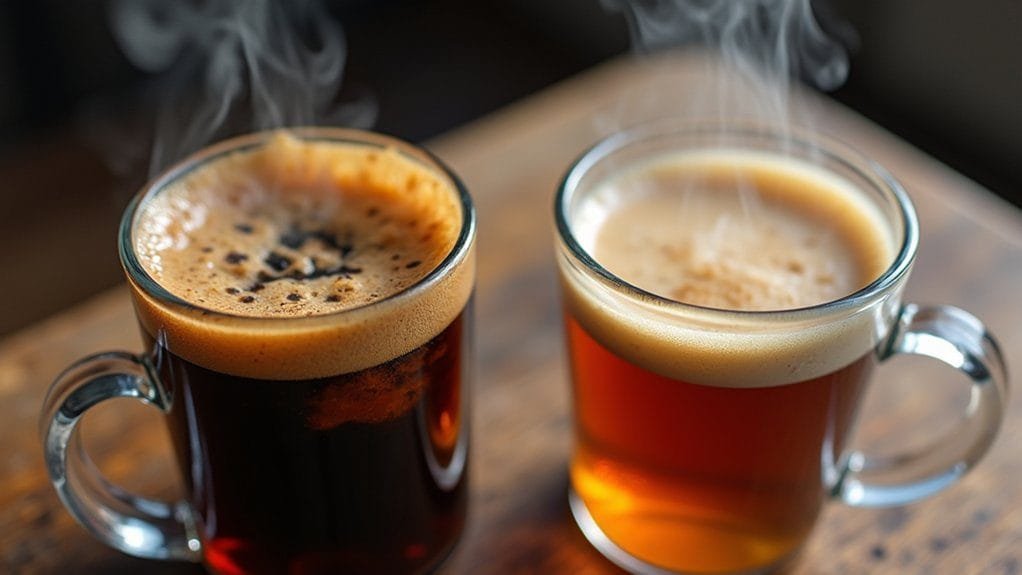
Because brewing method fundamentally shapes coffee’s tactile experience, texture and mouthfeel represent critical dimensions in understanding French Press and drip coffee distinctions. Your palate will detect nuanced differences between these brewing approaches, with French Press offering a richer, more robust sensation driven by retained natural oils and fine sediment particles.
| Characteristic | French Press | Drip Coffee |
|---|---|---|
| Texture | Fuller, grittier | Smoother, cleaner |
| Oil Retention | High | Low |
| Sediment | Noticeable | Minimal |
| Mouthfeel | Creamy, silky | Light, refined |
| Body | Intense | Delicate |
The absence of paper filtration in French Press allows essential oils to permeate your coffee, creating a more substantial mouthfeel. While drip coffee provides a cleaner experience, French Press enthusiasts appreciate the unique, textured character that emerges from this immersion brewing method.
Health Considerations and Brewing Benefits
When exploring coffee brewing methods through a health-focused lens, French Press and drip coffee reveal fascinating physiological implications that extend beyond mere taste preferences. You’ll discover that French Press brewing retains more antioxidants and essential oils, potentially offering superior health benefits compared to filtered drip coffee. The absence of paper filtration allows for enhanced flavor extraction and preservation of beneficial compounds. While research suggests potential cholesterol impacts from French Press coffee’s unfiltered nature, its lower acidity can be advantageous for individuals with sensitive digestive systems. Drip coffee, though smoother and more convenient, may sacrifice some nutritional advantages during its filtering process. Understanding these nuanced brewing method differences empowers you to make informed choices about your coffee consumption, balancing taste, convenience, and potential health considerations.
Equipment and Brewing Process
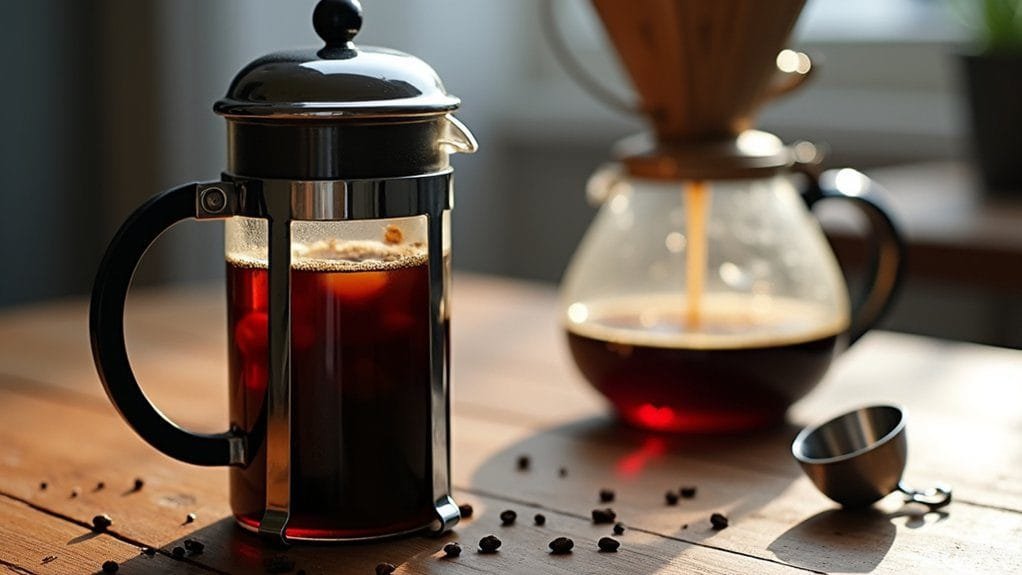
Having examined the health implications of French Press and drip coffee brewing methods, we’ll now explore the distinctive equipment and procedural nuances that define each approach. The French press and drip coffee machine represent divergent brewing technologies, each delivering unique sensory experiences through their specialized equipment and processes.
| Equipment | Grind Size | Brew Time |
|---|---|---|
| French Press | Coarse | 4-5 minutes |
| Drip Machine | Medium | 5-10 minutes |
| Filter Type | Metal/None | Paper/Metal |
| Water Interaction | Immersion | Pouring |
| Flavor Profile | Full-bodied | Smooth |
Your coffee’s character emerges through meticulous interaction between coffee grounds, water temperature, and brewing method. While the French press retains essential oils for a robust cup, drip coffee machines offer convenience and consistent extraction, allowing you to choose between intense richness and clean, balanced flavors.
Personal Preference and Coffee Culture
How do personal tastes and cultural dynamics shape our coffee brewing choices? Your preference for French Press or drip coffee reflects a nuanced interplay between flavor intensity and lifestyle convenience. Coffee culture celebrates individual exploration, where the full-bodied richness of immersion brewing competes with the smoother taste of filtered methods. The French Press appeals to those craving complex, robust profiles, while drip coffee attracts individuals seeking clean, mild experiences. Your selection isn’t merely about taste—it’s a personal statement. Experimentation becomes key, allowing you to navigate between these brewing techniques and discover what resonates with your palate. Whether you’re drawn to the intense extraction of French Press or the streamlined convenience of drip coffee, your choice represents a sophisticated engagement with a diverse and evolving coffee landscape.
Frequently Asked Questions
Does French Press Taste Better Than Drip?
You’ll find French Press coffee’s fuller flavor profile more satisfying due to longer extraction time, richer oil content, and more intense aroma, though personal preference ultimately determines which brewing method you’ll enjoy most.
Is French Press the Best Tasting Coffee?
With 65% of coffee enthusiasts preferring bold flavors, French press offers a nuanced aroma profile through its unique brewing method, maximizing coffee oils and depth. Your taste preferences will ultimately determine if it’s the “best” tasting coffee experience.
Why Does French Coffee Taste Better?
You’ll find French Press coffee tastes superior due to its unique brewing methods, which maximize flavor extraction through longer steeping time, retaining essential oils and creating a more complex, aromatic profile with reduced acidity.
What Are the Disadvantages of a French Press Coffee Maker?
Just when you’re craving a perfect brew, French Press challenges emerge: inconsistent grinding, prolonged brewing, sediment retention, and cleaning complexity can diminish your coffee experience, affecting flavor extraction and overall user satisfaction.
Conclusion
Ultimately, your coffee preference hinges on nuanced brewing techniques and personal palate sophistication. While French press offers a robust, unfiltered extraction that reveals earth-shattering flavor complexity, drip coffee provides consistent, clean brewing with minimal sediment. Each method represents a distinct sensory journey, transforming humble beans into liquid artistry. Your ideal brewing approach depends on individual taste, brewing expertise, and desired coffee experience.