
When comparing hard and soft coolers, hard-sided models clearly outperform soft-sided ones in ice retention. They can keep your ice chilled for several days due to superior foam insulation and durable construction. In contrast, soft coolers maintain ice for about six to eight hours, making them less suitable for long trips. If you’re planning a lengthy outdoor adventure, a hard cooler is your best bet; stick around to explore more about each type’s features and uses.
Key Takeaways
- Hard coolers maintain ice for up to a week due to superior foam insulation, making them ideal for extended trips.
- Soft coolers retain ice for approximately 6 to 8 hours, suitable for day trips and short outings.
- Hard coolers are constructed from durable rotomolded plastic, providing better insulation performance and longevity.
- Soft coolers are lightweight and portable but sacrifice long-term ice retention for convenience.
- For consistent ice retention and durability, hard coolers are the preferred choice over soft coolers.
Understanding Hard-Sided Coolers
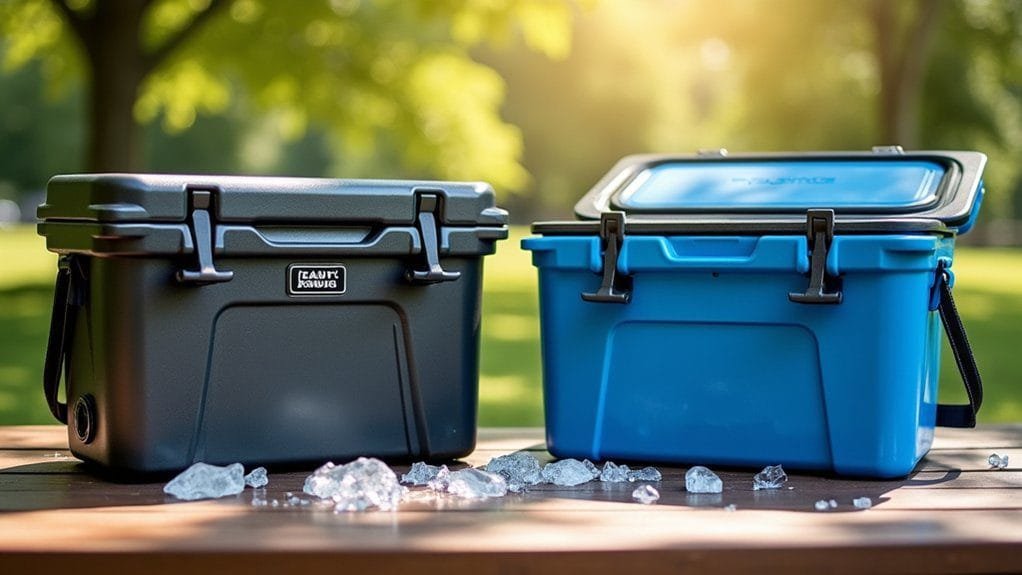
When you’re considering a cooler that can withstand the rigors of outdoor adventures, hard-sided coolers stand out for their durability and insulation capabilities. Typically made from rotomolded plastic, these hard coolers offer enhanced resistance to physical impacts, making them ideal for rugged environments. Their superior insulation performance allows for impressive ice retention, often maintaining cold temperatures for up to a week. With larger storage capacities ranging from 50 to 125 quarts, hard-sided coolers can accommodate more food and beverages than their soft-sided counterparts. While they tend to be bulkier and heavier, their robust design includes features like bear-resistant certification and compatibility with accessories, enhancing functionality and ensuring you’re well-prepared for your next outing.
Exploring Soft-Sided Coolers
While hard-sided coolers are known for their rugged durability, soft-sided coolers offer a compelling alternative for those who prioritize portability and convenience. These soft coolers are typically made from durable, puncture-resistant nylon and utilize closed-cell insulation to maintain cold temperatures for several hours. Their lightweight construction and convenient carrying options, such as padded shoulder straps, make them ideal for day trips, tailgates, and gym visits. Many soft-sided models, like the Yeti Hopper Flip 18, impressively maintain ice for up to 40 hours. Additionally, soft-sided coolers often come with features like multiple pockets for easy access and organization. This blend of functionality and practicality makes them a popular choice for those on the go.
Key Differences in Insulation Performance
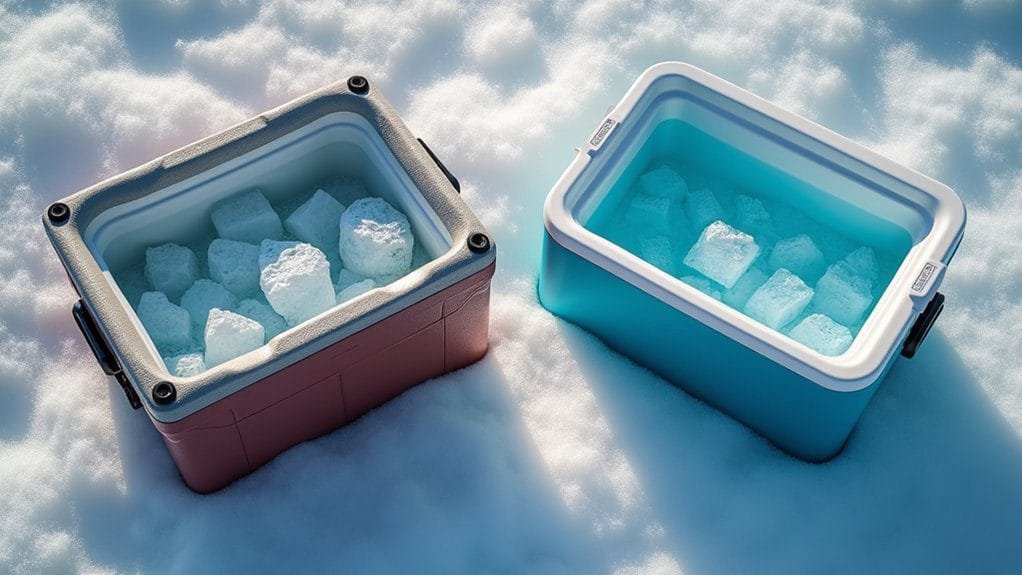
Soft coolers excel in portability, but their insulation performance doesn’t match up to that of hard coolers. A hard cooler utilizes rotomolded construction and dense materials, offering superior foam insulation that can keep things cold for several days, making it ideal for extended camping trips. In contrast, soft coolers typically retain ice for only six to eight hours, depending on the model and environmental conditions. This shorter duration limits their effectiveness for long-term use. While soft coolers are great for convenience and day trips, they can’t compete with the consistent ice retention of hard coolers. If you’re serious about keeping your food and drinks chilled for longer periods, the hard cooler is your best bet.
Durability Comparisons: Hard vs. Soft
Durability is a critical factor to evaluate when choosing between hard and soft coolers, as it directly impacts their ability to withstand the rigors of outdoor use. Hard coolers, constructed from rotomolded plastic, offer superior durability against rough handling and environmental exposure. They resist wear and tear effectively, maintaining their insulation and functionality over the years. In contrast, soft coolers, although more portable and lightweight, are often made from less durable materials like nylon and foam insulation, making them prone to punctures, tears, and failed seams. This compromise can hinder their ability to keep ice effectively. Ultimately, if you’re looking for long-term investment and robust performance, hard coolers prove to be the more reliable choice.
Weight and Portability Considerations
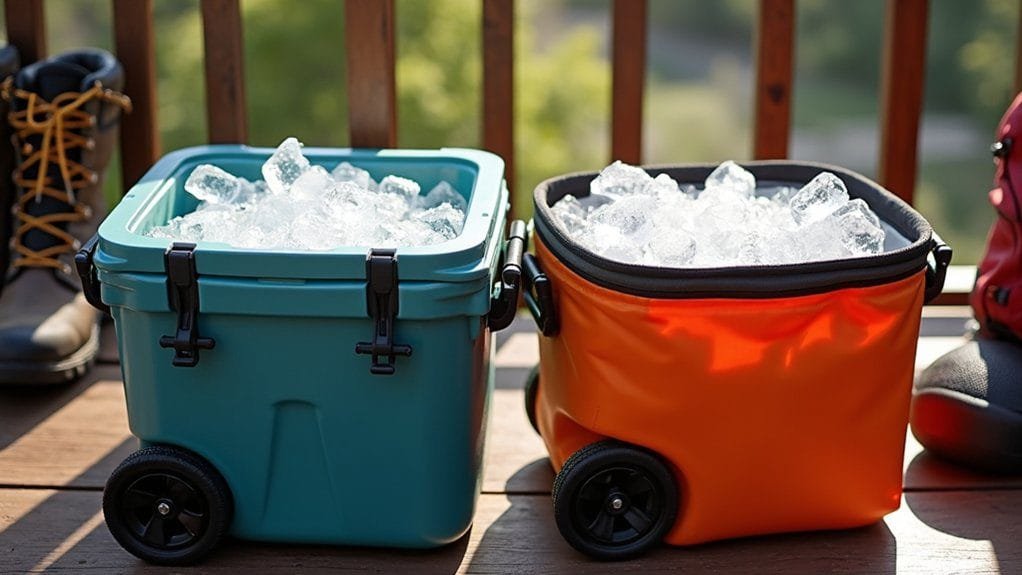
When considering weight and portability, hard and soft coolers present distinct advantages and challenges. Hard coolers tend to be heavier and bulkier, making them difficult to carry over long distances or fit into limited car space. On the other hand, soft coolers are lighter and more compact, making them easier to transport for activities like picnics or day trips. Their portability is further enhanced by features like padded shoulder straps, allowing you to carry additional items hands-free. Although hard coolers offer durability, their weight often requires vehicle transport. In contrast, soft coolers can be folded for convenient storage, maximizing space efficiency when not in use. Ultimately, your choice depends on balancing weight and portability for your specific needs.
Best Uses for Hard and Soft Coolers
Choosing the right cooler for your outing often hinges on understanding their best uses. Soft-sided coolers are perfect for short outings like day trips, tailgates, and picnics, as they’re lightweight and easy to transport. They offer enough storage space for snacks and drinks, keeping ice from melting for several hours. In contrast, hard coolers excel for long camping trips and larger gatherings, maintaining cold temperatures for days. They typically have a greater capacity, ranging from 50 to 70 quarts, making them ideal for multi-day events. If you’re engaging in rugged outdoor activities like hunting or fishing, a hard cooler is the better choice due to its durability and capacity to withstand harsh conditions.
Recommendations for Cooler Selection
Selecting the right cooler can make or break your outdoor experience, so it’s vital to match your cooler type to your specific needs. Consider the following recommendations:
- Hard coolers are ideal for extended camping trips, maintaining ice for several days.
- Soft coolers are better suited for day trips, offering portability with features like padded shoulder straps.
- Choose a 50 to 55-quart hard cooler for family outings, while a 20 to 24 can soft cooler suffices for individual lunches.
- If budget is a concern, soft coolers like the RTIC Soft Pack provide good insulation without breaking the bank.
Understanding the differences between hard and soft coolers guarantees you’re prepared for daily use and various activities.
Frequently Asked Questions
Do Hard Coolers Keep Ice Longer Than Soft Coolers?
When considering ice retention, hard coolers offer significant advantages in durability and insulation effectiveness, often outperforming soft coolers. However, soft coolers excel in portability, making them better suited for quick outings or casual outdoor activities.
What Kind of Cooler Keeps Ice the Longest?
When choosing a cooler for maximum ice retention, consider insulation materials, cooler sizes, and drainage options. Brand comparisons and user reviews reveal that hard coolers generally outperform soft options in temperature control, despite price differences.
How Long Will Ice Last in a Soft Cooler?
In a soft cooler, ice lasts between 6 to 24 hours. To enhance ice retention, consider insulation quality, cooler size, drainage features, and use ice pack alternatives for ideal temperature maintenance in various outdoor scenarios.
What Type of Ice Last Longer in a Cooler?
When considering ice types comparison, block ice outperforms cubes due to cooler insulation effectiveness. Employing ice packs enhances retention, while cooler size and material differences impact prolonged cooling strategies in various outdoor usage scenarios.
Conclusion
When deciding between hard and soft coolers, consider that hard coolers can keep ice for up to 10 days, while soft coolers typically last 1 to 3 days. This significant difference highlights the importance of your needs. If you’re planning a weekend camping trip, a soft cooler may suffice, but for extended outings, a hard cooler’s superior insulation could be crucial. Ultimately, your choice should align with your specific requirements to guarantee peak performance.