
When choosing lightweight backpacking cookware, prioritize titanium or hard-anodized aluminum for durability and performance. You’ll want gear weighing between 3.6 and 11.2 oz, with a capacity of roughly 1 liter for two hikers. Consider nesting options that save pack space and offer efficient heat distribution. Your ideal cookware balances weight, cooking efficiency, and long-term reliability. Want to master the nuanced art of outdoor culinary gear selection?
Key Takeaways
- Select titanium or hard-anodized aluminum cookware, prioritizing lightweight designs under 11.2 oz for optimal backpacking performance and durability.
- Determine pot capacity based on group size, targeting approximately 1 pint per person to ensure efficient meal preparation and cooking.
- Consider nesting cookware options that minimize pack space and provide compact, stackable configurations for streamlined outdoor gear management.
- Evaluate heat distribution and boiling efficiency, with materials like titanium offering rapid cooking and minimal fuel consumption in challenging environments.
- Inspect cookware for scratch resistance, corrosion protection, and invest in pieces that balance initial cost with long-term durability and reliability.
Understanding Cookware Materials for Backpacking
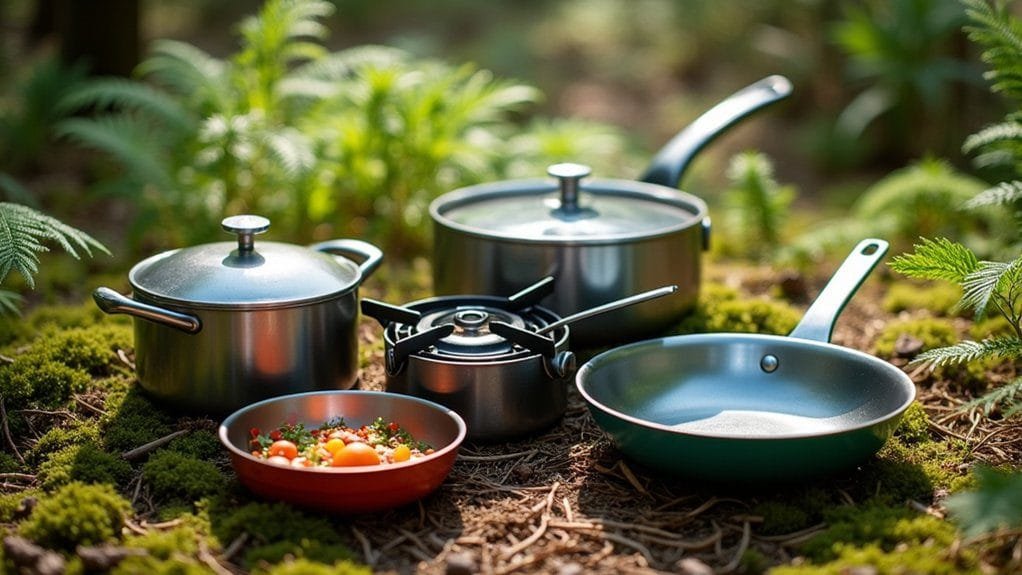
While selecting the right cookware can make or break your backpacking experience, understanding the materials available is essential for making an informed choice. Titanium stands out as a premier lightweight cookware material, offering exceptional durability and minimal weight. Its remarkable properties include high corrosion resistance and an impressive melting point of 3034 °F, making it ideal for rugged outdoor adventures. Aluminum provides an alternative with good heat distribution and affordability, though it’s more susceptible to damage. When evaluating lightweight cookware options, consider your specific needs and trip requirements. Weight matters considerably for backpackers, so prioritize materials that balance performance and portability. Each material—titanium, aluminum, and others—comes with distinct advantages and trade-offs that can impact your cooking experience in the wilderness.
Weight and Packability Considerations
Because weight is critical in backpacking, selecting the right cookware demands careful consideration of both mass and volume. Your lightweight cookware should balance functionality with minimalistic design, targeting options between 3.6 and 11.2 oz. Prioritize sets that nest together, which dramatically reduces pack space and maintains gear efficiency.
When evaluating packability, assess pot capacity relative to group size—aim for approximately 1 pint per person. Ultralight options like the Snow Peak Ti-Mini Solo Combo, weighing just 0.4 lbs, demonstrate how modern lightweight cookware can meet performance needs without unnecessary bulk. Titanium and hard-anodized aluminum represent superior material choices, offering exceptional strength-to-weight ratios that won’t compromise your backcountry cooking capabilities.
Cooking Performance and Efficiency
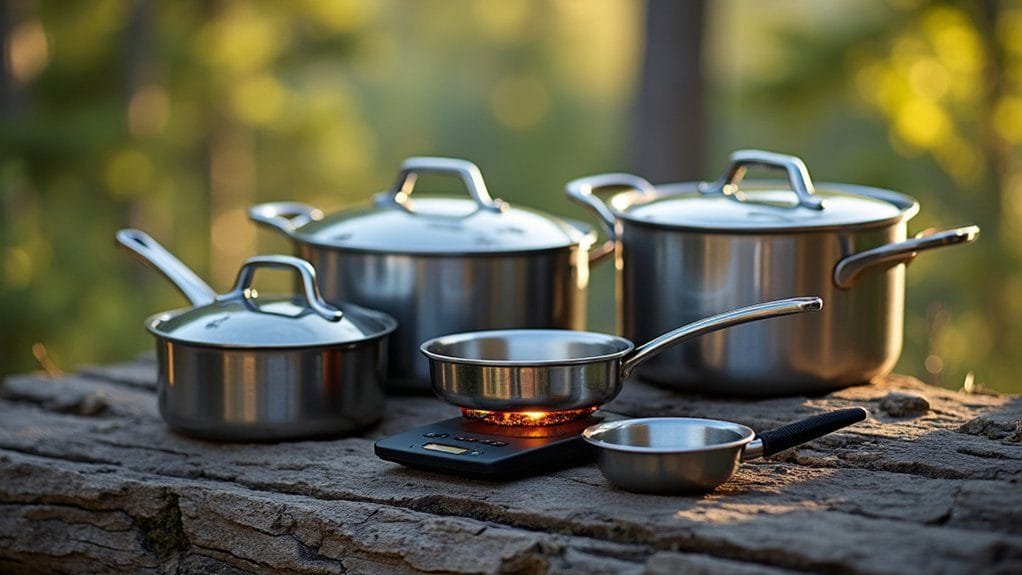
After carefully evaluating a cookware’s lightweight design, backpackers must next assess its cooking performance and efficiency in real-world alpine environments. Titanium cookware like the Toaks 750 mL pot offers superior heat transfer and resilience, enabling you to boil water rapidly while minimizing fuel consumption. The material’s high melting point guarantees consistent cooking performance under challenging conditions.
Anodized aluminum options such as the GSI Outdoors Halulite provide excellent heat distribution, preventing food scorching and assuring even cooking. When selecting lightweight cookware, prioritize materials that balance weight reduction with thermal efficiency. Look for features like insulated handles and liquid measurement lines that enhance cooking precision and safety during outdoor meal preparation. Your cookware’s performance can greatly impact your backcountry culinary experience.
Volume and Capacity Needs
Every backpacking cookware selection demands careful consideration of volume and capacity requirements to guarantee efficient meal preparation in the wilderness. Your volume and capacity needs directly impact meal versatility and pack weight. For two hikers, aim for a 1-liter pot; if you’re preparing dehydrated meals, a 750 mL container like the Toaks Titanium might suffice. Larger groups will require pots exceeding 1.5 liters.
Lightweight options with nesting capabilities, such as the GSI Outdoors Pinnacle Dualist HS, offer strategic solutions. These systems integrate bowls and mugs within compact designs, maximizing utility while minimizing bulk. Carefully assess your cooking style, group size, and meal complexity to select a pot that balances weight efficiency with practical volume requirements for your backcountry adventures.
Durability and Long-Term Investment
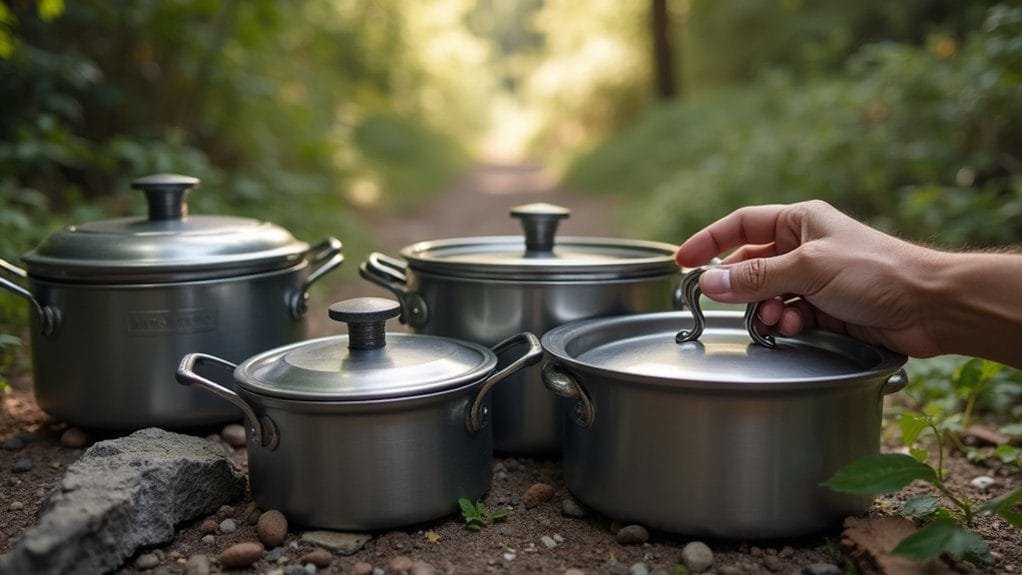
While durability might seem secondary to weight when selecting backpacking cookware, it’s a vital factor that directly impacts your long-term outdoor cooking experience. Titanium pots emerge as the gold standard for durable cookware, offering unparalleled strength and corrosion resistance. Consider these key advantages:
- Longevity: Titanium cookware like the Toaks Titanium 750 mL can last over a decade with proper care, making it a smart long-term investment.
- Temperature Resilience: These pots withstand extreme outdoor conditions without compromising structural integrity.
- Weight Efficiency: Despite superior durability, titanium remains incredibly lightweight, essential for minimalist backpackers.
Though initially more expensive, titanium cookware reduces replacement costs and provides consistent performance across multiple expeditions. Your investment translates directly into reliable cooking equipment that’ll accompany you through countless wilderness adventures.
Handle Design and Ergonomics
Although overlooked by many backpackers, handle design greatly impacts cookware performance and user experience in the wilderness. When selecting backpacking cookware, prioritize ergonomic handles that offer comfortable grip and reduce hand fatigue during meal preparation. Look for insulated handles that protect you from burns and prevent heat transfer, ensuring safe handling of hot pots and pans.
Opt for foldable or detachable handles that support compact storage and easy packing. Some advanced designs incorporate integrated pot lifters, enhancing maneuverability without requiring additional tools. Critically assess handle stability and attachment mechanisms to prevent accidental spills, especially when cooking on uneven terrain.
Your handle choice should balance lightweight design with functional performance, enabling efficient and comfortable cooking during outdoor adventures.
Heat Distribution and Cooking Techniques
Three key factors determine effective heat distribution in backpacking cookware: material composition, pot design, and cooking technique. Consider these critical elements when selecting your lightweight cooking gear:
- Material Selection: Choose titanium or anodized aluminum cookware for ideal heat transfer and even cooking performance.
- Base Design: Prioritize pots with wider bases that spread heat more uniformly, preventing hot spots and potential food scorching.
- Lid Functionality: Use tight-fitting lids to trap heat, reduce cooking times, and maximize your stove’s efficiency.
Understanding heat distribution allows you to master cooking techniques in challenging outdoor environments. Titanium’s high thermal conductivity requires careful temperature management, while anodized aluminum provides more forgiving heat spread. By selecting the right cookware and mastering these nuanced cooking approaches, you’ll transform your backcountry meal preparation from basic sustenance to culinary adventure.
Budget-Friendly Options and Value
Since budget constraints often dictate gear choices for backpackers, selecting cost-effective cookware doesn’t mean compromising on quality. Budget-friendly options like the Stanley Adventure Set, with its durable stainless steel construction, offer excellent value at just $25. You’ll find similar performance in the GSI Outdoors Halulite, which provides good heat distribution at $40.
For minimalist adventurers, the Vargo Bot delivers versatility as both pot and water bottle, though at a higher $100 price point. The MSR PocketRocket 2 Mini Kit stands out, combining a lightweight aluminum pot with a reliable stove for $50. Entry-level backpackers can also consider the MalloMe 10 Piece Mess Kit, which delivers basic functionality with a compact, affordable design.
Specialized Features for Outdoor Cooking
How can backpackers elevate their outdoor cooking experience beyond basic functionality? Consider specialized cookware features that transform your meal preparation. When selecting lightweight cooking gear, prioritize:
- Compact nesting features that allow pots, pans, and cups to stack efficiently, reducing pack volume
- Non-stick pot surfaces enabling quick meal preparation and effortless cleaning
- Insulated handles preventing burns while managing hot cookware in challenging terrain
Titanium and hard-anodized aluminum materials provide rapid heat transfer and minimal weight—critical for minimizing backpack burden. Look for cookware with clear measuring lines, which eliminate extra measurement tools and streamline cooking processes. These specialized design elements guarantee you’ll have versatile, practical cookware that supports your outdoor culinary needs without compromising performance or adding unnecessary weight to your expedition gear.
Maintenance and Care of Lightweight Cookware
Because proper maintenance can greatly extend the lifespan of your lightweight backpacking cookware, you’ll want to develop a systematic approach to care and cleaning. Inspect your cookware regularly for wear and tear, focusing on potential scratches or dents that could compromise performance.
| Maintenance Task | Recommended Action |
|---|---|
| Cleaning | Use mild soap, soft sponge |
| Storage | Keep in dry place, use protective sleeve |
| Heat Management | Avoid prolonged high-heat exposure |
When cleaning, wash immediately after use with mild soap and a soft sponge to prevent food residue hardening. Avoid metal utensils on non-stick surfaces to protect the coating. Store your cookware in a dry location, using protective sleeves during transport. For titanium and aluminum cookware, be cautious of overheating, which can warp materials and reduce cooking efficiency. Consistent, careful maintenance safeguards your lightweight cookware remains reliable and performs at its best during outdoor adventures.
Frequently Asked Questions
What Is the Best Material for Backpacking Pots?
You’ll want titanium for its unbeatable strength-to-weight ratio. Anodized aluminum offers great heat conductivity and non-stick properties, making it a lightweight, practical choice for backpackers seeking efficient, compact cooking gear without compromising performance.
What Is the Lightest Material for Cookware?
Titanium’s your lightest cookware material, outperforming aluminum with superior strength-to-weight ratio. While aluminum offers good heat conductivity, ceramic coatings can enhance its durability. For ultralight backpacking, titanium’s unmatched weight and resilience make it the top choice.
What Cookware to Bring Backpacking?
Like a Swiss Army knife for your campsite, you’ll want cookware that’s stove-compatible, space-saving, and versatile. Prioritize titanium or anodized aluminum pots with nesting designs, ensuring lightweight functionality that supports diverse cooking techniques without weighing down your pack.
Is Titanium or Stainless Steel Better for Camping?
Titanium offers superior weight advantages and non-reactivity, while stainless steel provides robust durability. You’ll find titanium lighter and more corrosion-resistant, but stainless steel’s lower cost and heat distribution make it a practical alternative for backpacking cookware.
Conclusion
You’ve survived gear shopping, debated titanium versus aluminum, and weighed every ounce—literally. Ironically, the perfect backpacking cookware isn’t about perfection, but finding what works for your adventure. Don’t overthink it: lightweight, durable, and efficient trumps fancy features. Your trail meals won’t care about brand prestige, but they’ll appreciate a reliable pot that doesn’t weigh you down or break mid-journey. Choose wisely, pack smartly, and enjoy the culinary wilderness.