
Indoor and outdoor pizza ovens differ greatly in cooking speed. You’ll find indoor models like the Breville Pizzaiolo cook pizzas in 2 minutes at 781°F, while outdoor options such as the Effeuno P134 reach a scorching 1050°F, slashing cooking times to under 90 seconds. Outdoor ovens’ higher temperatures mean faster, more intense cooking. Want to understand which oven will transform your pizza-making experience?
Key Takeaways
- Outdoor pizza ovens typically cook faster, reaching temperatures of 900-1100°F and producing pizzas in 90 seconds to 2 minutes.
- Electric indoor ovens like the Ooni Volt can preheat quickly (15 minutes) and cook Neapolitan-style pizzas in approximately 90 seconds.
- Higher temperatures in outdoor ovens enable rapid cooking and more authentic crisp crusts compared to standard kitchen ovens limited to 550°F.
- Wood-fired and gas outdoor ovens compensate for cooking speed with extremely high peak temperatures, allowing faster flavor development and crust preparation.
- Indoor electric pizza ovens offer consistent temperature control and quick cooking times, with models like Breville Pizzaiolo achieving up to 800°F for swift pizza preparation.
Temperature Showdown: Indoor vs. Outdoor Ovens
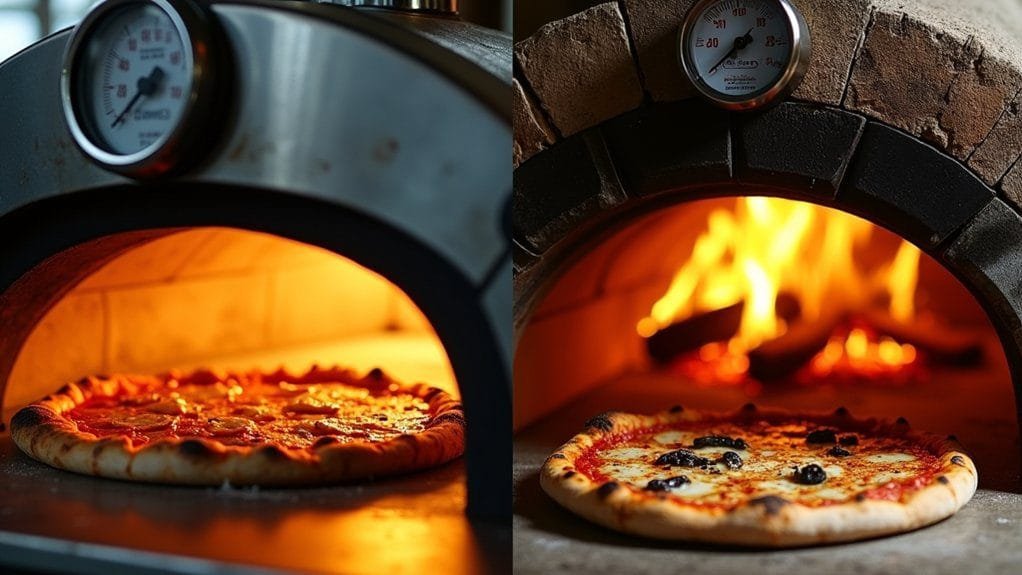
While temperature plays an essential role in pizza cooking, the disparity between indoor and outdoor pizza ovens reveals fascinating performance differences. Indoor pizza ovens like the Breville Pizzaiolo max out at 781°F, enabling swift 2-minute cook times, while outdoor ovens reach scorching temperatures between 900-1100°F. The Ooni Volt demonstrates impressive heat retention, preheating in 15 minutes and cooking Neapolitan pizzas in just 90 seconds. Outdoor units such as the Effeuno P134 push the boundaries, achieving 1050°F and completing pizzas in a mere 60 seconds. These high temperatures dramatically reduce cooking times compared to standard kitchen ovens, which struggle to surpass 550°F. The temperature differential directly impacts cooking quality, with higher heat producing more authentic, crisp crusts and perfectly melted toppings.
Cooking Speed: A Head-to-Head Comparison
Because pizza cooking speed directly impacts culinary satisfaction, indoor and outdoor pizza ovens showcase remarkable differences in performance that challenge traditional cooking expectations. Electric pizza ovens like the Ooni Volt demonstrate exceptional cooking speed, preparing Neapolitan pizzas in just 90 seconds with a 15-minute preheat time, while outdoor ovens such as the Gozney Dome require similar 2-minute cooking intervals but potentially longer heat-up periods.
Heat distribution plays a critical role in these cooking dynamics. Indoor ovens efficiently retain temperature, enabling quicker cooking, whereas outdoor ovens compensate with higher peak temperatures between 900-1100°F. The Chefman Home Slice, another indoor option, completes New York style pizzas in approximately 3 minutes, further highlighting the competitive cooking speeds of modern electric pizza ovens.
Flavor Profiles: Wood, Gas, and Electric Options
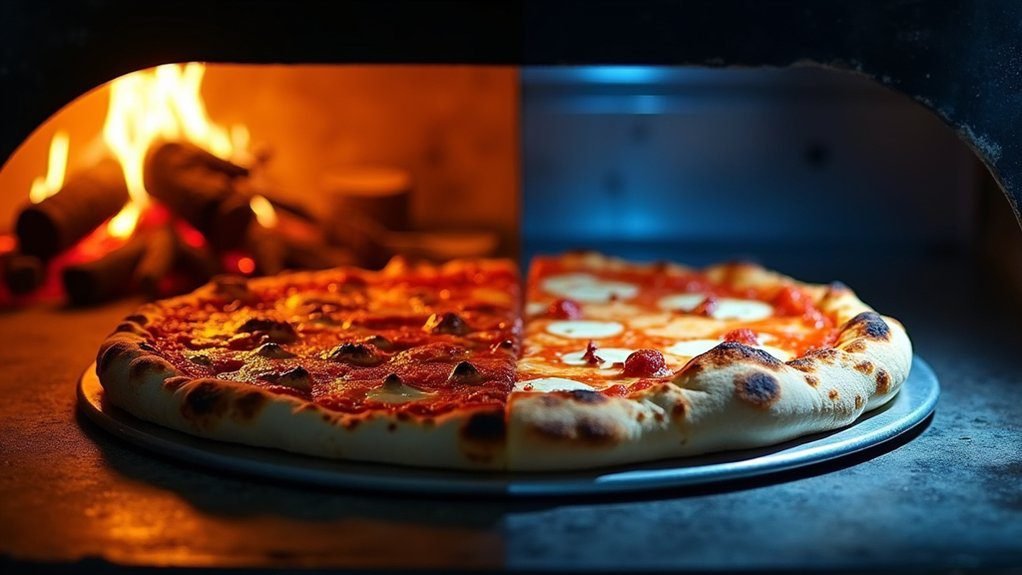
Pizza cooking speed naturally leads us to examine the more nuanced aspect of flavor development across different oven types. Wood-fired ovens produce an unparalleled smoky essence that electric and gas-fired options cannot replicate. While gas-fired ovens deliver comparable cooking performance, they lack the distinctive woodsy undertones prized by pizza enthusiasts.
Electric pizza ovens like the Breville Smart Oven Pizzaiolo demonstrate impressive capabilities, achieving temperatures up to 800°F and producing excellent Neapolitan pizza. However, they still struggle to match the authentic flavor profile inherent in outdoor cooking methods. The high temperatures and quick cooking times of wood and gas ovens contribute greatly to flavor development, making them superior choices for discerning pizza lovers seeking depth and complexity in their culinary experience.
Cost Considerations for Pizza Enthusiasts
Three key factors drive the financial landscape of pizza oven investments: initial cost, long-term value, and performance capabilities. When comparing indoor and outdoor pizza ovens, you’ll find significant price variations that impact your purchasing decision. Cost-effective outdoor models like the Solo Stove Pi Prime start around $330, while high-end indoor electric pizza ovens can reach $1,650.
Key considerations for pizza enthusiasts include:
- Budget-friendly outdoor ovens offer versatile cooking performance at lower price points
- Indoor pizza ovens provide exceptional temperature control and quick preheat times
- Multi-fuel outdoor options like the Gozney Dome represent long-term investments
Your choice depends on balancing initial investment with desired cooking capabilities, with outdoor options typically presenting more affordable alternatives to sophisticated indoor electric models.
Ease of Use and Setup
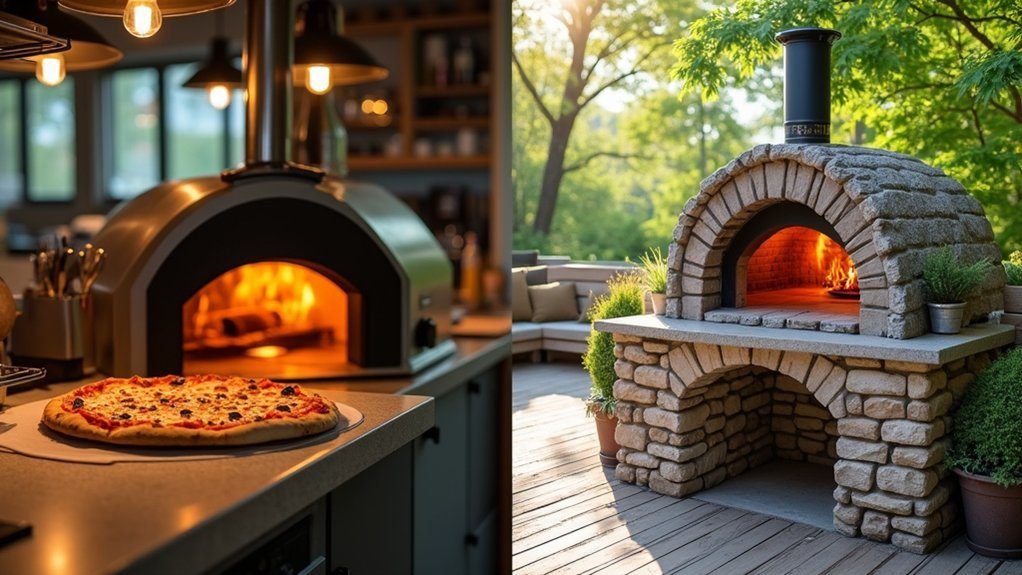
Beyond financial considerations, the operational complexity of pizza ovens greatly impacts user experience. Indoor pizza ovens offer remarkable simplicity in setup and operation. You’ll find these compact appliances require minimal preparation—typically just unboxing, inserting the stone, and plugging into utility power. Quick switch-on functionality enables spontaneous pizza nights with unprecedented convenience. Most models like the Ooni Volt feature pre-programmed settings for various pizza styles, streamlining the cooking process and reducing user intervention. Unlike outdoor ovens demanding complex fuel management, indoor units eliminate propane or wood pellet requirements. Their smaller footprint guarantees easy storage in limited kitchen spaces, making them an attractive option for home chefs seeking efficient, hassle-free pizza preparation. The plug-and-play nature of indoor pizza ovens transforms home cooking into a straightforward, enjoyable experience.
Space and Storage Solutions
While space constraints challenge home chefs, indoor and outdoor pizza ovens diverge markedly in their storage requirements and spatial dynamics. Indoor pizza ovens like the Breville Smart Oven Pizzaiolo offer user-friendly, compact kitchen solutions with minimal setup process. The Ooni Volt 12, bridging indoor/outdoor functionality, demands careful measurement of available space at 24.2 x 20.8 x 10.9 inches.
Key storage considerations include:
- Indoor models provide plug-and-play convenience with easy indoor storage
- Outdoor pizza ovens require external storage options like garage or covered spaces
- Precise spatial planning guarantees ideal appliance placement and accessibility
Your storage strategy should prioritize measuring designated areas, understanding each oven’s dimensional requirements, and selecting a solution that balances cooking performance with spatial efficiency. Thoughtful selection prevents storage challenges and maximizes culinary potential.
Design and Aesthetic Appeal
Design aesthetics transform pizza ovens from mere kitchen appliances into culinary statements, reflecting the nuanced interplay between functional performance and visual sophistication. Indoor pizza ovens like the Breville Smart Oven Pizzaiolo prioritize a compact and sleek aesthetic, seamlessly integrating with modern kitchen decor through stainless steel and black finishes. Conversely, outdoor pizza ovens such as the Gozney Dome showcase a more rugged, traditional appearance that becomes a visual focal point in patio and garden settings.
The Ooni Volt exemplifies a unique design bridging indoor and outdoor environments, demonstrating how visual appeal can enhance the overall pizza-making experience. Your choice between indoor and outdoor models will depend on personal aesthetic preferences, space constraints, and the desire to create a distinctive culinary centerpiece that complements your specific environment.
Choosing the Right Pizza Oven for Your Needs
How do you select the ideal pizza oven that perfectly matches your culinary aspirations and spatial constraints? Your decision hinges on several critical factors:
- Evaluate your space: Measure available room carefully, considering compact indoor models like the Ooni Volt 12 and Breville Pizzaiolo versus larger outdoor options such as the Gozney Dome.
- Analyze cooking performance: Compare cook times and temperature ranges, noting that outdoor pizza ovens reach 900-1100°F, enabling faster cooking and superior flavor compared to indoor models maxing at 800°F.
- Consider versatility and fuel requirements: Determine whether you prefer the plug-and-play convenience of indoor pizza ovens or the diverse fuel sources of outdoor variants like propane or wood pellets.
The Ooni Volt 12 stands out as the sole indoor/outdoor oven, offering unprecedented flexibility for pizza enthusiasts seeking precision and convenience.
Frequently Asked Questions
What’s Better, an Indoor or Outdoor Pizza Oven?
You’ll weigh indoor convenience against outdoor ambiance, balancing cooking space, temperature control, and flavor differences. Your choice depends on maintenance needs, portability, design aesthetics, cost, and personal pizza-making experience.
How Long to Cook Pizza in Outdoor Oven?
You’ll craft culinary perfection in 90-120 seconds, thanks to your outdoor oven’s remarkable heat. Wood or gas-fired, temperatures soaring to 1000°F guarantee a crispy crust, smoky essence, and gourmet results that’ll transform your pizza-making experience.
Which Type of Oven Is Best for Pizza?
You’ll find wood-fired and brick ovens ideal for authentic flavor, while electric and gas models offer precision. Portable countertop options with stone surfaces provide flexibility, balancing temperature control, convenience, and professional-quality pizza performance.
Can You Use an Outdoor Pizza Oven Indoors?
Fire dances dangerously: you can’t use outdoor pizza ovens indoors due to severe safety concerns, ventilation issues, and significant fire hazards that compromise your kitchen’s safety and potentially damage your living space.
Conclusion
When you’re hunting for the perfect pizza oven, speed isn’t everything—but it matters. Scientific analysis reveals outdoor wood-fired ovens can reach 900°F, cooking pizzas in under 90 seconds, while indoor electric models typically max at 550°F, requiring 4-6 minutes. Your choice depends on temperature tolerance, cooking style, and culinary passion. Whether you’re a speed demon or flavor purist, there’s an oven that’ll transform your pizza-making experience from ordinary to extraordinary.