
When it comes to heavy-load backpacks, Osprey and Deuter are top contenders. Osprey’s Atmos AG 65 offers an innovative Anti-Gravity mesh for breathability and customizable fit, while Deuter’s ACT Lite series is built with robust materials for durability. Comfort varies by individual, but both brands feature great load distribution and organization. If you’re after quality and value, consider your preferences and needs. Explore the unique features each brand offers to find your perfect match.
Key Takeaways
- Osprey’s Atmos AG 65 features innovative Anti-Gravity mesh for ventilation and customizable fit, ideal for comfort during heavy loads.
- Deuter’s ACT Lite series uses high-quality nylon and offers adjustable torso lengths to enhance fit and support for rigorous conditions.
- Osprey backpacks focus on lightweight design, while Deuter prioritizes durable materials, making them suitable for different trekking styles.
- Both brands provide thoughtful organization and easy gear access, important for efficient packing on long treks.
- Osprey’s higher price reflects advanced features and a lifetime warranty, while Deuter offers sturdy construction at a more budget-friendly price.
Overview of Osprey and Deuter Backpacks
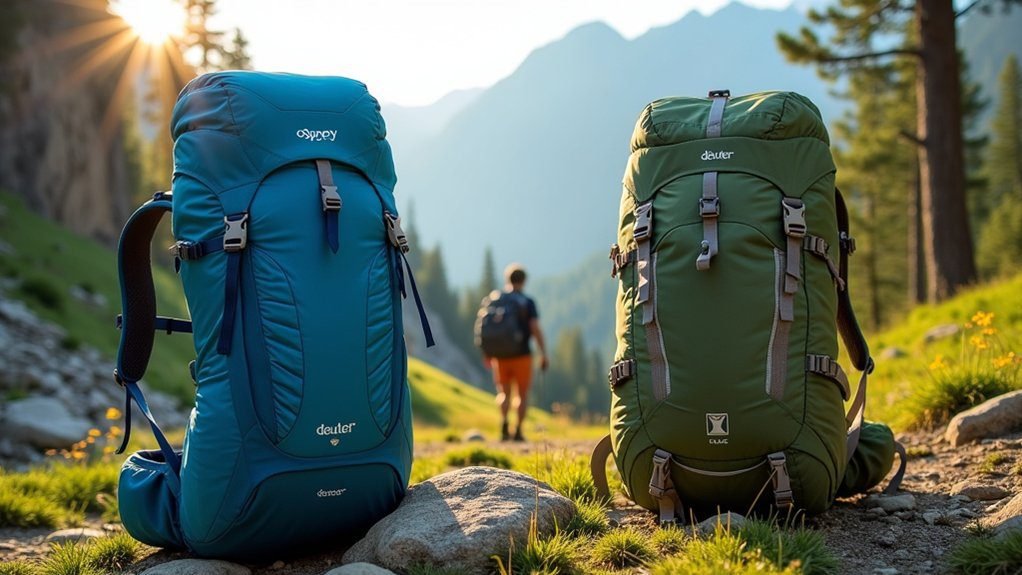
When you’re considering a backpack for heavy loads, both Osprey and Deuter offer standout options that cater to different needs. Osprey excels in comfort, particularly with models like the Atmos AG 65, featuring an innovative Anti-Gravity suspended mesh back panel that enhances ventilation and load-carrying efficiency. If you prioritize comfort during long treks, Osprey’s Baltoro and Deva models provide excellent organization but may weigh more. Conversely, Deuter focuses on durability and effective load management. Their ACT Lite series showcases sturdy construction, while adjustable torso lengths guarantee a customized fit, accommodating various body types. Ultimately, your choice hinges on whether you value Osprey’s comfort-driven designs or Deuter’s robust, adjustable structures for heavy-duty use.
Key Features of Osprey Backpacks
Osprey backpacks are engineered with a range of key features that enhance performance and comfort for heavy load carrying. The Osprey Atmos AG 65, for instance, includes an Anti-Gravity suspended mesh back panel that promotes ventilation and alleviates pressure on long hikes. You’ll appreciate the customizable Fit-on-the-Fly harness and hipbelt, which allow for personalized adjustments to fit various torso lengths, ensuring stability. Thoughtful organization is evident with ample external pockets, providing easy access to gear when you need it most. Plus, the use of durable 450-denier recycled polyester not only underscores Osprey’s commitment to sustainability but also guarantees long-lasting performance, making these backpacks an excellent choice for adventurers seeking reliability and comfort.
Key Features of Deuter Backpacks
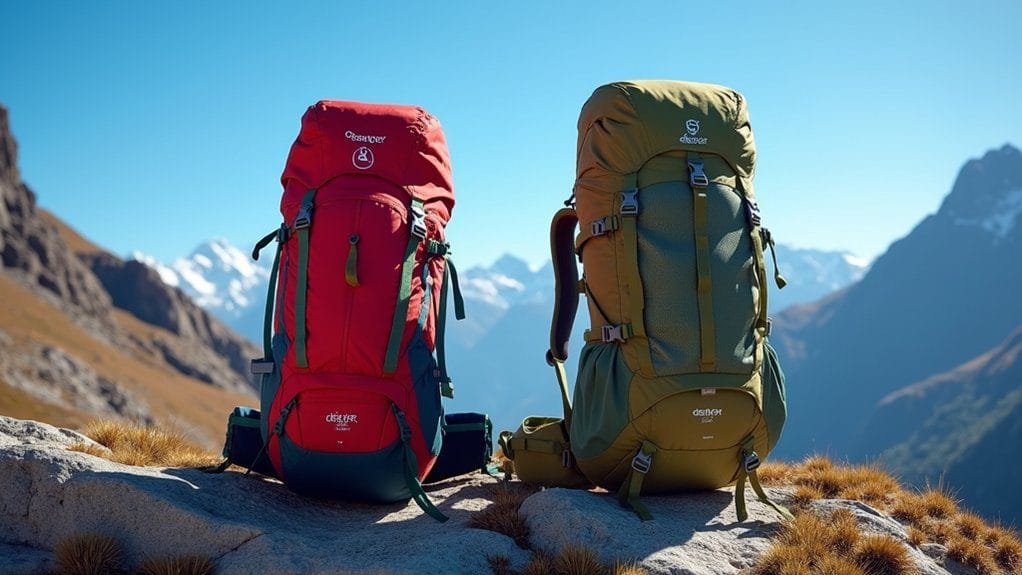
Designed for serious adventurers, Deuter backpacks offer key features that make them exceptional choices for carrying heavy loads over long distances. Their durable construction, crafted from high-quality materials like 210D and 420D nylon, guarantees longevity even under rigorous conditions. You’ll appreciate the adjustable torso lengths, allowing you to customize the fit for peak support. The Aircomfort Sensic Vario back system enhances ventilation and comfort, effectively reducing sweat buildup while evenly distributing weight across your body. Plus, many Deuter models feature multiple access points to the main compartment, making it easy to organize and retrieve your gear without hassle. With these innovations, Deuter backpacks stand out as reliable partners for any serious trekker.
Comfort and Fit Comparison
Comfort and fit are paramount when choosing a backpack for heavy loads, and both Osprey and Deuter offer unique solutions tailored to meet diverse needs. Osprey’s Atmos AG 65 features an innovative “Anti-Gravity” suspended mesh backpanel that scores a perfect 10.0 in comfort, enhancing ventilation and fit. Meanwhile, Deuter’s Aircontact Core 65+10 boasts adjustable torso lengths up to four inches, allowing for personalized customization across various body types. Both brands prioritize load distribution; Osprey’s Fit-on-the-Fly harness and hipbelt adjustments cater to individual shapes, while Deuter’s sturdy construction supports comfort under heavy loads. User experiences highlight that finding the right fit is essential, as comfort levels can considerably vary based on your unique body type and preferences.
Weight Capacity and Load Distribution
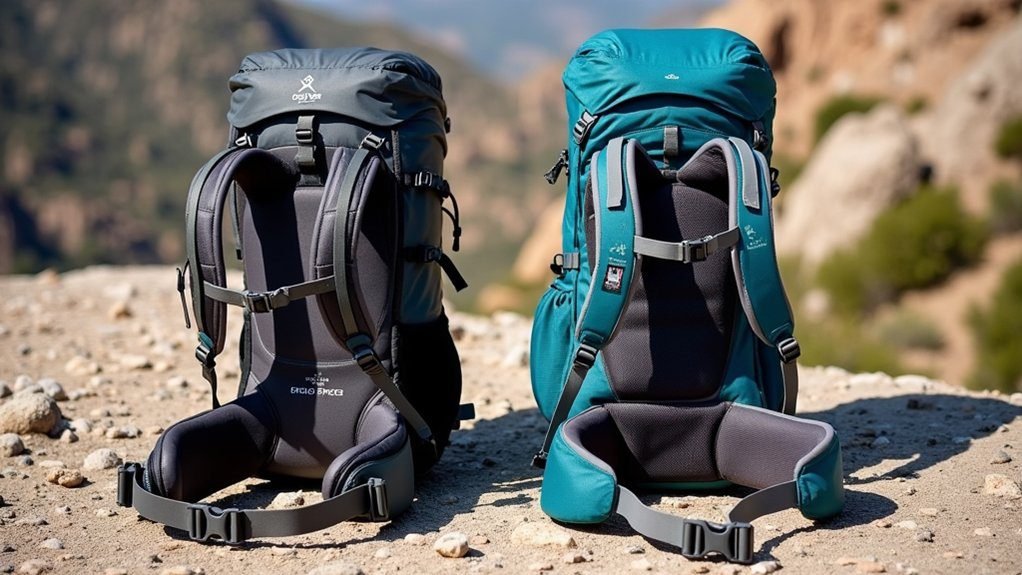
When it comes to managing heavy loads, both Osprey and Deuter excel in offering backpacks that prioritize weight capacity and load distribution. Their designs accommodate significant gear while ensuring a comfortable carrying experience.
- Osprey’s Baltoro 75 and Deva 70 can hold up to 75 liters, providing exceptional support.
- Osprey’s Atmos AG 65 features an innovative suspension system that enhances load distribution.
- Deuter’s Aircontact Core 65+10 includes an adjustable torso length for a customized fit.
- Both brands utilize robust materials to evenly distribute weight across hips and shoulders, reducing fatigue.
Choosing between these two brands means selecting packs that effectively handle heavy loads while ensuring comfort throughout your adventures.
Durability and Material Quality
Durability is a critical factor to contemplate when choosing a backpack for heavy loads, and both Osprey and Deuter deliver impressive material quality tailored for rigorous use. Osprey packs are crafted from 450-denier recycled polyester, striking a balance between durability and lightweight performance. In contrast, Deuter’s ACT Lite shines with its high-denier nylon fabrics, designed to withstand harsh conditions. Reinforced areas on Deuter packs enhance longevity under heavy loads, while Osprey’s designs prioritize a lightweight feel that might sacrifice some durability in extreme situations. Both brands offer lifetime warranties, underscoring their commitment to performance. User feedback often highlights Deuter’s superior longevity over time, making it a strong contender for those focused on durability in demanding environments.
Suspension Systems: Osprey vs. Deuter
The effectiveness of a backpack’s suspension system can make or break your experience on the trail, especially when carrying heavy loads. Osprey and Deuter both offer advanced systems designed for comfort and load distribution.
- Osprey’s Anti-Gravity suspension features a mesh panel that enhances ventilation and supports heavy loads.
- The Atmos AG 65 boasts a perfect comfort score, guaranteeing you won’t feel the weight of your gear.
- Deuter’s Aircomfort Sensic Vario allows airflow between the pack and your back, reducing sweat.
- Their adjustable torso length guarantees a personalized fit, aligning with your body shape for better weight distribution.
Choosing between Osprey and Deuter ultimately depends on your specific needs, but both brands excel in delivering comfort and effective load-carrying capabilities.
Pocket Organization and Accessibility
Effective pocket organization and accessibility can greatly enhance your hiking experience, especially on multi-day trips where quick access to gear matters. Osprey packs, like the Atmos AG 65, excel in this area with their thoughtful design, featuring multiple pockets, including side stretch pockets and a top lid pocket for essentials. Deuter’s Aircontact Core 65+10 offers three access points to the main compartment, considerably improving organization and accessibility. Both brands include hip belt pockets, with Osprey’s strategically placed for quick snack access, while Deuter’s large, zippered pockets provide ample storage. Additionally, Deuter’s separate sleeping bag compartments with integrated openings keep your sleeping gear organized and easily reachable. Choose the brand that aligns with your pocket organization and accessibility needs for a more efficient hiking experience.
Price Comparison and Value for Money
When you’re investing in a backpack for heavy loads, understanding the price difference between Osprey and Deuter can greatly impact your decision. Osprey models like the Atmos AG 65 range from $300 to $400, reflecting their high-end features and comfort. In contrast, Deuter packs, such as the ACT Lite, are more budget-friendly, typically priced between $200 and $300.
Understanding the price differences between Osprey and Deuter can significantly influence your backpack investment for heavy loads.
Consider these factors for value for money:
- Osprey’s lifetime warranty offers long-term savings.
- Deuter provides sturdy construction at a lower price point.
- Both brands cater to various preferences and budgets.
- Osprey’s advanced features may justify the higher cost for serious trekkers.
Ultimately, your choice hinges on balancing price with features that meet your heavy-load needs.
Final Thoughts on Osprey and Deuter for Heavy Loads
While both Osprey and Deuter offer exceptional backpacks for heavy loads, your choice ultimately depends on your specific needs and preferences. Osprey’s Baltoro 75 stands out for its outstanding comfort and organization, making it ideal for heavy hauling. However, if durability is your priority, Deuter’s ACT Lite series provides reliable support and can withstand years of rigorous use. Osprey’s Atmos AG 65 features innovative adjustability with its “Anti-Gravity” mesh back panel, enhancing comfort during long treks, though it may lack the robustness of Deuter’s designs in extreme conditions. Ultimately, consider your fit preferences and the balance between comfort and durability to determine which brand best suits your heavy load adventures.
Frequently Asked Questions
Is the Deuter Speed Lite 21 Better Than the Osprey Daylite Plus?
When comparing the Deuter Speed Lite 21’s comfort and features against the Osprey Daylite Plus’s durability and capacity, consider weight, user reviews, and hiking versatility to determine which best suits your needs.
What Is the Best Weight Distribution for Hiking Backpacks?
To achieve perfect weight balance, adjust your torso length and utilize load lifters, ensuring the hip belt supports 70-80% of the pack volume. Frame types matter too, aligning the center of gravity enhances stability on your journey.
What Is the Max Load for the Osprey Exos 58?
The Osprey Exos has a load capacity of 40 pounds, ensuring hiking comfort while maintaining a lightweight design. Its durable materials, effective suspension system, and gear organization features enhance your trekking experience without sacrificing performance.
Which Company Makes the Best Hiking Backpacks?
When choosing the best hiking backpack, consider comfort levels, material durability, and customer reviews. Compare brand history, warranty options, and price. Osprey excels in features, while Deuter shines in durability—both serve dedicated hikers well.
Conclusion
When it comes to hauling heavy loads, choosing between Osprey and Deuter can feel like picking your favorite star in a night sky. Both brands offer exceptional comfort and innovative features, but your needs may tip the scales. If you prioritize adjustable suspension and pockets galore, Osprey might be your go-to. On the other hand, if durability and weight distribution are key, Deuter’s got your back. Ultimately, it’s about finding the perfect fit for your adventures.