
You’ll face complex trade-offs when choosing between plastic and reusable straws. Plastic straws generate lower carbon emissions but devastate marine ecosystems, with 500 million used daily in the U.S. Reusable alternatives like metal or glass create higher production emissions but reduce ocean waste. Non-biodegradable plastics can take 200 years to decompose, harming wildlife through entanglement and microplastic ingestion. Want to understand the nuanced environmental calculus?
Key Takeaways
- Plastic straws generate lower carbon emissions but contribute significantly to long-term environmental pollution, taking up to 200 years to decompose.
- Reusable straws (metal, glass) have higher initial production emissions but create substantially less ocean waste and reduce single-use plastic consumption.
- Marine ecosystems suffer critically from plastic straw waste, with millions of straws causing wildlife entanglement, microplastic ingestion, and potential species health disruptions.
- Paper straws, while biodegradable, paradoxically contribute to deforestation and often contain higher levels of harmful PFAS chemicals compared to plastic alternatives.
- Consumer choices in straw selection directly impact environmental sustainability, with individual actions potentially driving systemic change in reducing plastic waste and ecological harm.
The Straw Dilemma: Understanding Environmental Consequences
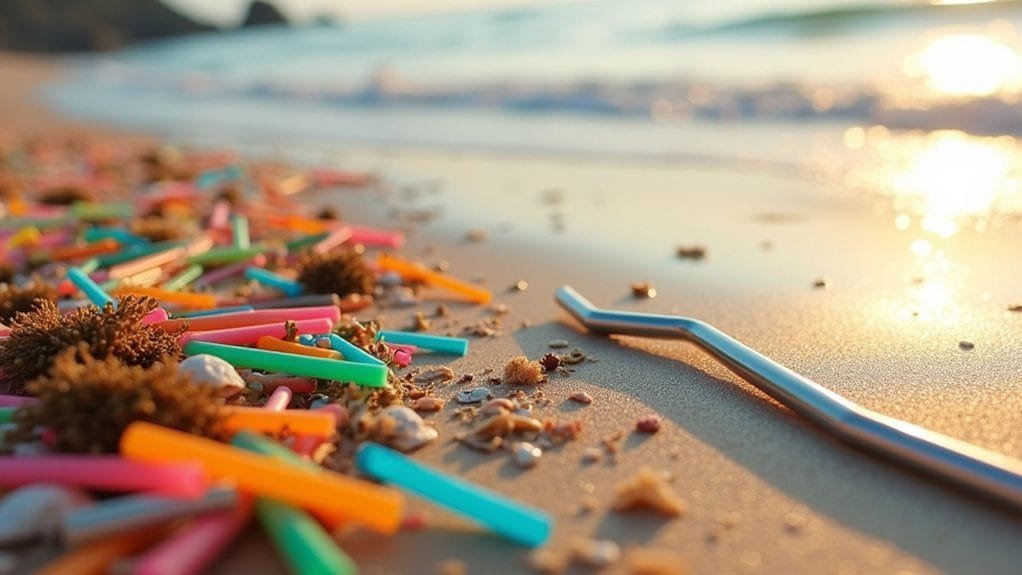
While the global environmental impact of plastic straws might seem straightforward, the reality is far more nuanced. When examining the pollution problem, you’ll discover that single-use plastics like plastic straws aren’t simply black and white environmental villains. The estimated 500 million daily U.S. straw consumption contributes to plastic waste, but alternative solutions aren’t necessarily cleaner. Paper straws, often marketed as eco-friendly, can contain higher PFAS levels and comparable greenhouse gas emissions to traditional plastic straws. Reusable straws made from metal, glass, or bamboo present a promising alternative, though their initial production emissions are higher. Understanding the complex lifecycle of these products is essential in addressing the broader climate change challenge. Your choice matters, but it requires informed, critical assessment of each straw type’s true environmental impact.
Material Matters: Comparing Straw Types and Their Ecological Footprint
Although the environmental impact of straws might seem straightforward, the reality is deeply complex and nuanced. Your choice between plastic straws, paper straws, and reusable straws greatly influences greenhouse gas emissions and ecological footprint. Traditional plastic straws generate lower carbon emissions compared to bioplastic alternatives, while paper straws contribute to deforestation despite quick biodegradability. Reusable straws like metal or glass options create less ocean waste but have higher initial production emissions. Most straw types ultimately end up incinerated or in landfills, with paper straws often unrecyclable due to food contamination. Single-use plastic remains a substantial environmental challenge, yet alternatives aren’t necessarily superior. Understanding the thorough lifecycle of different straw materials reveals that no perfect solution exists—each type presents unique environmental trade-offs demanding thoughtful consideration.
Wildlife and Waste: How Straws Impact Marine Ecosystems
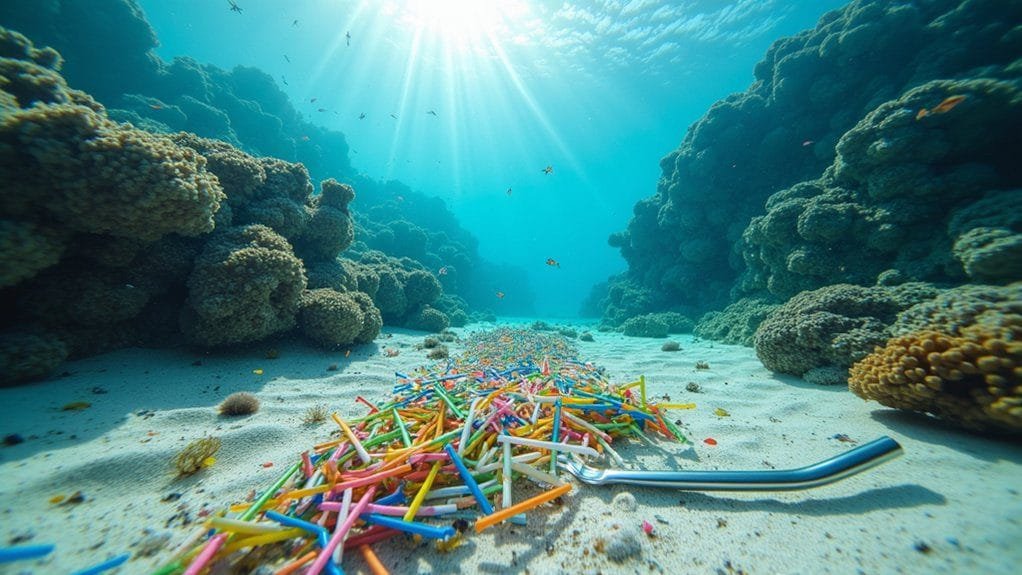
Beyond the material composition and carbon footprint of straws lies a stark environmental reality: marine ecosystems are bearing the brunt of our disposable plastic habits. Plastic straws represent a critical threat to wildlife, with approximately 500 million used daily in the U.S., causing devastating environmental impact. Marine animals suffer catastrophic consequences, as these non-biodegradable items can take up to 200 years to decompose, fragmenting into microplastics that are ingested by aquatic species. Millions of marine animals die annually from entanglement and starvation caused by plastic pollution. Reusable alternatives offer a meaningful solution, helping to mitigate the destruction of delicate marine ecosystems. By shifting to biodegradable or sustainable straw options, you can directly contribute to protecting marine life and reducing the long-term environmental damage caused by disposable plastic straws.
Sustainable Solutions: Strategies for Responsible Straw Usage
Considering the significant environmental impact of single-use plastic straws, consumers can adopt practical strategies to minimize waste and support sustainable practices. By choosing reusable straws made from metal, glass, or bamboo, you’ll reduce your plastic footprint and contribute to environmental conservation.
| Strategy | Action | Impact |
|---|---|---|
| Refuse | Skip unnecessary straws | Immediate waste reduction |
| Replace | Use reusable alternatives | Minimize single-use plastic |
| Support | Advocate for straw legislation | Systemic environmental change |
| Educate | Share sustainability knowledge | Increase collective awareness |
Keeping reusable straws accessible in multiple locations encourages consistent sustainable choices. Supporting legislative efforts that limit automatic straw distribution in restaurants can further amplify environmental benefits. Your individual actions, combined with collective awareness, create meaningful progress in addressing the lifecycle emissions associated with disposable straw consumption.
Beyond the Straw: Broader Implications for Consumer Choices

While the anti-plastic straw movement represents a targeted approach to reducing single-use plastics, its significance extends far beyond a single product type. Your consumer choices can catalyze meaningful environmental change by understanding the broader implications of plastic consumption. Reusable straws symbolize a larger shift towards sustainability, challenging you to reconsider everyday habits that impact marine ecosystems. By consciously selecting alternatives to disposable plastics, you’re not just avoiding 500 million daily straws in the U.S., but participating in a global movement of environmental responsibility. Each decision to embrace sustainable options creates a ripple effect, demonstrating how individual actions can collectively address significant environmental challenges. Your commitment to reducing single-use plastics transforms the straw from a simple drinking tool into a powerful symbol of ecological awareness.
Frequently Asked Questions
Are Reusable Straws Better for the Environment?
You’ll reduce waste by choosing reusable straws, as their sustainability benefits outweigh single-use options. With proper cleaning and long-term use, you’ll lower environmental impact through smarter material choices and conscious consumer habits.
What Is the Most Environmentally Friendly Straw?
You’ll find bamboo straws are most eco-friendly, utilizing biodegradable materials that minimize marine pollution while supporting sustainable practices through reduced waste and supporting responsible consumer behavior in straw alternatives.
What Is the Environmental Impact of Plastic Straws?
You’re contributing to plastic pollution when using disposable straws, harming marine life and overwhelming landfills. With limited recycling options, these microplastic generators considerably impact ecosystems, urging consumers to explore biodegradable alternatives and raise environmental awareness.
What Are the Pros and Cons of Plastic Straws Vs Paper Straws?
You’ll find paper straws biodegrade faster but have higher carbon footprints, while plastic straws persist longer in environments. Consumer behavior and public awareness campaigns are driving shifts toward sustainable alternatives like reusable metal or bamboo straws.
Conclusion
You’ve likely learned straws aren’t just a trivial choice. Each year, Americans discard approximately 500 million plastic straws daily—enough to wrap around the Earth 2.5 times. Your decision to switch to reusable alternatives isn’t just personal; it’s a critical environmental statement. By choosing sustainable options, you’re directly reducing marine pollution, protecting wildlife, and demonstrating how individual actions can create meaningful ecological change.