
You’ll face complex trade-offs when choosing produce bags. Plastic bags have a lower initial carbon footprint but create massive pollution, with less than 5% recycled. Reusable mesh and cotton bags require higher production resources, needing 10-20 and 7,100 uses respectively to offset environmental impact. Your consistent bag reuse transforms resource-intensive products into sustainable choices. Want to unpack the full ecological equation?
Key Takeaways
- Single-use plastic produce bags create significant environmental pollution, with less than 5% being recycled and decomposition times ranging from 20 to 1,000 years.
- Reusable bags like mesh and cotton options reduce plastic waste, but require multiple uses to offset their initial production environmental impact.
- Non-woven polypropylene bags become environmentally beneficial after 10-20 uses, while cotton bags require approximately 7,100 uses to balance their production resources.
- Reusable bags must be carefully maintained to prevent bacterial contamination, with regular washing in warm water recommended to reduce microorganism risks.
- The sustainability of produce bags depends on consistent reuse, consumer awareness, and intentional management of their lifecycle and environmental footprint.
The Environmental Cost of Produce Bags
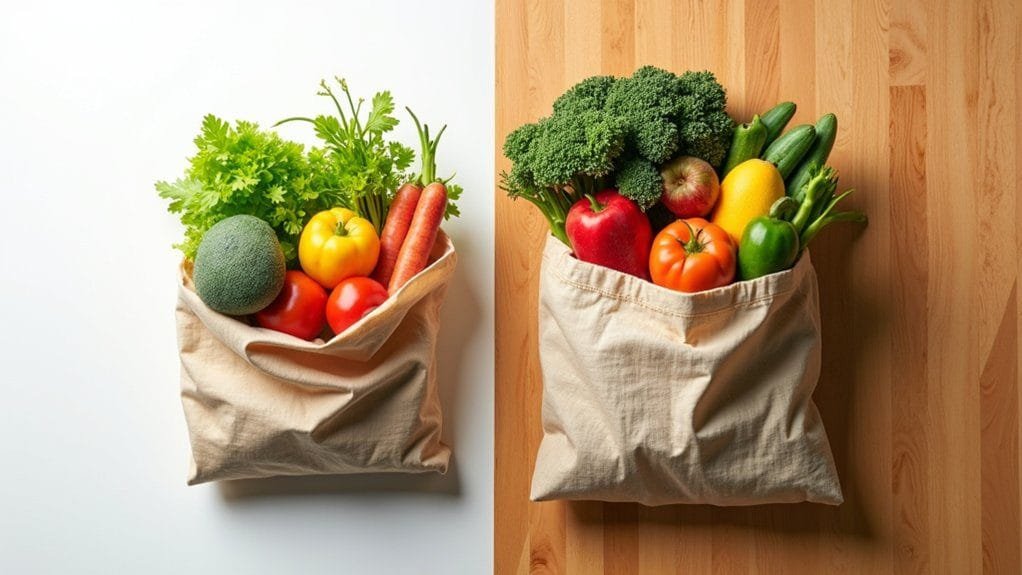
While plastic produce bags might seem convenient, their environmental toll is staggering. Single-use plastic bags generate massive pollution, with less than 5% being recycled and decomposition times ranging from 20 to 1,000 years. You’ll find that the carbon footprint of these bags extends far beyond their brief, momentary utility.
Reusable alternatives like mesh and cotton produce bags offer a more sustainable approach, though they’re not without environmental considerations. Cotton bags, for instance, require significant water and pesticide resources, necessitating a minimum of 7,100 uses to offset their production impact. Non-woven polypropylene bags become environmentally beneficial after just 10-20 uses, presenting a more pragmatic solution to reducing single-use plastic waste and minimizing long-term environmental degradation.
Comparing Material Production and Energy Consumption
Understanding the environmental impact of produce bags requires a thorough analysis of their production processes and energy consumption. When comparing plastic bags to reusable alternatives, you’ll find stark differences in resource demands and carbon footprint. Single-use plastic bags demand considerably less energy to produce compared to cotton or polypropylene bags. Cotton bags, for instance, consume immense water resources during manufacturing, with a single bag potentially requiring enough water to fill a bathtub. Polypropylene bags, while more durable, still incur substantial production costs. The key to mitigating environmental impact lies in reuse: a cotton bag must be used 7,100 times to offset its production, while polypropylene bags break even after just 10-20 uses. Your choice of bag directly influences its overall environmental footprint.
Lifecycle Analysis of Plastic and Mesh Bags
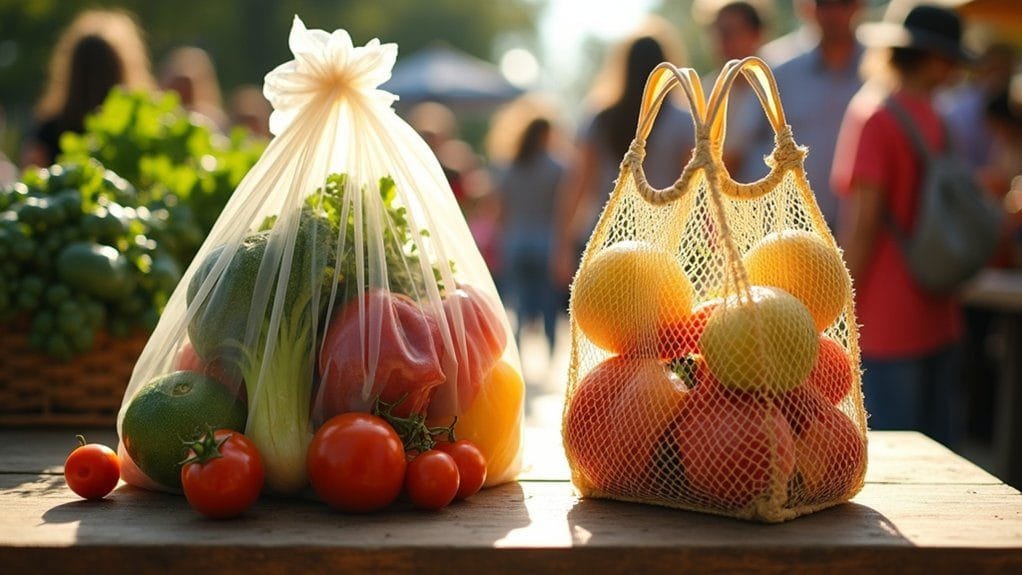
Because environmental sustainability hinges on thorough product assessments, lifecycle analysis provides critical insights into the ecological performance of plastic and mesh produce bags. You’ll find that while plastic bags have a lower initial carbon footprint, their single-use nature creates significant plastic pollution challenges. Reusable mesh bags require higher resource investment during production but offer substantial sustainability benefits through repeated use.
Lifecycle assessments reveal that mesh bags must be reused 10 to 20 times to offset their environmental impact effectively. Your commitment to consistently using these bags transforms them from a resource-intensive product to an ecologically responsible choice. The key lies in understanding that repeated use directly correlates with reducing overall ecological issues associated with single-use plastics.
Reuse Frequency: A Critical Sustainability Factor
When evaluating the environmental performance of produce bags, reuse frequency emerges as a vital sustainability metric. Your commitment to consistently reusing bags directly influences their environmental impact. Non-woven polypropylene bags require 10-20 uses, while cotton bags demand 7,100 uses to offset production impacts compared to single-use plastic bags.
| Bag Type | Reuse Threshold | Environmental Consideration |
|---|---|---|
| Plastic | 1 use | High waste generation |
| Polypropylene | 10-20 uses | Moderate production impact |
| Cotton | 7,100 uses | Significant initial footprint |
| Mesh | Multiple uses | Depends on consistent reuse |
Consumer awareness and intentional bag management are essential. By understanding that the sustainability of reusable bags hinges on frequency of use, you can make more environmentally conscious choices in your shopping habits.
Disposal and Long-Term Environmental Consequences
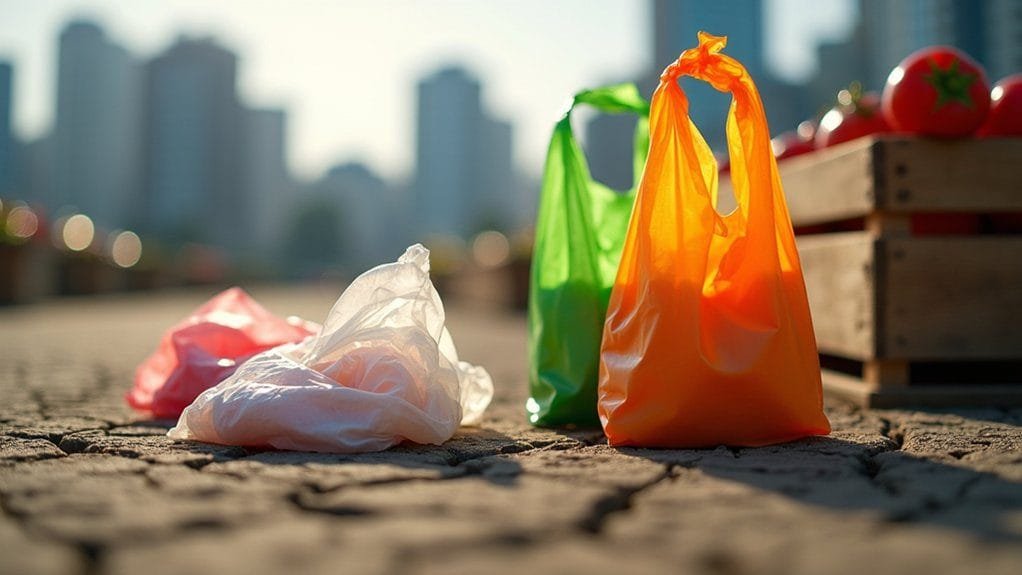
While the immediate convenience of produce bags masks their environmental trajectory, the disposal and long-term consequences reveal a complex ecological narrative. Plastic bags and reusable alternatives each carry distinct environmental impacts contingent on consumer behavior. Less than 5% of single-use plastic bags get recycled, transforming them into persistent environmental hazards that contaminate ecosystems and harm wildlife. Reusable bags offer waste reduction potential, but their ecological footprint depends on frequency of use and proper disposal. Cotton bags, for instance, require 7,100 uses to offset their production impact. Your disposal choices dramatically influence the long-term environmental consequences. Mindful consumer practices—including consistent reuse, appropriate recycling, and responsible end-of-life management—ultimately determine whether produce bags become ecological burdens or sustainable solutions.
Health and Hygiene Considerations
Although convenience often drives consumer choices, health and hygiene considerations are essential when selecting produce bags. Reusable bags can harbor significant bacterial risks if not properly maintained. Consider these key hygiene factors:
Prioritize health over convenience by understanding the hidden bacterial risks lurking in unwashed reusable produce bags.
- E. coli and other bacteria can thrive in unwashed reusable bags, with studies revealing 12% of bags containing harmful microorganisms.
- Meat juices and organic contaminants create ideal breeding grounds for bacterial growth, necessitating separate bags for different food types.
- COVID-19 can survive on polypropylene surfaces for up to three days, underscoring the importance of regular cleaning.
Washing bags in warm or hot water reduces bacterial counts by 99.9%, effectively sanitizing them. Proper storage is equally important; avoid leaving bags in hot environments like cars, which promote bacterial proliferation. Regular cleaning and mindful handling can mitigate health risks associated with reusable bags.
Economic Implications for Consumers and Businesses
As consumers and businesses navigate the complex landscape of produce bag choices, economic considerations emerge as a critical factor in decision-making. You’ll face upfront costs when shifting to reusable bags, which typically have a higher initial price point compared to single-use plastic bags. However, long-term economic benefits can offset these expenses. Businesses may realize cost savings by reducing plastic bag supply, though they’ll need to invest in customer education. Surprisingly, the sale of durable plastic bags has increased, potentially undermining plastic bag bans’ economic advantages. You can mitigate costs by utilizing consumer incentives, such as retailer discounts for bringing reusable bags, which can contribute to reduced grocery bills. Strategic bag selection and consistent use are key to maximizing economic advantages.
Strategies for Sustainable Produce Bag Selection
Building on the economic considerations of produce bag choices, consumers can now strategically select sustainable options that minimize environmental impact and long-term costs. When choosing produce bags, consider these key strategies:
- Select mesh bags made from recycled material to reduce plastic waste and support a circular economy
- Prioritize durable, washable bags that can withstand multiple uses and decrease environmental footprint
- Opt for breathable produce bags that keep fruits and vegetables fresh while reducing reliance on single-use plastics
Frequently Asked Questions
Are Plastic Bags Better for the Environment Than Reusable Bags?
You’ll find it’s complex: plastic’s lower production impact contrasts with reusables’ longer-term sustainability. Your consumer behavior matters most—frequent reuse, proper disposal, and waste management can mitigate ecosystem damage across bag types.
Which Type of Grocery Bag Is Better for the Environment?
You’ll minimize waste and reduce your carbon footprint by choosing reusable bags. Prioritize sustainable materials, consider bag lifecycle, and reuse them consistently to effectively manage environmental impact during grocery shopping.
Is It Better to Reuse or Recycle Plastic Bags?
You’ll find reusing plastic bags is more eco-friendly than recycling, as recycling processes consume significant energy and often fail to effectively manage plastic waste. Prioritize reuse to reduce environmental impact and support sustainable consumer behavior.
How Do Reusable Bags Affect the Environment?
You’ll unravel a complex environmental puzzle: reusable bags’ benefits hinge on frequency of use, carbon emissions, and waste reduction, with durability and biodegradable options impacting their life cycle and ocean pollution potential.
Which Type of Produce Bag is More Environmentally Friendly: Plastic or Reusable?
In the debate over sustainable shopping, a simple ecology and earthwise produce bag comparison reveals that reusable bags significantly reduce waste compared to plastic. By opting for durable, washable options, consumers can minimize their environmental impact while supporting a greener planet, making a conscious choice for a healthier future.
Conclusion
You’re standing at a crossroads of environmental choice. Each produce bag represents a ripple in our global ecosystem—plastic’s haunting persistence versus reusable mesh’s sustainable promise. By consciously selecting bags that minimize long-term ecological damage, you’re not just shopping; you’re casting a vote for planetary health. Your individual decisions, multiplied across millions, can transform waste streams and protect fragile environmental systems.