
When comparing plastic wrap to beeswax wraps, beeswax wraps are the clear winner in waste reduction. They’re compostable and biodegradable, greatly minimizing landfill contribution. Unlike plastic wrap, which is single-use and harmful, beeswax wraps are reusable, cost-effective, and safe for food storage, containing no harmful chemicals. By choosing beeswax wraps, you’re not only making a healthier choice for your family but also for the planet. Discover how to maximize these eco-friendly benefits further.
Key Takeaways
- Beeswax wraps are compostable and biodegradable, significantly reducing landfill waste compared to single-use plastic wrap.
- Plastic wrap contributes to pollution and greenhouse gas emissions during production, while beeswax wraps promote sustainable practices.
- Using beeswax wraps multiple times reduces overall waste, as they last longer than plastic wrap, which is typically discarded after one use.
- Beeswax wraps help combat plastic pollution, protecting wildlife and supporting a circular economy through their compostability.
- Transitioning to beeswax wraps leads to a substantial decrease in environmental footprint compared to the continuous use of plastic wrap.
Overview of Beeswax Wraps
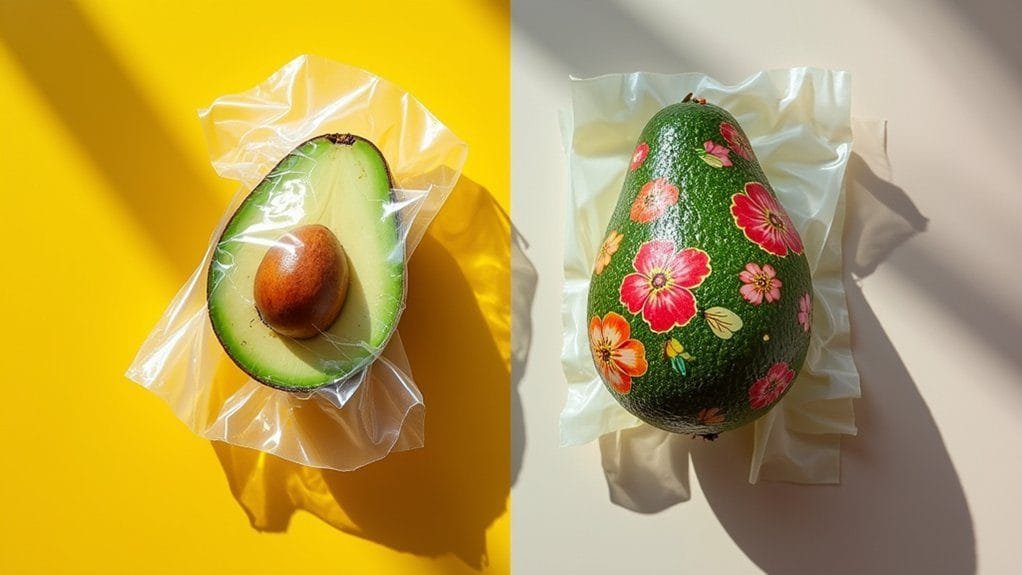
When you’re looking for an eco-friendly alternative to plastic wrap, beeswax wraps are an excellent choice. Made from organic cotton, beeswax, jojoba oil, and tree resin, these wraps provide a sustainable alternative to traditional food storage methods. Their flexible, slightly tacky surface allows you to mold them securely around various food items, effectively keeping your food fresh while allowing gases to escape to prevent spoilage. With proper care, beeswax wraps can last up to a year and are biodegradable and compostable, helping you reduce waste. They’re non-toxic, safe for food storage, and boast natural antibacterial properties from beeswax. While they might not create a perfect seal, their versatility makes them ideal for covering bowls, wrapping cheese, sandwiches, and fruits.
Preservation of Food
Beeswax wraps not only offer a sustainable way to store food but also excel in preserving its freshness. Here’s how they stack up against plastic wrap for food preservation:
Beeswax wraps provide a sustainable, effective solution for food storage while enhancing freshness compared to plastic wrap.
- Breathability: Beeswax wraps create a breathable yet waterproof seal, allowing gases to escape and preventing spoilage.
- Versatility: Ideal for covering bowls and wrapping cheeses, fruits, and vegetables, they cater to various food types.
- Reusability: You can reuse beeswax wraps for up to a year, unlike plastic wrap, which is single-use.
- Eco-Friendliness: As a sustainable alternative, beeswax wraps are compostable, reducing plastic waste that harms our environment.
Choosing beeswax wraps not only benefits your food’s freshness but also supports a healthier planet.
Usability
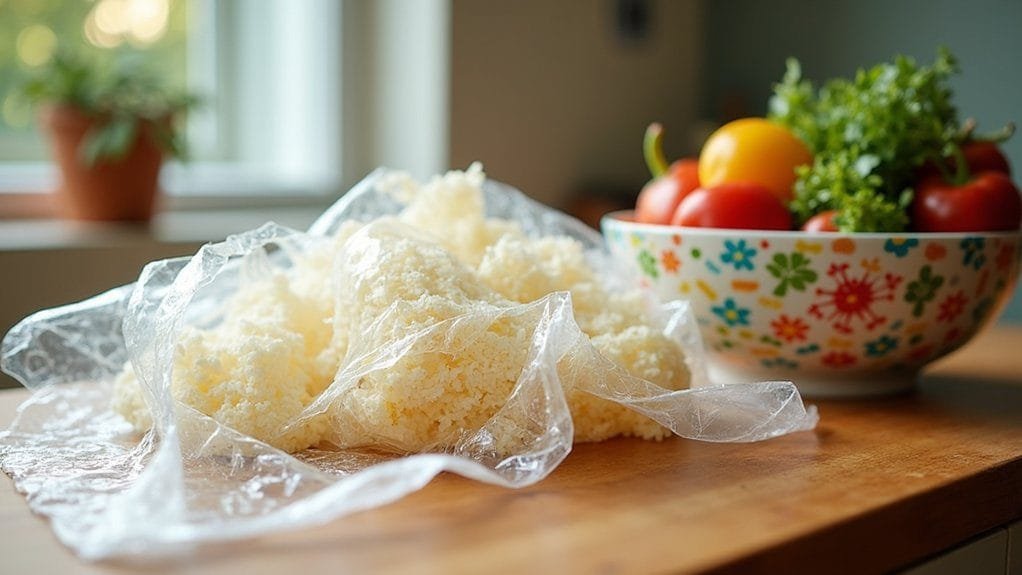
How easy is it to use beeswax wraps compared to traditional plastic wrap? Beeswax wraps are incredibly user-friendly. Their flexibility and slight stickiness let you mold them around food items or containers with just the warmth of your hands, making food preservation simple and efficient. Kids can even help wrap leftovers or snacks without the frustration often found with single-use plastics. Plus, you can wash and reuse beeswax wraps for up to a year, promoting a sustainable alternative to disposable wraps. However, keep in mind that they’re not suitable for raw meat or microwaving, and while they offer a breathable seal, they may not create as tight an airtight seal as plastic wrap. Choose wisely for your food storage needs!
Environmental Impact
Choosing beeswax wraps not only enhances your food storage practices but also greatly benefits the environment. By opting for these sustainable alternatives, you can make a significant impact. Here’s how:
- Biodegradable: Beeswax wraps are made from natural materials, reducing landfill waste.
- Reusable: They can be used for over a year, unlike single-use plastic wraps.
- Combatting Plastic Pollution: Using beeswax wraps helps decrease reliance on harmful plastics that threaten wildlife.
- Support Circular Economy: At the end of their life, they can be composted, further reducing waste.
Cost Comparison
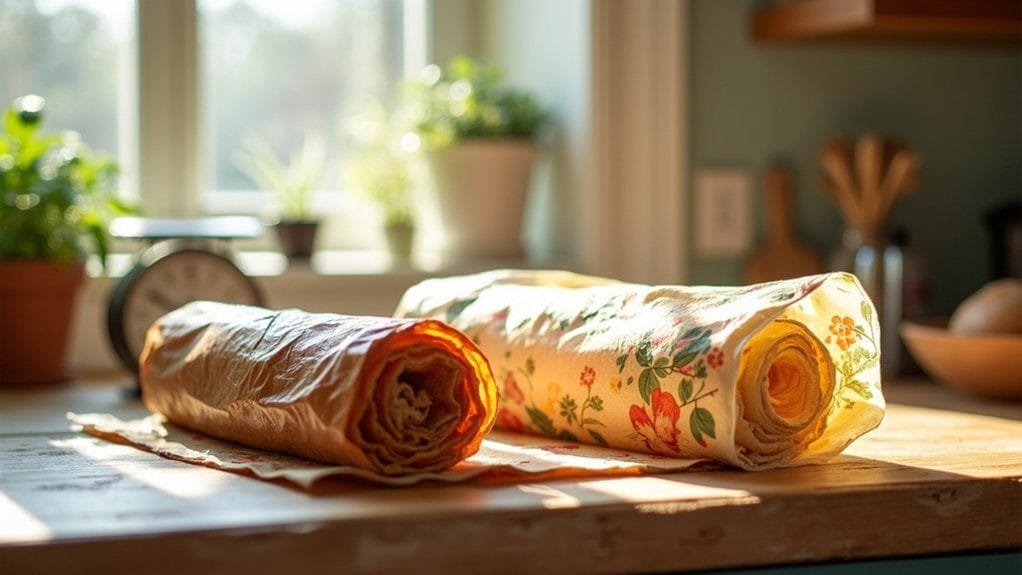
When it comes to food storage, the cost of your options can greatly impact your budget. The average household spends about $26.52 annually on plastic wrap, using around eight rolls. In contrast, a set of three beeswax wraps costs approximately $18.00 and lasts up to a year with proper care. If you opt for Bambeez Beeswax Food Wraps, you’ll spend about $12.97 annually, making them a financially advantageous choice. While beeswax wraps have a higher upfront cost, their reusability and compostability make them a sustainable alternative that can save you money in the long run, especially if you frequently use plastic wrap. Ultimately, considering this cost comparison can lead to smarter, eco-conscious decisions for your kitchen.
Quality and Performance
Quality and performance are essential factors to contemplate in your food storage choices. When comparing beeswax wraps and plastic wrap, consider these points:
- Flexibility: Beeswax wraps mold to food, creating a breathable seal that keeps your food fresh.
- Antibacterial Properties: Natural properties of beeswax inhibit mold and bacteria growth, unlike plastic wrap.
- Sustainability: Beeswax wraps are reusable for up to a year, reducing waste compared to single-use plastic wrap.
- Versatility: While plastic wrap offers a tighter seal, beeswax wraps are suitable for various food items, from sandwiches to fruits.
Community Engagement and Style
As you explore eco-friendly alternatives to plastic wrap, you’ll find that beeswax wraps not only offer functional benefits but also enhance your kitchen’s aesthetic. With vibrant patterns and sizes, these wraps allow you to express your style while committing to a sustainable lifestyle. The minimalistic, plastic-free packaging, made from recycled materials, further reduces environmental impact and supports your efforts in reducing plastic waste.
Community engagement thrives through social media, where you can share your creative uses of beeswax wraps and connect with like-minded individuals. Brands like Nature Bee foster this sense of community by promoting sustainable practices. Participating in initiatives like Plastic Free July amplifies awareness, encourages collective action, and strengthens your commitment to a greener future.
Benefits of Beeswax Wraps
While many people are becoming more aware of the need to reduce plastic waste, beeswax wraps offer a practical and sustainable solution that benefits both you and the planet. Here are some compelling reasons to reflect on this alternative to plastic wrap:
- Natural Ingredients: Made from organic cotton, beeswax, jojoba oil, and tree resin, they’re biodegradable and compostable.
- Cost-Effective: You can reuse them for up to a year, reducing ongoing waste and costs.
- Food Freshness: Their breathable yet waterproof seal helps preserve food freshness better than traditional plastic wraps.
- Non-Toxic: Safe for food storage, they support a healthier planet without harmful chemicals.
Drawbacks of Beeswax Wraps
Although beeswax wraps present an eco-friendly alternative to plastic, they come with some notable drawbacks that might affect your decision. For starters, these wraps can leave a slight wax residue on bowls, which some find annoying. Additionally, they may not create as strong a seal as plastic wraps, leading to less effective food preservation for certain items. The initial price for a set of beeswax wraps is typically around $18 for three pieces, which can feel pricey compared to cheaper plastic options. If you’re used to the airtight nature of plastic wrap, the drawbacks of beeswax wraps may disappoint you. Finally, health concerns surrounding beeswax could deter some consumers, especially without proper care.
The Future of Sustainable Food Storage
With the growing awareness of environmental issues, the future of sustainable food storage is shifting towards eco-friendly alternatives like beeswax wraps. Here’s why you should consider making the switch:
The shift towards eco-friendly food storage is gaining momentum, with beeswax wraps leading the way.
- Biodegradable: Beeswax wraps decompose naturally, unlike plastic wrap, which can linger for hundreds of years.
- Reusable: You can use beeswax wraps for up to a year, greatly reducing waste.
- Natural Materials: Made from organic cotton, beeswax, and jojoba oil, they’re a sustainable alternative to petroleum-based plastic.
- Cost-effective: If you use more than six rolls of plastic wrap annually, beeswax wraps can save you money over time.
Frequently Asked Questions
Is Beeswax Wrap Better Than Plastic Wrap?
When considering whether beeswax wrap’s better than plastic wrap, you’ll find beeswax benefits include reduced plastic waste, enhanced food preservation, and eco-friendly choices. Embracing sustainable alternatives like beeswax wraps supports a healthier planet and your conscious lifestyle.
Is Wax Paper More Environmentally Friendly Than Plastic Wrap?
Wax paper usage offers a lower environmental impact than plastic wrap. It’s made from compostable materials, making it a sustainable alternative for packaging solutions. Choose wax paper to reduce waste and promote eco-conscious living.
Why Is Beeswax a More Sustainable Material Than Plastic?
Did you know beeswax wraps can last over a year? This sustainable alternative uses biodegradable materials and renewable resources, considerably reducing your environmental impact compared to plastic, which contributes to pollution and waste.
What Are the Disadvantages of Beeswax Wraps?
Beeswax wraps have drawbacks like limited durability and higher initial cost. Cleaning can be tricky, and they may retain odors. Their lifespan is about a year, requiring replacements, which can add to overall waste.
Conclusion
In the battle of plastic wrap versus beeswax wraps, the latter shines as a beacon of sustainability. By choosing beeswax wraps, you’re not just reducing waste; you’re nurturing the planet like a gardener tending to a budding seed. Although they might come with a higher price tag, the long-term environmental benefits outweigh the costs. Embrace this eco-friendly alternative and join the movement towards a greener future—because every small choice you make can lead to a flourishing world.