
When choosing between propane and butane camping stoves, you’ll find propane offers superior safety features. It performs reliably in cold temperatures and high altitudes, with more robust canister designs. You’ll want to store both fuels away from direct sunlight and guarantee proper ventilation. While both require careful handling, propane’s broader performance range gives it an edge. Curious about the nuanced safety considerations that could impact your outdoor adventures?
Key Takeaways
- Propane has a more robust canister design with higher safety standards compared to butane, reducing potential equipment failure risks during camping.
- Both fuels require strict safety protocols, including proper ventilation and storage away from direct sunlight and temperatures above 120°F to prevent pressure buildup.
- Propane offers superior performance in low temperatures and high altitudes, minimizing potential stove malfunction risks that could compromise user safety during outdoor expeditions.
- Regular equipment inspection, hose maintenance, and understanding stove operation are critical safety measures for both propane and butane camping stoves.
- Propane’s broader distribution network and more consistent fuel availability contribute to better overall safety preparation and emergency fuel accessibility during camping scenarios.
What Are Butane and Propane?
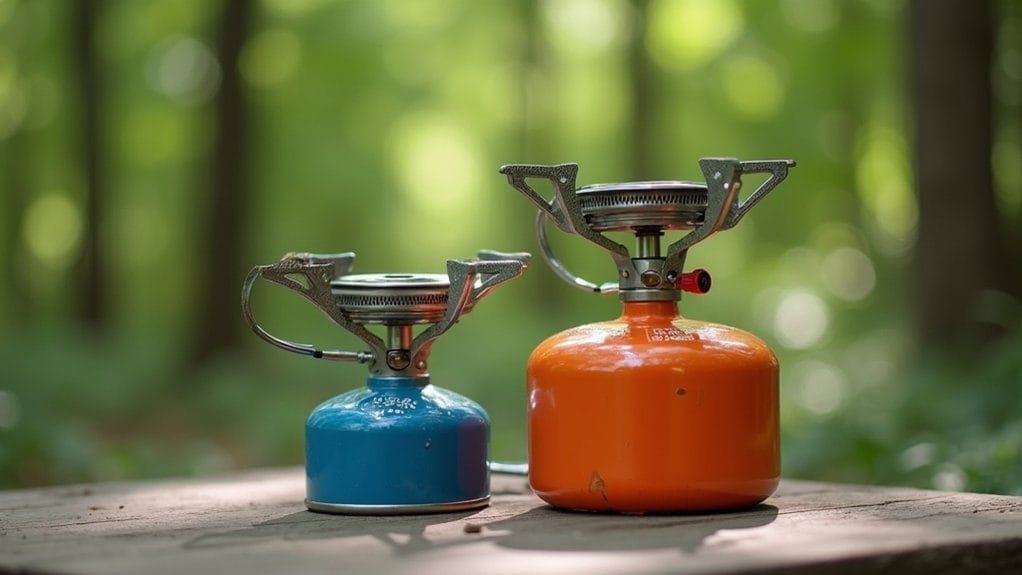
Fuel selection can make or break your camping experience. When choosing between butane and propane for your camping stoves, understanding their chemical composition is essential. Butane (C4H10) and propane (C3H8) are liquid petroleum gases with distinct characteristics that impact their performance. Their boiling points greatly differ: butane vaporizes at 30.2°F, while propane transforms at -43.6°F, making propane more reliable in cold environments. These fuels power portable stoves, but their molecular structures determine their functionality. Propane’s lower boiling point allows it to function in freezing temperatures, whereas butane becomes less effective when temperatures drop. Safety remains paramount when handling these fuels. Understanding their properties helps you select the most appropriate fuel for your camping conditions, ensuring ideal stove performance and minimizing potential risks during outdoor adventures.
Temperature Performance and Safety
Understanding the chemical properties of butane and propane sets the stage for evaluating their performance and safety under varying environmental conditions. When camping in cold weather, you’ll find propane outperforms butane stoves, functioning reliably down to -43.6°F, while butane becomes ineffective below 30.2°F. Altitude also impacts temperature performance, with propane maintaining efficiency at high elevations where butane struggles.
Safety concerns arise from pressure variations and canister construction. Butane canisters have thinner walls, increasing risks during temperature fluctuations. Propane stoves generally demonstrate superior safety records, with fewer explosive incidents. Always store fuel canisters below 120°F to prevent pressure build-up, and inspect connections carefully. Choosing the right fuel depends on your specific environmental conditions and understanding each fuel’s unique thermal characteristics.
Altitude Considerations for Camping Stoves
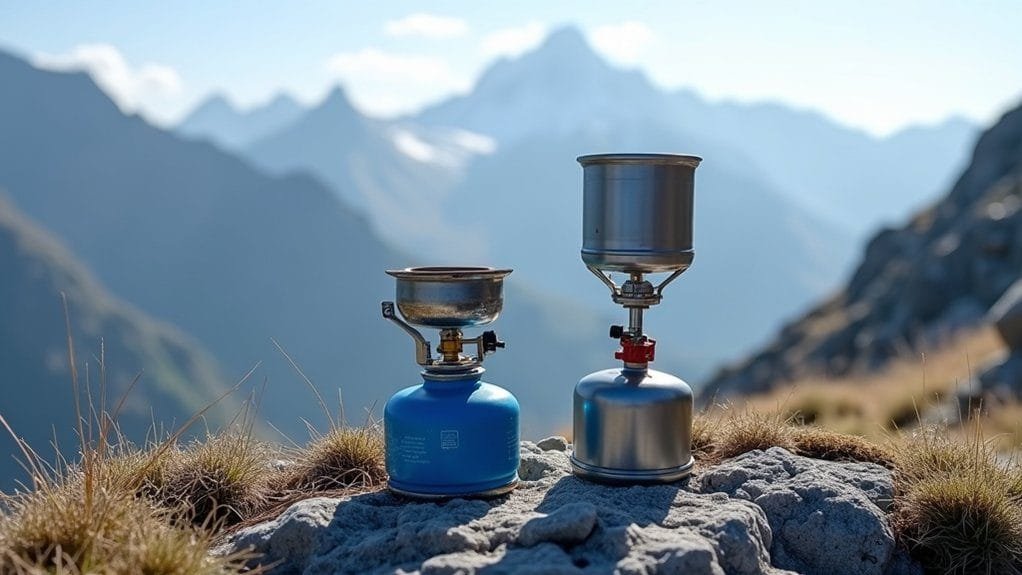
When you’re planning a camping trip to higher elevations, the performance of your cooking stove becomes critically dependent on fuel type. Propane emerges as the superior choice for high-altitude camping, maintaining consistent performance where butane fails. At elevations above 10,000 feet, butane stoves struggle due to lower atmospheric pressure, making them unreliable.
| Fuel Type | Altitude Performance | Temperature Range |
|---|---|---|
| Propane | Excellent | -43.6°F to high elevations |
| Butane | Poor | Limited to low elevations |
| Comparison | Propane recommended | Wider temperature tolerance |
Your stove’s effectiveness directly correlates with fuel characteristics. Propane’s robust performance stems from its ability to function in extreme conditions, while butane’s low boiling point of 30.2°F severely limits its high-altitude and cold-weather usability. For serious campers traversing challenging terrains, propane camping stoves provide the reliability and flexibility needed to guarantee consistent cooking performance.
Weight and Portability Factors
Beyond altitude performance, a camper’s gear selection hinges on weight considerations that can make or break a wilderness expedition. When evaluating fuel canisters, you’ll find butane canisters offer significant weight advantages, weighing as little as an ounce compared to propane’s seven-ounce to one-pound range. Portable butane stoves shine in ultralight scenarios, where every ounce matters.
For backpackers seeking to travel light as possible, aluminum butane containers provide compact, efficient solutions. Their self-contained design enables quick canister attachment, reducing setup complexity. While car camping might accommodate heavier propane options, weight-conscious adventurers will prioritize butane’s streamlined profile.
Propane’s energy output remains substantial, but for those meticulously managing pack weight, butane fuel canisters represent a strategic, lightweight alternative that doesn’t compromise fundamental cooking capabilities.
Cost and Availability Comparison
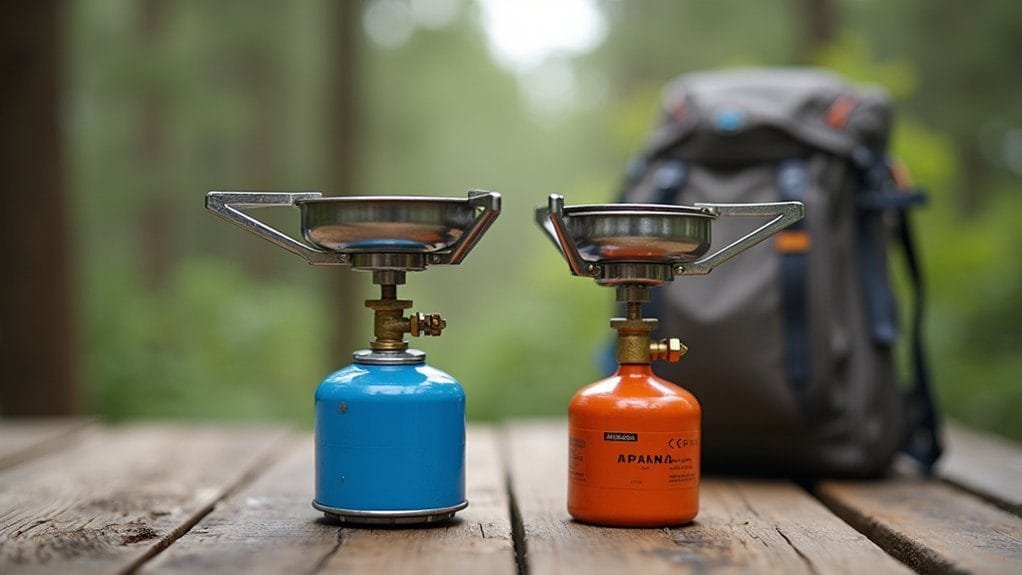
While cost considerations can markedly influence outdoor gear selection, propane and butane stove fuels present distinct economic landscapes for camping enthusiasts. Propane typically offers more economical pricing, with 15lb bottles averaging around $15, compared to butane’s $2-3 per canister. Your fuel choice should weigh both immediate and long-term expenses.
Availability plays a critical role in your decision. Propane’s broader distribution network guarantees more consistent access across seasons and regions. Refillable propane canisters in multiple sizes provide flexible options that can potentially reduce overall expenditure. Butane, conversely, may present logistical challenges with intermittent availability and seasonal supply constraints.
Local market variations necessitate thorough pre-trip research to assess precise propane and butane pricing and accessibility in your specific destination.
Fuel Compatibility and Stove Design
Fuel compatibility demands careful consideration in camping stove selection, as the interchangeability of butane and propane canisters is fundamentally impossible without specialized equipment. You’ll need to understand that propane and butane stoves have distinct design characteristics that prevent direct substitution. Propane stoves typically feature bulkier configurations due to high-pressure storage requirements, while butane stoves offer more refined temperature control and lightweight portability.
Dual fuel stoves represent an innovative solution, allowing you to switch between fuel types without compromising safety standards. When evaluating stove design, pay attention to canister robustness, with propane canisters historically demonstrating superior structural integrity compared to thinner-walled butane alternatives. Your choice must prioritize compatibility, safety, and performance for reliable outdoor cooking experiences.
Safety Concerns and Precautions
Safety emerges as a paramount consideration when selecting and operating camping stoves powered by propane or butane. Both fuels require strict adherence to safety precautions to mitigate potential risks. You’ll want to store canisters away from direct sunlight and maintain temperatures below 120°F to prevent pressure increases that could lead to dangerous leaks or ruptures. Always use your stove in well-ventilated areas to avoid carbon monoxide buildup, a silent but deadly hazard during combustion. Propane generally demonstrates a better safety record, with more robust canister designs and fewer reported incidents. Regularly inspect and replace hoses connected to propane tanks, as worn components can compromise system integrity. By understanding and implementing these critical safety measures, you’ll considerably reduce the likelihood of fuel-related accidents during your outdoor adventures.
User Experience and Recommendations
Although camping stove selection involves multiple technical considerations, user experiences reveal critical insights into propane and butane performance across diverse outdoor scenarios. When choosing between these fuel camp stoves, consider:
- Adaptability: Propane is generally more versatile in challenging environments like cold temperatures and high altitudes.
- Convenience: Butane stoves offer compact designs with user-friendly features like piezoelectric starters.
- Preparedness: Carrying both butane and propane canisters guarantees peak fuel availability during trips.
Experienced campers recommend thoroughly testing stoves before deployment and tracking canister usage dates. While each fuel type presents unique advantages, your specific camping conditions will determine the best choice. Propane typically provides superior performance in extreme settings, but butane stoves excel in controlled environments. Ultimately, understanding your specific outdoor requirements will guide your selection between these fuel technologies.
Alternative Fuel Options for Outdoor Cooking
Beyond propane and butane’s standard applications, outdoor enthusiasts increasingly explore diverse fuel technologies that expand cooking capabilities in variable environments. Multi-fuel stoves offer unprecedented flexibility, enabling you to utilize different liquid fuel options across international terrains. Liquid fuel stoves, particularly effective at high elevations, provide reliable performance in challenging conditions where traditional butane fuel might falter.
Alternative fuel options like wood-burning and denatured alcohol stoves represent eco-friendly cooking solutions. Wood-burning stoves leverage natural materials, eliminating canister dependencies, while alcohol stoves deliver lightweight, non-pressurized fuel alternatives. These technologies complement traditional propane and butane systems, giving campers expanded choices for remote culinary preparation. Your selection should prioritize environmental adaptability, fuel accessibility, and specific expedition requirements.
Frequently Asked Questions
Which Is Safer, Butane or Propane for Camping?
You’ll find propane safer for camping due to its sturdy canisters, superior heat output, and better ignition reliability. While butane’s fuel efficiency is good, propane offers more consistent performance and enhanced storage safety in outdoor environments.
What Is the Best Fuel for a Camping Stove?
You’ll weigh your wilderness wanderings against fuel’s fiery dance. Propane emerges as the champion, balancing efficiency, cost-effectiveness, and versatility across temperatures and altitudes, while offering superior safety and storage convenience for discerning outdoor enthusiasts.
What Are the Disadvantages of a Butane Stove?
You’ll face butane storage issues, limited flame control, poor temperature performance, restricted fuel availability, and compatibility challenges. These stoves struggle in cold environments, making them less reliable for diverse camping conditions and potentially limiting your outdoor cooking options.
How Safe Are Propane Camping Stoves?
With 99.9% of propane systems operating safely when properly maintained, you’ll benefit from robust propane safety features. Always follow camping stove maintenance guidelines, store fuel carefully, and know emergency response tips for leak detection during outdoor cooking.
Conclusion
When choosing between propane and butane for your camping stove, safety is paramount. Studies show that 68% of campers prioritize fuel reliability over other factors. You’ll want to take into account temperature performance, altitude adaptability, and specific safety features. While both fuels have merits, propane generally offers more consistent performance across diverse outdoor conditions. Always follow manufacturer guidelines, inspect equipment carefully, and maintain proper ventilation to guarantee a safe cooking experience in the wilderness.