
If you’re weighing slow cookers against Instant Pots for meal prep, you’ll find each has distinct advantages. Slow cookers excel at tender, low-and-slow cooking over 6-8 hours, while Instant Pots dramatically reduce cooking times to 30-60 minutes with multi-function capabilities. Your choice depends on your schedule, preferred cooking style, and recipe complexity. Want to uncover which appliance will transform your kitchen workflow and save you time and energy?
Key Takeaways
- Instant Pots offer superior time efficiency, reducing cooking times by up to 75% compared to slow cookers, making them ideal for busy individuals with limited meal preparation time.
- Slow cookers excel in unattended, long-duration cooking, allowing for tender, flavor-rich meals with minimal hands-on effort and perfect for batch meal planning.
- Energy consumption differs between appliances, with slow cookers using 200-300 watts and Instant Pots consuming 700-1200 watts, but Instant Pots’ faster cooking can potentially lower overall electricity costs.
- Versatility favors Instant Pots, which combine multiple cooking functions like pressure cooking, sautéing, and steaming in one device, providing greater meal preparation flexibility.
- Cooking outcomes vary by appliance: pressure cooking produces richer flavors and better browning, while slow cooking maintains ingredient structure and delivers consistently moist, tender dishes.
Understanding Slow Cookers: Basics and Benefits
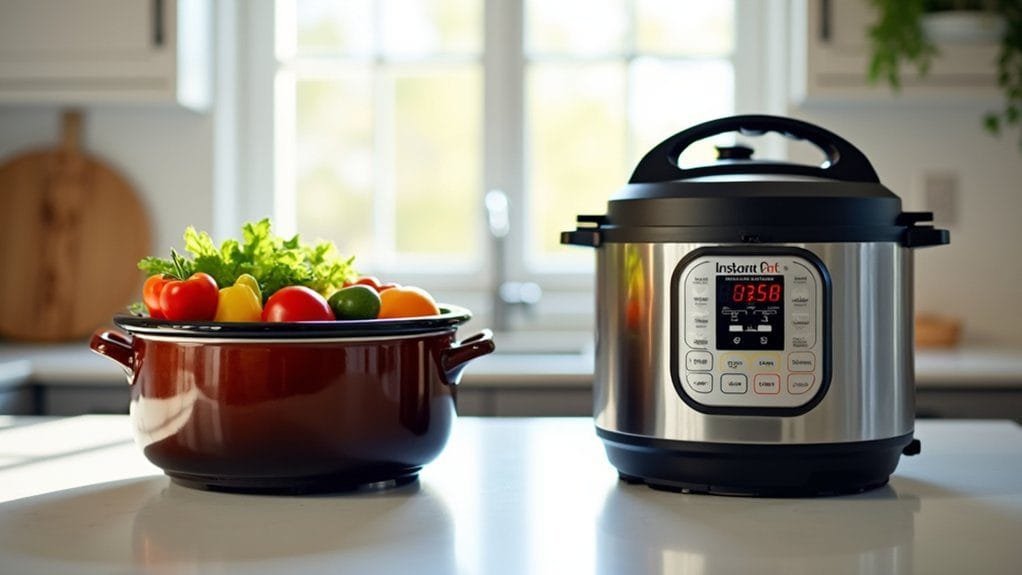
The humble slow cooker has revolutionized home cooking with its straightforward, set-and-forget approach to meal preparation. Operating at low temperatures around 180-190°F, slow cookers transform tough meat cuts into tender, flavor-packed dishes through extended, gentle cooking. You’ll appreciate their simplicity: just add ingredients, select a setting, and let the appliance work its magic without constant supervision.
These kitchen workhorses excel at developing rich, complex flavors in stews, soups, and hearty meals while consuming minimal electricity. Their energy efficiency makes them an economical choice for home cooks seeking convenient meal solutions. However, be mindful that delicate ingredients might not fare well in the slow cooking process, potentially resulting in mushy textures. With minimal preparation and maximum convenience, slow cookers offer a smart approach to home meal preparation.
Exploring Instant Pots: Versatility and Functionality
While traditional kitchen appliances often specialize in single cooking functions, Instant Pots have emerged as game-changing multi-cookers that revolutionize meal preparation. This versatile Instant Pot cooker combines multiple cooking methods—pressure cooking, slow cooking, sautéing, and steaming—allowing you to transform your culinary approach with one powerful appliance.
The primary advantage lies in its pressure cooking function, which dramatically reduces cooking times while preserving flavor and moisture. You’ll appreciate how it enables complex recipes like risottos and stews to be prepared seamlessly in a single pot. By sautéing ingredients directly in the cooking vessel, you’ll minimize additional cookware and simplify cleanup.
These innovative cookers provide unprecedented flexibility, making meal preparation more efficient and enjoyable for home chefs seeking convenience without compromising on taste.
Cooking Performance: Temperature, Flavor, and Texture
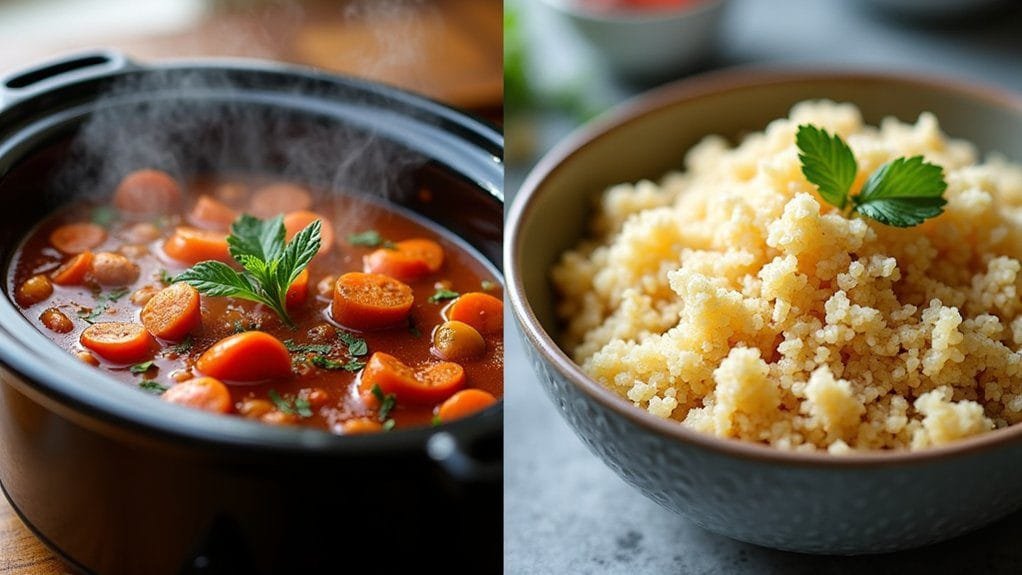
Because cooking performance directly impacts meal quality, understanding the nuanced differences between slow cookers and Instant Pots reveals critical insights for home chefs seeking ideal culinary results. The temperature variance between these appliances dramatically influences flavor and texture outcomes. Pressure cooking’s higher temperatures (around 250°F) enable more profound flavor development through enhanced Maillard reactions, while slow cooking’s lower temperatures (180-190°F) preserve ingredient integrity but limit taste complexity.
Cooking temperatures transform flavor—pressure or slow cooking dictate meal complexity and culinary depth.
Key performance distinctions include:
- Pressure cooking produces richer, more concentrated flavors in dramatically shorter preparation times
- Slow cooking maintains ingredient structure but yields less intense taste profiles
- Higher temperatures in pressure cooking facilitate superior browning and depth of flavor
Your meal preparation strategy should align with desired culinary outcomes and time constraints.
Time Efficiency: Cooking Speed Comparison
Building upon the flavor dynamics explored in cooking performance, time efficiency emerges as another pivotal differentiator between slow cookers and Instant Pots. You’ll find that Instant Pots revolutionize meal preparation through pressure cooking, dramatically reducing cooking times compared to traditional slow cookers. While a slow cooker might require 8 hours for a beef stew, an Instant Pot can complete the same dish in merely 45 minutes.
| Cooking Method | Temperature | Cooking Time | Versatility |
|---|---|---|---|
| Slow Cooker | 180-190°F | 6-8 hours | Limited |
| Instant Pot | 250°F | 30-60 minutes | Multiple functions |
| Pressure Cooking | High pressure | Rapid | Integrated |
| Sauté Capability | Adjustable | Quick | Enhanced |
| Overall Efficiency | Low | High | Superior |
The high-temperature pressure cooking method enables swift, flavorful meal preparation ideal for busy individuals.
Convenience Factor: Ease of Use and Cleanup
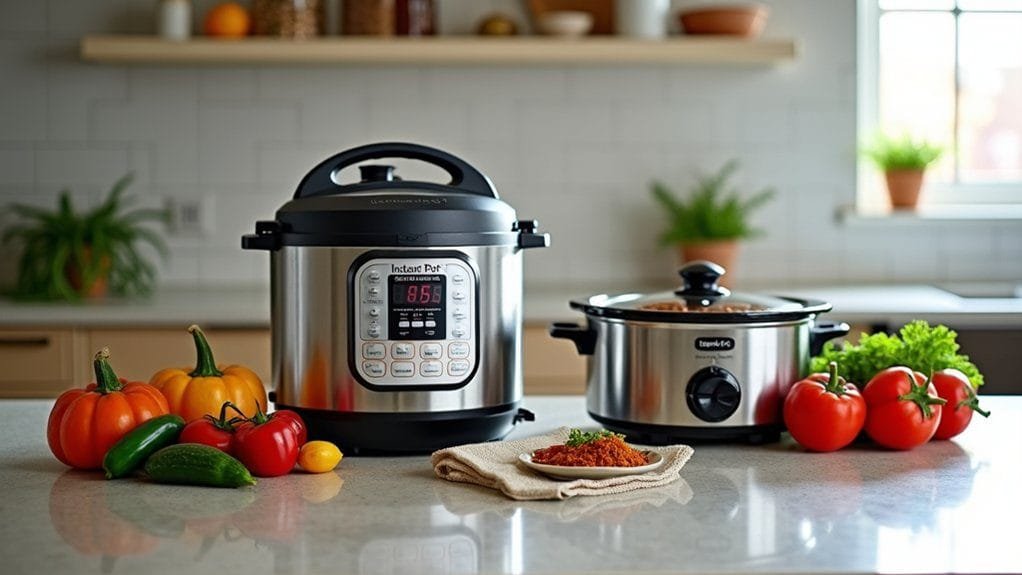
In the domain of kitchen convenience, Instant Pots and slow cookers showcase distinct advantages that greatly impact meal preparation efficiency. The convenience factor of these appliances hinges on their unique capabilities and user experience.
- Slow cooker cooks excel in “set and forget” meal preparation, allowing you to start meals with minimal setup and walk away
- Instant Pot offers multiple functions, enabling you to sauté, steam, and pressure cook without switching between different cookware
- Both appliances reduce cleanup time, with Instant Pots potentially providing quicker shifts between cooking stages
While slow cookers prioritize extended, unattended cooking, Instant Pots demand more immediate interaction during pressure release. However, their rapid cooking times and versatile functionality make them an attractive option for busy home cooks seeking efficient meal preparation strategies.
Recipe Adaptability: Which Appliance Works Best
When exploring recipe adaptability, home cooks quickly discover that Instant Pots and slow cookers offer distinctly different approaches to meal preparation. Your recipe adaptation success depends on understanding each appliance’s strengths. Instant Pots excel in versatility, allowing you to pressure cook, sauté, and steam complex dishes like risotto in mere minutes, while slow cookers specialize in long, flavor-developing cooking methods ideal for stews and soups.
If you’re looking to brown ingredients before cooking or manage delicate textures, the Instant Pot provides more consistent results. Slow cookers require separate browning steps and can struggle with intricate ingredient textures. By knowing each appliance’s cooking method capabilities, you’ll strategically adapt recipes to maximize flavor, efficiency, and meal prep convenience.
Energy Consumption and Cost Considerations
Beyond recipe adaptability, smart home cooks recognize that kitchen appliances carry hidden operational costs, particularly when considering energy consumption. When comparing slow cookers and Instant Pots, energy efficiency becomes a critical factor in meal preparation:
- Slow cookers typically use 200-300 watts, costing about $0.20-$0.30 for an 8-hour cooking session
- Instant Pots consume 700-1200 watts but complete meals faster, potentially reducing overall energy usage
- Both appliances are more energy-efficient than traditional ovens, offering cost-effective cooking alternatives
The choice between a slow cooker and an Instant Pot depends on your specific energy cost considerations. Instant Pots shine with rapid cooking times, while slow cookers excel in extended, low-wattage meal preparation. Your cooking style and local electricity rates will ultimately determine which appliance provides the most economical solution for your kitchen.
Pros and Cons: Making the Right Choice
While comparing slow cookers and Instant Pots requires careful consideration of individual cooking needs, each appliance brings unique strengths to your meal preparation strategy. A slow cooker really shines with tough cuts of meat that benefit from low, consistent heat, transforming them into tender, flavorful dishes over hours to cook. In contrast, a pressure cooker like the Instant Pot dramatically reduces cooking time, making it ideal for quick meal solutions.
Your choice depends on lifestyle and culinary preferences. If you’re seeking convenience and enjoy preparing meals in advance with minimal hands-on time, a slow cooker might be your perfect match. However, if you value speed and versatility, an Instant Pot’s multiple cooking functions could streamline your kitchen workflow, offering rapid meal preparation without compromising on taste or quality.
Recommended Models for Different Cooking Needs
How do you select the perfect cooking appliance that matches your culinary lifestyle? Your choice depends on specific cooking needs and desired versatility. Different slow cookers and Instant Pots offer unique features to enhance meal preparation:
Unlock culinary potential by matching your kitchen appliance to your unique cooking style and needs.
- If you want consistent moist-heat cooking with portability, the Crock-Pot 6-Quart Cook & Carry provides reliable temperature settings and convenient transport
- For multi-functional cooking, the Instant Pot Duo 7-in-1 delivers pressure and slow cooking capabilities, accommodating various recipe requirements
- When precise meat preparation matters, the Hamilton Beach Set & Forget Programmable Slow Cooker includes a temperature probe for accurate cooking without constant monitoring
These models demonstrate that selecting the right appliance means understanding your specific cooking preferences and performance needs.
Frequently Asked Questions
Are Crock Pots Good for Meal Prep?
You’ll love how crock pots boost meal prep efficiency with their recipe versatility. They’re perfect for preparing hearty dishes, offering convenient cooking times that let you plan ahead and enjoy delicious, ready-made meals with minimal daily effort.
What Is the Equivalent of 8 Hours on Low in a Slow Cooker?
Think slow cooking’s a snooze fest? Not so fast! You’ll find 8 hours on low equals 4 hours on high, ensuring your meal’s perfectly cooked while maintaining food safety and transforming tough ingredients into tender delights.
Conclusion
Whether you’re a busy professional or a home cooking enthusiast, your kitchen arsenal needs the right tool. While Instant Pots offer lightning-fast cooking and multiple functions, slow cookers deliver unparalleled depth of flavor. You’ll find each appliance has its strengths – the key is matching your cooking style and lifestyle. Don’t get hung up on limitations; instead, imagine tender, perfectly seasoned meals waiting for you after a long day’s work. Choose wisely, and transform your meal prep forever.