
When comparing smart bulbs to traditional incandescent bulbs, smart options clearly save more energy. They use 80-90% less energy, consuming about 10 watts for 800-1000 lumens versus 60 watts for incandescents. Additionally, smart bulbs last 15-30 years, compared to only 1-2 years for incandescents, leading to lower replacement costs. With features like dimming and scheduling, smart bulbs further optimize energy use. There’s much more to discover, so keep exploring the benefits of smart lighting solutions.
Key Takeaways
- Smart bulbs use 80-90% less energy than traditional incandescent bulbs, significantly reducing electricity costs.
- They consume about 10 watts to produce 800-1000 lumens versus 60 watts for incandescent bulbs.
- Smart bulbs last 15-30 years compared to 1-2 years for traditional bulbs, minimizing replacement costs.
- Advanced features like dimming and scheduling can lower energy consumption by up to 40%.
- Tracking energy usage through smart bulb apps helps identify peak usage times, promoting efficiency.
Understanding Smart Bulbs
Smart bulbs represent a significant advancement in lighting technology, integrating LED efficiency with modern connectivity. These smart bulbs utilize LED technology, consuming 80-90% less energy than traditional incandescent bulbs. This dramatic energy efficiency leads to substantial energy savings over time. With a lifespan of 15 to 30 years, smart bulbs far exceed the 1-2 year lifespan of incandescent options. They offer features like remote control through mobile apps, allowing you to automate and schedule lighting according to your needs. Additionally, color customization enhances your home ambiance, making these bulbs not just functional but also versatile lighting solutions. As part of a smart home ecosystem, smart bulbs improve convenience while optimizing energy use, demonstrating their value in modern households.
Energy Efficiency of Smart Bulbs
The energy efficiency of smart bulbs stands out when compared to traditional incandescent options. Smart bulbs can consume 80-90% less power, leading to significant energy savings. For instance, a smart LED bulb generates 800-1000 lumens using only 10 watts, while a 60W incandescent bulb uses 0.3 kWh daily. Features like dimming and scheduling can further enhance this efficiency, potentially reducing consumption by up to 40%. With a lifespan of 15-30 years, smart bulbs reduce replacement costs compared to the 1-2 years of incandescent bulbs.
| Feature | Smart Bulbs |
|---|---|
| Energy Consumption | 80-90% less than incandescent |
| Lifespan | 15-30 years |
| Potential Savings | Up to 83% energy savings |
Comparison With Incandescent Bulbs
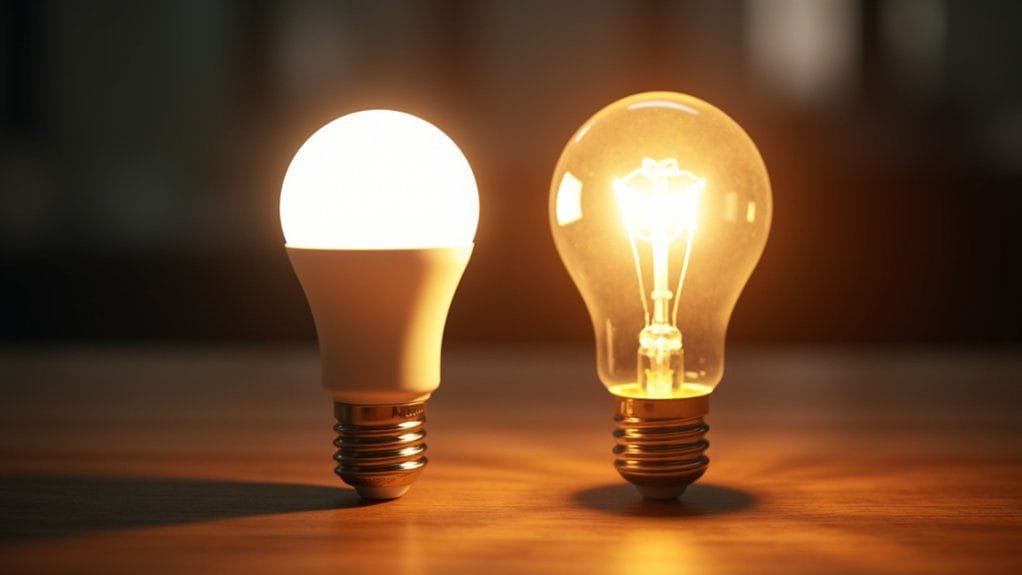
While many people continue to rely on traditional incandescent bulbs, a closer examination reveals the stark differences in performance and efficiency between these outdated options and modern smart bulbs. Smart bulbs use about 10 watts to produce 800-1000 lumens, compared to 60 watts for incandescent bulbs, resulting in significant energy savings. This translates to a daily electricity cost of approximately $0.012 for smart bulbs versus $0.18 for incandescents. Additionally, incandescent bulbs have a short lifespan of 1-2 years, while smart LED bulbs can last 15-30 years with typical use. Smart bulbs also offer dimming capabilities and scheduling, enhancing their energy efficiency by reducing unnecessary power consumption. Ultimately, the cost-effectiveness and energy efficiency of smart bulbs are clear.
Comparison With Regular LED Bulbs
When comparing smart bulbs to regular LED bulbs, you’ll find that both options offer impressive energy efficiency; however, smart bulbs provide features that enhance user experience and convenience. While both types consume about 10 watts to produce similar lumens, smart bulbs come equipped with advanced features like remote control, automation, and dimming capabilities, allowing you to control your lights more effectively. These features can help you save money by further reducing energy consumption. Additionally, smart LED bulbs boast a longer lifespan of up to 30,000 hours compared to 15,000 to 25,000 hours for regular LED bulbs. This longevity results in fewer replacements and contributes to overall energy-efficient practices in your home.
Cost Analysis of Smart vs. Traditional Bulbs
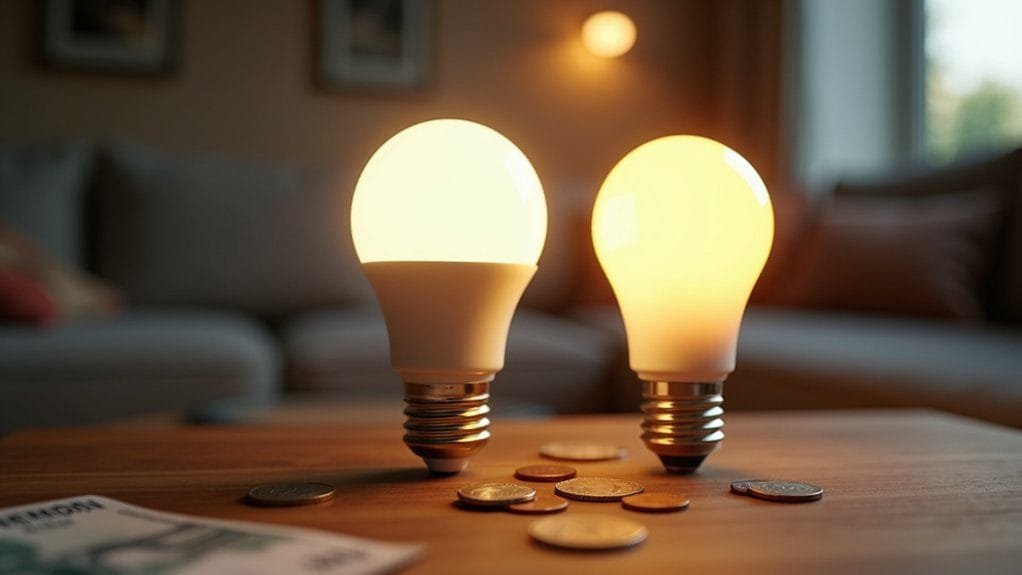
Although smart bulbs come with a higher initial price tag, their long-term cost benefits often make them a more economical choice compared to traditional incandescent bulbs. Here’s a breakdown of why smart bulbs can be a cost-effective option:
- Energy savings: Smart LED bulbs use only 10 watts, consuming 80-90% less energy than traditional bulbs, which use 60 watts.
- Longevity: Smart bulbs last 15 to 30 years, while traditional bulbs typically last only 1 to 2 years, reducing replacement costs.
- Advanced features: Functions like scheduling and dimming can further enhance energy efficiency, justifying the upfront investment.
Longevity and Replacement Costs
Smart bulbs outshine traditional incandescent options not just in energy efficiency but also in longevity and replacement costs. With a lifespan of 15 to 30 years, smart bulbs greatly exceed the 1 to 2-year durability of incandescent bulbs. Even compact fluorescent lamps (CFLs), which last 5 to 10 years, can’t compete. Although smart bulbs come with a higher upfront cost, their extended lifespan reduces the frequency and expenses associated with replacements. Over time, these lower replacement costs contribute to overall savings, making smart bulbs a more cost-effective choice. By investing in smart bulbs, you not only enhance energy efficiency but also guarantee long-term durability and considerable savings compared to traditional options.
Control and Automation Features
How do control and automation features enhance your lighting experience? Smart bulbs offer advanced functionalities that greatly optimize energy usage. With various control options, you can effortlessly manage your lighting through voice commands or a smartphone app. This convenience eliminates the need for physical switches and allows for:
Smart bulbs enhance your lighting experience with effortless control through voice commands and apps, optimizing energy usage without the need for physical switches.
- Grouping smart lights for simultaneous control, reducing energy waste.
- Dimming capabilities that can lower energy consumption by up to 40% when less brightness is needed.
- Scheduling features that automate lights, preventing unnecessary energy expenditure.
Additionally, energy monitoring helps you track consumption, identifying inefficiencies. These features collectively promote responsible energy habits, making smart bulbs a compelling choice for energy-conscious consumers.
Effects of Color Temperature on Energy Consumption
When managing your lighting experience, the color temperature of your bulbs plays a significant role in energy consumption. Cooler white LEDs (6000K) generally use more electricity compared to warm light (3000K) due to the increased energy needed to produce blue light. By opting for warm light, not only do you create a cozy atmosphere, but you also promote energy efficiency. Energy-efficient LEDs can consume 80-90% less energy than traditional incandescent bulbs, but choosing the right color temperature can enhance these savings even further. Additionally, utilizing the dimming features of smart bulbs allows you to adjust brightness levels, further reducing energy consumption. Overall, making informed choices about color temperature can help you save energy effectively.
Standby Power Consumption of Smart Bulbs
While many may overlook the standby power consumption of smart bulbs, this aspect plays a crucial role in understanding their overall energy efficiency. Smart bulbs typically consume less than 1 watt when off, allowing for remote control connectivity without significant energy waste. Here are some key points to reflect on:
Standby power consumption of smart bulbs is vital for energy efficiency, typically using less than 1 watt when off.
- The average monthly standby cost for a single smart bulb is just a few cents, making it a minor expense.
- However, having 20-30 bulbs in standby mode can noticeably increase energy usage.
- Standby power is essential for features like the smart bulb app, enabling Wi-Fi or Bluetooth connections.
Practical Tips for Reducing Energy Use
Understanding standby power consumption is just one piece of the puzzle in maximizing energy efficiency with smart bulbs. To effectively reduce energy usage, start by replacing older incandescent bulbs with energy-efficient smart LEDs, which save 80-90% more energy. Utilize scheduling features to automatically turn off lights when they’re unnecessary, preventing waste. Consider integrating motion sensors that guarantee lights activate only when rooms are occupied. You can also adjust the brightness of smart bulbs based on ambient light, potentially decreasing energy use by up to 40%. Finally, monitor your energy usage through smart bulb apps to identify peak times and adjust your habits for better efficiency. Implementing these strategies will greatly enhance your energy savings.
Frequently Asked Questions
Do Smart Bulbs Actually Save Money?
Smart bulbs can save you money by reducing energy costs through their lighting efficiency and longer bulb lifespan. Although the initial investment is higher, smart features and usage patterns often lead to significant long-term savings and positive environmental impact.
Does Using Smart Bulbs Increase the Electricity Bill?
Using smart bulbs can slightly increase your electricity bill due to standby power, but their efficiency and long-term savings from lower energy consumption, combined with dimming capabilities and smart home integration, typically outweigh installation costs.
What Are the Disadvantages of Smart Bulbs?
Smart bulbs have disadvantages like high initial costs, installation complexity, and technology dependence. You might face connectivity problems, compatibility issues, security risks, and require regular software updates, affecting energy measurement and leading to a limited lifespan.
What Kind of Light Bulb Saves the Most Energy?
Did you know LED technology can cut energy usage by up to 90%? With superior energy efficiency, longer bulb lifespan, and varied brightness levels, LEDs offer significant cost comparison and reduced environmental impact over time.
What Are the Benefits of Using a Smart Bulb Vs a Regular Bulb?
Using smart bulbs enhances energy efficiency through customizable settings and advanced lighting control. Their longevity benefits and diverse color options improve convenience factor, while remote access through home automation reduces environmental impact and optimizes energy use effectively.
Do Smart Thermostats Offer Energy Savings That Compare to Smart Bulbs?
Smart thermostats and cost savings often go hand in hand, offering homeowners a way to optimize energy usage. By adjusting temperatures based on habits and time of day, these devices minimize waste and enhance comfort. When compared to smart bulbs, the energy savings from smart thermostats can be even more significant over time.
Conclusion
In the battle between smart bulbs and traditional bulbs, you’ll find that smart bulbs often lead the charge in energy efficiency. Picture a home filled with vibrant colors, each hue carefully chosen to suit your mood while minimizing energy use. Although smart bulbs may have higher upfront costs, their ability to adapt to your habits can save you money in the long run. Ultimately, investing in smart technology not only brightens your space but also lightens your energy bill.