
Electric garden lights outshine solar alternatives, delivering 200 to 1,000+ lumens compared to solar’s modest 10-150 lumens range. You’ll find wired lighting consistently brighter, maintaining peak performance across various environmental conditions. Solar lights’ output fluctuates with sunlight availability, limiting their effectiveness. If you’re seeking reliable, high-intensity outdoor illumination, electric systems provide superior brightness and dependability. Curious about the technical nuances that set these lighting solutions apart?
Key Takeaways
- Electric garden lights consistently outperform solar lights in brightness, generating 200 to over 1,000 lumens compared to solar lights’ 10-150 lumens range.
- Wired landscape lighting provides stable, high-intensity illumination unaffected by weather conditions, ensuring reliable performance across different environmental scenarios.
- Solar light brightness directly depends on sunlight exposure, resulting in significant performance variations and reduced effectiveness during winter or cloudy periods.
- Electric lighting systems support higher wattage bulbs and more diverse illumination options, making them superior for security and task-oriented lighting applications.
- The energy conversion process of solar lights limits their luminous output, with most solar garden lights producing soft, ambient lighting between 10-50 lumens.
Understanding Light Intensity in Solar and Electric Garden Lights
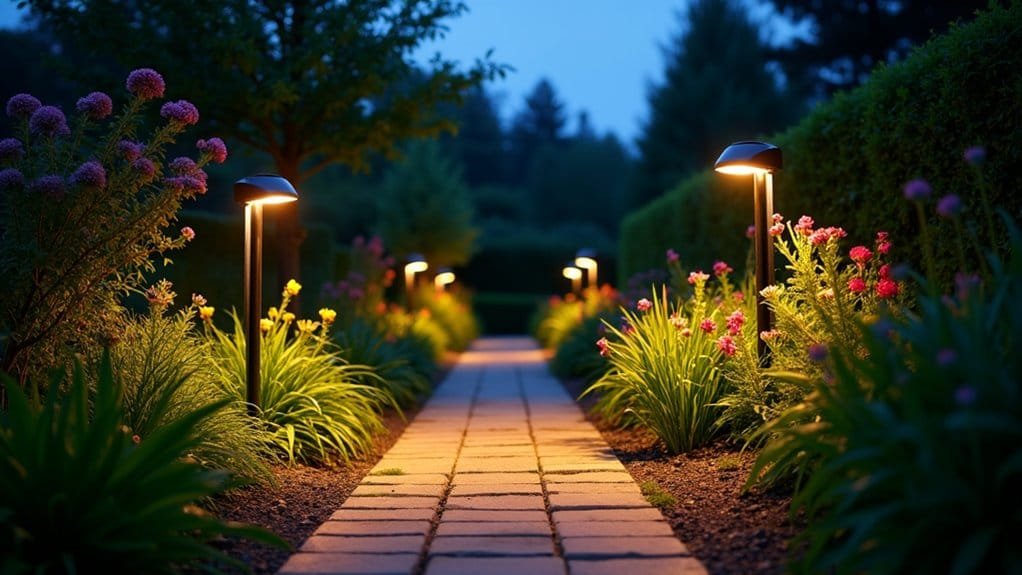
Lumens—the silent metric of garden illumination—reveal the stark differences between solar and electric garden lights. When comparing brightness, you’ll find electric garden lights dramatically outperform solar options. Electric fixtures can generate 200 to over 1,000 lumens, while solar lights typically range from 10 to 150 lumens. This significant variance in light intensity impacts your garden’s ambient lighting potential.
Weather conditions further distinguish these technologies. Electric garden lights maintain consistent brightness regardless of climate, whereas solar lights’ illumination diminishes during cloudy days or winter months. Your lighting strategy should consider these performance nuances. While solar lights offer a cost-effective solution for basic garden lighting, electric options provide superior brightness and reliability for those seeking more robust, dependable outdoor illumination.
Technical Differences in Illumination Performance
While solar and electric garden lights serve similar aesthetic purposes, their technical illumination performance diverges considerably. Solar lights leverage solar energy with inherently limited brightness, typically generating 10-100 lumens, whereas wired electric lighting systems provide consistent power supply enabling lumens output exceeding 1000. Your garden’s illumination performance depends critically on the chosen power source, with electrical systems offering superior brightness and reliability.
The fundamental distinction lies in energy conversion: solar lights transform sunlight into electrical power, constraining their illumination potential, while electric garden lights draw directly from a stable electrical source. Wired lighting supports broader bulb variations and higher wattage, ensuring more uniform and intense garden illumination. Solar lights’ performance fluctuates with environmental conditions, making them less dependable for consistent, high-intensity lighting scenarios.
Factors Affecting Brightness and Consistency
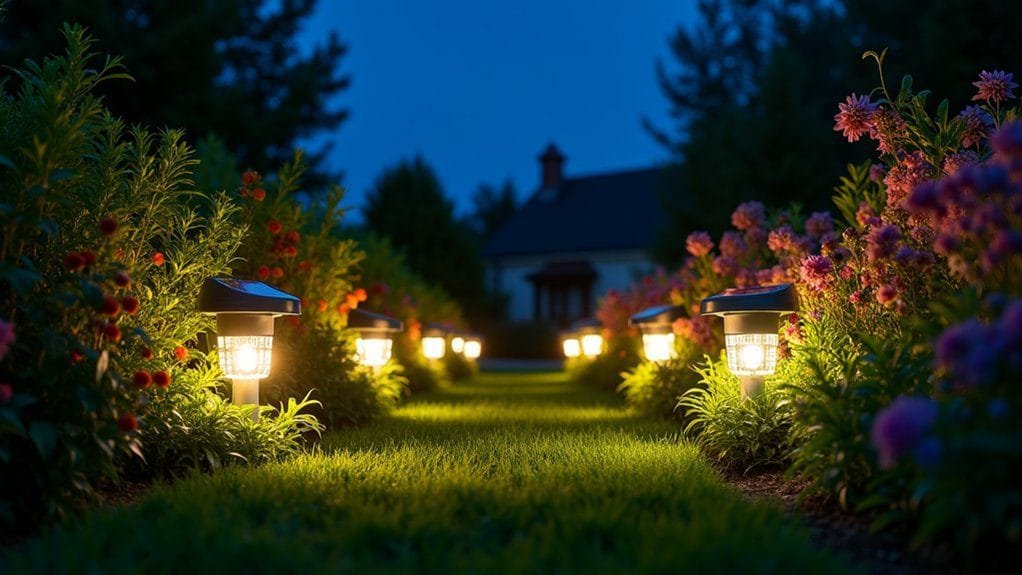
Because solar and electric garden lights operate on fundamentally different energy principles, their brightness and consistency are determined by distinct technical parameters. Wired landscape lighting offers consistent brightness through direct electrical connection, enabling higher wattage and superior lumen output often exceeding 100 lumens per fixture. In contrast, solar lighting depends on solar panels to absorb energy from the sun, which introduces variability in illumination performance.
Your lighting’s effectiveness hinges on several critical factors: solar panel efficiency, battery life, and ambient sunlight conditions. Solar lights typically range between 10-50 lumens, considerably lower than electric alternatives. Reduced sunlight during cloudy or winter periods can dramatically diminish solar lighting’s brightness, whereas wired systems maintain stable, predictable illumination levels regardless of external environmental conditions.
Comparative Analysis of Lumens and Light Output
Building upon the previous examination of brightness determinants, the quantitative comparison of solar and electric garden lights reveals stark differences in luminous output.
Illuminating the nuanced landscape of garden lighting through precise comparative luminous analysis.
The comparative analysis of lumens demonstrates critical variations in outdoor lighting performance:
- Solar lights typically generate 10-100 lumens, creating soft ambient lighting
- Wired garden lights produce 100-1,200 lumens, offering considerably higher brightness
- Direct sunlight exposure dramatically impacts solar light performance
- Consistent brightness in electric systems guarantees reliable illumination
- Security and task-oriented applications favor wired lighting solutions
When evaluating light output, you’ll find that solar lights are best suited for decorative and low-intensity scenarios, while electric garden lights excel in providing robust, dependable illumination. The lumens differential underscores the technological limitations of solar-powered systems, making wired options preferable for thorough outdoor lighting requirements.
Real-World Performance in Various Environmental Conditions
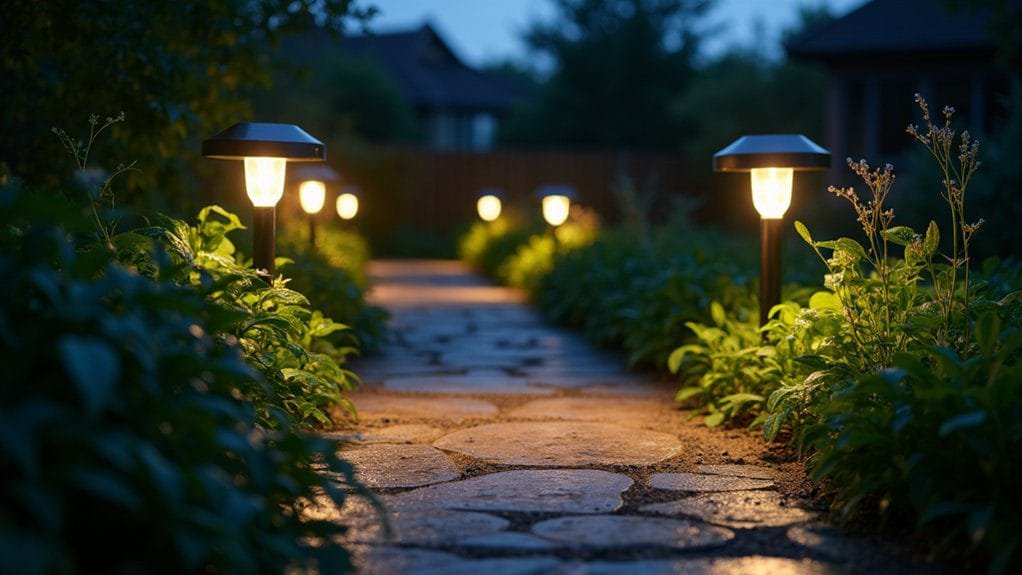
Should environmental variables challenge outdoor lighting effectiveness, solar and electric garden lights demonstrate markedly different performance characteristics across diverse conditions. Solar landscape lighting‘s brightness dramatically fluctuates with sunlight availability, rendering inconsistent illumination in shaded or overcast environments. Wired landscape lights, drawing from stable energy sources, maintain superior visibility regardless of weather patterns.
Winter months particularly expose solar lights’ limitations, with reduced daylight compromising their performance considerably. Electric lights, conversely, deliver consistent brightness throughout seasonal shifts. When evaluating outdoor spaces requiring reliable lighting, wired options outperform solar alternatives in maintaining luminous intensity.
Your lighting selection must prioritize environmental resilience, understanding that solar lights’ performance inherently depends on external conditions, while electric lights offer unwavering reliability across challenging landscapes.
Making the Right Lighting Choice for Your Outdoor Space
How do you illuminate your outdoor spaces effectively? Selecting the right garden lighting depends on a nuanced analysis of your specific environmental and aesthetic requirements. Consider these critical factors when choosing between solar and wired lighting solutions:
- Evaluate overall outdoor brightness needs for LED illumination
- Assess potential energy efficiency of solar vs. wired systems
- Analyze installation complexity and home security implications
- Determine aesthetic appeal and landscape design compatibility
- Calculate long-term maintenance and operational costs
Your lighting strategy must balance technical performance with practical constraints. Solar options provide flexible, low-voltage solutions for decorative spaces, while wired systems deliver consistent, high-intensity illumination. By matching lighting technology to your precise outdoor environment, you’ll optimize energy consumption, enhance visual appeal, and create a functional, well-lit landscape that meets your specific requirements.
Frequently Asked Questions
Are Solar Lights as Bright as Electric Lights?
You’ll find solar lights aren’t as bright as electric lights, with lower lumens and performance variations. Their energy efficiency and easy installation appeal, but they can’t match electric lights’ consistent brightness and longevity.
Are Solar Lights Better Than Electric Lights?
You might think solar lights can’t compete, but they’ve got advantages. When weighing solar light efficiency, environmental impact, and lower energy costs against electric lights’ installation complexity, solar often emerges as the smarter, more sustainable garden lighting choice.
What Are the Cons of Solar-Powered Garden Lights?
You’ll face installation challenges with solar lights: limited battery lifespan, weather sensitivity, and low light intensity. Their cost-effectiveness diminishes due to charging duration, maintenance needs, design constraints, and shorter illumination periods compared to electric alternatives.
Are Solar or LED Outdoor Lights Better?
You’ll weigh efficiency, costs, and aesthetics when choosing. LED lights offer brighter, more versatile illumination, while solar options provide sustainable, low-maintenance solutions. Consider your garden’s specific needs, energy consumption, and long-term lighting performance.
Conclusion
When choosing garden lights, you’ll discover solar and electric options aren’t created equal. Electric lights blast intense, unwavering illumination that’ll make your landscape look like a blazing runway, while solar lights offer a more subtle, eco-friendly glow. Your ultimate decision hinges on specific environmental conditions, desired light intensity, and personal aesthetic preferences. Carefully weigh lumens, durability, and installation requirements to transform your outdoor space into a luminous wonderland.