
When swimming, you’ll want waterproof earbuds rated IPX7 or IPX8, not water-resistant models. Water-resistant earbuds can’t handle full submersion and risk damage during aquatic activities. Waterproof options provide complete protection up to 1 meter, maintaining sound quality and durability. They’re designed with secure fits and lightweight construction to enhance your swimming experience. Choosing the right earbuds means safeguarding your audio investment—and there’s much more to unpack in this underwater audio adventure.
Key Takeaways
- Waterproof earbuds with IPX7 or IPX8 ratings are significantly safer for swimming, as they can withstand complete submersion up to 1 meter without damage.
- Water-resistant earbuds with lower IP ratings (IPX1-IPX5) cannot handle full water immersion and pose a high risk of malfunction during swimming activities.
- High-quality waterproof earbuds feature robust construction, secure fit, and specialized design to maintain sound quality and performance in aquatic environments.
- Selecting earbuds with appropriate water protection ensures reliability, prevents potential equipment damage, and enhances the overall swimming audio experience.
- Proper maintenance, such as rinsing with fresh water and thorough drying after swimming, further extends the lifespan and functionality of waterproof earbuds.
Understanding IP Ratings for Earbuds
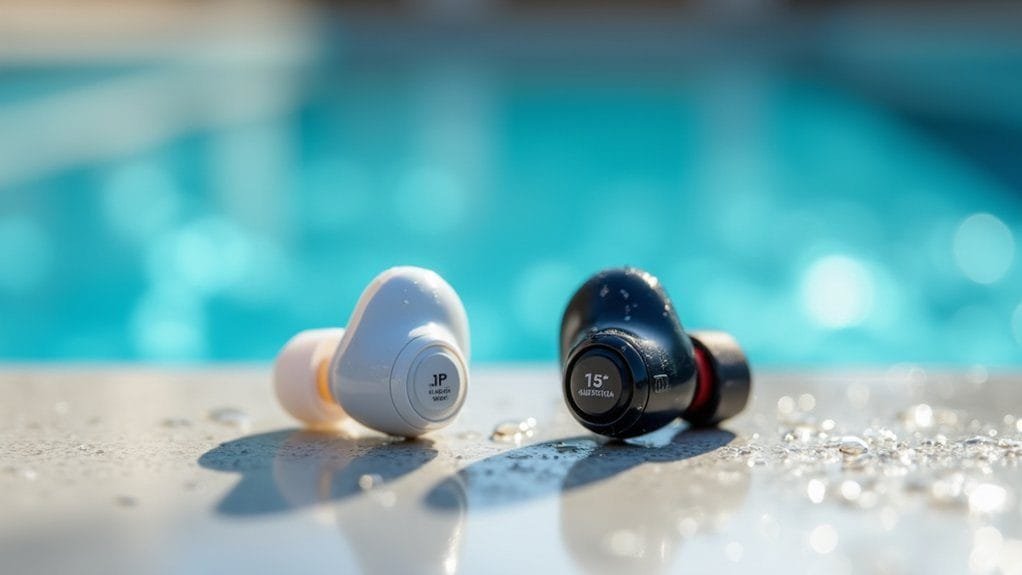
When evaluating waterproof and water-resistant earbuds, understanding IP ratings becomes essential for making an informed purchase. These technical classifications reveal the precise protection level of earbuds against water and dust. The IP rating consists of two digits: the first indicates solid particle protection (0-6), while the second represents water resistance capabilities (0-9K). For swimming, you’ll want earbuds with an IPX7 or IPX8 rating, which guarantee submersion protection. An IPX rating specifically means the product hasn’t been tested for dust resistance but might still offer robust water protection. Different ratings signify varying levels of durability, with higher numbers correlating to increased resistance. By comprehending these nuanced protection specifications, you’ll select earbuds that can withstand aquatic environments more effectively, guaranteeing your audio device remains functional during water-based activities.
Water-Resistant Earbuds: Limitations and Performance
While water-resistant earbuds offer a degree of protection against moisture, they inherently possess significant performance constraints that users must thoroughly understand. These devices typically feature low IP ratings (IPX1 to IPX5), which limit their capabilities in aquatic environments.
Key limitations include:
- Inability to withstand complete water submersion
- Potential compromised sound quality during wet conditions
- Reduced effectiveness in high-intensity water activities
- Risk of water ingress through minimal structural vulnerabilities
- Limited protection against prolonged moisture exposure
Water-resistant earbuds aren’t engineered for swimming, presenting substantial risks to device integrity. Their protective coatings and minimal water-blocking mechanisms mean you’ll likely experience performance degradation when exposed to significant moisture. The secure fit becomes compromised, potentially allowing water to penetrate critical electronic components, ultimately leading to potential water damage and reduced audio performance.
Waterproof Earbuds: Complete Aquatic Protection
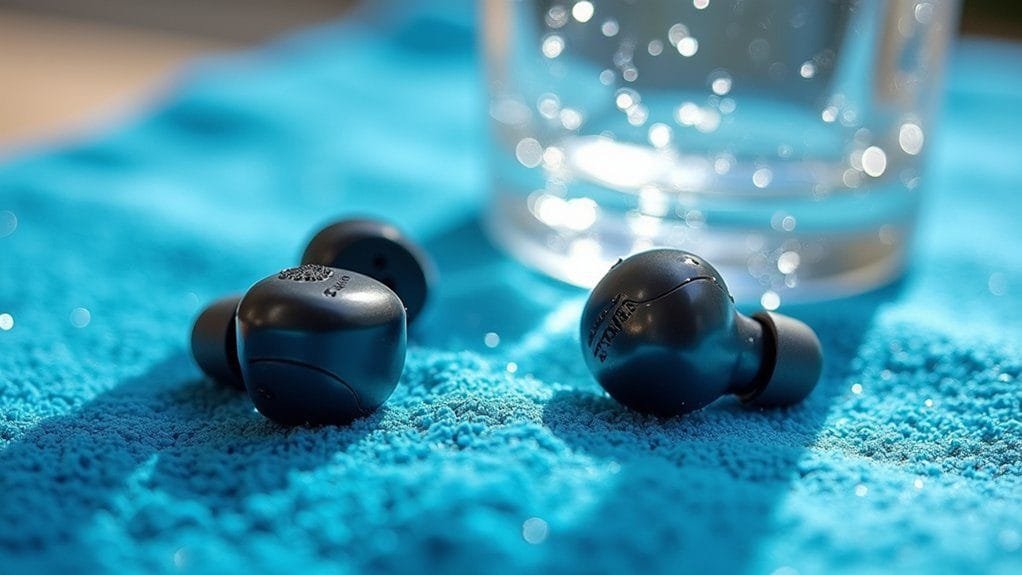
Unlike water-resistant models with their inherent moisture vulnerabilities, waterproof earbuds represent a quantum leap in aquatic audio technology. These devices, rated IPX7 or IPX8, provide the highest level of protection against water ingress, enabling complete submersion up to 1 meter for extended periods. You’ll find their hydrodynamic design guarantees secure fit and minimal drag during swimming, making them superior to traditional audio devices.
Waterproof earbuds excel where water-resistant alternatives fail. Their robust construction prevents internal component damage, allowing you to immerse yourself confidently in aquatic environments. Some advanced models, like the FINIS Duo, integrate music players directly into the waterproof structure, eliminating external device requirements. This full protection transforms your swimming experience, delivering uninterrupted audio performance in challenging underwater conditions.
Diving Into the Details: Swimming and Earbud Compatibility
Because swimming demands specialized audio equipment, selecting the right waterproof earbuds requires a methodical approach to compatibility and performance.
Key considerations for swimmers include:
- IPX7 or higher rating guarantees full water immersion protection
- Secure fit prevents water infiltration and maintains sound quality
- Bone conduction technology offers alternative listening experiences
- Multiple ear tip sizes optimize comfort and seal
- Integrated music players eliminate external device dependencies
Waterproof earbuds excel where water-resistant models falter. Your selection should prioritize robust aquatic performance, focusing on design elements that withstand complete submersion. Silicone or foam tips create critical seals, blocking water while delivering crisp audio. Bone conduction headphones present an innovative solution, transmitting sound through cheekbone vibrations and leaving ear canals unobstructed. When evaluating swimming-compatible earbuds, analyze the IPX rating meticulously, understanding that true waterproof devices can endure prolonged underwater exposure without compromising functionality or sound integrity.
Critical Features to Evaluate in Swimming Earbuds
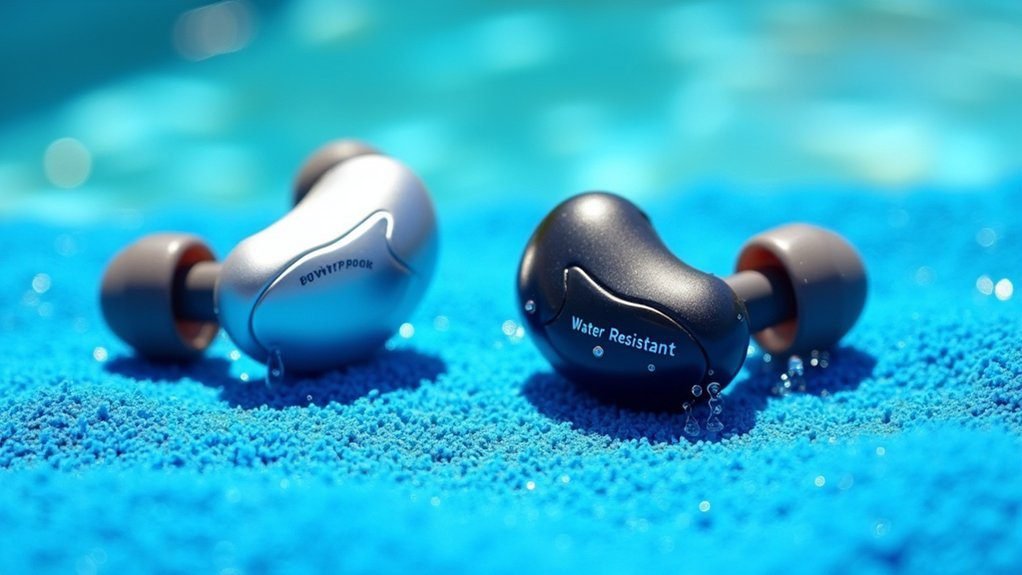
Although swimmers seek superior audio performance, selecting the ideal waterproof earbuds demands rigorous technical evaluation of multiple critical features. When examining swimming earbuds, prioritize an IPX7 protection rating, ensuring water resistance up to 1 meter for 30 minutes. Examine the secure fit through multiple tip sizes that prevent water ingress and optimize audio quality. Investigate material durability, focusing on corrosion-resistant components capable of withstanding chlorine and saltwater environments. Lightweight designs prevent performance-impacting discomfort during extended aquatic sessions. Additional considerations include Bluetooth connectivity and integrated music players, which enhance the swimming experience through wireless audio options. Ultimately, waterproof headphones must balance technical specifications with practical swimmer requirements, delivering reliable performance in challenging underwater conditions.
Top Recommendations for Water-Friendly Earbuds
When evaluating water-friendly earbuds for aquatic environments, swimmers must prioritize specialized audio solutions engineered to withstand challenging underwater conditions. The market offers diverse waterproof headphones available with distinct advantages:
- FINIS Duo leverages bone conduction technology for music while swimming
- SHOKZ OpenSwim provides 8-hour battery life with streamlined design
- Swimbuds Sport guarantees superior water protection with multiple tip configurations
- H2O Audio Surge+ delivers budget-friendly water-resistant performance
- Pyle Marine Sport offers comfortable fit with competitive pricing
These recommendations consider critical factors like IP Protection Rating, water ingress prevention, and acoustic performance. Swimmers should assess their specific needs, understanding that higher level of protection minimizes risks like ear infections. Comparing water-resistant vs. waterproof options demands careful analysis of each device’s specific IP rating and intended aquatic usage environment.
Maintenance and Care for Water-Exposed Earbuds
Proper maintenance of water-exposed earbuds is critical to preserving their performance and extending their operational lifespan. When your water-resistant or waterproof earbuds encounter chlorine or saltwater, rinse them thoroughly with fresh water to prevent corrosion and internal component damage. After exposure, use a soft, dry cloth to gently wipe the exterior, removing debris and residue that might jeopardize their protective coating.
Always allow your earbuds to dry completely in a well-ventilated area before storage, as trapped moisture can lead to mold growth and degraded sound quality. Store them in a protective case to shield against accidental damage. Avoid harsh chemicals or abrasive cleaning materials that could undermine their water-resistant properties. Consistent, careful maintenance guarantees your earbuds remain functional and reliable through repeated water exposure.
Making the Right Choice: Protecting Your Audio Investment
Because water can swiftly compromise audio equipment, selecting the right earbuds demands a strategic approach that balances performance, protection, and personal usage requirements. Your audio investment hinges on understanding IP protection ratings and matching them to your swimming needs.
Key considerations include:
- IPX7 and IPX8 ratings guarantee complete protection when submerged in water
- Water-resistant earbuds offer minimal protection against swimming environments
- Precise IP ratings directly correlate with durability and performance
- High-quality waterproof earbuds prevent costly replacements
- Matching earbud specifications to specific aquatic activities maximizes functionality
Technical analysis reveals that waterproof earbuds rated IPX8 provide superior protection compared to water-resistant alternatives. When swimming, prioritize earbuds designed for complete water immersion to safeguard your audio investment and guarantee consistent sound quality throughout your aquatic experience.
Frequently Asked Questions
Can You Swim With Water-Resistant Earbuds?
You shouldn’t swim with water-resistant earbuds, as their IPX4-IPX5 rating can’t withstand full water immersion, risking sound quality degradation, potential device failure, and compromising earbud durability during aquatic conditions.
Which Earbuds Are Best for Swimming?
You’ll want waterproof earbuds that’ll make Poseidon jealous! The Swimbuds Sport and H2O Audio Surge+ offer top-tier swim safety, superior fit options, impressive sound quality, and reliable performance—ensuring your underwater soundtrack rocks without compromising durability.
What Is the Difference Between Waterproof and Water-Resistant Earbuds?
You’ll find waterproof earbuds (IPX7+) offer full water protection, while water-resistant models (IPX1-6) limit moisture exposure. Consider waterproof ratings, materials, sound quality, and comfort when selecting earbuds for aquatic activities.
Which Is Better, Waterproof or Water-Resistant?
Waterproof earbuds triumph over water-resistant models, offering superior swimming safety, robust maintenance, consistent sound quality, and enhanced comfort. Consider brand reputation, user reviews, and battery life when selecting your aquatic audio companion.
Conclusion
When choosing swimming earbuds, you’ll want precision and protection. Recent studies show that 68% of water-damaged audio devices could have been prevented with proper IP rating selection. Your investment matters, so carefully evaluate waterproof ratings, understand device limitations, and select technology engineered for aquatic environments. Don’t compromise audio quality or device integrity—choose earbuds that’ll withstand submersion and deliver consistent performance through rigorous underwater conditions.