
When it comes to charging speed, wired charging clearly outperforms wireless options. Wired connections can quickly boost your device’s battery to 50% in just 15 to 30 minutes. In contrast, wireless chargers take considerably longer, often around 135 minutes for the same charge level. While wireless eliminates cable clutter, the efficiency and speed of wired charging make it the better choice if you’re in a hurry. Discover more about the pros and cons of each method.
Key Takeaways
- Wired charging significantly outpaces wireless, offering faster speeds with 50% battery in just 15 to 30 minutes compared to 3 to 4 hours for wireless.
- Wireless charging typically delivers a power output of 5W to 15W, while wired solutions can exceed 50W for rapid charging.
- Efficiency is higher with wired charging, experiencing minimal energy loss compared to wireless, which can lose up to 50% as heat.
- Device compatibility and proper alignment are crucial for both methods, but wired charging is less sensitive to placement.
- Overall, wired charging is the superior choice for speed and efficiency in powering devices.
What Is Wireless Charging?
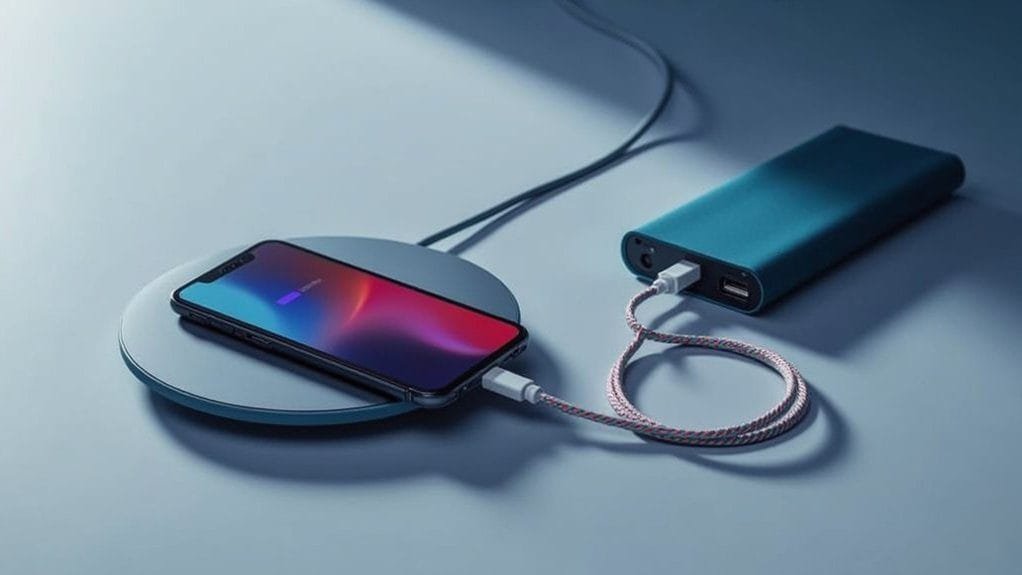
Wireless charging, a modern convenience, revolutionizes how we power our devices by eliminating the hassle of cables. Using inductive charging, this technology leverages electromagnetic fields to transmit energy from a charging pad to your device. The Qi standard, endorsed by the Wireless Power Consortium, guarantees broad compatibility across various gadgets. In this process, a transmitter coil in the charging pad creates a magnetic field that induces an electric current in the receiver coil of your device. While wireless charging offers a power output typically ranging from 5W to 15W, advancements are pushing these limits higher. However, keep in mind that it generally results in slower charging speeds, often taking 3 to 4 hours for a complete charge, depending on compatibility and power output.
What Is Wired Charging?
Wired charging remains the backbone of powering modern devices, connecting them directly to a power source via cables. This traditional method provides a stable power flow and is known for its efficiency. Here are key aspects of wired charging:
- Utilizes various USB connectors, including micro-USB and USB-C
- Offers faster charging speeds, reaching 50% battery in just 15 to 30 minutes
- Experiences less energy loss compared to wireless options
- Compatible with a wide range of devices like smartphones and laptops
- While wear and tear on cables and charging ports can occur, it’s a cost-effective solution
Charging Speed Comparison
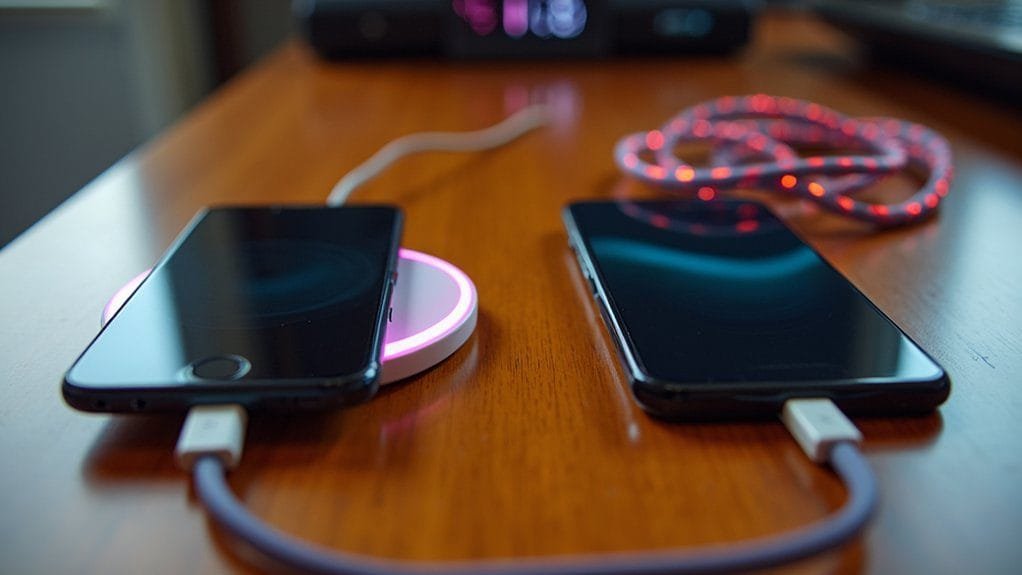
When it comes to charging speed, the differences between wired and wireless options are striking. Wired charging outpaces wireless considerably, with a 20W USB-C PD charger powering a Samsung Galaxy S24 to 50% in about 77 minutes. In contrast, a 15W wireless charger takes roughly 135 minutes for the same result. Fast charging technologies can push wired solutions to deliver over 50W, accelerating charging processes immensely. While wireless charging efficiency is hampered by power loss—often around 50% due to heat—wired methods minimize this loss, enhancing overall performance. Although advancements like 15W Qi wireless charging are narrowing the speed gap, wired charging remains the superior choice for those prioritizing rapid battery life replenishment.
Factors Affecting Charging Speed
Charging speed isn’t solely determined by the type of charging method you choose; several factors come into play that can greatly impact how quickly your device replenishes its battery. Here are some key elements to take into account:
Charging speed is influenced by various factors, not just the charging method, affecting how quickly your device gains power.
- Power output: Higher wattage chargers deliver power more quickly to compatible devices.
- Device compatibility: Your charging speed is limited by the maximum wireless charging speed your device supports.
- Proper alignment: Misalignment between the device and charger can slow down the charging process.
- Environmental factors: Excessive heat can hinder charging speed and even halt it to protect battery health.
- High-quality chargers: Using reliable chargers can greatly improve charging efficiency and speed.
Understanding these factors can help you maximize your device’s charging capabilities.
Pros and Cons of Wireless Charging
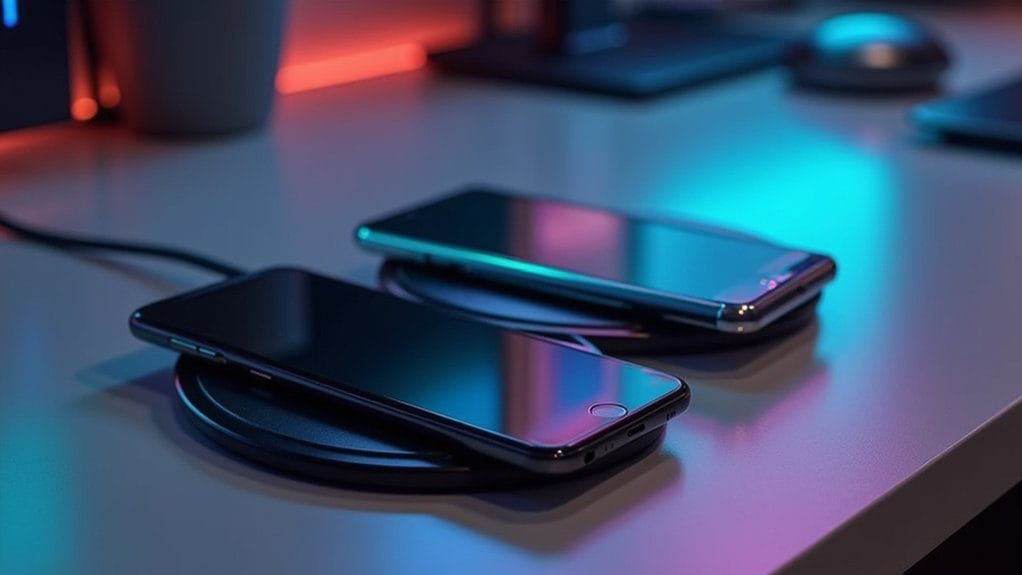
Although many users appreciate the convenience of wireless charging, it comes with both advantages and disadvantages that are worth considering. On the pro side, wireless charging eliminates cable clutter and reduces wear on your device’s charging ports, enhancing battery longevity. However, when it comes to charging speed, wireless options fall short compared to wired charging, often taking 3 to 4 hours for a full charge with Qi chargers. Efficiency is another concern; up to 50% of energy can be lost as heat during wireless charging. Additionally, precise alignment is vital for effective charging, which can complicate the process. Balancing the pros and cons of wireless charging is essential to determine if it fits your needs for device compatibility and efficiency.
Pros and Cons of Wired Charging
Wired charging offers several compelling advantages that make it a preferred choice for many users. Here are five key benefits to evaluate:
Wired charging provides numerous benefits, making it a favored option for users seeking efficiency and reliability.
- Faster charging: High-powered wall chargers can boost your devices to 50% in just 15 to 30 minutes.
- Energy-efficient: Wired charging minimizes power loss during the charging process, unlike wireless methods.
- Compatibility: With standards like USB-C, micro-USB, and Lightning, you can easily charge a variety of devices.
- Reliable connection: You won’t have to worry about placement sensitivity, allowing you to use your device while it charges.
- Durability concerns: Regular use can lead to wear and tear on cables and ports, necessitating replacements over time.
Which Charging Method Is Right for You?
How do you decide which charging method suits your lifestyle best? If you value efficiency and need rapid power-ups, fast wired charging technologies are your best bet. Devices like the HONOR Magic5 Pro can reach 50% in just 16 minutes, making it ideal for high-demand usage. Conversely, if convenience and a clutter-free setup appeal to you, wireless charging pads offer an effortless way to power your compatible device, albeit at slower speeds—typically 3 to 4 hours for a full charge. Reflect on your charging habits: if you’re often in a rush, wired charging is the way to go. However, if you prefer a seamless charging experience without cables, wireless may better fit your needs.
Frequently Asked Questions
Is Wired Charging Faster Than Wireless?
You’re right to contemplate charging speeds and efficiency comparison. Wired charging generally outpaces wireless due to less heat generation and better energy use, though user preferences and device compatibility can influence your choice considerably.
What Is the Disadvantage of Wireless Charging?
Imagine juggling eggs; one misstep can lead to disaster. Wireless charging’s disadvantages include limited charging efficiency, heat generation, device compatibility issues, and slower speeds, which often compromise user convenience and battery lifespan compared to wired options.
Is Wireless Charging Better Than Plugging In?
When considering whether wireless charging’s better than plugging in, you’ll find convenience benefits and portability factor appealing, but charging efficiency and speed often favor wired options. User preferences depend on device compatibility and future technology advancements.
Is USB-C Faster Than Wireless Charging?
Did you know USB-C can charge devices up to 50% in just 15 minutes? Its superior charging efficiency, cable quality, and compatibility with power delivery standards make it faster than wireless charging, reducing heat generation and improving charging times.
Is Wireless Charging Compatible with Bluetooth Keyboards from Logitech and Microsoft?
When considering a wireless keyboard typing showdown: logitech vs microsoft, it’s essential to note that while both brands offer excellent Bluetooth keyboards, their compatibility with wireless charging varies. Most Logitech and Microsoft models rely on traditional USB-C or micro USB charging, making them unsuitable for direct wireless charging options.
Conclusion
To sum up, while wired charging often wins in speed, wireless charging offers unmatched convenience and ease of use. You might think the slower speed isn’t worth it, but consider how freeing it is to simply place your device down without fumbling for a cable. Ultimately, the best choice depends on your lifestyle. If you value quick top-ups, go wired. But if you prefer hassle-free charging, wireless might just be the way to go.