
Wireless security cameras offer you a dramatically simpler installation experience compared to wired systems. You’ll avoid complex cable routing and minimize technical barriers, enabling quick, hassle-free setup without professional assistance. Battery-powered models allow flexible positioning near Wi-Fi routers, reducing signal obstructions. While wireless cameras require periodic battery maintenance, they provide unparalleled ease of deployment. Want to uncover the nuanced details of your ideal surveillance strategy?
Key Takeaways
- Wireless cameras offer significantly easier installation with minimal cable routing and no complex hardwiring requirements.
- Wireless systems can be quickly mounted at preferred locations without extensive professional technical assistance.
- Battery-powered wireless cameras provide flexible placement options without being constrained by electrical outlet proximity.
- Wired camera installations demand intricate cable management, professional expertise, and more time-consuming setup processes.
- Wireless cameras require less labor and initial setup costs compared to traditional wired security camera systems.
Understanding Security Camera Installation Complexity
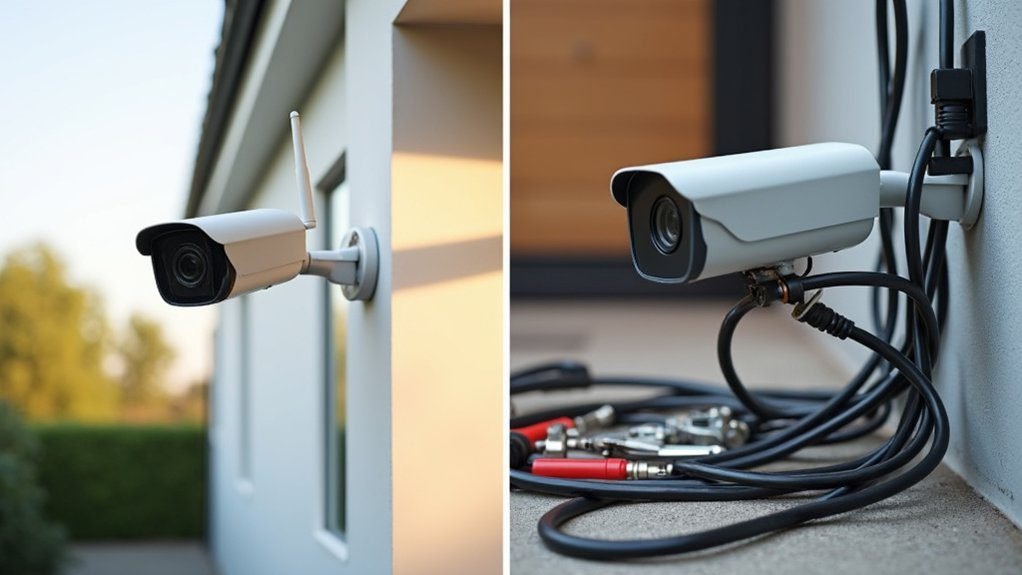
While home security camera selection involves numerous considerations, installation complexity stands as a vital differentiating factor between wireless and wired systems. Wired security cameras demand intricate installation processes, requiring you to strategically run cables for power and data transmission. You’ll face challenges in routing cables, ensuring secure mounting, and potentially needing professional assistance.
Wireless security cameras offer a dramatically different experience. You’ll enjoy easy installation without hardwiring, enabling quick deployment across multiple locations. However, don’t assume it’s entirely straightforward. You’ll still need to carefully evaluate Wi-Fi signal strength, router proximity, and potential obstructions that might impact camera placement. Signal stability remains essential, even with wireless systems.
Understanding these installation nuances helps you make an informed choice between wired and wireless security camera technologies.
Wired Security Camera Setup: Behind the Scenes
Although complex, wired security camera setup demands meticulous planning and technical precision. You’ll need to strategically route cables from each camera to a central recording hub, ensuring minimal obstructions and ideal positioning. Professional assistance is essential for reliable installation, particularly when managing power supply connections and preventing signal interference.
Your mounting height must be carefully calculated to deter potential tampering while maintaining clear surveillance angles. Video quality hinges on establishing direct, stable connections between cameras and the recording system. Keep in mind that wired setups offer superior signal consistency compared to wireless alternatives.
Repositioning cameras post-installation becomes challenging due to fixed wiring, so initial placement requires thorough consideration of your surveillance objectives and potential environmental constraints.
Wireless Security Camera Placement: Simplicity in Action
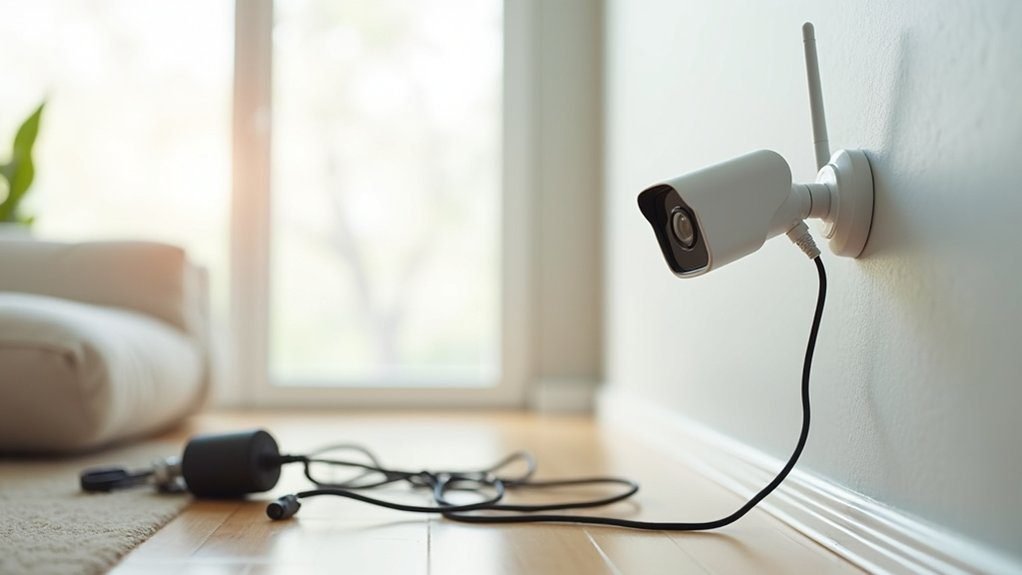
Where wired security camera installations demand intricate cable management, wireless cameras offer a rejuvenating streamlined approach to surveillance positioning. Strategic placement of wireless security cameras hinges on enhancing Wi-Fi signal strength and minimizing potential obstructions.
| Placement Factor | Consideration |
|---|---|
| Router Proximity | Closer is better |
| Physical Barriers | Reduce signal interference |
| Battery Power | Regular maintenance required |
| Camera Height | Maximize field of view |
| Mounting Surface | Stable, unobstructed location |
Battery-powered wireless cameras provide exceptional portability, allowing you to reposition surveillance points swiftly. When installing, assess your environment methodically: identify ideal locations with strong connectivity, minimal interference, and thorough coverage. Continuous operation depends on proactive battery monitoring and intelligent placement, transforming wireless camera installation from a complex task into a precise, adaptable security solution.
Technical Challenges of Wired Camera Systems
Wired security camera systems present a labyrinth of technical challenges that can quickly transform a seemingly straightforward installation into a complex engineering endeavor. You’ll face intricate cable routing through structural elements, demanding meticulous planning of power source locations and precise mounting strategies. The installation process requires extensive professional assistance, with potential costs escalating to $2,000 for a four-camera setup.
Navigating cable routes becomes a critical challenge, as you must strategically prevent potential tampering while ensuring ideal camera positioning. Troubleshooting becomes exponentially more complicated due to physical connection constraints, making maintenance a sophisticated technical undertaking. The complexity of wired camera systems demands advanced technical expertise, transforming what might seem like a simple security solution into a nuanced technical implementation requiring careful, methodical execution.
Wireless Camera Installation: Step-by-Step Breakdown
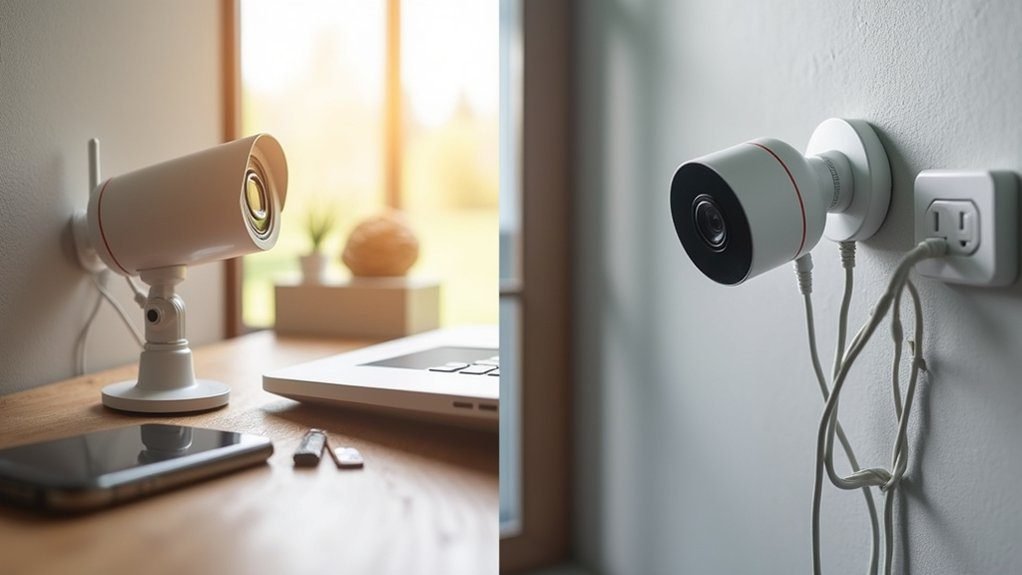
Wireless security cameras emerge as a streamlined alternative to the complex wired systems previously discussed, offering a user-friendly approach to home and business surveillance. Your wireless camera installation begins with verifying a robust Wi-Fi connection and selecting ideal, flexible placement options based on your specific security needs. Most battery-powered models facilitate quick setup using adhesive mounts that eliminate drilling requirements—ideal for renters seeking non-invasive solutions.
Navigate the installation process by downloading the manufacturer’s app, which guides you through seamless integration with your home network. Position cameras strategically, leveraging motion detection capabilities to maximize coverage. Verify battery levels remain consistent to prevent service interruptions. Each step demands precision: confirm network compatibility, mount securely, sync with your network, and configure detection settings for thorough monitoring.
Cost and Labor Considerations for Different Camera Types
Because installation complexity directly impacts overall security system expenses, comparing the cost and labor requirements for different camera types becomes essential for budget-conscious consumers. Wireless cameras offer lower initial labor costs and consumer-friendly installation, while wired systems demand professional intervention and extensive cabling work.
| Camera Type | Installation Cost | Labor Complexity |
|---|---|---|
| Wireless | Lower | Minimal |
| Wired | Higher | Significant |
The scalability of wireless cameras allows you to expand your system without substantial ongoing costs. However, battery replacement and recharging can introduce additional expenses. Wired cameras, though initially more expensive, provide consistent power and potentially more reliable performance. Your choice depends on balancing upfront installation complexity with long-term operational considerations, ensuring your security investment meets both budgetary and protection requirements.
Making the Right Choice for Your Security Needs
Selecting the ideal security camera system requires a systematic approach that evaluates your unique property characteristics and protection objectives. Consider the installation flexibility wireless cameras offer—they’re easy to set up and provide power adaptability across various environments. If you’re a renter or anticipating frequent location changes, wireless security cameras present an excellent solution with minimal technical complexity.
Conversely, long-term residential setups might benefit from wired systems‘ stable infrastructure. Your specific security needs will dictate the most appropriate choice: wireless cameras for dynamic spaces or wired cameras for permanent, thorough monitoring. Assess your property’s layout, power accessibility, and potential future modifications to determine the most strategic camera configuration that aligns with your protection requirements.
Frequently Asked Questions
What Is the Easiest Camera System to Install?
You’ll find wireless camera systems easiest to install, with DIY-friendly setup, minimal tools required, flexible camera placement, battery power, and straightforward WiFi connectivity that reduces installation time and simplifies maintenance.
Is It Better to Have Wired or Wireless Security Cameras?
You’ll want to weigh wired cameras’ superior video quality and signal stability against wireless systems’ flexible installation and easier maintenance. Consider your specific security needs, budget, and property layout when making your decision.
What Are the Disadvantages of Wireless Security Cameras?
Like a fragile spider’s web vulnerable to wind, wireless cameras struggle with signal interference, limited range, battery constraints, network dependence, and cybersecurity risks, making them less reliable for thorough property surveillance and protection.
How Easy Is It to Install Wireless Security Cameras?
You’ll find wireless camera installation surprisingly simple: most models offer intuitive mobile app setup, versatile mounting options, and minimal tools needed. Just guarantee strong Wi-Fi signal, check battery life, and follow step-by-step instructions carefully for seamless deployment.
Conclusion
When weighing security camera options, you’ll find wireless cameras take the cake for ease of installation. Their plug-and-play nature means you can set up extensive home surveillance without complex wiring or professional assistance. Consider your specific security requirements, budget constraints, and technical comfort level. Ultimately, wireless solutions offer flexibility and simplicity, making them the go-to choice for most homeowners seeking straightforward security monitoring.