
When choosing between YETI and RTIC coolers for camping, you’ll find YETI excels in insulation and ice retention, staying colder longer, which justifies its higher price. If you’re on a budget, RTIC offers solid performance with more storage space at a lower price. YETI’s durable design and lengthy warranty add value, while RTIC’s options deliver affordability. Both brands have their strengths, so consider what matters most to you for your next adventure. There’s plenty more to unpack!
Key Takeaways
- YETI coolers offer superior insulation, maintaining colder temperatures longer than RTIC models, making them ideal for camping trips.
- YETI Tundra 65 experiences only a 2.2°F temperature increase in 24 hours, outperforming RTIC coolers.
- While YETI is more expensive, its 5-year warranty and exceptional durability justify the investment for serious campers.
- RTIC coolers are budget-friendly alternatives, providing decent performance with more storage capacity for casual campers.
- YETI features better transport handles and bear-resistant designs, enhancing usability and reliability in rugged camping environments.
Key Specifications of YETI and RTIC Coolers
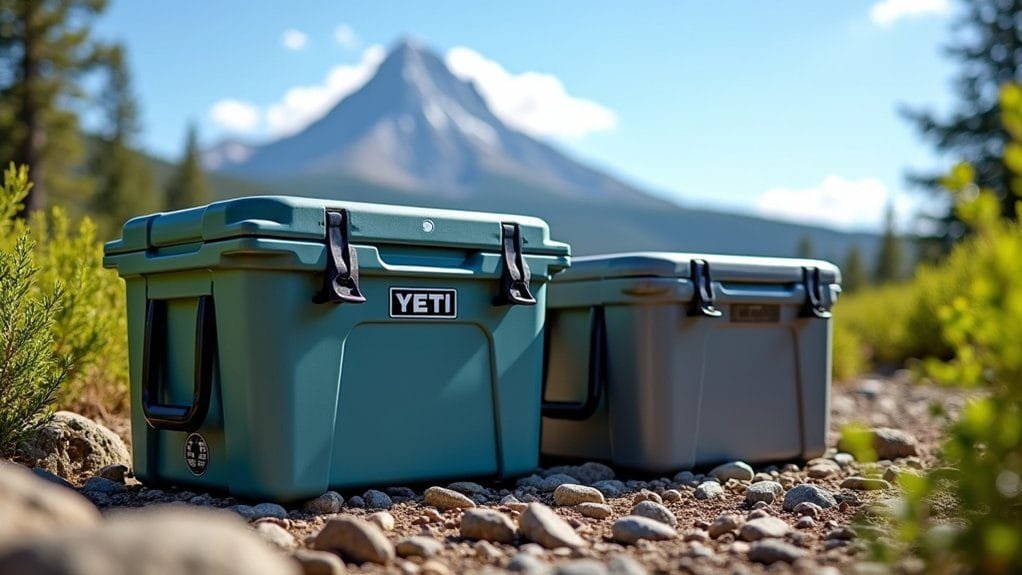
When it comes to choosing between YETI and RTIC coolers, understanding their key specifications can greatly influence your decision. YETI coolers are renowned for superior insulation, outpacing RTIC in ice retention; for instance, the YETI Tundra 65 only sees a temperature increase of 2.2°F in 24 hours, while RTIC struggles to keep up. Though RTIC offers a more budget-friendly option—like their 45-quart model at $219.99 compared to YETI’s $325.00—you might prioritize performance over price. Both brands feature durable rotomolded plastic and three-inch polyurethane foam insulation, ensuring quality. Additionally, YETI’s extensive color options and 18 bear-resistant models could appeal to those seeking personalization and ruggedness, making it essential to weigh these specifications against your camping needs.
Performance Comparison: Ice Retention and Temperature Control
While both YETI and RTIC coolers excel in outdoor performance, a closer look at their ice retention and temperature control reveals distinct advantages for each brand. In tests conducted over 72 hours at 90 degrees, YETI maintained an internal temperature of 42.4°F, while RTIC reached 44.8°F. This shows YETI’s superior insulation capabilities, with the Tundra 45 holding ice for approximately 35 hours compared to RTIC’s 27 hours. Both coolers feature three-inch polyurethane foam insulation, but YETI’s design enhances cold retention due to better sealing. Additionally, YETI starts at 29°F versus RTIC’s 32.9°F, indicating a more efficient baseline. While both coolers remain effective for outdoor use, YETI has the edge in prolonged temperature control.
Design and Usability: Features That Matter
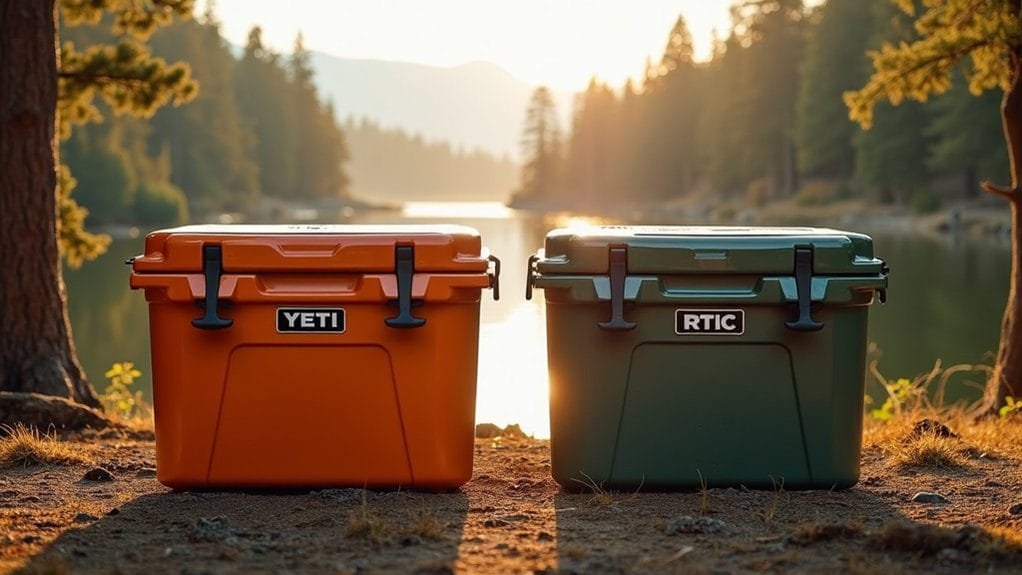
Although both YETI and RTIC coolers are built to withstand the rigors of outdoor adventures, their designs and usability features can greatly impact your experience.
- YETI’s superior carry handles make transportation easier.
- RTIC coolers have two drain plugs, simplifying water removal.
- YETI products boast exceptional durability, with multiple models approved for bear resistance.
- RTIC offers more storage capacity, accommodating up to 36 cans.
In terms of design and usability, YETI’s focus on user-friendliness stands out, while RTIC’s extra capacity is appealing for larger groups. Your choice may ultimately depend on whether you prioritize ease of use or storage space, but both brands deliver solid performance for your camping needs.
Price Analysis: Is YETI Worth the Extra Cost?
Whether you’re planning a weekend camping trip or a longer outdoor adventure, understanding the price difference between YETI and RTIC coolers is essential for making an informed decision. YETI coolers generally cost about $100 more than comparable RTIC models, like the YETI 45-quart at $325 versus the RTIC 45-quart at $219.99. While YETI offers superior insulation, retaining ice longer, this performance may not justify the higher price for everyone. Additionally, YETI’s 5-year warranty contrasts sharply with RTIC’s 1-year warranty, hinting at perceived durability. For budget-conscious campers, RTIC models present a compelling alternative, balancing affordability with functionality. Ultimately, your choice hinges on whether you value brand reputation and longevity over cost savings.
Durability and Warranty: What to Expect
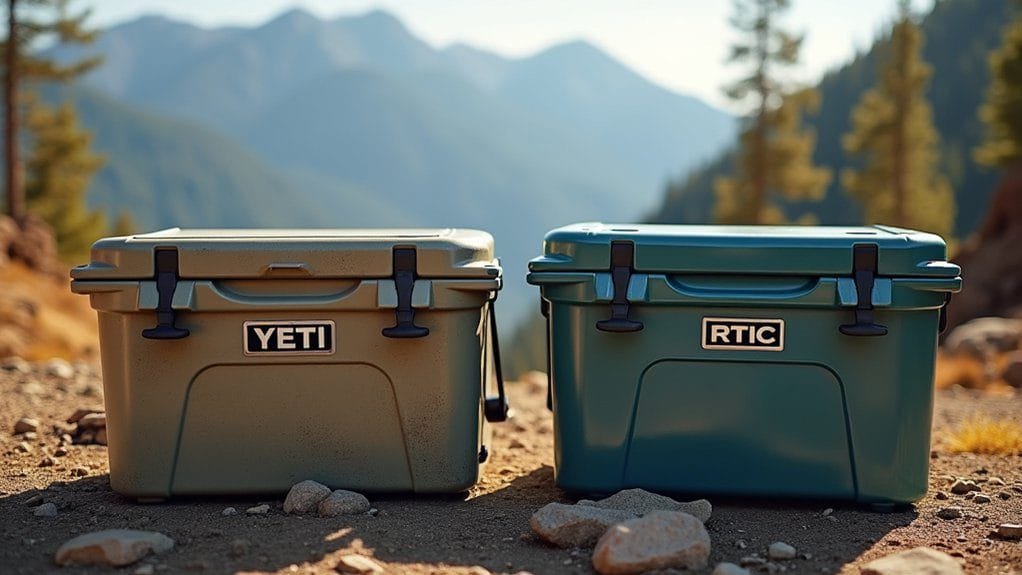
When it comes to durability and warranty, you’ll find significant differences between YETI and RTIC coolers that could influence your choice.
- YETI coolers excel in durability, surviving rigorous tests like drops from heights.
- YETI offers a 5-year limited lifetime warranty, while RTIC provides only 1 year.
- YETI has 18 bear-resistant models, showcasing its robust construction for outdoor adventures.
- Both brands feature rotomolded construction, but YETI’s design emphasizes longevity and toughness.
If you prioritize durability and warranty, YETI stands out as one of the best coolers on the market. While you might pay more, the extensive guarantee reflects a commitment to quality and performance that RTIC can’t match.
Final Verdict: Choosing the Right Cooler for Your Camping Needs
Choosing the right cooler for your camping needs hinges on understanding how YETI and RTIC stack up against each other in key areas like insulation, price, and portability. If you’re planning extended trips, the YETI Tundra excels in ice retention, keeping your perishables fresh longer. However, if budget constraints are a concern, RTIC coolers offer solid performance at a more accessible price point, making them an appealing choice for cost-conscious campers. For portability, the YETI Roadie 60 and RTIC 52-quart wheeled cooler both shine, but your specific terrain may influence your decision. Ultimately, assess your camping duration and cooling requirements to determine which cooler meets your needs—both brands can provide the best cooler experience for outdoor enthusiasts.
Frequently Asked Questions
What Is the Best Brand of Cooler for Camping?
When choosing the best cooler brand for camping, consider insulation performance and price comparison. YETI offers superior features, while RTIC provides great value. Your choice depends on budget and desired cooling efficiency for your adventures.
Are RTIC Coolers Just as Good as Yeti?
When you plunge into cooler comparisons, you’ll find RTIC’s affordability and capacity alluring. Yet, brand loyalty often draws folks to YETI, whose insulation and durability shine, despite the noticeable price differences. It’s a balancing act.
Are Yeti Coolers Good for Camping?
YETI coolers excel in cooler performance, offering impressive insulation efficiency for extended trips. Their portability features, like comfortable handles, make them easy to transport, ensuring you enjoy your camping experience without worrying about food and drink temperature.
Why Did Yeti Sue RTIC?
You might think it’s just a brand comparison, but Yeti sued RTIC over cooler features, claiming patent infringement. The legal disputes centered on design similarities that misled consumers, prompting a settlement and product redesigns.
Conclusion
In the battle of YETI vs. RTIC coolers, your choice could make or break your camping experience. Are you leaning towards the premium performance of YETI, or will the cost-effective reliability of RTIC win your heart? With ice retention, design, and durability on the line, the decision isn’t straightforward. As you weigh the features and prices, remember: the right cooler could mean the difference between a rejuvenating drink and a warm disappointment. Which one will you choose?