
For serious runners, Garmin outperforms Apple Watch with superior GPS accuracy, more precise training analytics, and robust health tracking. You’ll get deeper insights into performance metrics, with Garmin’s split-time tracking to the nearest 10 milliseconds and more accurate calorie estimations. While Apple offers sleek design, Garmin’s specialized features cater specifically to runners’ needs. Stick around to uncover which device could transform your training strategy.
Key Takeaways
- Garmin offers superior running analytics, providing more precise GPS tracking and split-time measurements crucial for serious runners.
- GPS accuracy favors Garmin, with marathon testing showing more precise distance tracking compared to Apple Watch’s measurements.
- Garmin’s advanced health metrics, including VO2 Max estimates, daily training readiness scores, and recovery recommendations, outperform Apple’s tracking.
- Battery life significantly advantages Garmin, with devices like Forerunner 255 lasting up to 16 days versus Apple Watch Ultra’s 36 hours.
- While Apple excels in general smartwatch features, Garmin specializes in dedicated running performance tracking, making it the top choice for serious athletes.
Design and Build Quality
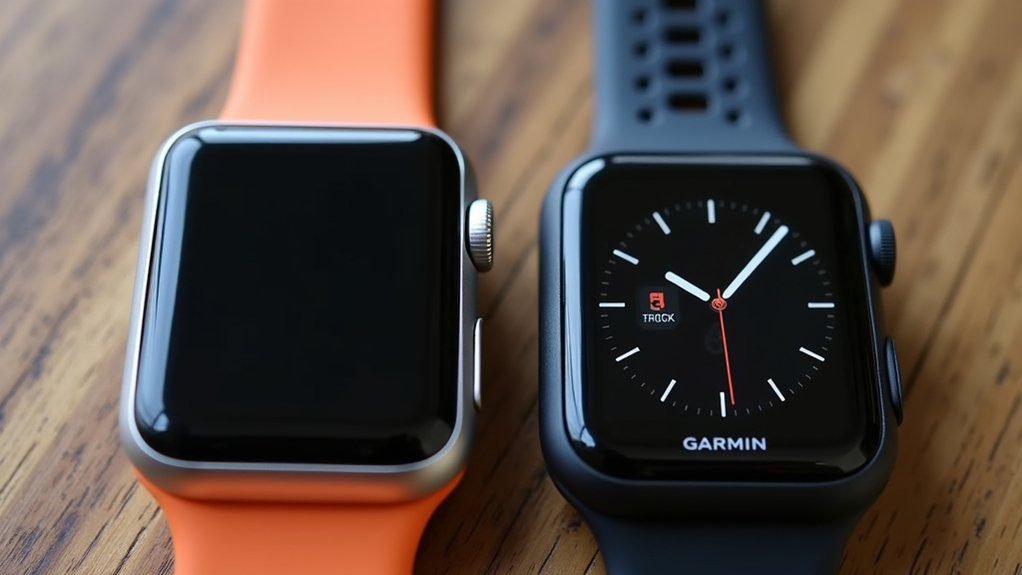
When it comes to smartwatches for runners, design isn’t just about looks—it’s about functional durability. The Apple Watch and Garmin offer distinct approaches to design and build quality. Apple’s lineup emphasizes sleek aesthetics with premium materials like aluminum and stainless steel, while Garmin prioritizes rugged construction for outdoor conditions. You’ll notice Apple’s touchscreen interface provides a modern user experience, whereas Garmin integrates physical buttons for easier navigation during intense workouts. Material choices reflect each brand’s philosophy: Apple balances style with Ion-X or sapphire crystal, and Garmin reinforces its watches with Corning Gorilla Glass. Their display technologies also differ, with Apple using vibrant OLED and Garmin leveraging MIP screens that excel in bright sunlight. Your choice depends on whether you prioritize urban elegance or hardcore durability.
Running Performance and Analytics
While running performance metrics can make or break a smartwatch’s utility for athletes, the Apple Watch and Garmin devices reveal nuanced differences in tracking precision and analytical depth. You’ll notice Garmin’s superior running analytics provide more detailed insights, with customizable run screens and advanced training metrics like ground contact time and training effect. The GPS accuracy varies slightly, with Garmin recording 42.81 km versus Apple Watch’s 42.38 km during a marathon, though both maintain competitive timing within seconds. Heart rate tracking and calorie estimates demonstrate algorithmic disparities, with Apple Watch underestimating calorie burn by 117 calories compared to Garmin. For serious runners seeking extensive fitness tracking, Garmin offers more robust native features, while Apple Watch relies on third-party apps to bridge analytical gaps in running performance.
Training Insights and Feedback
Training insights and feedback distinguish Garmin’s prowess from Apple Watch’s capabilities, revealing three critical dimensions of performance analysis. While Apple Watch provides real-time metrics, Garmin delivers deeper running performance insights through daily training readiness scores and precise VO2 Max estimates. You’ll notice Garmin’s advantage in recovery time recommendations and nuanced heart rate tracking, offering more thorough fitness data.
The calorie estimation variance highlights technical differences: Garmin typically provides more accurate burn calculations, potentially showing 117 more calories expended compared to Apple Watch. For serious runners seeking granular performance feedback, Garmin’s split-time tracking to the nearest 10 milliseconds and customizable lap data analytics provide a more sophisticated approach to understanding your training progression and physiological responses.
Health and Fitness Tracking
The fitness tracking battlefield reveals stark contrasts between Garmin and Apple Watch, with each device wielding unique health monitoring arsenals. If you’re a serious runner seeking thorough health insights, Garmin’s ecosystem offers superior depth. Its VO2 max estimates and Body Battery metric provide nuanced training readiness assessments that Apple Watch can’t match. While Apple focuses on activity engagement through rings, Garmin delivers granular heart rate zone analysis and recovery recommendations critical for performance optimization.
When comparing sleep tracking, Garmin edges out with more accurate stage monitoring, though Apple Watch has recently improved its capabilities. For holistic health tracking, Garmin’s stress, breathing, and cycle tracking metrics present a more rounded view, making it the more sophisticated choice for runners demanding precise, actionable health data.
GPS Accuracy and Navigation
GPS Precision: A Runner’s Silent Companion, the navigation technology embedded in running watches can make or break your performance tracking. When comparing the Garmin Epix Pro and Apple Watch Ultra 2, GPS accuracy becomes paramount. Garmin’s SatIQ technology dynamically selects ideal GPS modes, delivering superior distance measurement compared to Apple’s precision dual-frequency GPS. During marathon testing, the Garmin recorded 42.81 km versus Apple’s 42.38 km, revealing critical tracking differences.
Garmin’s navigation tools dramatically outshine Apple’s reliance on Apple Maps. You’ll appreciate Garmin’s route creation and turn-by-turn guidance, which provide more thorough running workout support. Additionally, Garmin’s split times are measured to the nearest 10 milliseconds, offering granular performance insights that Apple’s second-level rounding can’t match.
Battery Life and Durability
Although battery endurance might seem like a peripheral concern, for runners pushing performance limits, watch power management becomes a critical differentiator between Apple and Garmin. Garmin watches dominate in battery life, with the Forerunner 255 lasting up to 16 days in smartwatch mode, compared to the Apple Watch Ultra’s 36-hour standard usage. For serious runners tackling ultramarathons or multi-day events, Garmin’s solar charging and rugged materials provide unparalleled reliability.
You’ll find Garmin’s durability design excels in outdoor activities, featuring Corning Gorilla Glass and construction that withstands extreme conditions. While Apple Watches offer sleek aesthetics, Garmin prioritizes performance endurance. The Instinct 2 Solar edition even achieves unlimited battery life with just three hours of daily sunlight, making it the ultimate companion for athletes demanding sustained, uninterrupted performance tracking.
Smart Features and Ecosystem
Beyond raw battery performance and rugged design, smartwatch utility hinges on intelligent features and ecosystem integration. If you’re a runner seeking the perfect companion, the Apple Watch and Garmin offer distinctly different smart ecosystems. Apple’s platform delivers thorough integration with Apple Fitness, Siri, and a vast third-party app network, making it a versatile running watch for everyday tech enthusiasts. Conversely, Garmin prioritizes performance metrics, providing a streamlined experience for serious athletes through its Garmin Connect app. While Apple Watch excels in general smart features, Garmin focuses intensely on fitness tracking, offering deep performance analysis and community challenges. Your choice depends on whether you want a multipurpose device or a dedicated running performance tracker that provides granular insights into your athletic journey.
Price and Value Proposition
When comparing smartwatches for runners, price and value become critical decision-making factors that extend beyond mere dollar signs. Garmin’s lineup offers compelling value, with models like the Forerunner 55 delivering robust running capabilities at £299.99, considerably undercutting Apple’s basic offerings. While the entry-level Apple Watch SE 2 starts at £219, serious runners will find Garmin’s specialized features more performance-oriented.
| Brand | Entry-Level | Mid-Range | Premium | Running Focus |
|---|---|---|---|---|
| Apple | £219 (SE 2) | £399 (S9) | £799 (Ultra) | Limited |
| Garmin | £299.99 (55) | £429.99 (265) | £599.99 (Fenix 7) | Extensive |
Your investment in a running watch should prioritize health tracking, advanced features, and performance metrics—areas where Garmin consistently demonstrates superior value for runners.
Frequently Asked Questions
Which Watch Is Best for Runners?
If you’re serious about running, you’ll want a watch that balances running metrics, GPS accuracy, and battery life. Garmin typically outperforms Apple in performance tracking, though Apple offers sleeker smartwatch features at a competitive price point.
Is Apple Watch Suitable for Runners?
You’ll find the Apple Watch suitable for casual runners, offering solid fitness tracking and heart rate monitoring. However, its GPS accuracy, battery life, and advanced workout modes may fall short for serious training compared to specialized running watches.
Are Garmin Watches Good for Runners?
You might think Garmin’s pricey, but they’re runners’ ultimate companion. With unrivaled GPS reliability, advanced tracking features, long battery life, and precise heart rate monitoring, Garmin watches deliver professional-grade performance that’ll elevate your running experience beyond basic fitness tracking.
What Is the Best Garmin Watch to Replace the Apple Watch?
You’ll find the Forerunner 265 superior, offering robust running metrics, exceptional GPS tracking, week-long battery life, and advanced heart rate monitoring. It outperforms alternatives with precise tracking, user-friendly interface, and competitive pricing for serious athletes.
Which Is Better for Runners: A Smartwatch or a Garmin?
When choosing between smartwatches or fitness trackers, runners should consider their specific needs. Smartwatches offer advanced features like music storage and notifications, while Garmin devices excel in GPS accuracy and performance metrics. Ultimately, the decision between smartwatches or fitness trackers depends on personal preferences and training goals.
Conclusion
Your ultimate choice between Apple Watch and Garmin hinges on your running DNA. While Apple elegantly bridges lifestyle and performance, Garmin remains the technical maestro for serious athletes. Consider your training depth, ecosystem preference, and performance demands. Each device isn’t just a gadget—it’s a performance partner mapping your running journey. Choose wisely, and let your wrist become the canvas of your athletic narrative.