
When comparing smart and traditional sprinklers, smart systems clearly save more water. They reduce water usage by up to 60% through real-time moisture and weather data adjustments. In contrast, traditional systems waste about 1.5 billion gallons daily due to overwatering. Smart irrigation can also lead to annual savings of $100 to $200 on water bills, making them more cost-effective over time. Explore how these systems can enhance your irrigation strategy for even better results.
Key Takeaways
- Smart irrigation systems can save up to 15,000 gallons of water annually compared to traditional systems.
- Traditional sprinkler systems waste about 1.5 billion gallons of water daily in the U.S. due to overwatering.
- Smart systems can reduce water usage by up to 60% through real-time data analysis and adjustments.
- Homeowners using smart controllers often see a 30% reduction in water bills due to efficient watering practices.
- While traditional systems have lower initial costs, smart systems offer long-term savings and environmental benefits.
Understanding Water Waste in Residential Irrigation
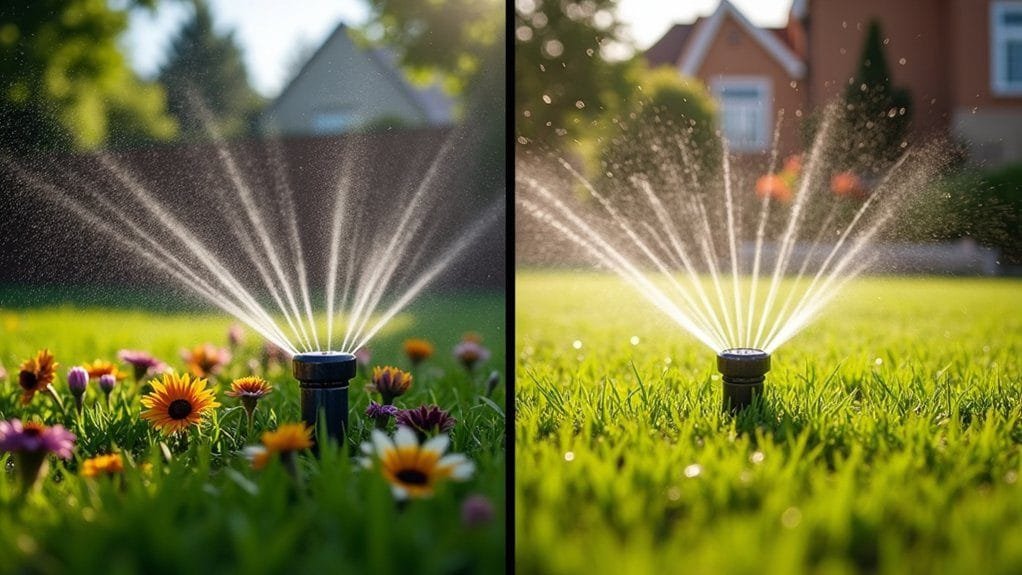
While residential irrigation might seem like a mundane aspect of home maintenance, the scale of water waste is staggering. Traditional sprinkler systems are notorious for inefficient water consumption, wasting approximately 1.5 billion gallons daily across the U.S. Your irrigation practices likely contribute to this problem, with overwatering being a primary culprit. Smart irrigation systems with advanced controllers can dramatically reduce this waste by monitoring real-time weather conditions and soil moisture levels. By integrating these technologies, you can potentially save up to 15,000 gallons of water annually. Only 2% of residential water is classified as human-grade, making efficient watering practices essential. Shifting from traditional to smart irrigation systems represents a strategic approach to reducing water waste and promoting sustainable landscape management.
Traditional Sprinkler Systems: An Overview
The significant water waste highlighted in residential irrigation stems directly from traditional sprinkler systems’ fundamental design limitations. These systems rely on manual adjustments for seasonal changes, increasing risks of overwatering and underwatering. Homeowners must actively manage water usage to prevent inefficient watering practices that drive up utility bills.
| System Type | Water Control | Maintenance Effort |
|---|---|---|
| Traditional | Manual | High |
| Smart | Automatic | Low |
| Hybrid | Semi-automatic | Medium |
Regular maintenance becomes essential in traditional sprinkler systems. Inspecting for leaks, adjusting settings, and monitoring water distribution require consistent homeowner intervention. While these systems offer lower initial installation costs, their long-term water inefficiency can offset potential savings. Understanding the system’s operational constraints helps you make informed decisions about residential irrigation management, ultimately reducing water waste and controlling utility expenses.
Smart Irrigation Technology: How It Works
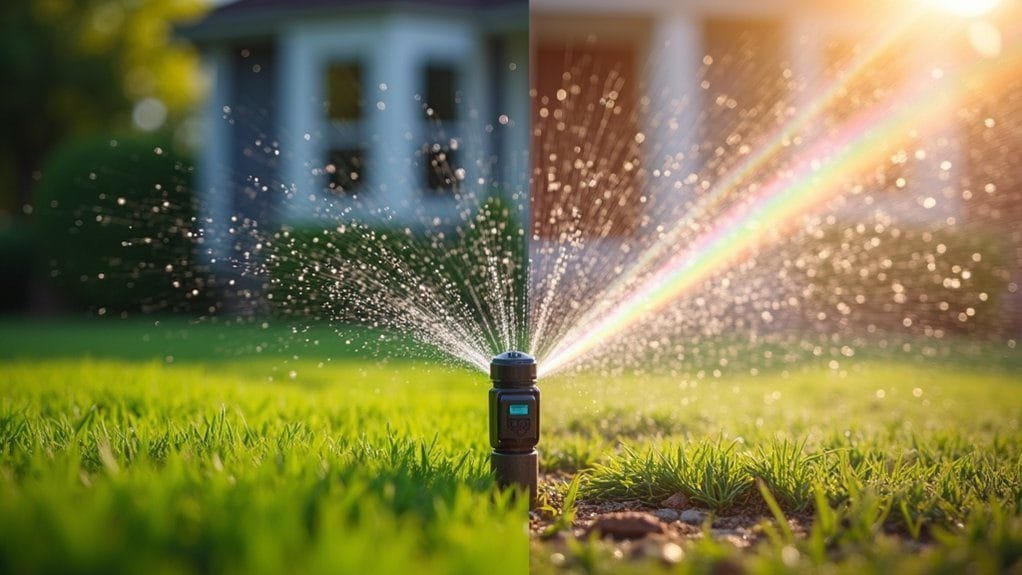
Smart irrigation technology revolutionizes water management by integrating advanced sensors and data-driven algorithms that dynamically adjust watering schedules. You’ll experience precise water conservation through real-time data collection from soil moisture sensors and weather condition monitors. These high-efficiency systems optimize water use by analyzing evapotranspiration data, including temperature, humidity, and wind speed, ensuring your landscape receives exactly what it needs.
Water Conservation Comparison
Water conservation plays a pivotal role in the effectiveness of irrigation systems. By comparing smart systems to traditional sprinkler systems, you can see significant differences in water usage:
- Smart systems can reduce water usage by up to 60%.
- Traditional systems waste about 1.5 billion gallons daily in the U.S.
- Homeowners report up to a 30% reduction in water bills with smart controllers.
- Smart controllers utilize moisture sensors and real-time weather data for adjusting schedules.
- Efficient watering practices promote sustainable living while traditional systems often lead to overwatering.
Incorporating smart irrigation technology not only conserves water but also guarantees your landscape remains healthy, minimizing waste and optimizing water usage effectively.
Cost Analysis: Installation and Long-Term Savings
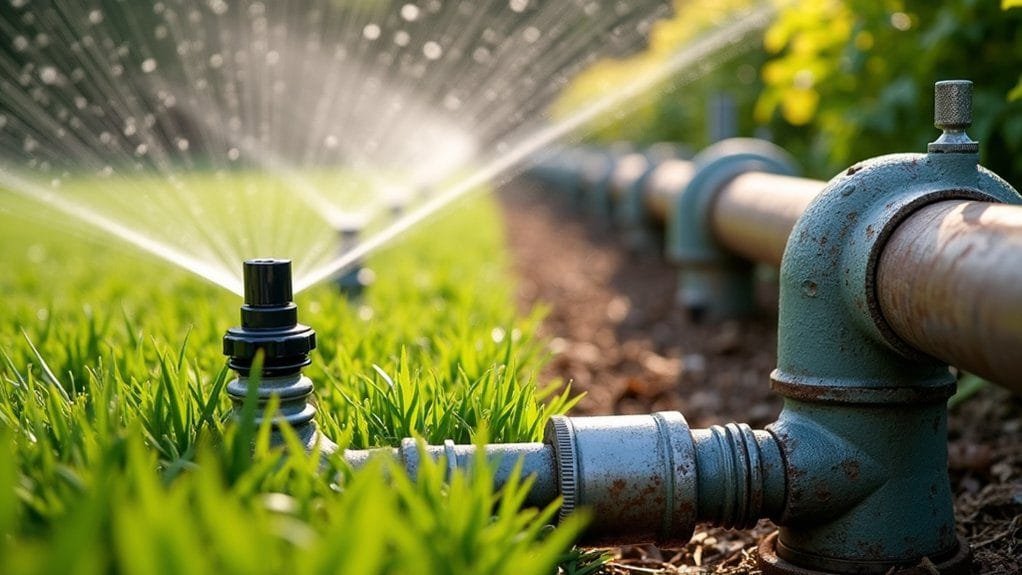
When considering the installation of an irrigation system, it is essential to weigh the initial costs against potential long-term savings. Smart systems typically have an installation cost ranging from $200 to $1,500, while traditional systems can be set up for only $100 to $300. However, smart systems can reduce water usage by up to 30%, leading to annual savings of $100 to $200 on water bills. The return on investment for smart systems often materializes within 2-3 years through decreased consumption and lower utility costs. In contrast, traditional systems frequently incur higher long-term costs due to overwatering and ongoing maintenance needs, whereas smart systems automate these processes, promoting efficiency and minimizing manual effort.
Environmental Impact and Sustainability
While traditional sprinkler systems often lead to significant water wastage through overwatering and runoff, smart irrigation technology offers a sustainable solution. These advanced systems can reduce water consumption by up to 30%, promoting conservation and efficiency.
Smart irrigation technology reduces water consumption by up to 30%, offering an efficient and sustainable alternative to traditional systems.
- Real-time adjustments based on weather data enhance watering practices.
- They minimize waste, saving approximately 1.5 billion gallons of water daily in the U.S.
- Smart controllers help preserve local ecosystems.
- Reduced strain on municipal water supplies aligns with broader sustainability goals.
- Regular maintenance guarantees maximum efficiency for both traditional and smart systems.
Making the Right Choice for Your Landscape
Choosing the right irrigation system for your landscape can greatly impact both water efficiency and plant health. If you opt for a smart controller, you can water your lawn more efficiently by adjusting watering schedules based on weather conditions and soil moisture levels. This system provides precise watering that helps reduce wasted water, potentially saving you up to 15,000 gallons annually. Traditional systems, with fixed timers, often lead to overwatering during rain, increasing utility costs. By selecting a smart system, you’ll guarantee your lawn gets the attention it needs while accommodating your landscape’s unique needs. Upgrading to high-efficiency sprinkler heads alongside smart technology can further enhance plant health and lower maintenance costs. Make the sustainable choice for your landscape today.
Frequently Asked Questions
What Is the Most Efficient Type of Water Sprinkler?
The most efficient type of water sprinkler is a drip irrigation system, enhanced by rainfall sensors and soil moisture monitoring. This technology optimizes irrigation scheduling, conserves water, and promotes plant health while improving overall landscape design.
Do Smart Sprinkler Controllers Save Money?
Yes, smart sprinkler controllers provide cost savings by minimizing water usage and adjusting for seasonal changes. Despite installation costs, their energy efficiency and technology investments lead to long-term savings and a favorable return on investment.
What Irrigation Method Saves the Most Water?
Drip irrigation, combined with moisture meters and rain sensors, optimizes irrigation scheduling based on soil types and plant selection. Regular irrigation audits enhance water conservation, notably reducing evaporation rates and maximizing efficiency in landscape design.
How Much Water Does Smart Irrigation Save?
Imagine your lush garden thriving under a smart irrigation system, conserving water efficiently. With rainfall sensors and soil moisture data, you save up to 60% in drought conditions, enhancing landscape management while minimizing environmental impact.
Is Using Filtered Water in Smart Sprinklers More Efficient for Water Conservation?
Using filtered water in smart sprinklers can enhance water conservation efforts significantly. By ensuring that the water is free of impurities, plants can absorb nutrients more efficiently, reducing waste. This efficient use of resources presents a compelling argument for choosing filtered over tap or filtered options in irrigation systems.
Conclusion
In the battle of smart versus traditional sprinklers, the data is clear: smart systems generally save more water and offer better long-term savings. By adjusting to weather conditions and soil moisture levels, they optimize irrigation efficiently. Isn’t it time you consider investing in technology that not only conserves water but also boosts the health of your landscape? Choosing the right sprinkler system can greatly impact your water usage and environmental footprint, making a smart choice essential for sustainability.