
Yes, dehumidifiers help with mold prevention by reducing indoor humidity levels. Mold thrives in humidity above 60%, so keeping levels between 30% and 50% creates an unfavorable environment for mold growth. They pull moisture from the air, limiting the resources available for mold spores. Regularly maintaining your dehumidifier also enhances its effectiveness in controlling humidity. Discover how to choose the right dehumidifier and explore additional strategies for thorough mold management.
Key Takeaways
- Dehumidifiers maintain indoor humidity levels between 30% and 50%, creating an unfavorable environment for mold growth.
- They reduce moisture in the air, limiting resources available for mold spores to thrive.
- Mechanical dehumidifiers cool air to condense water vapor, actively removing moisture from the environment.
- Regular maintenance of dehumidifiers enhances their effectiveness in preventing mold and controlling humidity levels.
- Using a dehumidifier, especially in damp areas, significantly lowers the risk of mold infestations in homes.
What Is a Dehumidifier?
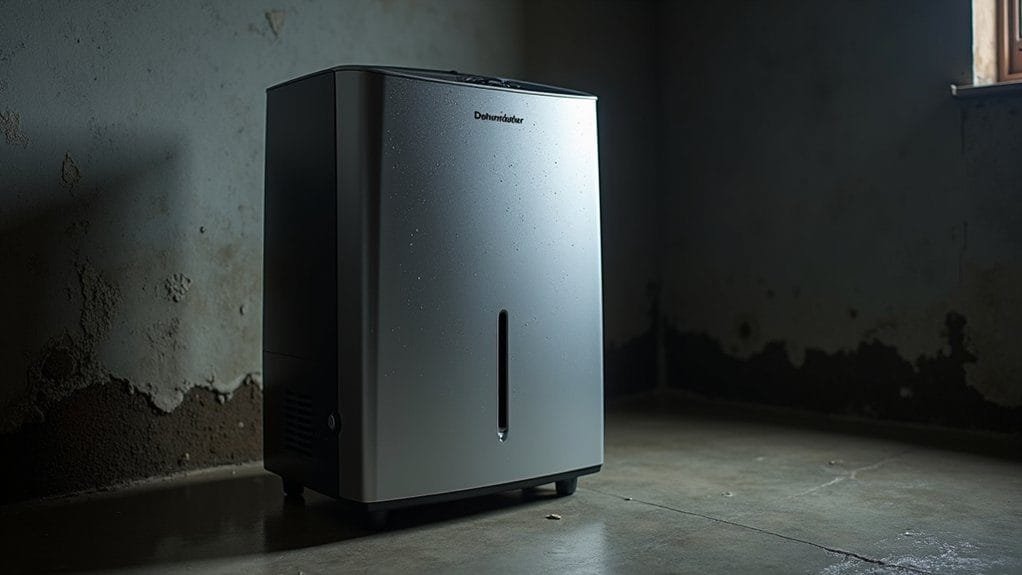
A dehumidifier is an indispensable tool for managing indoor air quality and comfort. It works by reducing humidity levels in your home, which is essential for maintaining a balanced atmosphere. This portable device pulls moisture from the air, cooling it to condense water vapor, then collects it in a tank or drains it away. The ideal relative humidity for homes is between 30% and 60%, and a dehumidifier helps you achieve this range. Different types include mechanical models with cold coils, absorption units using desiccants, and electronic systems, each effectively removing moisture. Regular maintenance and cleaning are important to guarantee your dehumidifier operates efficiently, preventing excess humidity and enhancing your indoor environment.
Understanding the Connection Between Moisture and Mold
Understanding the connection between moisture and mold is vital for maintaining a healthy living environment. Mold thrives in humidity levels above 60%, pulling moisture directly from the air. By controlling moisture levels, you can greatly reduce mold’s chances of survival. High humidity creates a perfect breeding ground, while mold spores can remain dormant until humidity rises, leading to infestations. Dehumidifiers help by maintaining indoor humidity between 30% and 50%, limiting the resources mold needs to thrive. With approximately 70% of homes facing mold issues due to excessive moisture and poor ventilation, managing humidity is essential. By effectively lowering moisture levels, you can prevent mold and guarantee a healthier space for you and your family.
How Do Dehumidifiers Help Prevent Mold Growth?
While high humidity creates ideal conditions for mold growth, dehumidifiers effectively combat this issue by maintaining indoor humidity levels between 30% and 50%. By reducing moisture in the air, dehumidifiers limit the water available for mold spores to germinate and thrive. Studies indicate that controlling humidity through dehumidification greatly lowers mold spore presence indoors. Mechanical dehumidifiers cool air below its dew point, causing condensation and effectively lowering humidity levels. To optimize mold prevention, consider these tips:
High humidity fosters mold growth, but dehumidifiers help maintain ideal indoor humidity levels, reducing mold spore presence.
- Use a hygrometer to monitor humidity levels.
- Regularly empty the dehumidifier’s water collection tank.
- Facilitate proper ventilation in damp areas.
- Clean the dehumidifier filter periodically.
- Place the unit in high-humidity spaces, like basements.
Implementing these strategies helps you create a healthier environment.
Benefits of Using a Dehumidifier in Mold Prevention
When you use a dehumidifier, you’re not just lowering humidity; you’re actively creating a less favorable environment for mold growth. Maintaining indoor humidity levels between 30% to 50% is essential for mold prevention, especially in damp areas like bathrooms and basements. By removing excess moisture from the air, a dehumidifier reduces the water available for mold spores, effectively stunting their proliferation. This not only helps prevent mold but also considerably reduces indoor allergens, enhancing air quality and alleviating allergy or asthma symptoms. Furthermore, regular use protects your belongings from moisture damage, a common consequence of mold. A study from the University of Cincinnati confirms that dehumidifiers effectively control indoor humidity and reduce mold spore counts, solidifying their role in mold prevention strategies.
How to Choose the Right Dehumidifier for Your Home
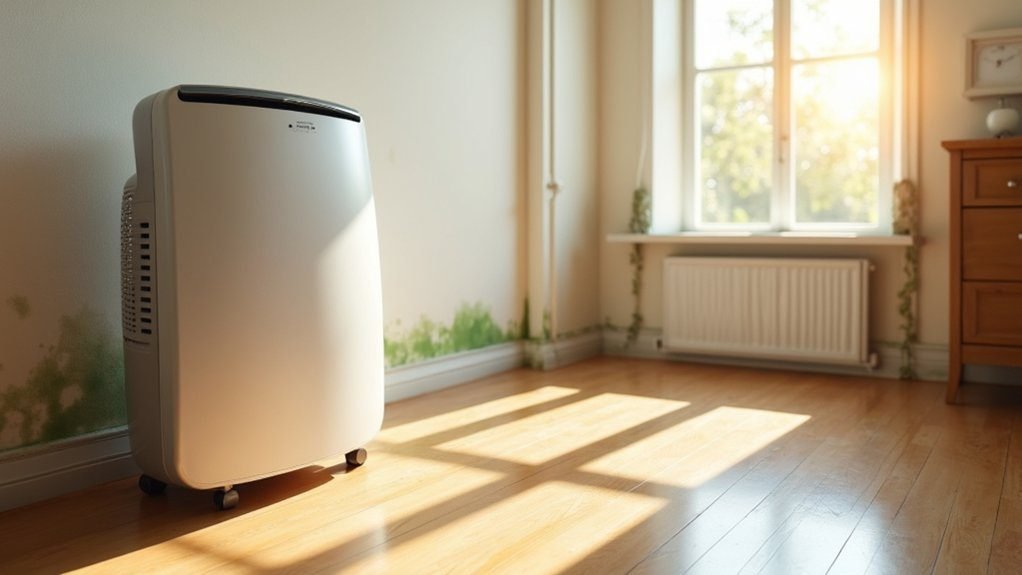
How can you guarantee you choose the right dehumidifier for your home? Start by evaluating your space and needs to effectively reduce moisture. Here are key factors to take into account:
- Area size: Smaller units handle about 30 pints/day; larger ones can absorb up to 90 pints, ideal for basements.
- Humidity levels: Check local humidity and choose between portable or whole-house models.
- Built-in sensors: Opt for dehumidifiers with hygrometers that adjust operation based on current humidity levels.
- Maintenance: Regularly clean the filter and empty the reservoir to maintain efficiency.
- Energy efficiency: Look for Energy Star certified models to save on electricity costs while managing indoor humidity effectively.
Identifying Dehumidifier Effectiveness in Mold Control
Choosing the right dehumidifier is only the first step in effectively preventing mold growth in your home. To truly identify its effectiveness, you need to maintain indoor humidity levels at or below 45-50%. A dehumidifier can help achieve this by removing 3 to 15 liters of moisture daily, depending on its size. Additionally, using a hygrometer allows you to monitor humidity levels, ensuring they stay within this ideal range. Studies show that reducing humidity can lead to lower mold spore counts indoors, ultimately curbing mold growth. However, make sure your dehumidifier is properly sized; an undersized unit may not adequately reduce humidity, allowing mold to persist.
Other Strategies for Mold Prevention
While a dehumidifier plays an essential role in mold prevention, it’s important to adopt a multifaceted approach to effectively combat mold growth in your home. Here are some strategies to help you manage humidity levels and reduce moisture:
- Regularly inspect and repair leaks in plumbing and roofing.
- Guarantee proper ventilation in high-moisture areas like bathrooms and kitchens.
- Clean and dry any water-damaged materials within 24-48 hours.
- Use mold-resistant products, such as paints and building materials.
- Maintain indoor humidity levels between 30% and 50% using hygrometers.
The Role of Air Purifiers in Combating Mold
As you seek effective solutions for mold prevention, incorporating air purifiers into your home environment can greatly enhance your efforts. Air purifiers equipped with HEPA filters effectively capture mold spores, notably improving indoor air quality. Some models also utilize UV light technology, which deactivates mold spores and curbs their growth. Regular use of air purifiers complements dehumidifiers by targeting airborne mold spores, creating less favorable conditions for mold development.
| Feature | Benefits | Impact on Mold |
|---|---|---|
| HEPA Filters | Captures 99.97% of particles | Reduces mold spores |
| UV Light Technology | Deactivates mold spores | Prevents growth |
| Consistent Use | Improves overall air quality | Alleviates health issues |
Using air purifiers not only controls mold but also supports respiratory health.
Expert Insights on Mold Management and Dehumidifiers
Understanding the importance of humidity control is essential for effective mold management, especially in spaces prone to moisture. A dehumidifier can greatly impact indoor humidity levels and inhibit mold growth. Here are some key insights:
- Maintain humidity between 30% to 50% to deter mold spores.
- Mold can develop within 24-48 hours of water exposure, highlighting the need for timely action.
- Studies show dehumidifiers reduce mold spore concentration, improving air quality.
- Regular use in humid areas, like basements and bathrooms, prevents mold reoccurrence.
- While dehumidifiers can’t eliminate existing mold, they help manage humidity effectively to prevent new growth.
Frequently Asked Questions
How Effective Are Dehumidifiers at Preventing Mold?
Dehumidifiers effectively prevent mold growth by maintaining humidity levels below 50%. They enhance air circulation, reducing moisture that promotes mold spores. Regular use can markedly decrease mold risks, supporting a healthier indoor environment for you.
What Is the Best Setting for a Dehumidifier to Prevent Mold?
To prevent mold, set your dehumidifier between 30% and 50% relative humidity. For ideal results, place it in high-humidity areas and follow maintenance tips like regularly emptying the water tank to guarantee efficiency.
Will Mold Grow at 55 Humidity?
At 55% humidity levels, mold growth is possible due to increased moisture availability. You should maintain indoor humidity below 50% for effective moisture control, considerably reducing the risk of mold development and ensuring a healthier environment.
When Should You Not Use a Dehumidifier?
About 30% humidity is ideal for comfort; use a dehumidifier when humidity levels exceed this. You should avoid using it in extremely dry conditions, during flooding, or alongside other moisture-removal methods due to limitations in effectiveness.
Do Reusable Bags Contribute to Mold Growth, and Can Dehumidifiers Help?
Reusable bags can sometimes become a breeding ground for mold, especially if they retain moisture from food or liquids. In the debate of plastic bags versus reusable options, it’s crucial to understand that proper cleaning of reusable bags, coupled with the use of dehumidifiers, can significantly reduce mold growth and keep them fresh.
Conclusion
In the battle against mold, dehumidifiers are your frontline defenders, tackling excess moisture before it becomes a problem. By maintaining ideal humidity levels, you not only protect your home but also promote a healthier environment. While dehumidifiers play an essential role, remember that they’re part of a broader strategy. Combining them with other preventative measures can create a fortress against mold growth, ensuring your living space remains safe and comfortable for you and your loved ones.