
When comparing plastic and reusable bags, consider their environmental impacts. Plastic bags generate less municipal waste and require fewer resources to produce, but they contribute to pollution and microplastics. Paper bags, while biodegradable, consume more energy and lead to greater pollution during production. Reusable bags can offset their environmental costs but need to be used frequently; cotton bags require 131 uses, while non-woven polypropylene bags only need 11. Find out more about the nuances of each option.
Key Takeaways
- Single-use plastic bags have a lower production energy footprint but contribute significantly to pollution and environmental degradation.
- Paper bags generate more waste and pollution during production, requiring multiple reuses to become sustainable.
- Non-woven polypropylene reusable bags need only 11 uses to offset their environmental impact compared to single-use plastic bags.
- Cotton bags are biodegradable but require 131 uses to balance their higher environmental costs, making frequent use essential.
- Regular washing of reusable bags is necessary to prevent health risks, as they can harbor bacteria and contaminants.
The Environmental Footprint of Plastic Bags
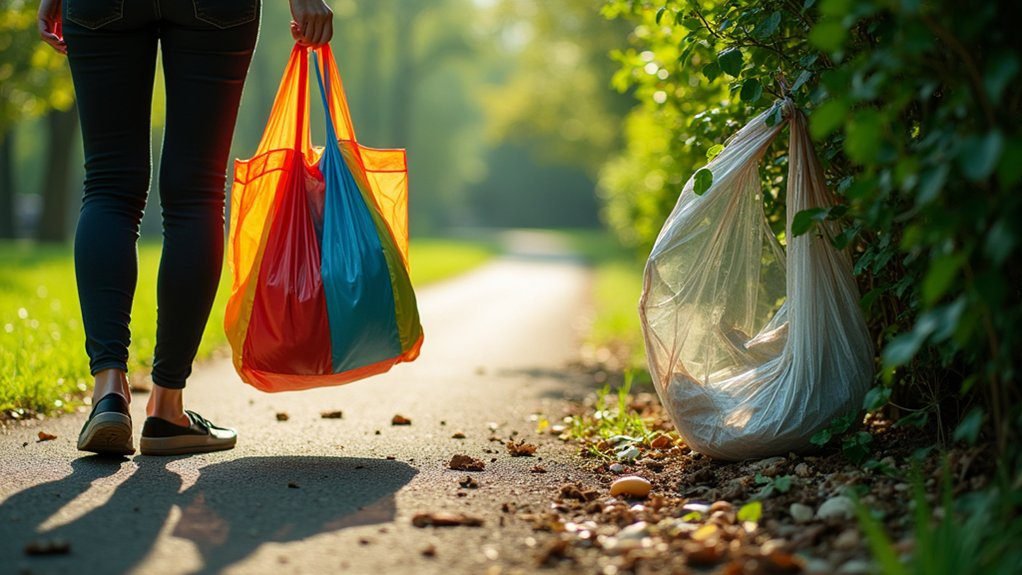
While many people might think of plastic bags as environmentally harmful, their production and use reveal a more nuanced picture. Single-use plastic bags, made from high-density polyethylene, require less energy and resources in their production compared to paper bags. They generate only 7 kg of municipal solid waste, considerably less than the 33.9 kg produced by paper bags. However, with approximately 100 billion plastic bags used annually in the U.S. and less than 5% being recycled, they contribute to pollution and long-term environmental issues, such as microplastic contamination. When reused multiple times, plastic bags can have a lower carbon footprint, making them a more sustainable option than often recognized, especially when considering their biodegradable alternatives.
Assessing the Impact of Paper Bags
When comparing the environmental impact of plastic and paper bags, it’s important to contemplate the significant resources required to produce paper bags. They consume about four times more energy than plastic bags and generate more greenhouse gas emissions throughout their lifecycle. Additionally, producing paper bags results in 70% more air pollution and 50 times more water pollution, raising concerns about pollution and solid waste. To truly make paper bags a sustainable choice, you need to reuse them at least three times, while plastic bags can remain effective with just two uses. The annual consumption of over 10 billion paper bags in the U.S. contributes to deforestation, necessitating the felling of around 14 million trees. Though biodegradable and recyclable, paper bags require proper care to avoid contamination.
Understanding Reusable Bags: Cotton vs. Non-Woven Polypropylene

As you evaluate the environmental implications of reusable bags, it is essential to understand the differences between cotton and non-woven polypropylene (PP) options. Here are three key points to examine:
- Cotton Bags: These are biodegradable but require 131 uses to offset their considerable production environmental impact, including high water and energy consumption.
- Non-Woven Polypropylene: More durable, these bags need only 11 uses to break even with single-use plastic bags, although they are not biodegradable.
- Sustainability: Frequent use of either type greatly mitigates initial environmental costs, highlighting the importance of reusing bags to enhance sustainability.
Understanding these factors can help you make informed choices about which reusable bags best align with your values and commitment to reducing environmental impact.
The Importance of Reuse Frequency
Understanding the importance of reuse frequency is essential for maximizing the environmental benefits of reusable bags. Each type of reusable bag has a specific reuse threshold to offset its production footprint. For instance, non-woven polypropylene bags must be used at least 11 times to break even with the environmental impact of a single-use plastic bag. Cotton bags require an impressive 131 uses, while paper bags need to be reused at least three times to neutralize their higher environmental costs. The frequency of reuse considerably affects your overall carbon footprint. By effectively reusing bags during grocery shopping, you can minimize waste and reduce the environmental impact associated with all types of bags, including single-use plastic.
Health and Safety Concerns With Shopping Bags
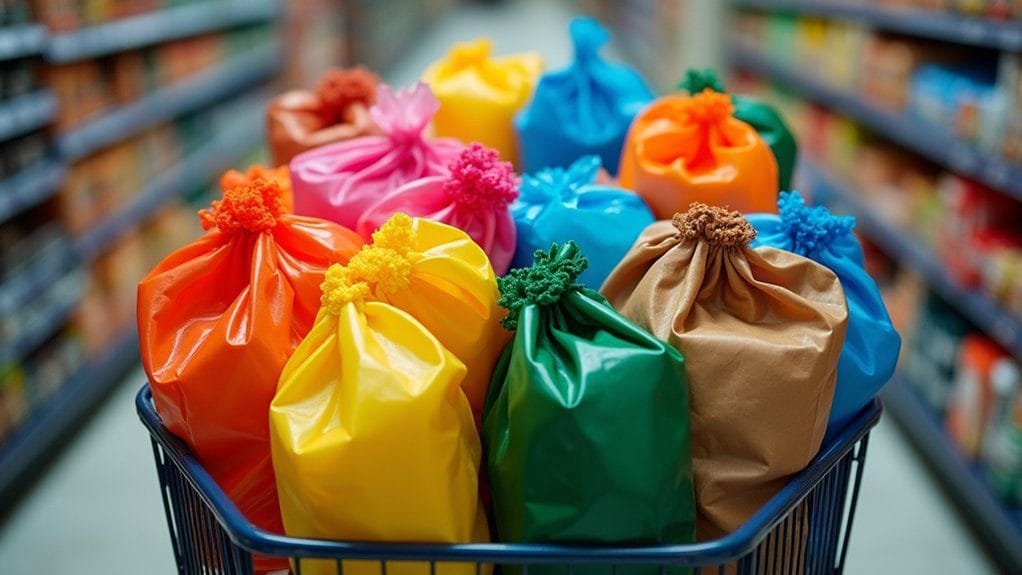
While reusable bags offer significant environmental advantages, they also present health and safety concerns that shouldn’t be overlooked. Here are three key issues to take into account:
- Bacterial Growth: Studies show that 12% of reusable bags contain E. coli, highlighting the need for regular washing to maintain hygiene.
- Cross-Contamination Risks: Meat juices can promote bacterial growth, so using separate bags for meats is advisable to avoid cross-contamination.
- Pathogen Survival: COVID-19 can survive on polypropylene bags for up to three days, necessitating thorough sanitation, especially during the pandemic.
To minimize health risks, wash your reusable bags in warm or hot water, as this can reduce bacteria by 99.9% and kill harmful pathogens. Prioritizing hygiene is essential for your safety and the environment.
Making Informed Choices for Sustainable Shopping
How can you make informed choices for sustainable shopping? Understanding the environmental impact of different bag types is essential. Here’s a quick comparison:
| Bag Type | Reuse Requirement to Offset Impact |
|---|---|
| Single-use Plastic | 2 times |
| Paper Bags | 3 times |
| Reusable Non-woven Polypropylene | 11 times |
| Cotton Bags | 131 times |
Choosing reusable bags helps reduce litter and microplastic pollution considerably. Remember, proper recycling practices matter too; less than 5% of plastic bags are recycled, harming marine life and increasing your carbon footprint. As consumers, you can make a difference by consistently opting for sustainable options. Your choices in shopping can lead to a more sustainable future.
Frequently Asked Questions
Are Plastic Bags Better for the Environment Than Reusable Bags?
When evaluating plastic bags against reusable bags, consider plastic bag longevity and production energy costs. Your consumer behavior influences environmental footprint comparison, waste management strategies, and recycling efficiency rates, ultimately affecting carbon emissions analysis and economic implications.
Is It Better to Reuse or Recycle Plastic Bags?
Reusing plastic bags is generally better than plastic bag recycling, as it extends their lifespan and contributes to pollution reduction strategies. Engaging in community recycling initiatives can further enhance waste management practices and consumer behavior trends.
What Are the Disadvantages of Reusable Bags?
Reusable bags have durability concerns and lifespan issues. Bacteria buildup requires frequent washing, complicating storage. Material sourcing and production energy can be high, while consumer habits often lead to underuse, limiting their eco-friendly alternatives.
What Is the Most Environmentally Friendly Bag?
Studies show that cotton totes need 131 uses to match plastic’s efficiency, highlighting how consumer habits shape our environmental footprint. Opt for reusable bags made from sustainable materials to minimize pollution levels and enhance waste management.
How Do Reusable Produce Bags Compare to Plastic Bags in Terms of Environmental Impact?
Reusable produce bags significantly reduce environmental impact compared to single-use plastic bags. While plastic bags contribute to pollution and wildlife harm, plastic or reusable bags offer a sustainable alternative. They minimize waste, conserve resources, and promote eco-friendly shopping habits, ultimately leading to a healthier planet for future generations.
Conclusion
When weighing plastic and reusable bags, consider their lasting impact. Plastic bags may seem convenient but contribute greatly to pollution, while paper bags require resources that could lead to deforestation. Reusable bags, whether cotton or non-woven polypropylene, offer a sustainable alternative, but only if you use them frequently enough to justify their production. Ultimately, making informed choices empowers you to balance convenience with environmental responsibility, ensuring that your shopping habits align with a healthier planet.