
If you’re after a crispy crust, outdoor pizza ovens are your best bet. They reach intense temperatures of 900-1100°F, allowing for quick cooking times and excellent heat retention that creates a crunchy exterior. On the other hand, indoor ovens max out around 700°F, often resulting in softer crusts due to slower cooking and moisture retention. So, if you want that authentic pizza experience, outdoor ovens win hands down. Stick around to discover more about choosing the perfect oven for you!
Key Takeaways
- Outdoor ovens reach higher temperatures (900-1100°F), allowing for a much crispier crust compared to indoor ovens, which max out around 700°F.
- The quick cooking times of about 90 seconds in wood-fired outdoor ovens contribute to better crust texture and enhanced crunchiness.
- Outdoor wood-fired ovens impart a unique smoky flavor and achieve a charred finish, elevating the overall pizza experience.
- Indoor ovens tend to retain moisture during slower cooking, leading to softer crusts rather than the desired crispiness.
- For the best crust, outdoor wood-fired ovens are superior due to intense heat retention and cooking efficiency.
The Impact of Heat Retention on Crust Crispiness
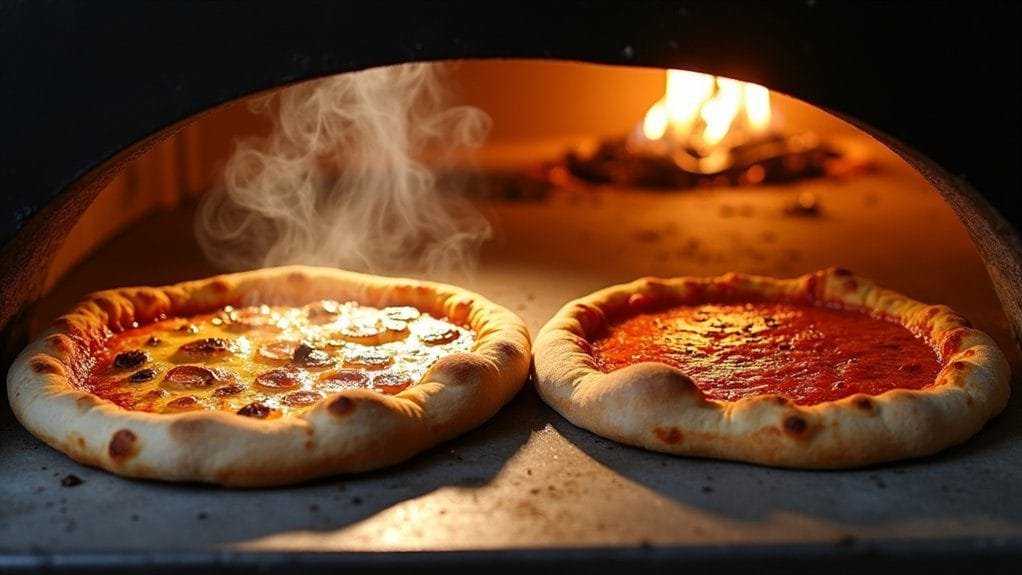
When you cook pizza, the temperature and heat retention of your oven play a crucial role in achieving that perfect crust. Outdoor ovens, especially wood-fired models, can reach scorching temperatures between 900-1100°F, allowing for quick cooking times of about 90 seconds. This intense heat retention creates an extraordinary crust crispiness, as the even heat from a pizza stone helps distribute warmth uniformly. In contrast, indoor pizza ovens, while capable of reaching over 700°F, often result in softer crusts due to lower maximum temperatures. The slower cooking process in these ovens can trap moisture, preventing that desired crunch. Ultimately, if you crave a drier, crunchier crust with a smoky flavor, outdoor ovens are your best bet for pizza perfection.
Flavor Profiles: Wood-Fired vs. Electric Cooking
While both wood-fired and electric ovens can produce delicious pizzas, the flavor profiles they create are distinctly different. A wood-fired oven gives your pizza a unique smoky flavor that enhances the overall taste, providing an authentic experience that electric indoor ovens simply can’t replicate. With temperatures soaring between 900-1100°F, wood-fired ovens cook pizzas quickly, resulting in crispy crusts and a charred, flavorful finish. On the other hand, electric ovens, which max out around 750°F, often yield a less authentic flavor profile, leaving pizza enthusiasts yearning for that signature smokiness. The high heat and cooking process in a wood-fired oven truly set it apart, making it the preferred choice for those seeking a genuine pizza experience.
Cost Considerations: Budgeting for Your Oven Choice
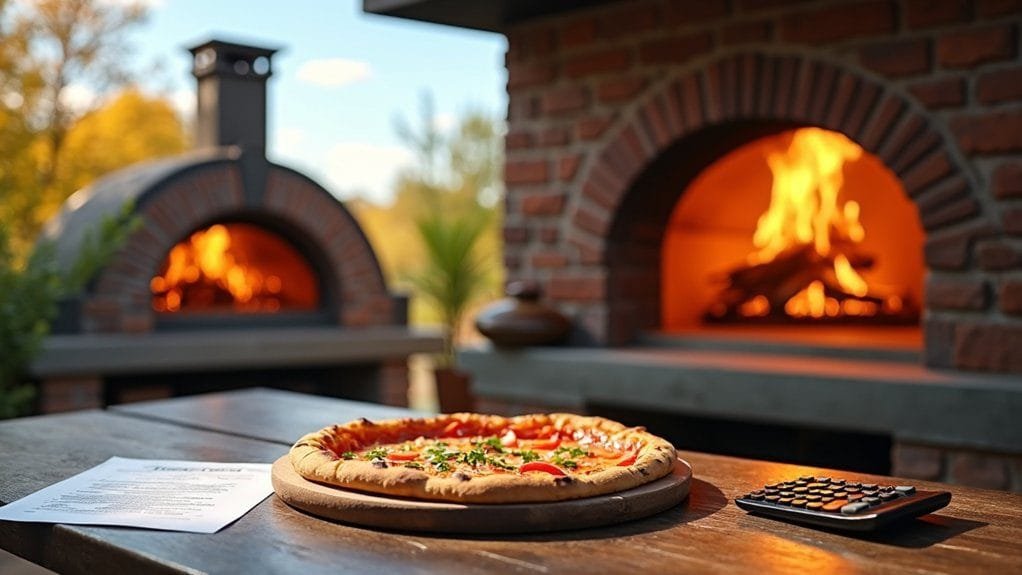
Choosing the right pizza oven involves more than just picking a style; it’s essential to factor in your budget and long-term costs. Indoor electric pizza ovens, like the Breville Smart Oven Pizzaiolo, generally come with a higher initial purchase price, around $800, but they often save you on energy bills due to their energy efficiency. In contrast, outdoor wood-fired ovens, such as the Gozney Arc, are priced between $600 and $700, making them a more budget-friendly option. If you want to keep costs low, consider models like the Ooni Fyra 12, which delivers great quality pizza for around $300. Always weigh your options with a pricing comparison of fuel sources and long-term operational costs to make the best choice.
User Experience: Ease of Use and Setup
Budget considerations are just one part of the equation; user experience plays a vital role in your pizza oven choice. Indoor pizza ovens, like the Ooni Volt 12, excel in ease of use with quick setup—just plug it in and start cooking. Their user-friendly digital controls and pre-programmed settings simplify the cooking process, making them ideal for beginners. In contrast, outdoor pizza ovens often require complex installation, including foundation and ventilation, which can be inconvenient. Indoor models are typically more compact, allowing for easier storage in small kitchens. Plus, they demand less maintenance than outdoor ovens, which require regular upkeep due to exposure to the elements. Your choice impacts not just flavor but also your overall experience.
Design Aesthetics: Which Oven Fits Your Space?
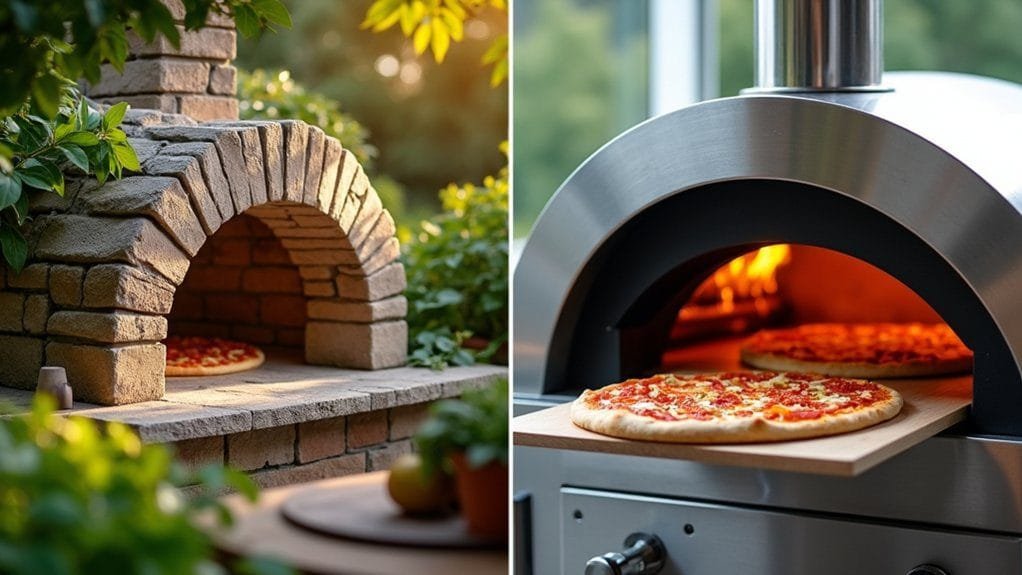
How does the design of your pizza oven influence your kitchen or outdoor space? The aesthetic appeal of your oven can make a significant impact on your environment, whether indoors or out.
Consider these points when choosing:
- Indoor pizza ovens often feature sleek stainless steel designs, resembling a high-end toaster oven that fits seamlessly into modern kitchens.
- Outdoor pizza ovens showcase a rugged appearance, serving as stylish focal points in outdoor dining areas.
- Compact indoor options are easier to store, making them ideal for smaller spaces.
- Space considerations are vital; outdoor ovens generally require more room and may need protective covers when not in use.
Ultimately, the right design enhances both functionality and your space’s visual appeal.
Key Features to Look for in a Pizza Oven
When selecting a pizza oven, it’s important to prioritize the key features that will enhance your cooking experience and the quality of your pies. First, look for ovens that can reach high temperatures of at least 700°F; this is essential for achieving that crispy crust we all crave. Consider models with dual heating elements for even cooking and faster preparation. Digital controls allow for precise temperature control, making it easy to master various pizza styles. A spacious cooking surface is significant, especially for larger pizzas—many outdoor ovens offer 16-inch spaces compared to smaller indoor options. Finally, evaluate fuel types: wood-fired ovens impart unique flavors, while gas options provide convenience without sacrificing performance. Choose wisely!
Frequently Asked Questions
What’s Better, an Indoor or Outdoor Pizza Oven?
When choosing between indoor and outdoor pizza ovens, consider cooking methods, heat distribution, and flavor profiles. Think about space, portability, cost, maintenance needs, and seasonal use to enhance your overall pizza-making experience.
How to Make Crispy Crust in Pizza Oven?
Isn’t it satisfying when pizza dough transforms into a crispy crust? Achieve this by controlling oven temperature, using a baking stone, managing moisture, and evenly distributing toppings while shaping for ideal heat retention and yeast activation.
Why Do Most Pizzerias Cook Pizza in a Deck Oven?
Most pizzerias choose deck ovens for their advantages: high baking temperatures, excellent heat retention, and steam generation. These factors guarantee superior crust texture, accommodate various pizza styles, and enhance ingredient quality through professional techniques in a controlled cooking environment.
Are Outdoor Pizza Ovens Worth It?
If you crave culinary adventures, outdoor ovens offer benefits like diverse cooking capacity and unique flavor profiles, though they require more maintenance. Indoor ovens provide convenience, but price comparisons reveal outdoor options often deliver exceptional taste for gatherings.
Conclusion
In the battle of outdoor versus indoor pizza ovens, it’s like choosing between a cozy campfire and a sleek kitchen stove. If you crave that classic wood-fired flavor and crispy crust, outdoor ovens often deliver the best results, with their intense heat and smoky notes. However, if convenience and ease are your priorities, an indoor oven can still whip up a delicious pie. Ultimately, your choice boils down to your cooking style and the experience you want to create.