
Electric scooters aren’t safe for children under 16. You’ll face significant injury risks, with statistics showing 17% of e-scooter incidents involve children experiencing head trauma and fractures. The American Academy of Pediatrics advises against children using e-scooters due to collision dangers and potential long-term mobility complications. Speeds between 15-20 mph dramatically increase accident severity. Want to understand how to protect your child from these risks?
Key Takeaways
- Electric scooters pose significant risks for children, with 17% of e-scooter injuries involving those under 14 years old.
- The American Academy of Pediatrics recommends against e-scooter use for children under 16 due to high potential for serious head and limb injuries.
- Proper safety gear, including well-fitted helmets, protective pads, and closed-toe shoes, is crucial in mitigating injury risks for young riders.
- Safe riding environments are essential, with recommended locations being designated scooter paths, parks, and areas free from heavy traffic and obstacles.
- Parental supervision, education about riding practices, and choosing age-appropriate scooters with controlled speeds can significantly reduce the likelihood of accidents.
E-Scooter Injury Statistics for Children
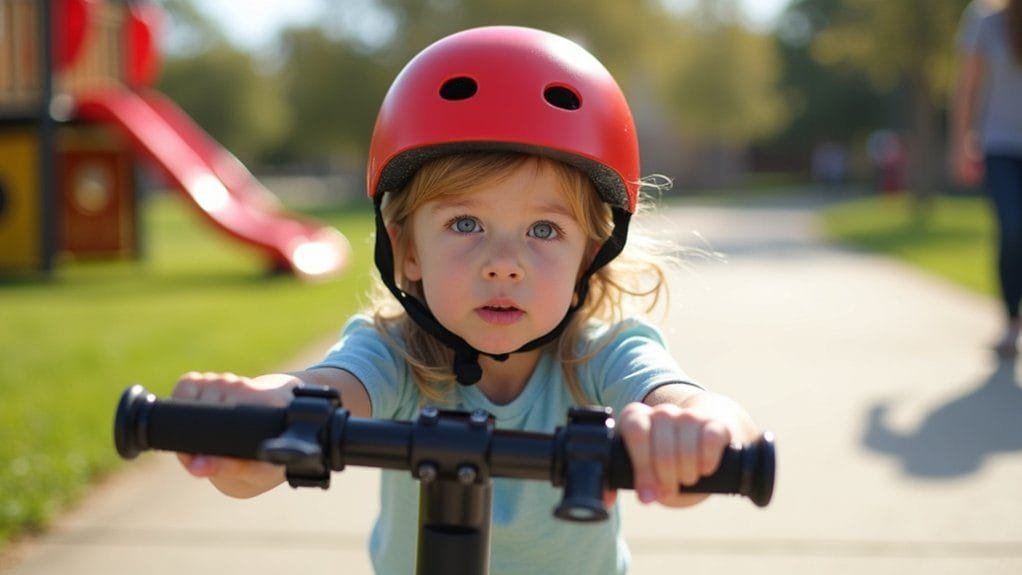
The rising tide of e-scooter injuries among children presents a growing public health concern. Between 2012 and 2019, nearly 300 hospital cases in Canada involved children aged 2-14, while U.S. emergency room visits for e-scooter injuries surged by 22% in 2022. Children under 14 represented 17% of these incidents, with the American Academy of Pediatrics strongly advising against e-scooter use for those under 16 due to significant safety risks.
Common injuries include head trauma, arm and leg fractures, and in severe cases, traumatic brain injuries. The documented risks underscore the importance of age restrictions, protective gear, and parental supervision. Understanding these statistics can help you make informed decisions about your child’s safety when it comes to e-scooter use.
Age Restrictions and Recommendations
While e-scooter popularity continues to rise, age restrictions play an essential role in protecting children from potential injuries. The American Academy of Pediatrics strongly advises against children under 16 operating or riding e-scooters due to significant safety concerns. Consider these critical recommendations:
E-scooter safety demands strict age limits to protect children from potentially serious injuries.
- Legal age restrictions typically range from 12 to 16, with some jurisdictions completely prohibiting children under 16.
- Only 57% of parents enforce helmet use, increasing the risk of serious e-scooter injuries.
- Proper supervision and education are crucial for older teens who meet legal age requirements.
E-scooter injuries among children under 14 account for 17% of reported incidents, underscoring the importance of strict age-based safety guidelines. Parents must prioritize their children’s safety by understanding and implementing these recommendations, focusing on prevention and risk mitigation.
Common Risks and Safety Concerns
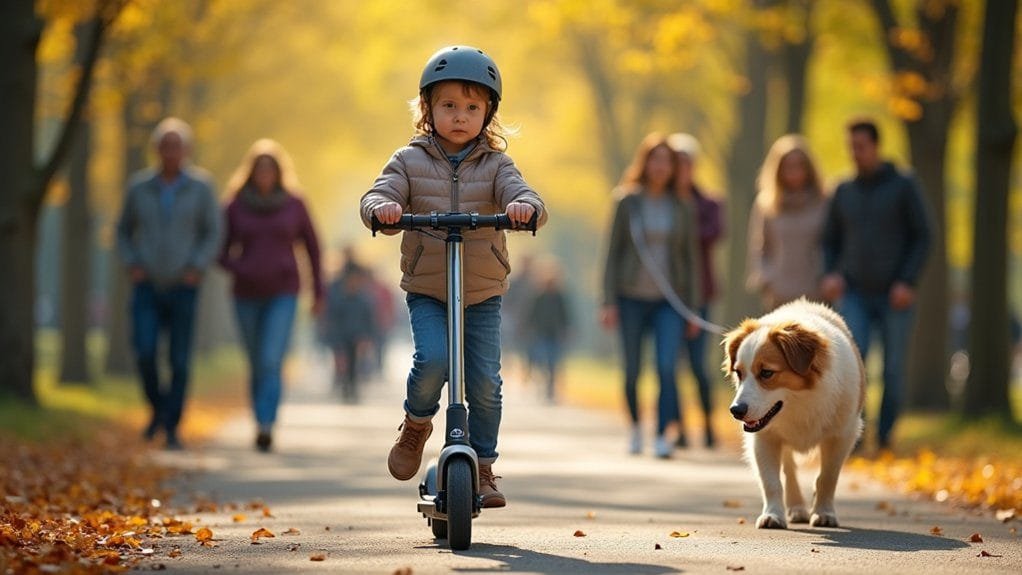
E-scooter safety concerns extend far beyond age restrictions, revealing a complex landscape of potential hazards for young riders. When children operate electric scooters without proper safety precautions, they’re exposed to significant risks of serious injuries.
| Risk Category | Potential Consequences |
|---|---|
| Head Injuries | Traumatic brain damage |
| Fractures | Long-term mobility issues |
| Collision Risks | Severe physical trauma |
| Inexperience | Increased accident probability |
The data is stark: children under 14 represent 17% of e-scooter injuries, with speeds reaching 15-20 mph dramatically increasing accident severity. Helmet usage remains critically low, with only 57% of parents enforcing protective gear. Medical professionals, including the American Academy of Pediatrics, strongly recommend children under 16 avoid e-scooter operation due to these substantial safety risks. Understanding and implementing thorough safety rules can mitigate potential dangers associated with electric scooter use.
Protective Gear and Essential Safety Measures
Because children’s safety demands meticulous preparation, selecting appropriate protective gear becomes vital when maneuvering electric scooter risks. The American Academy of Pediatrics emphasizes essential safety measures to minimize potential injuries while riding e-scooters.
Essential protective strategies include:
- Always wear a properly fitted helmet to reduce head injury risks
- Use full protective gear including elbow and knee pads
- Choose closed-toe shoes and reflective gear for enhanced safety
Parental supervision plays an important role in preventing accidents. By educating children about safe riding practices and consistently enforcing safety protocols, you can greatly reduce injury risks. Reflective gear becomes especially important during low-light conditions, ensuring visibility and minimizing potential collisions. Remember, proactive safety education and thorough protective equipment are your best defense against e-scooter-related injuries.
Legal Regulations Across Different Regions
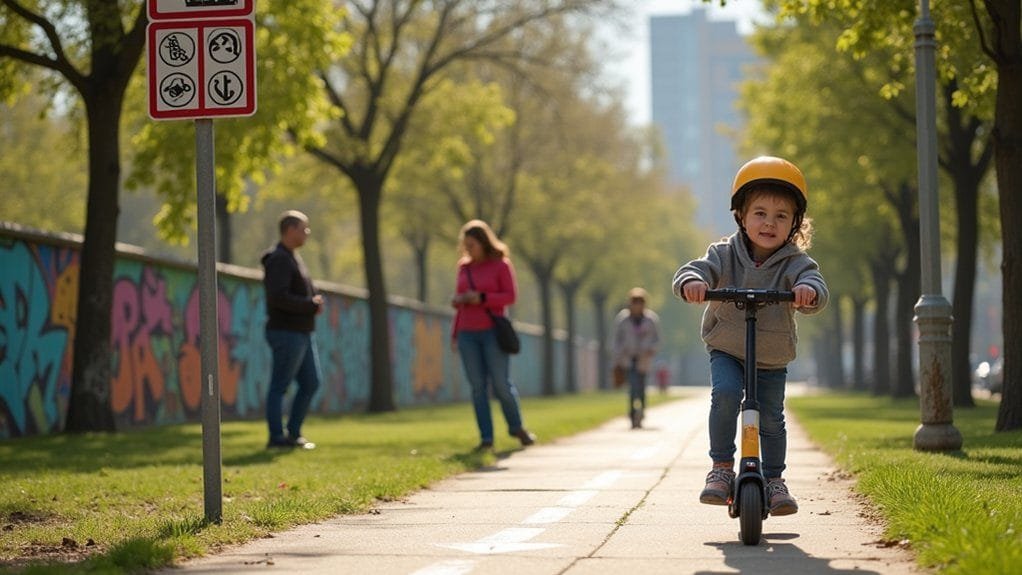
As urban mobility evolves, maneuvering the complex landscape of e-scooter legal regulations becomes vital for parents and young riders. Age restrictions and safety concerns vary dramatically across regions, with legal minimums ranging from 12 to 18 years old. Children under 16 face particularly stringent regulations, with some cities implementing outright bans on e-scooter use. Helmet laws play a significant role in mitigating accident risks, particularly for younger riders. You’ll need to carefully research local regulations regarding designated riding paths, speed limits, and specific age requirements. Canadian cities tend to have more thorough safety guidelines compared to U.S. jurisdictions, often mandating helmet use for riders under 18. Understanding these nuanced regulations can help guarantee a safer riding experience and prevent potential legal complications.
Choosing the Right Scooter for Younger Riders
Understanding local regulations is just the first step in ensuring your child’s safety on an electric scooter. When selecting an electric scooter for younger riders, consider these critical factors:
- Age-appropriate maximum speed limits
- Durable materials and safety features
- Manufacturer’s recommended weight and age restrictions
Choose scooters like the Segway Ninebot Zing E8 for ages 6-8 or Razor Power Core E90 for ages 9-12, which offer controlled top speeds and child-friendly designs. Prioritize models with reinforced frames, rear brakes, and stable platforms that support less experienced riders. Verify the scooter’s specifications to match your child’s skill level and physical capabilities.
Proper Maintenance and Scooter Care
Four key maintenance practices can dramatically enhance the safety and longevity of your child’s electric scooter. Regularly check tire pressure and inspect for wear and tear to maintain ideal traction and prevent potential accidents. Confirm brakes are responsive and all mechanical connections remain secure by routinely examining screws and moving parts.
Battery care is critical for both performance and safety. Avoid complete discharges and overcharging, which can compromise the scooter’s functionality. Lubricate essential components and clean moving parts to reduce friction and potential mechanical failures.
Following the manufacturer’s guidelines is paramount. These recommendations provide thorough insights into proper maintenance techniques specific to your child’s electric scooter model, helping guarantee safe operation and extended equipment lifespan.
Safe Riding Environments and Practices
Safety begins with selecting the right environment for electric scooter riding. When choosing where to ride, you’ll want to minimize risks and guarantee a safe experience. Consider these key guidelines:
Riding electric scooters safely starts with choosing the right environment to minimize risks and ensure a secure experience.
- Prioritize designated areas like parks, bike paths, and supervised locations that offer controlled riding conditions.
- Avoid crowded sidewalks, busy roadways, hilly terrain, and poorly maintained surfaces that could increase accident potential.
- Always comply with local regulations regarding age limits, helmet laws, and specific riding zones to prevent traffic citations.
Your awareness and practice of safe riding habits are vital. Teach children to start slowly, maintain situational awareness, and always yield to pedestrians. By understanding and following these principles, you’ll create a safer e-scooter experience that protects both young riders and those around them.
Top Recommended Scooter Brands for Kids
After identifying safe riding environments, selecting the right electric scooter becomes the next critical step in ensuring your child’s riding experience. Brands like Razor, Segway Ninebot, and GOTRAX GKS prioritize safety features tailored to different age groups. For younger riders aged 6-8, the Segway Ninebot Zing E8 offers a lightweight design and user-friendly operation, promoting confident riding. Pre-teens aged 9-12 will appreciate the Razor Power Core E90, which combines durability with a manageable speed limit. The GOTRAX GKS Electric Scooter stands out for its controlled top speeds and reinforced frame, making it an excellent choice for safety-conscious parents. When choosing, consider the scooter’s specific safety features, age recommendations, and your child’s individual skill level.
Parental Guidance and Supervision Strategies
While electric scooters offer children an exciting mode of transportation, parental involvement is critical to mitigating potential risks. Your guidance can greatly enhance your child’s safety when using e-scooters.
Key supervision strategies include:
- Enforce strict helmet use and verify proper fit
- Monitor riding practices and discuss local e-scooter laws
- Restrict access to rental apps for children under 16
The American Academy of Pediatrics recommends against children under 16 operating these devices, emphasizing the importance of responsible riding. By actively supervising and educating your children about e-scooter risks, you’ll help them develop safer habits. Stay informed about age restrictions, safety guidelines, and potential hazards. Your proactive approach can prevent accidents and provide a more secure riding experience for your child.
Frequently Asked Questions
What Age Can a Child Ride an Electric Scooter?
You’ll want to check local regulations, but most experts recommend waiting until you’re 14-16, ensuring proper safety gear, supervision, and taking safety courses to learn riding techniques and road awareness.
What Is the Age Limit for Electric Scooters for Kids?
You’ll want to follow age restrictions carefully: most experts recommend 12-16 years old, with adult supervision, proper helmet, appropriate scooter size, and ensuring your child understands traffic laws and demonstrates responsible riding skills.
What Are the Injuries to Electric Scooter Children?
You’ll likely face head injuries, fractures, and cuts from falls. Proper safety gear, supervised riding, helmet use, and understanding terrain risks can considerably reduce your child’s e-scooter injury potential.
What Age Is Appropriate for a Scooter?
You’ll want to wait until your child is at least 16, with mature balance skills, road awareness, and proper safety gear. Parental guidance, understanding traffic rules, and choosing age-appropriate scooter types are essential for safe riding.
Conclusion
Electric scooters can be safe when you’re informed and proactive. You’ll protect your child by understanding risks, investing in quality protective gear, and teaching responsible riding techniques. You’ll prevent accidents through careful supervision, selecting age-appropriate models, and ensuring proper maintenance. You’ll empower your child with knowledge, confidence, and respect for safety guidelines, transforming potential hazards into enjoyable, low-risk experiences.