
Your tent choice depends on your camping style: family tents offer spacious, cabin-like structures ideal for car camping, while backpacking tents prioritize lightweight, compact designs for trail adventures. Family tents accommodate 4-6 people with multiple access points and ample storage, weighing around 20 pounds. Backpacking tents average 2.5 pounds per person, focusing on minimal weight and quick setup. Your terrain and travel method will determine the perfect shelter.
Key Takeaways
- Choose a family tent if you prioritize spacious interiors, multiple access points, and comfortable car camping with 4-6 people.
- Select a backpacking tent when weight, compact size, and portability are critical for long-distance hiking and wilderness trekking.
- Consider family tents for group trips with substantial gear storage, vertical walls, and higher peak heights for easy movement.
- Opt for backpacking tents if you’re focused on minimalist travel, with lightweight designs typically weighing 2-5 pounds total.
- Evaluate your primary camping style: vehicle-based comfort versus trail mobility will determine the most suitable tent category for your needs.
Understanding Tent Types and Their Purposes
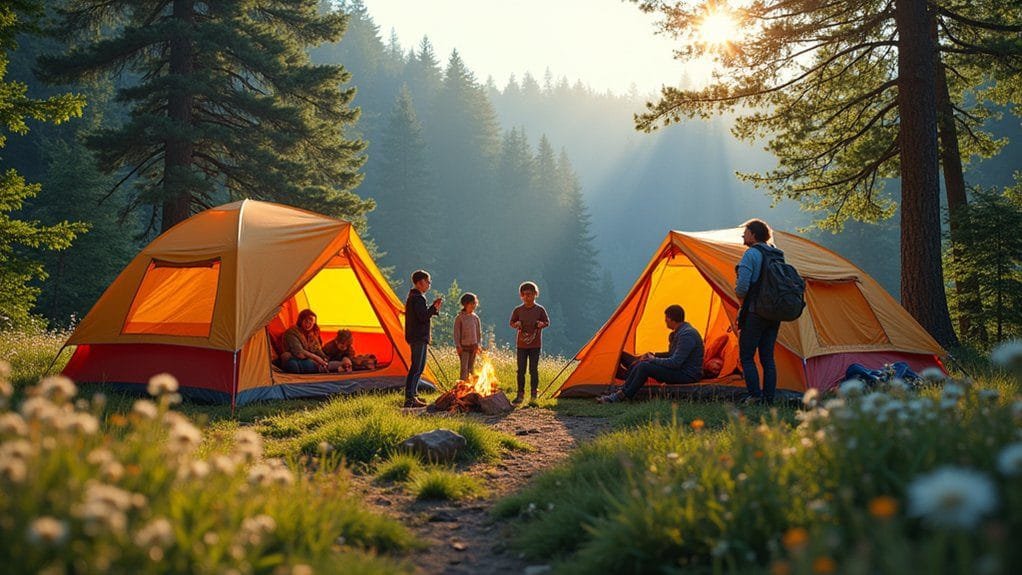
When selecting a tent, you’ll encounter two primary categories: family tents and backpacking tents, each engineered for distinctly different camping scenarios. Family tents excel in car camping environments, offering expansive interior space and multiple doors for convenient group access. These tents prioritize comfort with cabin-style roofs and higher peak heights, accommodating more people and gear. Conversely, backpacking tents focus on lightweight design, typically weighing around 2.5 pounds per person, with compact dome structures optimized for portability during multi-day hiking trips. Your choice depends on your specific camping needs: if you’re traveling by vehicle and want spacious accommodations, family tents provide ample room. If you’re trekking long distances and must minimize packed weight, lightweight backpacking tents become the superior option.
Key Differences in Design and Functionality
The architectural blueprint of tents reveals stark contrasts between family and backpacking designs, fundamentally driven by their intended usage environments. Family tents prioritize spaciousness, featuring cabin-style structures with vertical walls that maximize sleeping and gear storage capacity, while backpacking tents emphasize lightweight, compact configurations with sloping walls to minimize transportation burden. Your choice depends on functionality: family tents offer multiple doors, expansive interiors, and organizational features like vestibules and interior pockets, whereas backpacking tents sacrifice convenience for weight reduction. Material selection further distinguishes these tent types—family designs utilize higher-denier fabrics for enhanced durability and weather resistance, while backpacking models employ lighter materials to optimize portability, potentially compromising long-term performance.
Evaluating Space and Comfort Requirements
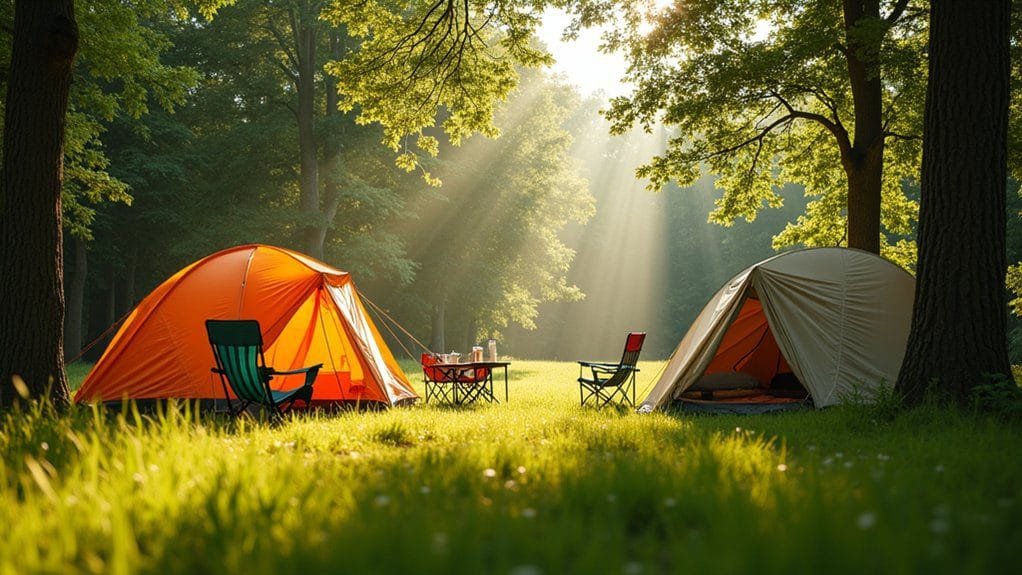
Because space and comfort directly impact camping satisfaction, campers must critically analyze tent design specifications through a lens of intended usage and personal requirements. Consider these key factors when evaluating family tents versus backpacking tents:
Mastering tent selection demands strategic analysis of space, comfort, and personal camping requirements.
- Spatial capacity: Family tents offer expansive interiors for 4-6 occupants, while backpacking tents prioritize minimal weight and compact dimensions.
- Gear accommodation: 6-person family tents provide substantial storage space, contrasting with streamlined backpacking tent designs that limit gear storage.
- Accessibility features: Family tents typically include multiple doors and higher peak heights, enhancing interior maneuverability for taller individuals.
- Seasonality considerations: 3-season family tents deliver versatile performance across mild weather conditions, ensuring comfort and adaptability for diverse camping scenarios.
Your specific camping objectives will ultimately determine the best tent selection between these distinct design approaches.
Weight and Portability Considerations
Although weight and portability might seem secondary to shelter considerations, they’re critical factors distinguishing family and backpacking tent designs. When camping with your family, you’ll notice family tents often exceed 20 pounds, requiring substantial vehicle storage and spacious setup areas. Conversely, backpacking tents prioritize lightweight performance, typically weighing 2-5 pounds and compact enough to fit into standard backpacks. Their aluminum poles and minimalist design enable quick setup in varied terrain, while accommodating essential sleeping pads.
The packed size directly impacts your mobility and convenience. Backpacking tents offer superior portability, allowing you to traverse challenging landscapes with minimal burden. While family tents provide more interior space, they compromise on weight and transportability. Your choice should balance rain protection, comfort, and the specific demands of your outdoor adventure.
Budget and Long-Term Investment Strategies
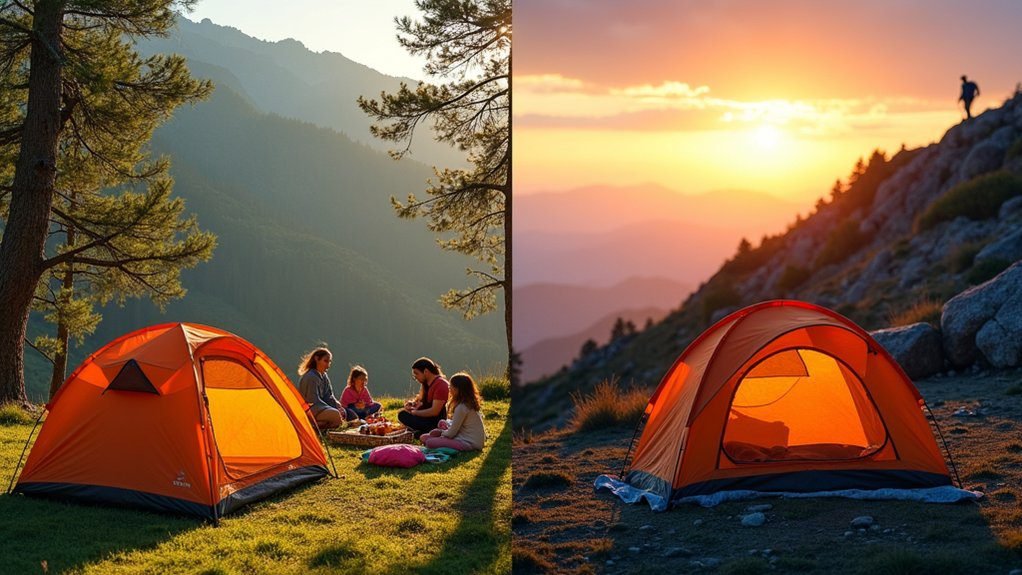
Weighing the financial implications of tent selection goes beyond initial purchase price, demanding a strategic approach to outdoor gear investment. Budget-conscious campers must consider long-term value when choosing between family tents and backpacking tents:
- Durability and space efficiency favor family tents like the MSR Habitude (6-Person), which can save money across multiple camping trips.
- Backpacking tents’ lightweight design might lead to frequent replacements, increasing overall expenditure.
- Resale potential varies, with models like the Tarptent Hogback maintaining better market value.
- Factoring in footprints and accessories can enhance tent longevity and optimize your investment strategy.
While initial costs differ, your camping style and frequency will ultimately determine the most cost-effective tent selection for your outdoor adventures.
Frequently Asked Questions
Is a Backpacking Tent Better Than a Normal Tent?
A backpacking tent’s superior portability and durability make it better if you prioritize weight, quick setup, and weather resistance over spaciousness. Your camping style and preferences ultimately determine which tent suits your specific outdoor adventure needs.
Is a Backpacking Tent Better Than a Car Camping Tent?
You’ll find backpacking tents excel in weight and portability, while car camping tents offer superior comfort and space. Your choice depends on trip type, prioritizing either lightweight durability for trails or roomy convenience for car-accessible campsites.
When Should You Use a Backpacking Tent?
You’ll want a backpacking tent when you’re traversing challenging terrain, prioritizing lightweight gear, managing compact space, and need quick setup in varied weather conditions while balancing durability, ventilation, and budget-conscious backpacking essentials.
Is 4 Lbs Too Heavy for a Backpacking Tent?
You’ll find 4 lbs isn’t ideal for ultralight backpacking, but it’s workable for short trips. Consider your specific weight considerations, packability factors, and camping goals when evaluating tent durability and features for your backpacking needs.
Conclusion
When choosing between family and backpacking tents, you’ll find each serves a unique purpose. Don’t let weight concerns deter you—invest in the right tent for your adventure. Whether you’re car camping with the family or trekking remote trails, prioritize your specific needs. Consider space, portability, and durability. Your ideal tent isn’t just shelter; it’s your home away from home, tailored to your outdoor lifestyle and personal comfort requirements.