
When comparing percolators and drip coffee makers, you’ll find that percolators consistently brew a bolder, richer cup. The continuous cycling of boiling water through the grounds enhances flavor complexity, resulting in an intense aroma and deep taste. On the other hand, drip coffee can often taste lighter and occasionally watered down, especially if the brew time is insufficient. If you’re passionate about flavor, the choice becomes clear, and there’s much more to explore about these brewing methods.
Key Takeaways
- Percolators enhance flavor complexity with continuous brewing, resulting in a bolder, more aromatic coffee compared to drip coffee makers.
- Drip coffee can taste diluted or overly bitter due to potential under-extraction, lacking the depth found in percolated coffee.
- Preference for percolated coffee often stems from its robust richness, while drip coffee is favored for its smooth simplicity.
- Coarse grinds in percolators help prevent bitterness, ensuring a stronger flavor profile than typically achieved with drip coffee.
- Overall, taste preference varies based on individual desires for flavor intensity versus ease of preparation and cleanup.
The Brewing Process: How Percolators and Drip Coffee Makers Work
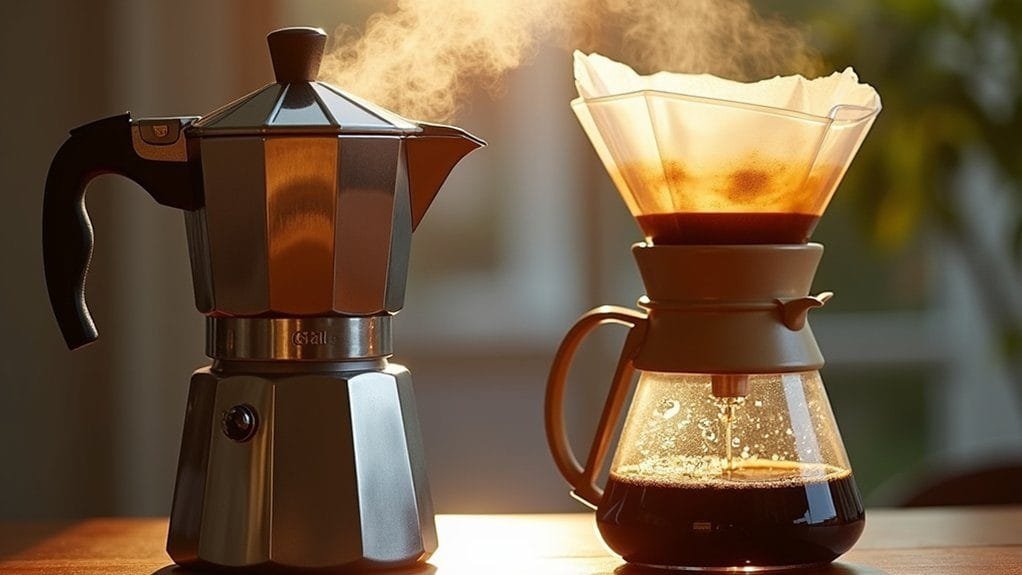
When you’re brewing coffee, understanding the differences between percolators and drip coffee makers can elevate your experience. Percolator coffee involves a unique brewing process where boiling water cycles through the coffee grounds multiple times, enhancing flavor complexity. This method typically takes 7-10 minutes, resulting in richly brewed coffee. In contrast, drip coffee makers rely on gravity, passing hot water through the grounds just once, often in 5-10 minutes. While drip brewers use paper filters that absorb some natural oils, percolators utilize a stainless steel basket, allowing those flavorful oils to contribute to a fuller body. The coffee-to-water ratio is also essential; percolators commonly require one tablespoon of coffee per cup, impacting the overall taste and intensity of your brew.
Flavor Profiles: Comparing the Taste of Percolated and Drip Coffee
Although personal taste plays a significant role in your coffee experience, the flavor profiles of percolated and drip coffee can be strikingly different. Percolated coffee typically boasts a strong flavor, thanks to its continuous brewing cycle that extracts rich oils and nuances from roasted coffee. This method often results in a bold, aromatic cup that many enthusiasts cherish. In contrast, drip coffee, brewed in a drip machine, can sometimes taste watered down or overly bitter due to under-extraction. While some appreciate the cleaner profile of drip coffee, it may lack the depth found in percolated brews. Ultimately, your preference will depend on whether you seek the robust richness of percolated coffee or the smooth simplicity of drip coffee.
Ease of Use: Which Method Is More User-Friendly?
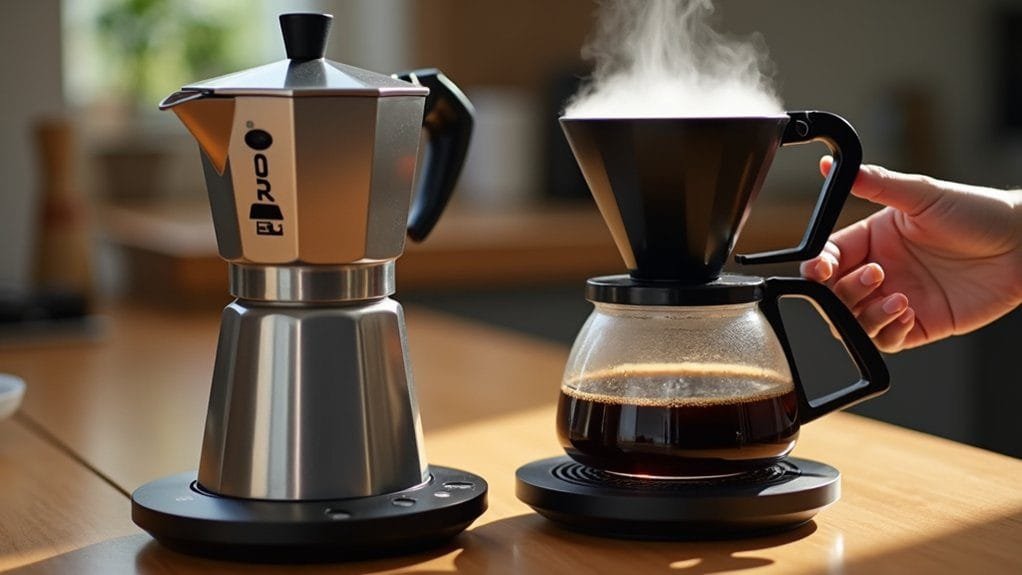
How easy is it to brew your morning cup? When it comes to ease of use, electric drip coffee makers shine with their user-friendly, one-button operation and automatic brewing features. You can set it and forget it, while percolators, especially stovetop models, demand more manual control and attention during brewing. They require a careful setup, aligning the brew basket, which can be intimidating. While electric percolators might offer some convenience with auto shut-off, they can interrupt brewing too soon, limiting your control. Cleaning a coffee maker is typically simpler with drip machines, thanks to dishwasher-safe parts, whereas percolators can present a cleaning challenge due to their design. Ultimately, drip coffee makers generally provide a smoother, more straightforward experience.
Cleanup and Maintenance: A Look at Convenience
Cleaning your coffee maker shouldn’t feel like a chore, yet the differences in cleanup and maintenance between percolators and drip coffee makers can make it seem that way. Drip coffee makers shine with their easy-to-clean removable parts, allowing you to toss them in the dishwasher for quick cleanup. In contrast, percolators, like the Presto 12-Cup Stainless Steel Coffee Maker, often feature complex designs that complicate maintenance, especially the brew basket which requires careful handling. Regular deep-cleaning with water and white vinegar is essential for percolators to maintain performance, adding to your cleaning routine. Ultimately, if convenience is a priority, drip coffee makers offer a more straightforward approach, making daily cleanup a breeze compared to the more involved process of percolators.
Quality of Coffee: Evaluating Brew Strength and Flavor
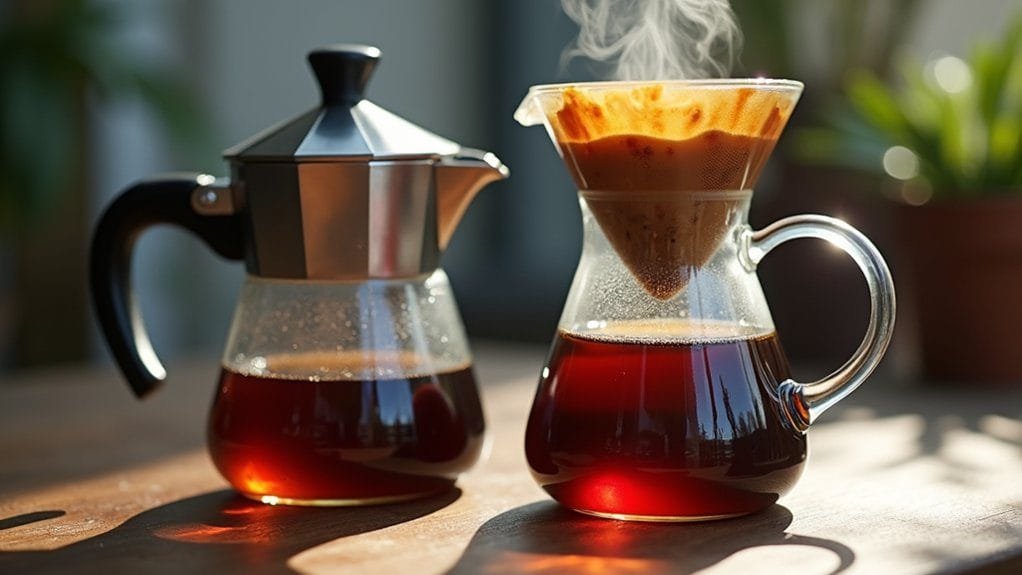
While ease of maintenance plays a significant role in choosing a coffee maker, the quality of the brew can ultimately define your coffee experience. Percolators typically deliver stronger coffee due to their continuous brewing cycle, allowing for deeper flavor extraction. In contrast, drip coffee makers often yield a more diluted brew, especially if the coffee-to-water ratio isn’t calibrated correctly. If you’re using a percolator, opt for coarse grinds to prevent bitterness and enhance smoothness. Remember, brewing time is essential; stovetop models may take longer but can yield richer flavors. Aim for 7-10 minutes for percolators, while drip machines require careful monitoring to avoid mediocrity. Ultimately, it’s about balancing strength and flavor to suit your palate.
Health Considerations: The Impact of Brewing Methods on Toxins
As you consider your coffee brewing methods, it is essential to recognize the health implications tied to the materials and processes involved. Percolators shine in this regard, typically constructed from stainless steel, eliminating concerns about plastic leaching toxins into your brew. In contrast, many budget drip coffee makers utilize non-food-grade plastics, possibly introducing harmful substances into your coffee. The percolator’s brewing process not only reduces waste by eliminating disposable filters but also enhances antioxidant levels, providing potential health benefits. This mindful approach fosters intentionality, making each cup a more enriching experience. By choosing a percolator, you’re not just brewing coffee; you’re prioritizing your health and well-being with each careful extraction.
Alternative Brewing Options: Exploring Other Coffee Methods
When exploring alternative brewing options, you’ll discover a diverse array of methods that can elevate your coffee experience beyond the traditional percolator or drip coffee maker. Here are some standout methods to contemplate:
- Moka pots: Create a stronger brew with an espresso-like richness through steam pressure.
- French press: Steep coffee grounds for a fuller flavor profile and a smoother cup, beloved by enthusiasts.
- Pour-over: Achieve precise control over water, ensuring consistent extraction for better-tasting coffee.
- Aeropress: Combine steeping and pressure for a concentrated, rich coffee that’s portable and easy to clean.
Additionally, cold brew offers a less acidic, smooth beverage, perfect for those seeking an alternative to traditional methods. Each option can transform your coffee routine!
Frequently Asked Questions
Does Coffee Taste Better Made in a Percolator?
If you prefer bold flavors, percolators excel in brewing methods, enhancing flavor extraction from coffee grounds. Their unique heat distribution and ideal brewing time elevate coffee strength and aroma profile, aligning with many users’ historical preferences for robust taste.
Do Percolators Make Better Coffee Than Drip?
When considering brewing methods, percolators often enhance flavor profiles and coffee strength through better temperature control and extraction rate. However, user preference varies—fresh beans and maintenance play significant roles in achieving satisfying results.
Why Don’t People Use Coffee Percolators Anymore?
You’ll find fewer people using coffee percolators today due to evolving coffee trends, preference for convenience, and maintenance hassle. Modern alternatives deliver a smoother flavor profile, shifting cultural significance away from traditional brewing methods like percolators.
Does Drip Coffee Taste Better?
Like a gentle breeze, drip coffee offers a milder flavor profile. With shorter brewing time and varying acidity levels, it can under-extract coffee grounds. Ultimately, it’s about your taste test and consumer preferences.
Which Brewing Method Pairs Best with Different Coffee Grind Types?
The choice of brewing method significantly impacts the flavor profile of your coffee, depending on the grind size. For coarse grinds, methods like French press shine, while medium grinds are perfect for drip coffee makers. Explore burr or blade: finding the best grind to enhance your brewing experience with precision.
Conclusion
Ultimately, choosing between percolators and drip coffee makers is like picking a favorite song; it depends on your taste. Percolators offer a bold, robust symphony of flavors, while drip machines provide a smooth, mellow melody. Your decision hinges on what you crave each morning—intensity or ease. Whichever path you take, remember that the joy of coffee lies not just in the brew, but in the ritual that wakes your senses and fuels your day.