
When comparing solar chargers and power banks, you’ll find power banks are considerably more reliable. Solar chargers struggle with inconsistent energy delivery, often charging devices to less than 50% in non-optimal conditions. Power banks provide immediate, stable charging across diverse environments, offering quick and dependable backup power. They’re compact, rapidly charge multiple devices, and work seamlessly regardless of weather or location. Stick around to uncover the full technological breakdown.
Key Takeaways
- Power banks deliver more consistent and immediate charging performance compared to solar chargers, providing reliable energy across various environmental conditions.
- Solar chargers exhibit significant limitations, often charging devices to less than 50% capacity and struggling with variable sunlight and weather conditions.
- Traditional power banks offer superior dependability with pre-charged batteries, quick charging technology, and stable power output across temperature ranges.
- Battery capacity matters: A 20,000 mAh power bank can charge multiple devices instantly, whereas solar chargers require prolonged sun exposure for minimal charging.
- Choosing between solar chargers and power banks depends on specific use cases, with power banks recommended for urban travelers and solar chargers suited for remote, sustainable energy environments.
Understanding Portable Power Technology
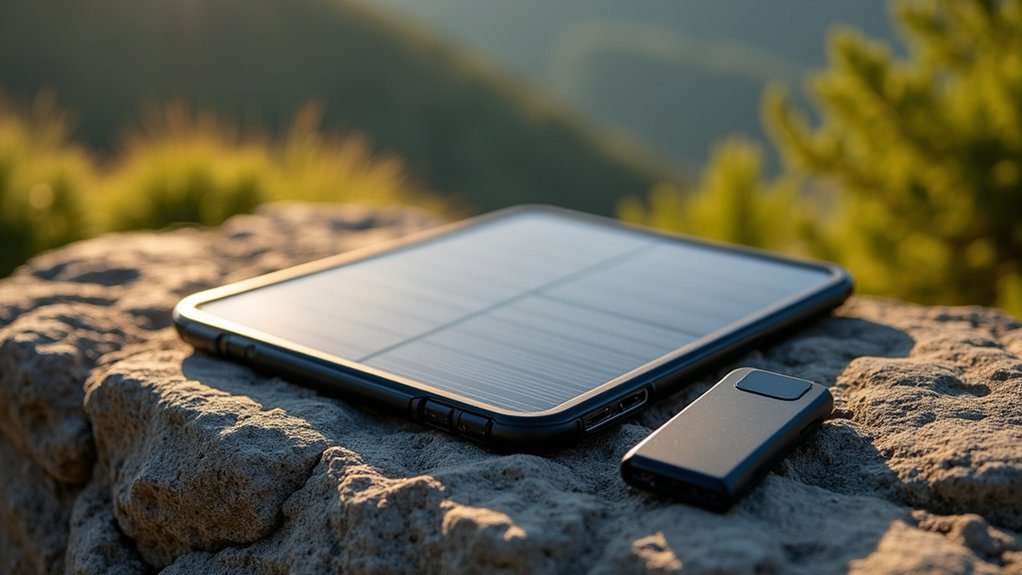
The evolution of portable power technology represents a critical innovation in our increasingly mobile digital landscape. You’ll find that power banks and solar chargers have transformed how we manage energy storage and charging capabilities across various environments. These portable power technology solutions cater to different needs, with traditional power banks offering immediate, reliable charging through pre-stored energy, while solar chargers leverage solar energy for more sustainable, environmentally conscious options. Outdoor enthusiasts particularly appreciate the versatility of portable power stations, which can handle multiple device charging during extended trips. Your choice between solar chargers and power banks ultimately depends on factors like reliability, environmental conditions, and specific charging requirements. Understanding the strengths and limitations of each technology enables you to make informed decisions about your portable power needs.
Analyzing Solar Charger Performance
How reliable are solar chargers in real-world conditions? Performance data reveals significant challenges with solar charging technologies:
- Charging Efficiency: Most solar chargers struggle to deliver consistent power, often charging devices to less than 50% even after extended sunlight exposure.
- Environmental Limitations: Solar charger performance dramatically declines in non-optimal conditions, making them unreliable as a primary backup power source for portable devices.
- Temperature Risks: High temperatures can push solar chargers to unsafe levels (up to 80C), potentially compromising lithium-ion battery safety and device integrity.
Comparative analysis suggests power banks remain more dependable for consistent charging. While solar chargers offer eco-friendly potential, their current technological constraints make them less practical than traditional portable charging solutions. Users seeking reliable device charging will likely find power banks provide more immediate and consistent performance across diverse environments.
Comparing Power Bank Capabilities

Given solar chargers’ inconsistent performance, power banks emerge as a superior portable charging solution. When you need reliable charging, portable power banks offer immediate usability with pre-charged rechargeable batteries. A 20,000 mAh power bank provides substantial battery life, enabling quick charge capabilities across multiple devices during trips or emergencies.
| Feature | Power Bank Advantage |
|---|---|
| Charging Speed | Quick Charge Technology |
| Portability | Lightweight and Compact |
| Reliability | Consistent Power Output |
| Convenience | Instant Emergency Backup |
Quality brands like Anker and RAVPower demonstrate superior performance, delivering robust power output with USB Power Delivery technologies. Unlike solar chargers dependent on sunlight, these portable power banks guarantee immediate charging solutions. Their compact design guarantees you’ll have a dependable power source wherever you go, making them an essential tech accessory for modern device users seeking uninterrupted connectivity.
Evaluating Reliability in Different Environments
While environmental conditions dramatically impact portable charging solutions, power banks consistently outperform solar chargers across diverse settings. When evaluating reliability in different environments, several key factors emerge:
- Urban Environments: Power banks provide immediate usability with consistent charging efficiency, making them a reliable choice for emergency preparedness and daily power needs.
- Outdoor Activities: Solar chargers struggle with variable performance due to sunlight angle, weather conditions, and terrain, whereas traditional power banks deliver stable electricity regardless of external factors.
- Extreme Conditions: Power banks operate safely across temperature ranges, while solar chargers risk overheating and reduced charging capabilities in challenging environments.
You’ll find that traditional power banks offer superior reliability, ensuring your devices remain charged when and where you need them most, without dependency on specific environmental conditions.
Selecting the Right Charging Solution for Your Needs

Strategically choosing between solar chargers and power banks demands a nuanced understanding of your specific power requirements and environmental contexts. Your decision hinges on critical factors like charging speed, capacity needs, and device compatibility. Power banks offer rapid, reliable backup power for urban travelers, providing immediate charging across multiple electronics with advanced features like Quick Charge. Solar chargers, conversely, excel in remote settings, serving as sustainable energy solutions with long-term emergency preparedness potential.
Assess your intended usage environment carefully. If you’re frequently in areas with consistent sunlight and require portable power for extended periods, solar-powered options might suit you. For short trips and quick device recharging, traditional power banks remain the more dependable portable charging solution, ensuring consistent and swift energy replenishment.
Frequently Asked Questions
What Are the Disadvantages of Solar Power Banks?
You’ll struggle with solar power banks’ limited sunlight efficiency, slow charging speeds, high costs, and weather dependency. Poor energy storage, durability concerns, and maintenance challenges make them less reliable than traditional power banks.
Which Is Better Power Bank or Charger?
You’ll find power banks more efficient for quick charging, offering superior battery capacity and convenience. While solar chargers have eco-benefits, traditional power banks provide reliable, faster performance across diverse usage scenarios, making them the pragmatic choice.
Are Powerbanks With Solar Panels Worth It?
You’ll find solar-powered power banks aren’t worth it due to low solar efficiency, slow charging speeds, and reliability issues. For consistent power, traditional power banks offer better performance, capacity, and value across most critical user requirements.
How Long Do Solar Power Banks Last?
While you might doubt their longevity, solar power banks typically last 2-3 years, with solar efficiency and battery lifespan varying based on usage scenarios, sunlight absorption, and environmental conditions that impact charging speed and durability.
Do Solar Chargers Provide a More Reliable Power Source for Security Lights Compared to Power Banks?
When considering energy efficiency, the solar vs wired security lights comparison reveals distinct advantages. Solar chargers harness sunlight, offering a sustainable power source for security lights. Unlike power banks, which require regular charging, solar systems provide a continuous, reliable supply, ensuring your security lights remain functional even during power outages.
Conclusion
When choosing between solar chargers and power banks, you’ll find each has its strengths. Like a Swiss Army knife of portable power, your ideal solution depends on your environment and usage patterns. Power banks offer consistent, immediate charging, while solar chargers provide renewable energy flexibility. Consider your specific needs, travel conditions, and charging frequency to select the most reliable technology for your lifestyle.